

 Akshay Dinesh
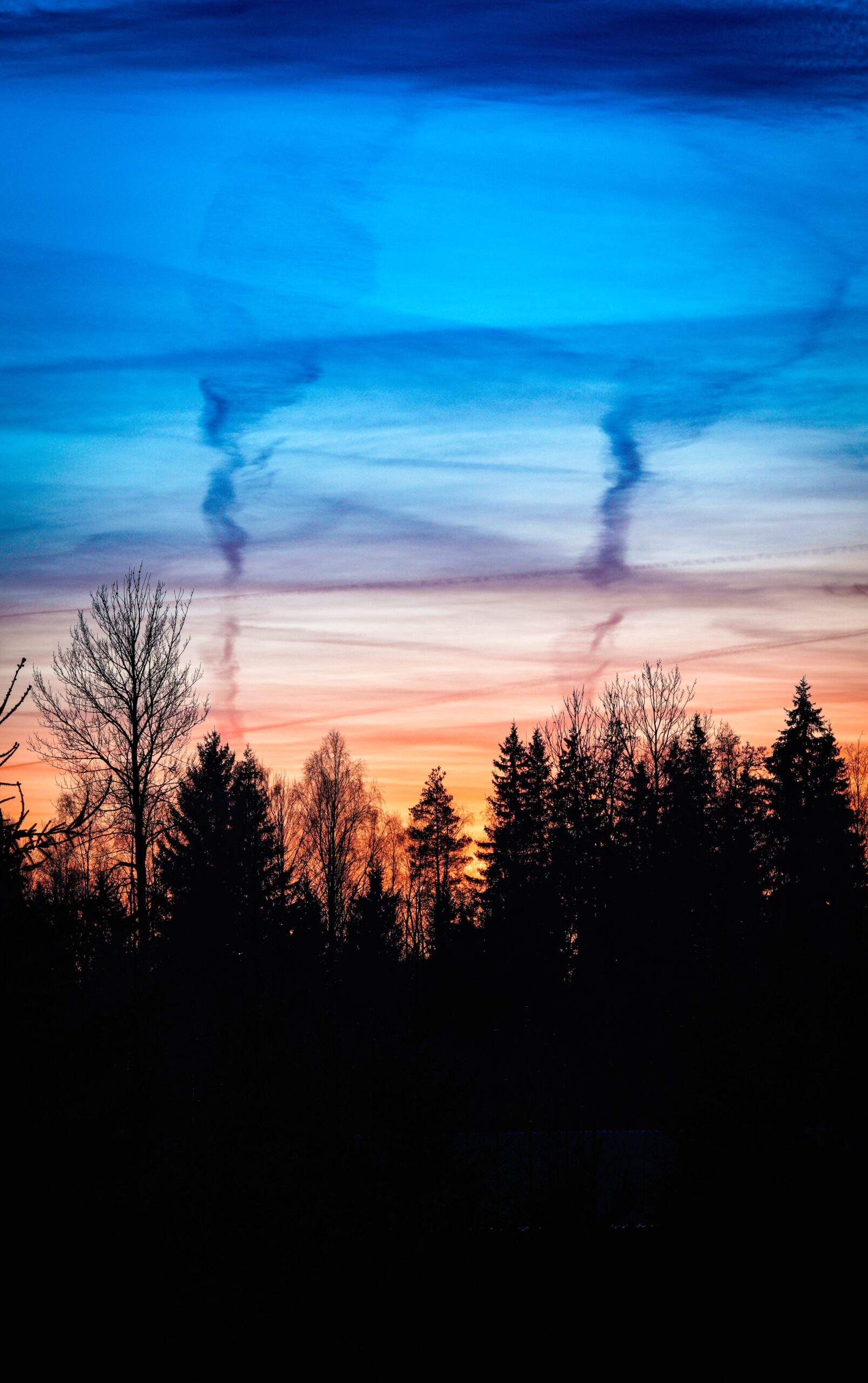
Some clouds seem to belong more to space than to weather. Noctilucent clouds appear as thin, blue-white ripples low in the twilight sky, often after ordinary clouds have faded into darkness. Their name means night-shining, which is fitting: they are too faint to see in full daylight, yet they can glow after sunset because they sit far above the clouds that bring rain, shade, and storms.
Their timing is part of the fascination. In the Northern Hemisphere, they are most often noticed on clear summer evenings, especially at middle and high latitudes when the Sun has dipped below the horizon but the upper atmosphere is still lit. A person on the ground may be standing in shadow, while these clouds, nearly at the edge of space, continue to catch sunlight from below. That unusual geometry turns a very thin layer of ice into something bright enough to catch the eye.
The Highest Clouds in the Atmosphere
Most familiar clouds form in the troposphere, the lowest layer of the atmosphere. That is where water vapor, rising air, dust, and temperature changes create cumulus clouds, storm clouds, fog, and the layered gray clouds that cover a winter sky. Noctilucent clouds form much higher, in the mesosphere, roughly 50 miles above Earth according to NASA and NOAA descriptions of the phenomenon.
That altitude changes almost everything about them. The mesosphere is far above everyday weather, above commercial flight paths, and near the region where many meteors burn up. Air there is extremely thin, so these clouds are not thick piles of droplets like lower clouds. They are delicate fields of tiny ice crystals, spread through a layer so high that satellites often refer to them as polar mesospheric clouds.
The two names point to two viewpoints. From the ground, observers call them noctilucent clouds because of the way they shine in the darkening sky. From space, researchers often call them polar mesospheric clouds because satellites see them as high-altitude ice clouds near the summer polar regions. Either way, they are among the most unusual clouds a person can see without a telescope.
Why They Shine When Other Clouds Go Dark
The glow is not produced by the clouds themselves. Noctilucent clouds do not make light the way lightning, auroras, or city lights do. They shine because they reflect sunlight at a moment when the observer and the lower atmosphere are already in Earth’s shadow.
The effect is easiest to picture with a tall mountain at sunset. A valley may be dark while the mountain peak is still bright because the peak is high enough to remain in sunlight. Noctilucent clouds work in a similar way, except the scale is far larger. Their ice crystals sit so high above the surface that sunlight can still reach them after sunset or before sunrise, while ordinary lower clouds have already gone dim.
This is why twilight matters. If the Sun is still too high, the sky is bright and the clouds are too faint to stand out. If the Sun is too far below the horizon, even the mesosphere loses direct sunlight. In the right window, the lower sky darkens enough for the pale blue and silver patterns to become visible, often close to the northern horizon for viewers in the Northern Hemisphere.
How Ice Forms in Such a Dry Place
At first, ice clouds in the mesosphere sound unlikely. The air is extremely thin and dry compared with the lower atmosphere. Yet NASA’s AIM mission, designed to study these clouds, helped confirm that they need three basic ingredients: water vapor, very cold temperatures, and tiny particles that give ice something to grow on.
The particles often come from meteor smoke. Small bits of space debris enter the atmosphere every day. Many burn up high above the ground, leaving microscopic dust behind. Water molecules can gather around these particles, freeze, and form tiny ice crystals. NASA has reported that measurements from the AIM spacecraft found meteoritic material inside noctilucent cloud ice, a clue that falling space dust is part of the recipe.
The coldest conditions arrive in a surprising season. Near the summer polar mesosphere, upward-moving air expands and cools, helping temperatures fall low enough for ice to form. That is one reason these clouds are seasonal even though summer feels warm at the ground. The lower atmosphere and upper atmosphere do not always behave the same way.
Why Summer and Latitude Matter
Noctilucent clouds are strongly tied to summer in each hemisphere. In the north, the observing season usually falls from late spring through summer, with many reports clustered around June and July. In the south, the pattern shifts to the Southern Hemisphere summer. NOAA’s satellite imagery has shown polar mesospheric clouds over Antarctica in January, a reminder that the season follows the hemisphere, not the calendar month alone.
Latitude also matters because the geometry of twilight changes with distance from the equator. These clouds are most often seen from higher latitudes, where summer twilight can linger and the Sun’s angle gives the upper atmosphere time to remain illuminated. Observers farther south in the Northern Hemisphere may see them during especially strong displays, but they are not an everyday sight everywhere.
They can also be mistaken for thin cirrus clouds at first glance. The difference is timing, position, and texture. Cirrus clouds usually darken with the rest of the sky after sunset. Noctilucent clouds often become more visible as the lower sky dims, showing fine ripples, waves, or net-like patterns that look almost metallic against the blue twilight.
What Scientists Learn From Them
Noctilucent clouds are beautiful, but they are also useful scientific signals. Because they form in a sensitive, hard-to-study region of the atmosphere, changes in their brightness, frequency, altitude, and latitude can reveal something about conditions in the mesosphere. Satellites such as NASA’s AIM spacecraft have helped researchers watch these clouds across whole polar regions instead of relying only on scattered ground reports.
Scientists pay attention to them because their formation depends on temperature, water vapor, dust, solar activity, and atmospheric circulation. A small change in one part of that system can affect whether ice crystals form or how bright the clouds become. NASA Earth Observatory has described evidence that noctilucent clouds have appeared at lower latitudes more often in some years, with atmospheric change and water vapor among the possible factors researchers study.
The evidence is still more complex than a simple one-cause story. Rocket launches can add water vapor high in the atmosphere. Methane chemistry can affect upper-atmosphere water. Solar cycles influence how much ultraviolet radiation reaches the upper atmosphere. The point is not that every bright display proves one explanation, but that these clouds offer a visible clue from a layer of air that is otherwise difficult to observe.
How to Recognize Them in the Sky
The best chance comes on a clear summer evening after sunset, or before sunrise, when the horizon is dark enough but the upper atmosphere can still catch sunlight. Look toward the part of the sky where twilight remains bright, often low in the north from many Northern Hemisphere locations. Noctilucent clouds may look like glowing strands, waves, or pale blue brushstrokes, sharper and more luminous than ordinary dusk clouds.
Patience helps. A weak display may emerge slowly as the sky darkens, then fade as the Sun sinks too far below the horizon. City lights can make faint displays harder to see, but the clouds themselves appear high enough that a clear view of the horizon can matter as much as a perfectly dark sky. Binoculars are not required, though they can reveal texture in a strong display.
The most important habit is comparison. If a cloud bank is dark like the lower sky, it is probably an ordinary cloud. If a thin pattern glows blue-white after nearby clouds have lost sunlight, it may be noctilucent. That small difference opens a window onto the mesosphere, meteor dust, ice, and sunlight arriving from a direction the ground can no longer see.
Noctilucent clouds turn a quiet summer twilight into a lesson in atmospheric scale. Weather clouds show what is happening close to the surface. These night-shining clouds show that Earth’s atmosphere keeps changing far above the world people feel and breathe in every day. Their glow is brief, delicate, and easy to miss, which is part of why seeing them can feel so surprising: the sky is not finished after sunset.



Add comment