
 Akshay Dinesh
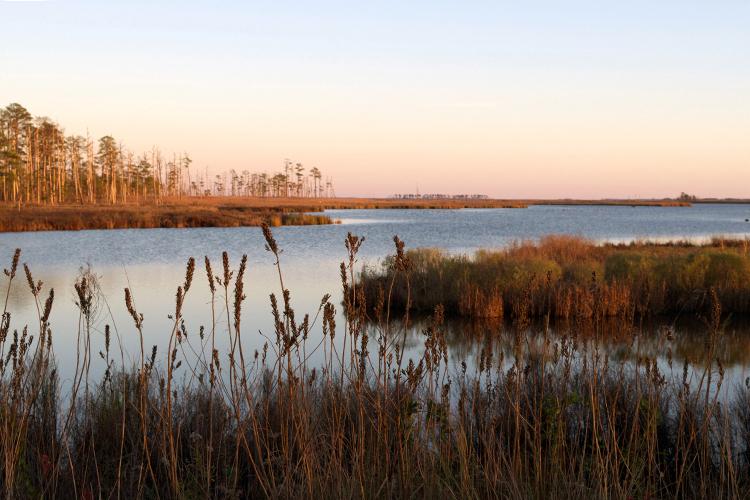
A salt marsh does not look much like a climate machine. It looks quiet: grass, mud, shallow water, birds, and the slow movement of tides. Yet places like salt marshes, mangrove forests, and seagrass meadows can lock away large amounts of carbon in ways that are easy to miss. Much of that carbon is not stored in towering trunks or visible leaves. It is buried beneath wet, oxygen-poor soil, where old plant material can remain for hundreds or even thousands of years.
That hidden storage is called blue carbon. The phrase refers to carbon captured and stored by ocean and coastal ecosystems, especially vegetated coastal habitats. It has become more important in climate science because these habitats do two jobs at once: they help remove carbon dioxide from the atmosphere, and they protect coasts by slowing waves, sheltering wildlife, and holding shorelines together. The idea is simple, but the science behind it is richer than the name suggests.
What Blue Carbon Means
Carbon moves constantly through living things, air, water, and soil. Plants take in carbon dioxide during photosynthesis and use that carbon to build leaves, stems, roots, and other tissues. When plants die, some of that material breaks down and returns carbon to the atmosphere. Some, however, becomes buried and stays out of circulation for a long time.
In coastal blue carbon ecosystems, the key habitats are usually salt marshes, mangroves, and seagrass beds. NOAA describes coastal blue carbon as carbon stored in these coastal habitats, where plants and soils work together. Mangroves and salt marshes are especially efficient because they grow quickly and trap organic material in wet ground. Seagrasses, though small and often overlooked, form underwater meadows that collect carbon-rich sediment on the seafloor.
The word blue does not mean the carbon itself is blue. It points to the ocean and coastal setting. Just as forests on land store carbon in wood and soil, coastal wetlands store carbon in plants, roots, sediments, and mud. The difference is that coastal wetlands often preserve a larger share of that carbon underground, where decomposition slows dramatically.
Why Wet Soil Stores Carbon So Well
The most important part of blue carbon is usually below the surface. In a dry forest, dead leaves and branches break down as microbes use oxygen to decompose them. That process releases carbon dioxide back into the air. In a tidal marsh or mangrove swamp, much of the soil is saturated with water. Oxygen moves through water much more slowly than through air, so the deeper soil often becomes anaerobic, meaning it contains little or no oxygen.
That low-oxygen setting changes the speed of decay. Plant roots, fallen leaves, and trapped sediment break down slowly, leaving more carbon stored in the ground. Over time, layers of carbon-rich soil can build up. NOAA notes that carbon found in coastal soils can be hundreds or thousands of years old. That age matters because climate benefits depend not only on how fast carbon is captured, but also on how long it stays stored.
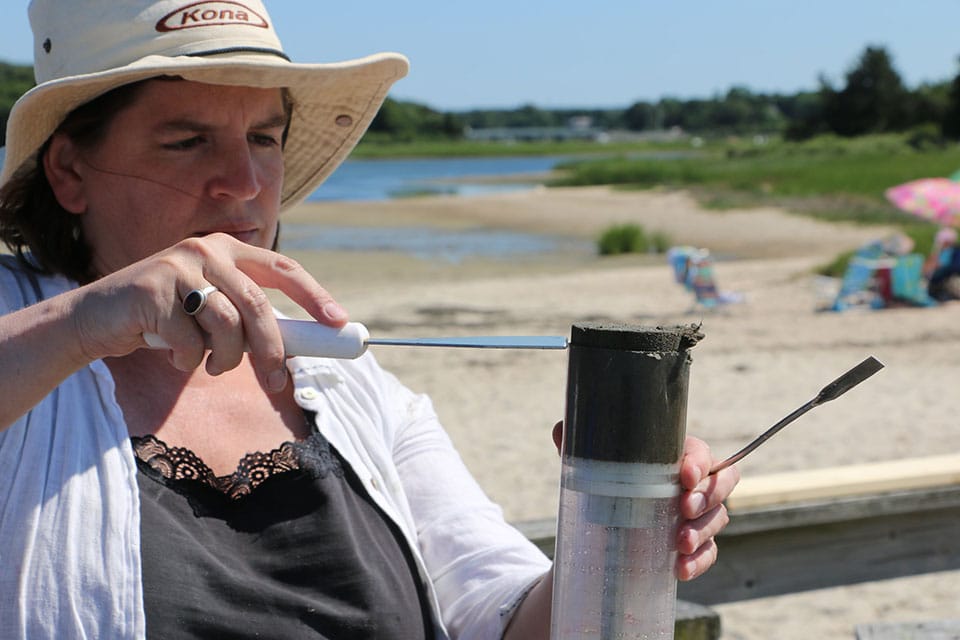
This is why blue carbon is not just about green plants growing near the water. A marsh with healthy grasses but eroding soil may not store carbon the same way as a stable marsh that keeps building sediment. A seagrass meadow may look delicate, but its roots and surrounding sediment can hold a long record of buried organic material. Scientists often study this record by taking sediment cores, slicing through layers of mud to estimate how much carbon has accumulated over time.
The Three Main Blue Carbon Habitats
Salt marshes form along sheltered coastlines where tides regularly flood grasses and muddy soil. Their plants tolerate salt and shifting water levels, sending roots into soft sediment. As tides move in and out, the marsh catches fine particles, dead plant material, and nutrients. Over many years, the marsh surface can rise as organic matter and sediment pile up, helping the ecosystem keep pace with some local changes in water level.
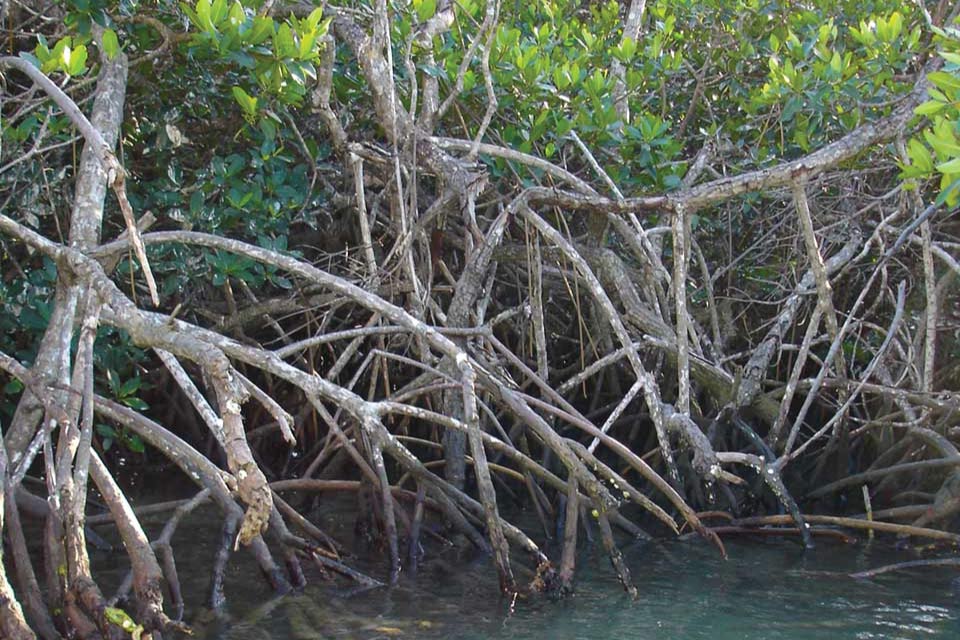
Mangroves grow in warmer coastal regions and are famous for their tangled roots. Those roots do more than anchor trees in soft mud. They slow water, trap sediment, provide shelter for young fish, and help build soil. Smithsonian Ocean and NOAA both describe mangroves as powerful carbon stores because so much material falls into wet, low-oxygen ground instead of rapidly decomposing in open air.
Seagrasses are not seaweed. They are flowering plants that live underwater in shallow coastal areas. Their long blades slow currents and help suspended particles settle. EPA researchers studying seagrass beds have collected sediment cores to measure both the amount and age of carbon deposits beneath underwater meadows. NOAA’s blue carbon fast facts also point to the unusual importance of seagrasses: although seagrass meadows cover only a tiny share of the world’s seafloor, they account for a notable share of organic carbon buried in the ocean.
Why Damage Can Turn Storage Into Emissions
Blue carbon ecosystems are valuable partly because they store old carbon safely. That also means damage can have a double cost. When a wetland is drained, dredged, filled, or eroded, it may stop taking in carbon at the same rate. Even worse, buried carbon can be exposed to oxygen and begin breaking down more quickly, releasing greenhouse gases.
Coastal development is one major pressure. Ports, roads, housing, seawalls, and commercial facilities can replace wetlands or cut them off from tides. Pollution can cloud water and harm seagrass, which needs sunlight to grow. Boat scars, dredging, warming water, and nutrient runoff can also weaken seagrass meadows. Mangroves may be cleared for development, aquaculture, or shoreline alteration. In each case, the loss is not only a loss of plants. It is also a loss of habitat structure, soil stability, and long-stored carbon.
Restoration can help, but it is not a magic undo button. Replanting vegetation is only part of the work. A restored marsh needs the right tidal flow, elevation, sediment supply, and plant community. A restored seagrass bed needs clearer water and suitable bottom conditions. A restored mangrove forest needs room for roots and tides. That is one reason current blue carbon science pays close attention to measurement: projects need to know whether carbon is truly being stored, for how long, and under what conditions.
Why Blue Carbon Matters Beyond Climate
The strongest reason to protect blue carbon habitats is not that they do one useful thing. It is that they do several useful things at the same time. A salt marsh can store carbon while softening storm surge, filtering water, and supporting fish and birds. A mangrove forest can hold soil in place while giving young marine life a place to hide. A seagrass meadow can store carbon while calming waves and supporting fisheries.
This overlap makes blue carbon different from many climate solutions that are judged by carbon alone. A 2026 paper in Nature Ecology & Evolution described blue carbon science as entering a new phase, with growing attention to climate mitigation, biodiversity, coastal resilience, finance, and community legitimacy. That last point matters. Wetlands are not empty spaces waiting to be managed from a distance. They are connected to people who fish, work, travel, study, live, and build traditions along the coast.
Good blue carbon projects must therefore ask more than “How much carbon is here?” They also need to ask who depends on the habitat, who benefits from restoration, who bears the cost of land-use decisions, and whether local knowledge is being taken seriously. A project that protects carbon but ignores coastal communities is unlikely to last. A project that supports both the ecosystem and the people around it has a better chance of becoming durable conservation rather than a short-term accounting exercise.
How to Think Clearly About Blue Carbon
Blue carbon should not be treated as a replacement for cutting fossil fuel emissions. Coastal wetlands are powerful, but they are limited in area. Even healthy salt marshes, mangroves, and seagrass meadows cannot absorb unlimited carbon dioxide. Their real value is more specific: they protect existing carbon stores, continue adding new carbon under the right conditions, and make coastlines more resilient.
That makes blue carbon a useful way to see coastal habitats more clearly. A marsh is not wasteland. A mangrove swamp is not just a difficult place to build. A seagrass meadow is not an empty patch of underwater grass. Each is living infrastructure, shaped by water, plants, sediment, microbes, and time. The carbon stored there is often invisible, but the consequences of losing it are very real.
The lesson is not that every shoreline should look untouched or that restoration is simple. Coasts are busy places, and people need homes, harbors, roads, and protection from storms. The lesson is that decisions about wetlands carry hidden costs and hidden benefits. When coastal soils stay wet, rooted, and undisturbed, they can hold carbon quietly for generations. When they are damaged, that quiet storehouse can begin to leak. Blue carbon gives a name to that hidden work, and it helps explain why some of the planet’s most useful climate habitats are found where land and water meet.




Add comment