
 Akshay Dinesh
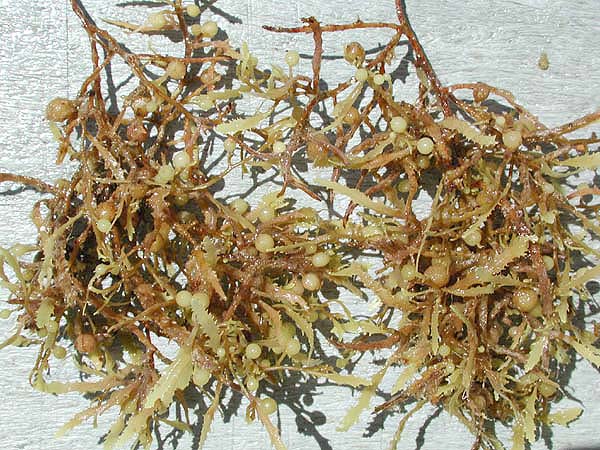
From a distance, sargassum can look like an ordinary mess of brown seaweed. Up close, it is stranger and more important than that. Some species of Sargassum float for their whole lives, held near the ocean surface by small air-filled bladders that look like tiny berries. In open water, those floating mats become moving shelter for fish, crabs, shrimp, sea turtles, and many other animals that need cover in the wide blue Atlantic.
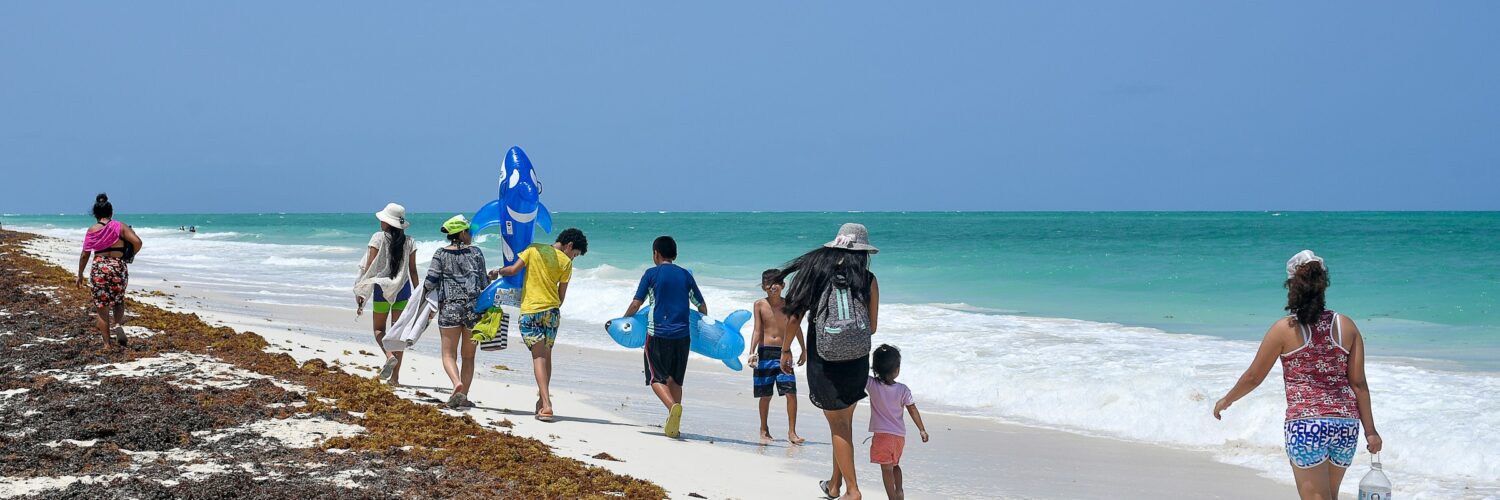
The problem begins when a helpful ocean habitat arrives in the wrong place, in the wrong amount, at the wrong time. In recent years, large quantities of sargassum have washed onto beaches across the Caribbean, Gulf of Mexico, Florida, and parts of West Africa. The same seaweed that supports life offshore can pile up on shorelines, decay, smell strongly, lower water quality, and create expensive cleanup problems. That contrast is what makes sargassum worth understanding: it is not simply good or bad. It is a natural organism caught inside a changing ocean system.
What Sargassum Is Before It Reaches Shore
Sargassum is a brown algae, not a flowering plant. Many seaweeds attach to rocks, reefs, or the seafloor, but the best-known Atlantic forms of pelagic sargassum do not need a fixed base. They drift at the surface, grow in branching clumps, and reproduce by breaking apart into pieces that continue growing. Their round floats keep them in sunlight, where photosynthesis can continue as currents move them across long distances.
The Sargasso Sea, a region of the North Atlantic surrounded by major currents rather than by land, has long been associated with floating sargassum. There, scattered mats create a rare surface habitat in the open ocean. NOAA Ocean Exploration describes sargassum as a refuge for smaller fish and invertebrates, and the National Ocean Service notes that many marine species use it for food, protection, and shelter. Young sea turtles, including loggerheads, may spend part of their early lives near floating mats where predators are easier to avoid and food is easier to find.
That habitat role matters because the open ocean can be surprisingly empty at the surface. A small floating clump can gather tiny animals, algae, eggs, larvae, and juvenile fish into one living neighborhood. Predatory fish and seabirds may then follow the smaller animals. In that setting, sargassum works almost like a temporary floating reef, even though it is made of drifting algae rather than rock or coral.
How the Great Atlantic Sargassum Belt Forms
The modern concern is tied to a much larger pattern: the Great Atlantic Sargassum Belt. Satellite observations have repeatedly shown huge bands of sargassum stretching across the tropical Atlantic, often from waters near West Africa toward the Caribbean and Gulf of Mexico. A 2019 study in Science, based on satellite data from NASA instruments, described a recurring belt that has appeared most years since 2011. In June 2018, researchers estimated that it held more than 20 million metric tons of sargassum biomass.
The belt does not form because one single patch drifts neatly across the ocean like a raft. It is shaped by many pieces growing, separating, accumulating, and moving with currents, winds, temperature patterns, and nutrient supply. Ocean circulation helps determine where the seaweed gathers. Nutrients from rivers, upwelling, dust, and changing ocean chemistry may also affect growth, though scientists are still studying how much each factor contributes.
This is why satellite data has become so important. The University of South Florida’s Sargassum Watch System uses ocean color observations to monitor sargassum across the Atlantic, Caribbean, and Gulf regions. NOAA has also developed daily inundation-risk products to help communities judge where seaweed may wash ashore. These tools do not make the problem disappear, but they give coastal managers more warning than a beach covered overnight with little explanation.
Why A Good Ocean Habitat Becomes a Coastal Problem
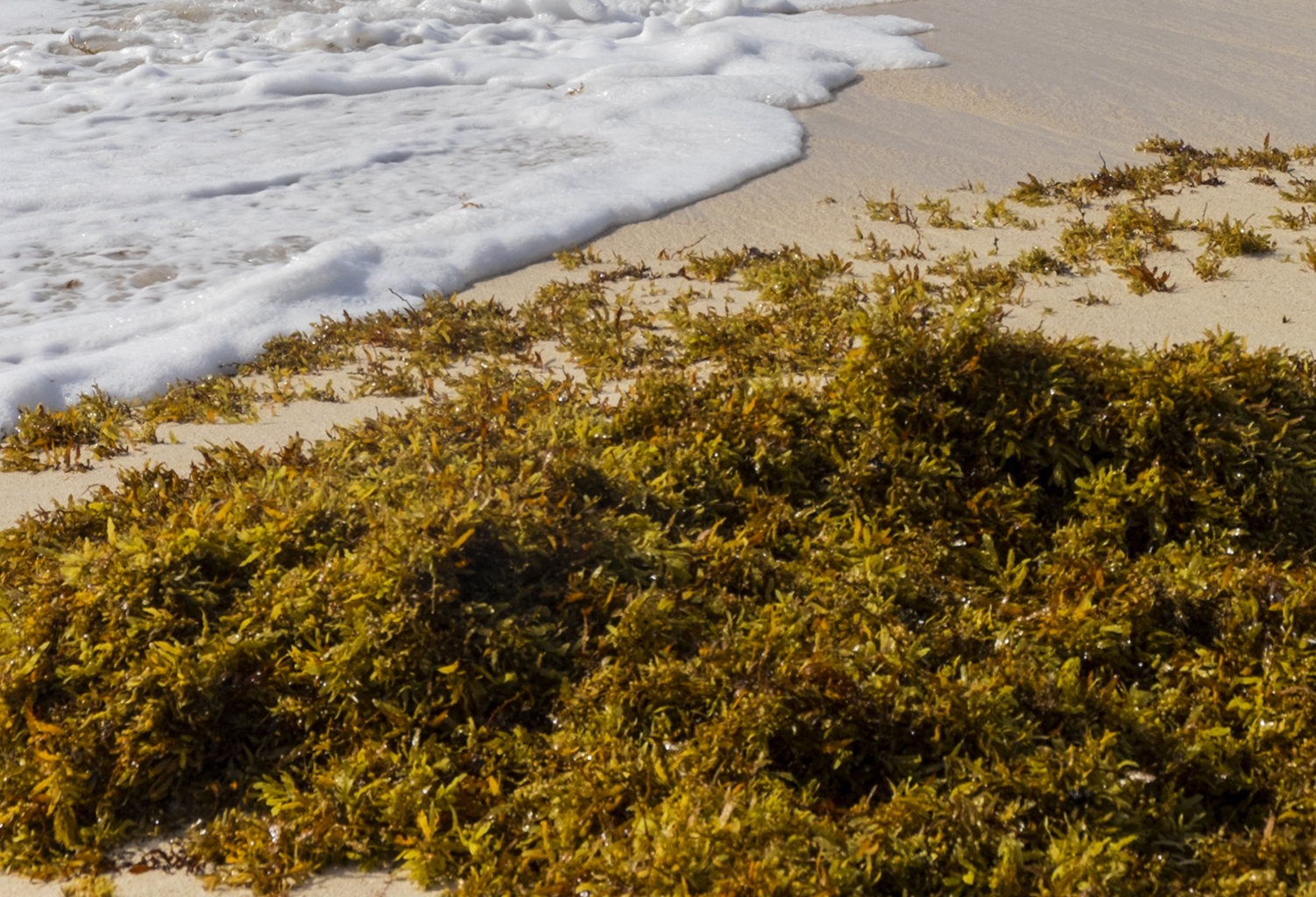
Sargassum causes trouble when large mats move into shallow coastal water and beach in thick piles. A light strand along the tide line may be harmless and even useful, adding organic matter to beach ecosystems. Heavy accumulation is different. It can block nesting sea turtles, trap small animals, smother seagrass, shade nearshore habitats, and reduce oxygen as it breaks down in warm water.
Rotting sargassum can also release hydrogen sulfide, the gas behind the rotten-egg smell often noticed near decaying seaweed. At low outdoor concentrations, the odor may be mainly unpleasant, but heavy buildup in poorly ventilated areas can become a health and safety concern. Coastal communities also face practical problems: beach access changes, tourism suffers, machinery is needed for removal, and disposal becomes complicated when wet seaweed is mixed with sand, salt, plastic, and other debris.
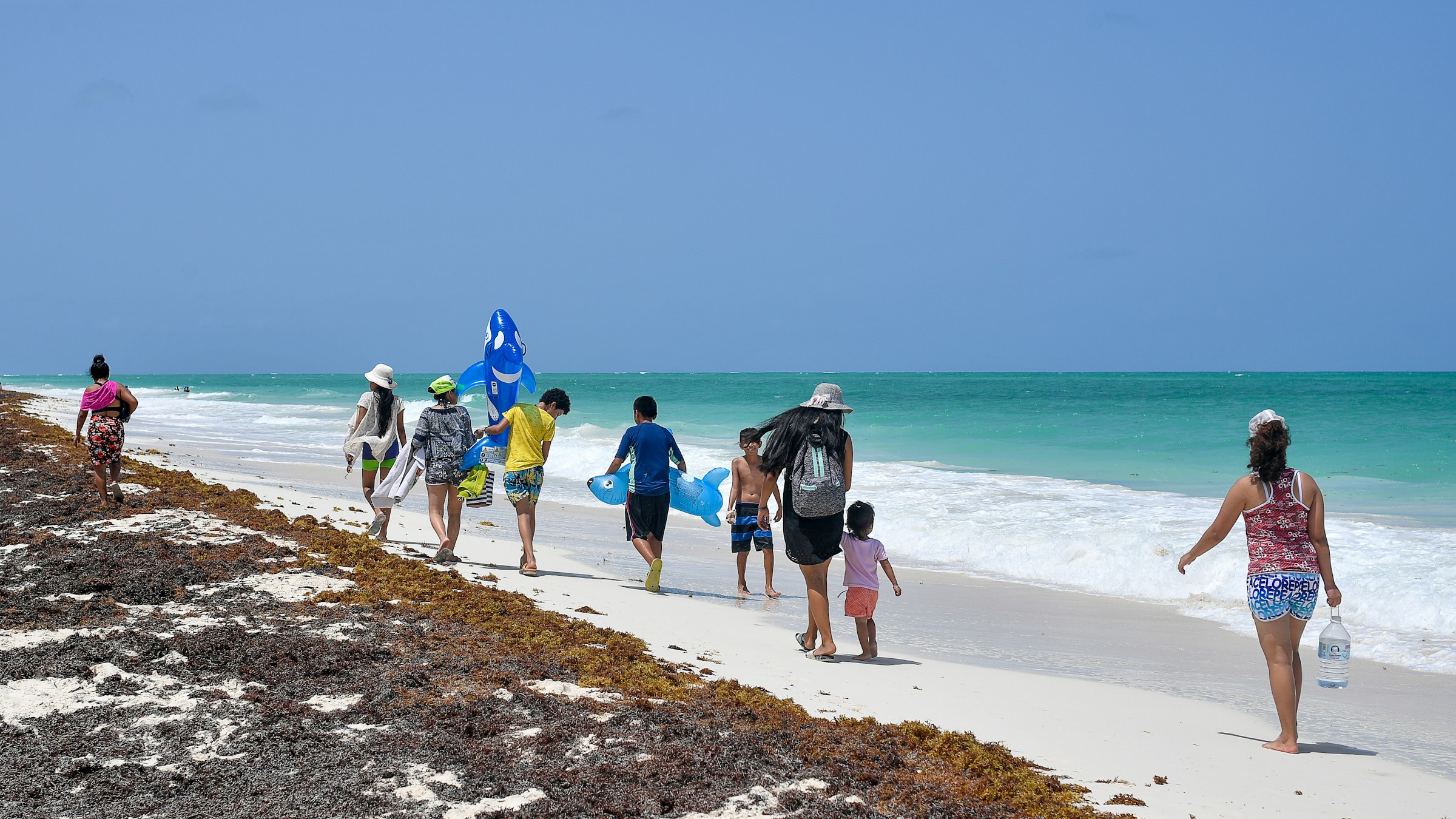
The beach is not just a scenic edge between land and sea. It is a working environment for hotels, fishers, lifeguards, nesting wildlife, local governments, and residents. When sargassum arrives in unusually large amounts, every group sees a different version of the same event. A scientist may see a nutrient and current signal. A turtle monitor may see blocked nesting habitat. A family on vacation may see an unusable beach. A town may see cleanup bills and disposal questions arriving with the tide.
Why Some Years Bring More Sargassum Than Others
Sargassum seasons vary because the Atlantic is not the same from year to year. Winds shift. Currents change. Water temperatures differ. Rainfall over large river basins can alter nutrient delivery. Dust from the Sahara can carry minerals across the Atlantic. Storms can scatter or concentrate floating mats. A large bloom in one region may become a beaching problem somewhere else only if currents and winds carry it toward shore.
Recent monitoring has made the timing easier to follow. In early 2026, University of South Florida outlook bulletins described another major sargassum year as likely, with substantial amounts expected to affect parts of the Caribbean, Florida, and Gulf coasts. That kind of forecast is useful because cleanup crews, beach managers, tourism operators, and environmental agencies need time to prepare. A shoreline response is much harder when planning begins only after piles have already arrived.
Still, forecasts have limits. Sargassum does not move like a storm with a single center and a simple track. Wind can push floating mats toward or away from a beach over short distances. Local currents, reefs, bays, and coastal shape can decide whether a nearby patch lands heavily, passes offshore, or breaks apart. That is why broad Atlantic outlooks and local beach reports both matter.
How Communities Manage Sargassum Without Making Things Worse
The simplest response is to remove seaweed from the beach, but simple is not always gentle. Heavy machinery can compact sand, disturb nests, remove too much beach material, or damage dunes if it is used carelessly. Leaving sargassum alone can also be harmful when piles are very thick, especially near homes, hotels, enclosed bays, or sensitive habitats. The challenge is not choosing between cleanup and nature. It is choosing the least damaging response for a specific shoreline.
Some communities use floating barriers, nearshore collection, beach raking, composting trials, or disposal sites away from crowded areas. Each option has tradeoffs. Barriers can shift impacts elsewhere if they are placed poorly. Collection at sea may reduce beaching but can disturb marine life if done without care. Composting or reuse sounds appealing, but salt, sand, moisture, heavy metals, and contamination can make processing harder than it first appears.
Good management starts with knowing what kind of beach is being protected. A resort shoreline, a sea turtle nesting beach, a mangrove-fringed bay, and a city waterfront may need different decisions. The best plans usually combine monitoring, public information, environmental rules, worker safety, and realistic disposal. Sargassum is not a one-day cleanup problem. In major years, it is a season-long coastal management problem.
What Sargassum Teaches About Connected Oceans
Sargassum makes ocean connection visible. A patch floating far offshore may have grown because of sunlight, nutrients, currents, and weather patterns spread across thousands of miles. Weeks or months later, it may land on a beach where the immediate question is how to clear a path through it. The local problem and the ocean-wide process are part of the same story.
That is why the most useful way to think about sargassum is not as a mysterious invasion or a simple nuisance. It is a floating habitat that becomes a coastal stress when growth, transport, and shoreline conditions line up in the wrong way. Offshore, it can shelter life. Near shore, too much of it can damage water quality, disrupt wildlife, and strain communities. The difference is context.
Better satellites, better beach reports, and better local planning can help people respond more intelligently. They cannot remove the uncertainty from the Atlantic, and they cannot turn every bloom into something harmless. But they can make the response less reactive and more careful. Sargassum is a reminder that ocean life does not stay neatly offshore, and that coastal problems often begin far beyond the horizon.





Add comment