
 Akshay Dinesh
Heat waves do not only happen on land. The ocean can also enter a stretch of unusually high temperatures, and when that warmth lasts long enough, scientists call it a marine heat wave. The idea sounds simple at first, but the effects can be surprisingly far-reaching. A few degrees of extra warmth in seawater can change where fish travel, how much food is available, whether corals survive, and how coastal communities prepare for the seasons ahead.
A marine heat wave is not just a hot beach day or a warm afternoon at the surface. Researchers usually compare the water temperature to what is normal for that exact place and time of year. If the temperature rises above a high local threshold, often the 90th percentile, and stays there for at least five consecutive days, the event can qualify as a marine heat wave. Some last a week. Others persist for months, spreading across huge regions of ocean.
Why a Few Degrees Can Matter So Much
Ocean animals are surrounded by the water they live in, so temperature is part of almost every biological process they depend on. It affects metabolism, growth, oxygen demand, migration, reproduction, and the timing of food. A fish, mussel, kelp forest, or coral reef does not experience warm water as background weather. It experiences warmth as a change in the conditions needed to stay alive.
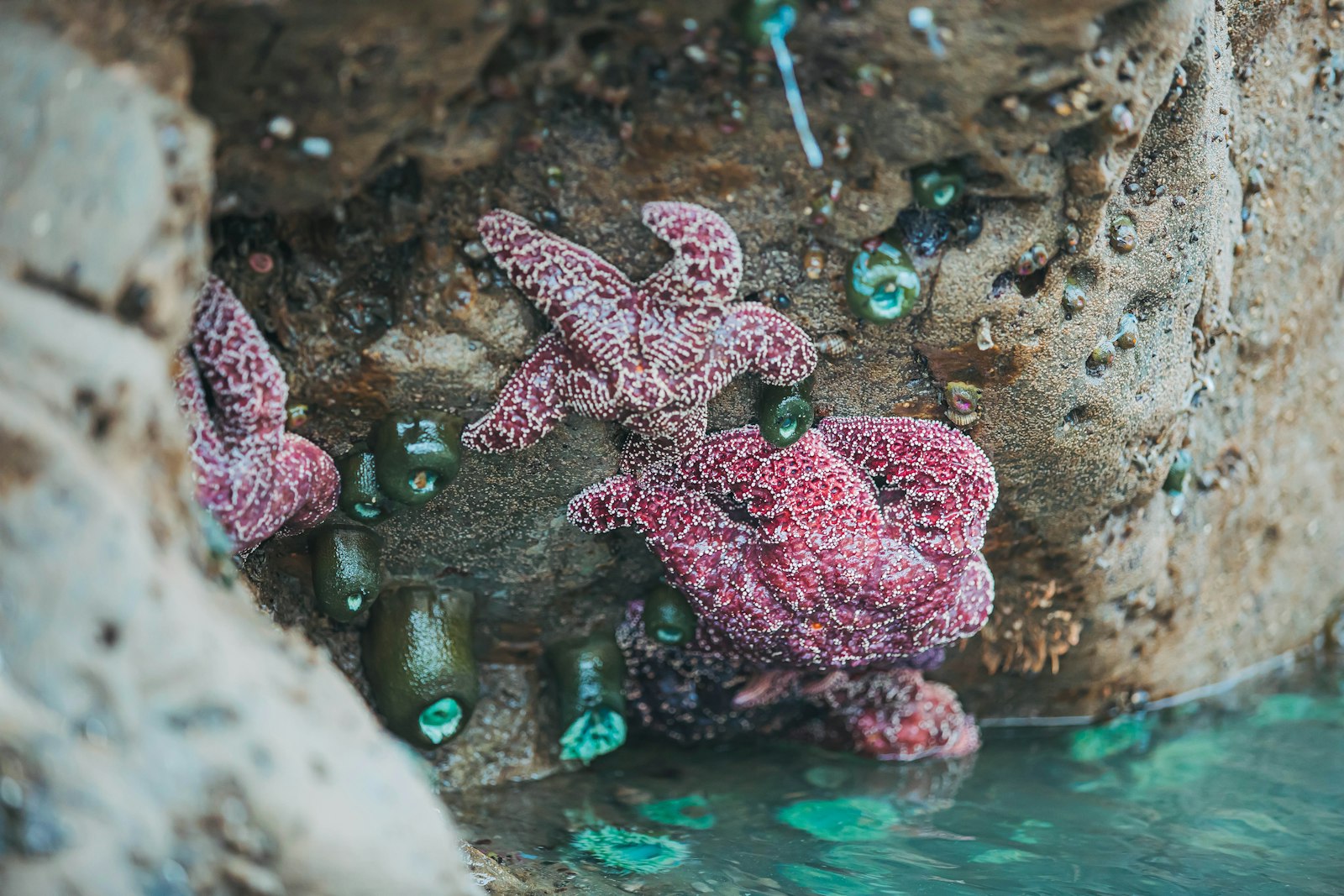
The ocean also has a narrow comfort range for many species. Some animals can move into cooler water when conditions change, but others cannot escape easily. Kelp is attached to the seafloor. Corals are fixed in place. Shellfish in tide pools may already be living near the edge of what they can tolerate during low tides and hot afternoons. When a marine heat wave pushes temperatures above their usual range, the stress can build quickly.
Warm water also holds less dissolved oxygen than cold water. At the same time, many animals need more oxygen when their bodies are working harder in warmer conditions. That mismatch can be brutal. A species may survive a short warm spell but struggle when the heat lingers, especially if food is scarce or oxygen levels drop.
How Marine Heat Waves Form and Persist
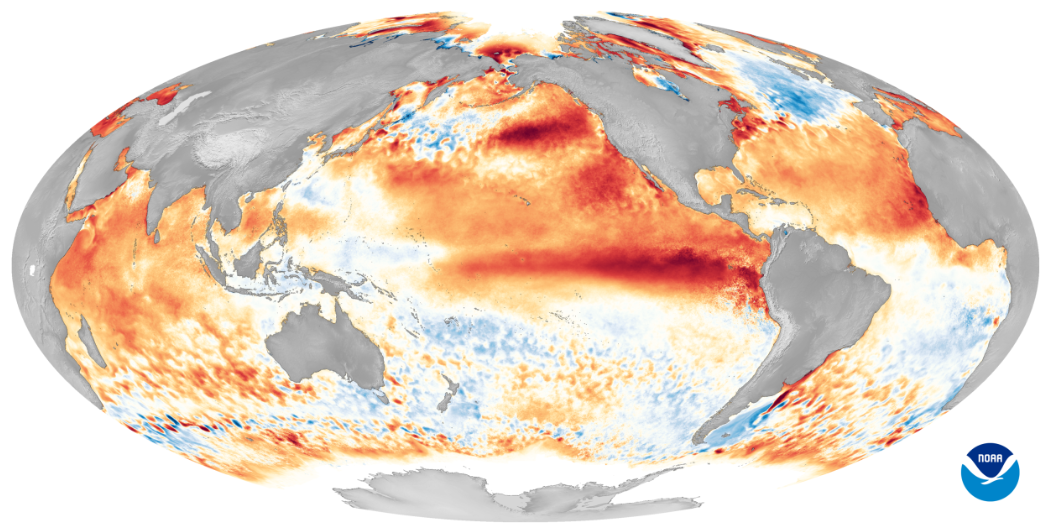
Marine heat waves can begin in several ways. Sometimes the atmosphere warms the ocean surface during calm, sunny weather. Sometimes winds weaken, so the surface water is not mixed as much with cooler water below. In some regions, changes in ocean currents can carry warm water into new places or keep cooler water from arriving. Large climate patterns, including El Niño and La Niña, can also shift where warm ocean conditions are more likely to appear.
Once an unusually warm patch forms, it can persist if the ocean remains layered. A warm surface layer may sit above cooler, denser water below it, with limited mixing between the two. That makes it harder for deeper water to cool the surface. If winds stay weak or currents continue to favor warmth, the event can stretch out week after week.
NOAA scientists have tracked repeated large marine heat waves in the eastern North Pacific in recent years. Their California Current Marine Heatwave Tracker notes that large events occurred in each year from 2019 through 2025, often beginning offshore in spring before affecting the U.S. West Coast later in the year. That does not mean every warm patch has the same cause or impact, but it shows why ocean heat extremes have become a serious monitoring problem rather than a rare curiosity.
The Food Web Can Shift From the Bottom Up
One reason marine heat waves matter is that they can disturb the base of the ocean food web. In many coastal systems, cold, nutrient-rich water rises from deeper layers through a process called upwelling. Those nutrients feed phytoplankton, the microscopic plant-like organisms that support zooplankton, small fish, larger fish, seabirds, and marine mammals. When warm surface water limits mixing or changes the timing of upwelling, the whole chain can wobble.
The problem is not always that every organism dies from heat. Sometimes the bigger issue is timing. If plankton blooms earlier, later, or in a different place than usual, the animals that depend on them may miss a critical food source. Young fish may hatch into water that does not have the right prey. Seabirds may return to nesting areas when the fish they feed their chicks have moved elsewhere.
The northeast Pacific event nicknamed “the Blob” showed how disruptive this can be. Warm water spread across a large region beginning in 2013 and persisted into later years. Researchers connected that period to unusual species movements, harmful algal bloom concerns, poor food conditions for some marine animals, and stress on fisheries. It became a memorable case because it showed that a marine heat wave is not just an ocean-temperature statistic. It can rewrite where food is, which species thrive, and which human activities are disrupted.
Why Reefs, Kelp Forests, and Fisheries Feel the Impact
Coral reefs are among the clearest examples of heat stress in the ocean. Corals live in partnership with algae that help feed them. When water stays too warm, that partnership can break down, and corals may expel the algae, turning pale or white. Bleaching does not always kill coral immediately, but it leaves the reef weakened. If the heat lasts too long or returns too often, recovery becomes much harder.
Kelp forests face a different but related danger. Kelp generally does best in cooler, nutrient-rich water. When marine heat waves reduce nutrients or favor grazing animals that eat kelp, entire underwater forests can thin or collapse. That matters because kelp forests shelter fish, invertebrates, and many young marine animals. Losing kelp is not like losing one plant species from a field. It is closer to removing the structure of a neighborhood.
Fisheries can feel the effects when species move, reproduction changes, or food webs shift. Warmer water may push some fish toward deeper or cooler regions, while other species appear in places where they were once uncommon. For fishing crews, seafood processors, managers, and coastal towns, those movements can change what is available, when harvests happen, and whether safety closures are needed. During some warm-water events, harmful algae have produced toxins that forced delays or closures in shellfish and crab fisheries, adding an economic cost to the ecological stress.
Marine Heat Waves Are Weather Events in a Warming Ocean
It helps to separate two ideas that often get mixed together. A marine heat wave is an extreme event, like a land heat wave. It has a beginning, a peak, and an end. Long-term ocean warming is the broader rise in ocean heat over decades. The two are connected because a warmer background ocean makes it easier for temperatures to cross extreme thresholds, but they are not identical.
The Intergovernmental Panel on Climate Change has reported that marine heat waves have become more frequent, longer, and more intense since the 1980s. That pattern is important because ecosystems can sometimes recover from a single shock if they have enough time. Repeated heat waves shorten the recovery window. Coral that is still recovering from one bleaching event may face another. Fish populations already stressed by poor food conditions may enter the next warm period with fewer strong year classes.
Still, marine heat waves are not uniform. A warm event in the Mediterranean, the North Pacific, the Caribbean, or the Southern Ocean can have different causes and consequences. Depth matters, season matters, and the species in the region matter. That is why scientists use satellites, buoys, ships, ecosystem surveys, and forecast models together. Surface temperature tells an important part of the story, but it does not reveal every underwater consequence by itself.
What Monitoring Can Help People Prepare For
Marine heat waves cannot be watched only after the damage is obvious. Early tracking helps fisheries managers, reef scientists, aquaculture operators, conservation groups, and coastal communities prepare for risk. If warm water is spreading toward a coast, agencies may increase monitoring for harmful algae, watch for species moving into new areas, or warn shellfish growers about possible stress. Forecasts are not perfect, but they can turn surprise into preparation.
There is also a learning value in paying attention to these events. Marine heat waves reveal how connected the ocean is. Temperature affects oxygen. Oxygen affects animal stress. Currents affect nutrients. Nutrients affect plankton. Plankton affects fish. Fish affect seabirds, marine mammals, fisheries, and coastal economies. What looks like a simple warm patch on a map can become a chain of changes across an ecosystem.
The ocean is often described as vast, but vast does not mean unaffected. A marine heat wave shows how sensitive ocean life can be when familiar conditions shift for too long. The water may eventually cool, but the biological effects can last beyond the temperature spike. Understanding that difference is the first step toward reading ocean heat not as a distant climate signal, but as a force that shapes living systems in real time.




Add comment