
 Akshay Dinesh
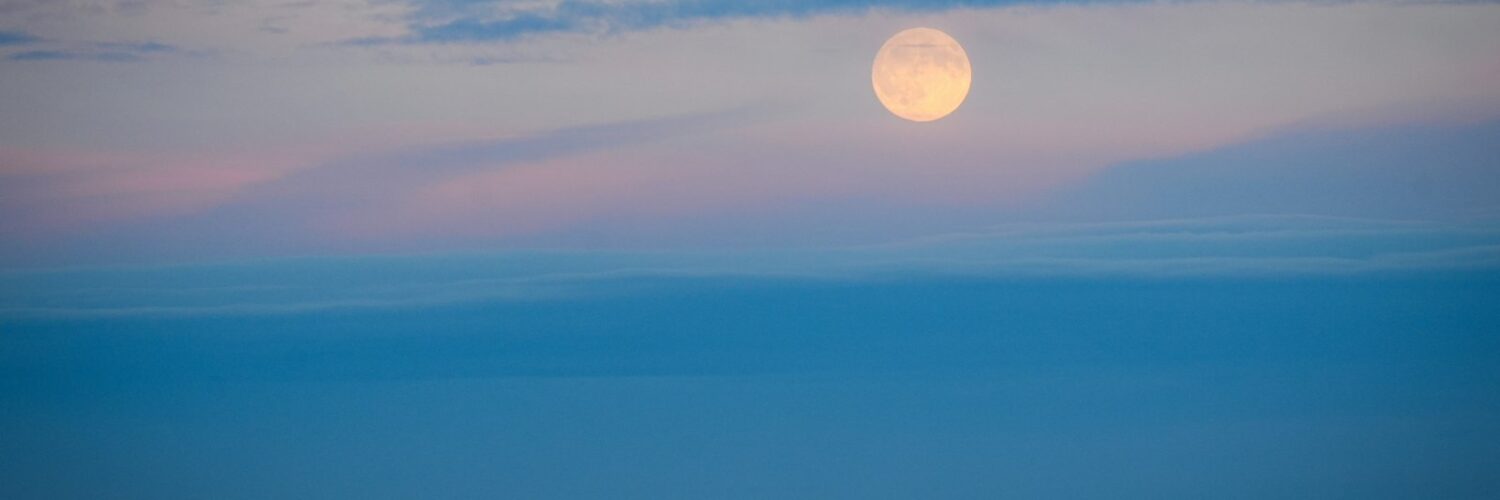
A full Moon rising behind rooftops, trees, mountains, or the ocean can look startlingly large. It may seem as if the Moon has moved closer to Earth, swelled in size, or been magnified by the atmosphere near the horizon. Then, later in the night, the same Moon looks smaller and quieter when it is high overhead. The surprise is that the Moon has not meaningfully changed size at all. What changes is the way the brain reads the scene around it.
This effect is called the Moon illusion. It is one of the oldest skywatching puzzles because people have noticed it for thousands of years, yet scientists still do not have one simple explanation that accounts for every detail. The main point is clear, though: the huge horizon Moon is not mainly an astronomy event. It is a perception event, where the eye, the brain, and the surrounding landscape combine to make a familiar object look different from what measurement shows.
The Moon Is Not Actually Larger at Moonrise
The easiest mistake is to assume the Moon looks larger near the horizon because it is physically closer. In fact, the opposite is usually closer to the truth. When the Moon is near the horizon, an observer is looking across part of Earth’s radius, so the Moon can be slightly farther away than when it is high overhead. That tiny difference is not large enough for the eye to notice as a dramatic size change, and it works in the wrong direction anyway.
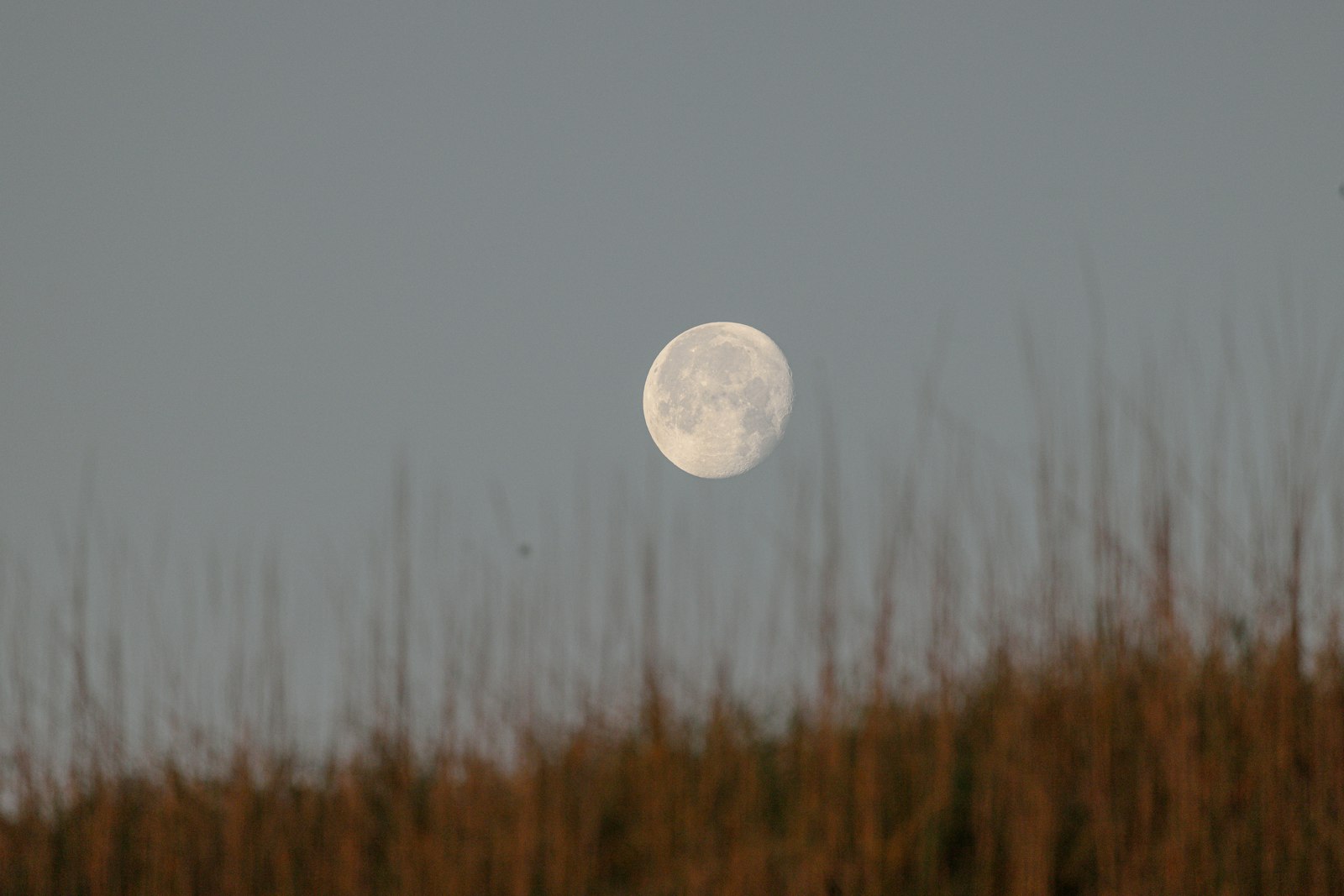
NASA explains the simplest test: photograph the Moon near the horizon and then photograph it again when it is higher in the sky, keeping the same camera zoom settings. Side by side, the Moon’s width stays essentially the same. Another quick test is to hold a fingernail or small object at arm’s length beside the Moon. The Moon will cover about the same apparent width whether it is low or high, even if it feels much bigger near the horizon.
The measurement that matters here is angular size, which means how much space an object takes up in your field of view. The Moon’s angular size changes slightly during its orbit around Earth, which is why a closer full Moon can be called a supermoon. But the ordinary moment-to-moment difference between the horizon Moon and the overhead Moon is not enough to explain the enormous change many people perceive.
Why the Horizon Changes What the Brain Expects
The horizon is full of distance clues. Trees, buildings, hills, roads, and shorelines help the brain judge how far away things might be. When the Moon sits among those clues, it can feel like part of a deep landscape rather than a flat bright disk on the sky. The brain tries to make sense of that depth, and the result can be a Moon that feels larger than its measured angular size.
One useful comparison is the Ponzo illusion, an optical illusion often drawn with two equal horizontal lines placed between converging lines like railroad tracks. The upper line can look longer because the background suggests distance. The brain reads the scene as if one equal-sized object is farther away, then adjusts the perceived size. The horizon Moon may trigger a similar kind of judgment, especially when it is framed by mountains, towers, trees, or a city skyline.
This does not mean the Moon illusion is completely solved. NASA notes that foreground objects cannot explain every case, because some people still report the illusion over open water or wide empty land. Astronauts have also described Moon-illusion-like effects without ordinary trees or buildings in the foreground. Still, horizon cues remain one of the most helpful ways to understand why the effect is so common in everyday skywatching.
Size Constancy Makes the Illusion Stronger
Human vision does not work like a simple camera. If a person walks away from you, the image of that person on your retina gets smaller, but you do not usually think the person is shrinking. Your brain uses distance clues to preserve a stable sense of real-world size. This habit is called size constancy, and it is incredibly useful for moving through the world.
The Moon causes trouble because it is both familiar and strange. It has a fixed-looking disk, but it sits far beyond the ordinary objects the brain evolved to judge. When the low Moon appears in a scene that suggests depth, the brain may treat it as if it belongs to the same distance-filled landscape. If it seems farther away while taking up the same angular width, the brain may interpret it as physically larger.
That is why the illusion feels so convincing. A person does not merely think, “The Moon is the same size, but I am making a visual mistake.” The low Moon often genuinely appears larger, closer, or more dramatic. Perception is not a passive recording of the world. It is the brain’s active best guess, built from light, memory, depth cues, and context.
The Atmosphere Changes Color More Than Size
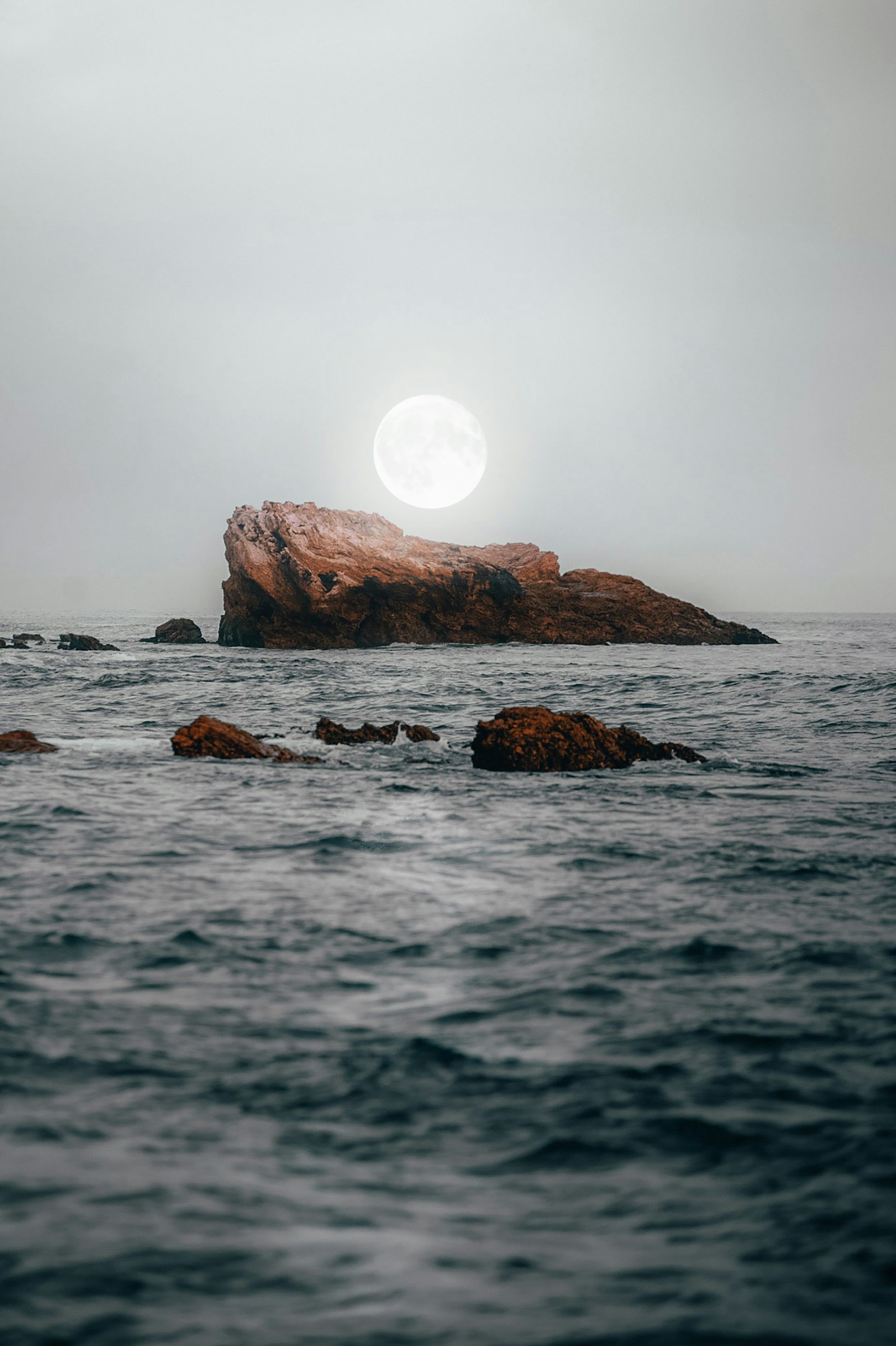
Some explanations sound convincing because the low Moon really does look different. It can appear yellow, orange, or even reddish near the horizon. That color shift is real, and it happens because moonlight travels through more of Earth’s atmosphere when the Moon is low. Shorter blue wavelengths scatter away more easily, leaving more longer red and orange wavelengths to reach the eye.
That same atmospheric path does not act like a giant magnifying glass. If anything, atmospheric refraction can slightly distort the Moon’s shape, especially near the horizon. It may look a little flattened vertically because the lower edge of the Moon is bent through the atmosphere differently from the upper edge. That is not the same as making the Moon broadly larger.
Photography adds another source of confusion. Many famous moonrise images are made with a long lens from far away. A telephoto lens compresses distance, making a distant Moon and a distant building, ridge, or skyline appear close together in the frame. The Moon looks huge in those photographs because the whole distant scene has been zoomed in, not because the Moon became physically larger.
A Simple Way to Test It Yourself
The next time a full Moon rises, look at it first without trying to measure anything. Notice how the scene feels. A Moon sitting above a road, a row of houses, or a line of trees may look enormous because the surrounding objects give the brain a scale to work with. Then try a simple check. Hold one finger at arm’s length and compare your fingernail with the Moon’s width. Repeat the same check later when the Moon is higher.
You can also take two photos with the same phone or camera zoom setting. The images may not be perfect, especially if the camera automatically changes exposure, but the Moon’s disk should stay close to the same size in the frame. If it looks much larger in one photo, the camera likely changed zoom or the image was cropped differently.
Another test is to view the Moon through a narrow tube made from a rolled sheet of paper. By blocking out much of the landscape, the brain loses many of the horizon clues that make the illusion stronger. Many people find that the giant Moon suddenly looks more ordinary. The physical Moon has not changed; the context has.
What the Moon Illusion Teaches About Seeing
The Moon illusion is useful because it turns a familiar skywatching moment into a lesson about perception. The eye gathers light, but the brain decides what that light probably means. Usually that system works beautifully. It helps people judge distance, recognize objects, and move through complex surroundings without calculating every angle. Sometimes, though, the same system produces a beautiful mistake.
That mistake is not foolish. It shows how intelligent perception can be. The brain is constantly using context, expectation, and comparison to build a workable world. A low Moon over a city or shoreline gives the brain a rich scene full of depth clues, and the brain responds by making the Moon feel larger than measurement says it is.
Knowing the science does not make the view less impressive. If anything, it adds another layer to it. The horizon Moon is both ordinary and extraordinary: an object nearly the same angular size as always, seen through a mind that turns context into wonder. The next time it rises huge and golden, the best response may be to measure it once, understand the trick, and then enjoy the sight anyway.



Add comment