

 Akshay Dinesh
Near the summer solstice, evening light can feel as if it keeps stretching even after the longest day has passed. A calendar may say the Northern Hemisphere reaches its maximum daylight on June 21, 2026, but many people in mid-northern places will notice something odd: the Sun may keep setting a little later for several more days. That is not a mistake in the calendar, and it does not mean the solstice is really later than astronomers say. It means sunrise and sunset are controlled by two clocks at once: the seasonal clock of Earth’s tilt and the everyday clock people use to divide the day into equal hours.
The summer solstice is the day when the Northern Hemisphere is tilted most directly toward the Sun. It gives the year’s longest span between sunrise and sunset north of the equator. But the time of sunset depends on more than total daylight. It also depends on when the middle of the solar day, called solar noon, happens by the clock. Around the solstice, solar noon can drift later from one day to the next, and that slow drift can tug sunset later even while total daylight has already started to shrink.
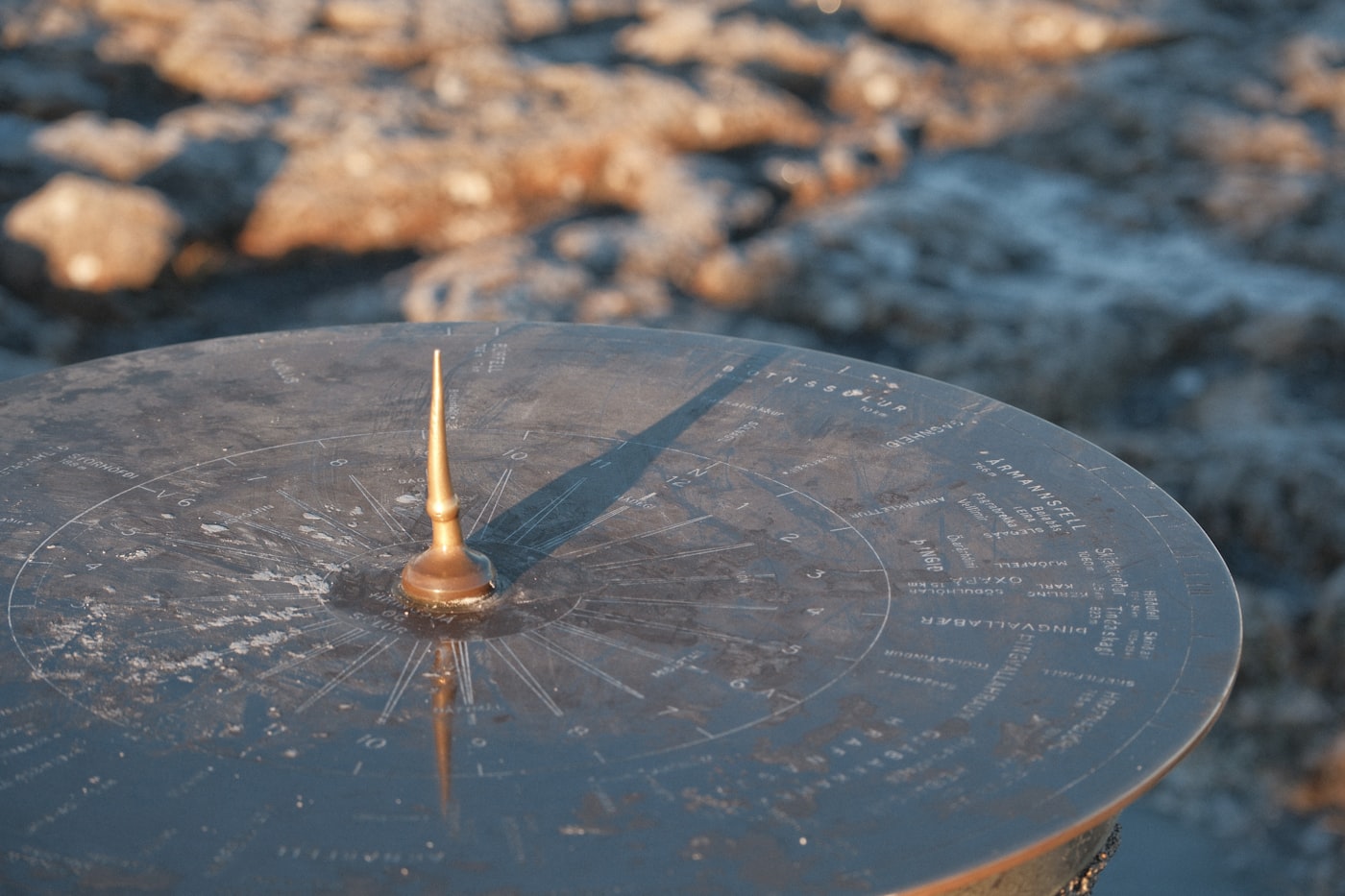
The solstice is about daylight, not the clock time of sunset
The word solstice comes from the Sun’s apparent pause at its northern or southern limit in the sky. In June, the Sun reaches its northernmost position for the year. For people in the Northern Hemisphere, that means the Sun follows its highest and longest daily path, rising north of east, setting north of west, and spending more time above the horizon than on any other day of the year.
That description is about the arc of sunlight, not the exact clock reading on a phone. The longest day is found by measuring the time between sunrise and sunset. The latest sunset asks a different question: at what clock time does the Sun disappear below the horizon? Those two questions sound almost identical, but they are not. One measures duration; the other measures placement on the clock.
A simple example helps. Imagine a day with 15 hours of daylight centered on 12:55 p.m. solar noon. Sunrise would be about 7 hours and 30 minutes before that midpoint, and sunset about 7 hours and 30 minutes after it. If the next day has slightly less daylight but solar noon has shifted later to 12:57 p.m., sunset can still move later even though the total daylight has begun to decrease. The day is shorter, but its midpoint has slid later on the clock.
Solar noon is the moving center of the day
Solar noon is the moment when the Sun reaches its highest point in the sky for a particular location. On a sundial, it is the natural middle of the day. On a clock, it usually does not land exactly at 12:00. Time zones, daylight saving time, and a location’s east-west position inside a time zone all move clock noon away from solar noon. Even if those human choices stayed perfectly still, solar noon would still drift during the year.
The U.S. Naval Observatory explains this drift through the equation of time, the difference between apparent solar time and mean solar time. Apparent solar time is the Sun’s time: what a sundial would show if it were corrected for location. Mean solar time is the smoothed-out time used by clocks, where every day is treated as 24 equal hours. The two are close, but they do not match perfectly because Earth’s motion is not a simple, uniform circle.
That small mismatch is enough to shift sunrise and sunset dates near the solstices. In June, the length of daylight changes very slowly from one day to the next because the Sun’s yearly north-south motion is turning around. Since day length is changing only by small amounts, the drift of solar noon can briefly dominate the clock times. The result is the pattern many almanacs show: earliest sunrise comes before the summer solstice, the longest daylight comes on the solstice, and latest sunset comes after it.
Earth’s tilt and orbit both matter
Earth’s axial tilt is the main reason the seasons exist. The planet’s axis leans about 23.4 degrees relative to its orbit, so different hemispheres receive more direct sunlight at different times of year. In June, the North Pole leans toward the Sun, making northern days longer and southern days shorter. This tilt explains why daylight reaches a maximum at the June solstice.
But Earth’s orbit adds another layer. Earth travels around the Sun in an ellipse, not a perfect circle, and its orbital speed changes slightly during the year. It moves faster when it is closer to the Sun and slower when it is farther away. At the same time, the tilted equator and the plane of Earth’s orbit do not project onto the sky in a way that produces perfectly even apparent solar days. Together, these effects make the Sun appear to run a little ahead of or behind clock time at different points in the year.
This is why a sundial and a clock do not agree exactly every day. The difference is not random. It follows a yearly pattern, and that pattern is what produces the lopsided timing around both solstices. Near the December solstice in many northern locations, the earliest sunset often occurs before the shortest day, while the latest sunrise comes after it. June has the matching summer version: earliest sunrise before the longest day, latest sunset after it.

Latitude changes how noticeable the effect feels
The exact dates of earliest sunrise and latest sunset depend on latitude. Near the equator, the yearly change in day length is small, so the equation of time can have a stronger influence on sunrise and sunset timing. Farther from the equator, especially in middle and high latitudes, the seasonal change in daylight becomes much larger. That does not erase the effect, but it changes the spacing of the dates.
For many places in the continental United States, the latest sunset arrives several days after the June solstice. In some northern locations, the difference can be especially easy to notice because summer evenings are already long. In New York City, for example, published sunrise-sunset tables for June 2026 show the latest sunsets falling in the days after the June 21 solstice, while the earliest sunrises happen earlier in the month. The specific minute can vary by source, rounding, elevation, and horizon, but the pattern is the important part.
Local geography matters too. A flat ocean horizon, a mountain ridge, tall buildings, or a tree line can change the visible moment of sunrise or sunset for a person standing in one exact place. Official sunrise and sunset tables usually use a mathematical horizon and account for atmospheric refraction, which bends sunlight slightly when the Sun is near the horizon. That makes the published time a careful estimate for a location, not a guarantee that every observer will see the Sun appear or vanish at that exact minute.
Why the effect is easy to miss
Most people notice daylight in broad strokes. In winter, mornings feel dark and evenings end early. In spring, the light comes back quickly. By late June, the evenings are bright enough that a one-minute change rarely feels dramatic. The latest sunset can pass almost unnoticed because the difference from one day to the next is tiny.
Weather also hides the pattern. A cloudy horizon can make sunset feel earlier, while a clear western sky can make twilight feel long after the Sun has set. Daylight saving time adds another layer in many regions by pushing evening light later on the civil clock, even though it does not change the Sun’s motion at all. When people say the days are getting longer or shorter, they often mix together sunset, twilight, work schedules, school schedules, and the feeling of light in daily life.
The cleaner way to think about it is to separate three ideas. Day length is the total time from sunrise to sunset. Solar noon is the middle of that daylight period. Sunset time is the end of daylight placed on the clock. Around the summer solstice, day length reaches its peak, but solar noon can keep sliding later. That is why the final edge of daylight can still move later for a short time.
A simple way to check it yourself
The pattern becomes much clearer with a month of sunrise and sunset data for one city. Look up daily times from a reliable astronomy or weather source, then mark three dates: earliest sunrise, longest daylight, and latest sunset. The dates will usually not be the same. In a mid-northern city, earliest sunrise commonly appears before the June solstice, longest daylight appears on or very near the solstice, and latest sunset appears afterward.
For an even better check, add solar noon to the table. NOAA’s solar calculator and similar tools can show how solar noon shifts through the month. Once the midpoint of the solar day is visible, the puzzle becomes less mysterious. Sunrise and sunset are not fixed to the clock like bookends on a shelf. They move with the changing length of the day and with the changing clock time of the day’s solar midpoint.
The summer solstice still deserves its familiar title as the longest day. It is the moment when Earth’s tilt gives the Northern Hemisphere its greatest daylight. The latest sunset comes later for a subtler reason: the Sun’s apparent schedule and our equal-hour clocks are slightly out of step. That small mismatch is easy to overlook, but it is a lovely reminder that even ordinary evening light carries the geometry of a tilted, moving planet.






Add comment