
 Akshay Dinesh
The Panama Canal looks, at first, like a shortcut carved through a narrow strip of land. A ship enters from the Caribbean Sea or the Pacific Ocean, crosses Panama, and avoids the much longer route around South America. But the canal is not a flat ditch from one ocean to the other. Its most important engineering trick is that ships are lifted up to an inland lake, carried across high ground, and then lowered back down to sea level on the far side.
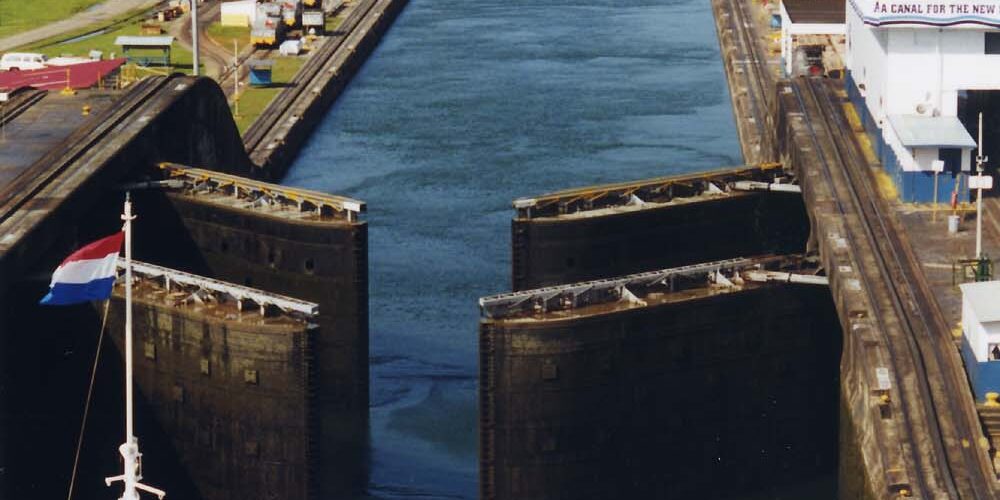
That is why the canal depends on locks. A lock is a watertight chamber with gates at both ends. By letting water in or out, the chamber can raise or lower a floating ship without using ramps, cranes, or pumps. At the Panama Canal, those locks turn water, gravity, and careful gate control into a working elevator for some of the largest moving machines on Earth.
The canal crosses land that is not at sea level
A sea-level canal sounds simple: dig a channel from ocean to ocean and let ships sail through. In Panama, that idea ran into geography. The route crosses the Isthmus of Panama, a narrow land bridge with hills, rivers, heavy rainfall, and a continental divide. Cutting the entire route down to sea level would have required removing far more earth and controlling far more water than a lock canal required.
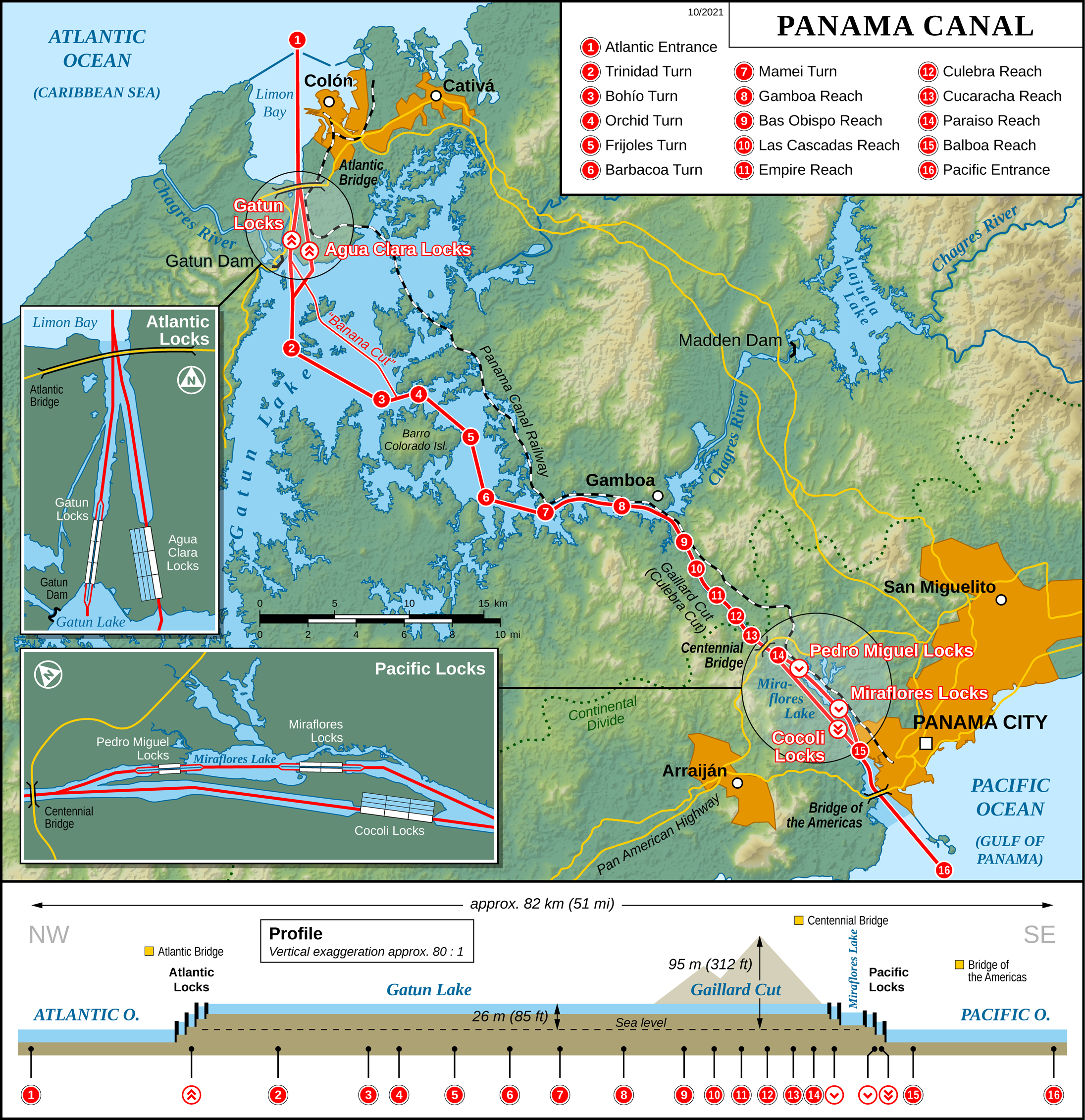
The solution was to use Gatun Lake as the canal’s central high-water section. Gatun Lake is an artificial lake formed by damming the Chagres River. Instead of digging all the way down through the interior, engineers raised ships about 85 feet, or 26 meters, to the lake level. The ships then travel across the lake and through the Culebra Cut before descending through another set of locks toward the opposite ocean.
This design changed the problem. Engineers no longer had to carve a flat trench through the whole isthmus. They could use an elevated freshwater lake as part of the route. The locks became the link between sea level and that higher inland waterway.
A lock works by changing the water level around the ship
The basic idea of a lock is easier to picture with a small boat. Imagine a boat floating in a box between two gates. If the water inside the box is low, the boat floats low. If water flows into the box, the boat rises with it. The boat is not being lifted by a platform. It is simply floating on water whose level is changing.
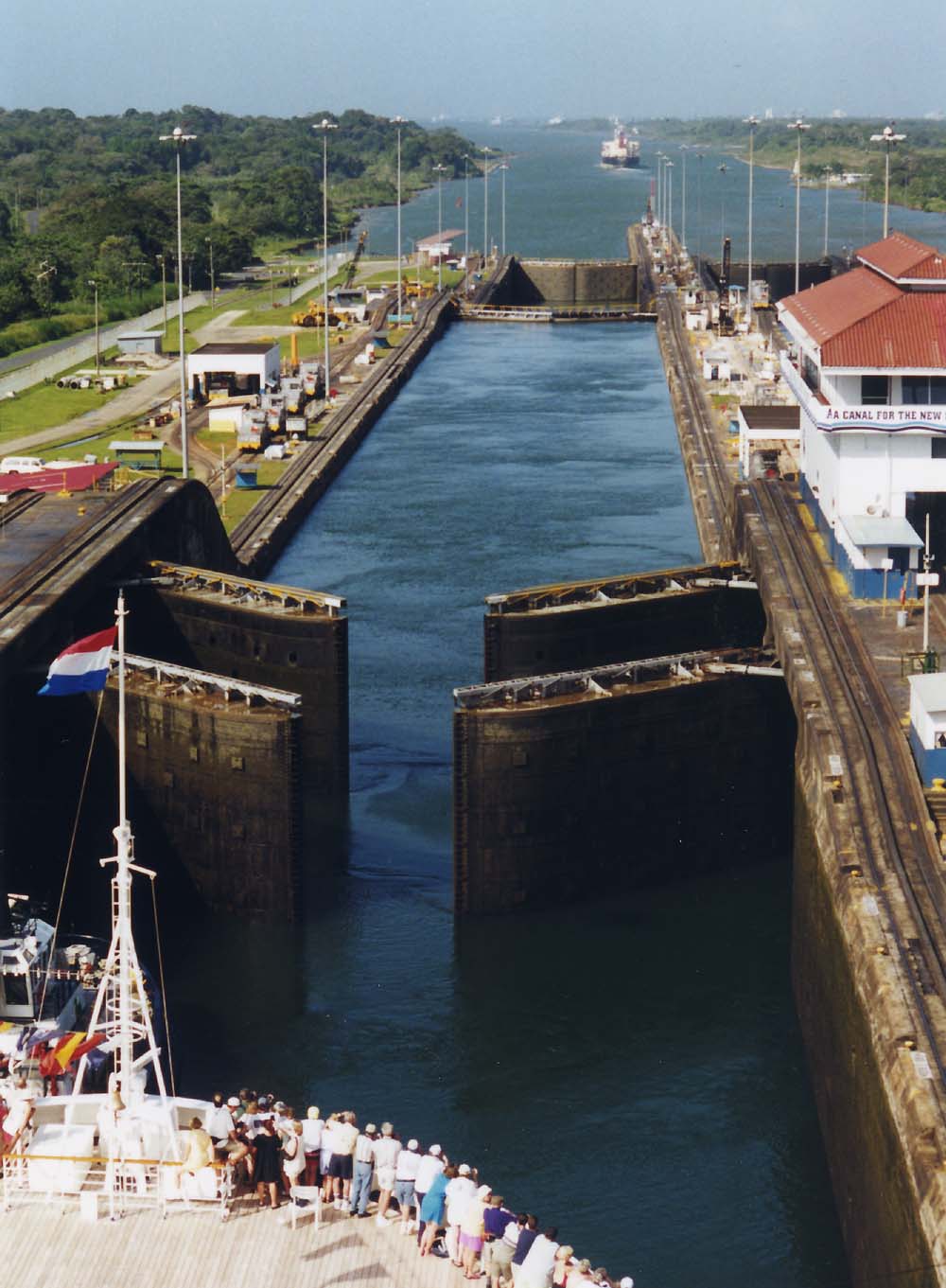
At the Panama Canal, the same principle works at a massive scale. A ship enters a lock chamber, and the gate behind it closes. Valves open so water can flow into the chamber from a higher level. As the water rises, the ship rises with it. When the water inside the chamber matches the level ahead, the forward gate opens and the ship moves into the next chamber or channel.
Going downhill is the reverse. The ship enters a full chamber, the gate closes, and water drains out through controlled passages. The ship gently lowers as the water level falls. Once the chamber matches the lower level ahead, the next gate opens. The ship floats out, still upright and supported by the water beneath it.
The Panama Canal Authority describes the original lock chambers as 110 feet wide and 1,000 feet long. Water moves through large culverts built inside the lock walls, then spreads through openings under the chamber floor. That matters because filling from many points reduces turbulence. A ship in a lock should rise steadily, not bounce around in a rush of uneven water.
Gravity does the heavy lifting
One of the most surprising facts about the Panama Canal is that the original locks do not use pumps to raise ships. Water moves by gravity. When a lock chamber needs to fill, water from a higher level flows down into it. When a chamber needs to drain, water flows out toward a lower level. The system depends on valves, gates, culverts, and careful timing, but the energy source is the natural pull of water from high to low.
This is why Gatun Lake is more than scenery along the route. It is part of the canal’s operating system. Its water level provides the height needed to fill the locks and move ships between elevations. Rainfall in the canal watershed helps replenish the lake, while dry periods can make water management much harder.
Every lockage uses freshwater. When a ship is lowered toward the ocean, some of that water eventually leaves the lake system. That is one reason the canal is not only an engineering story but also a water-supply story. The same watershed that helps move global trade also supports communities and ecosystems in Panama.
The locks are arranged like steps
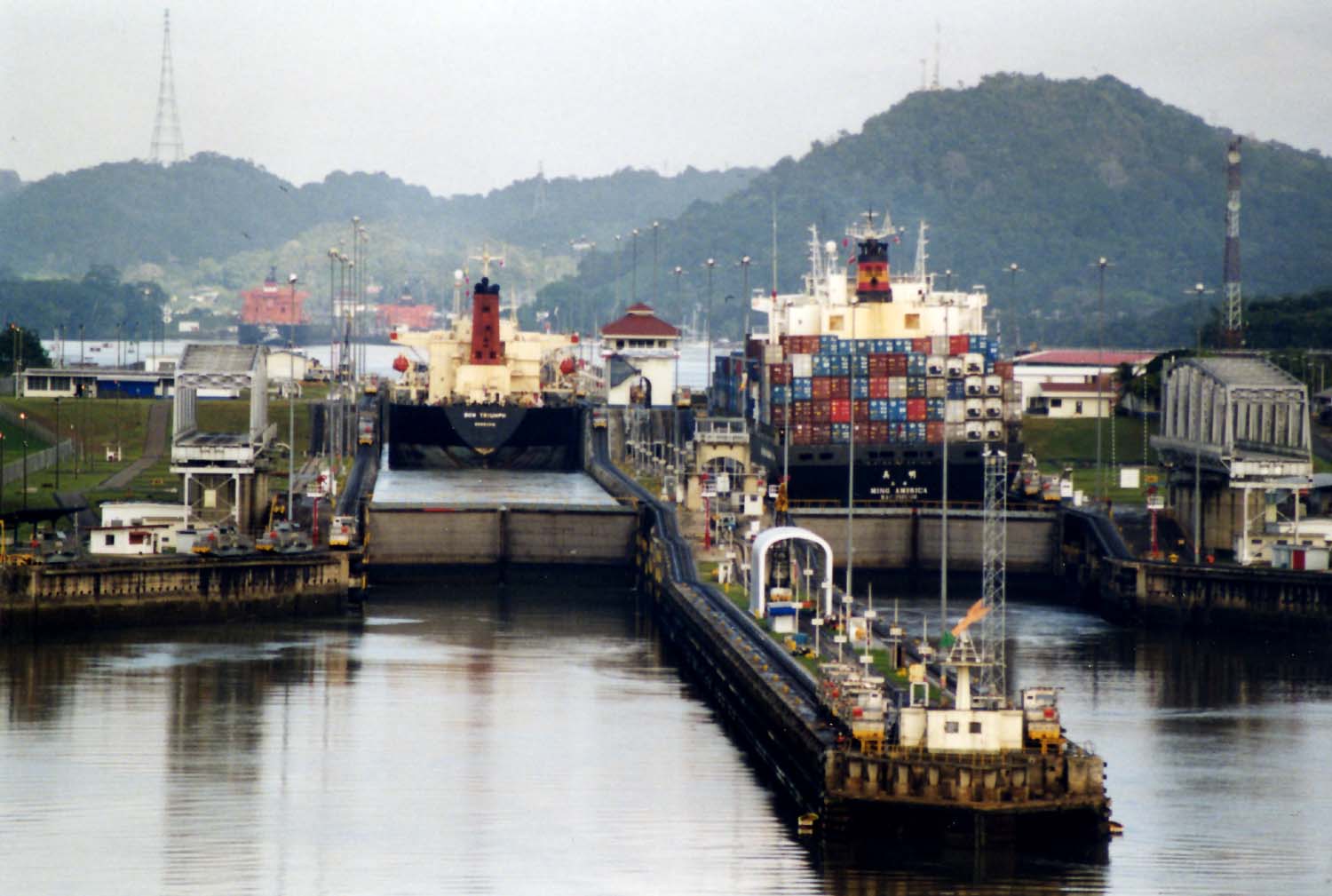
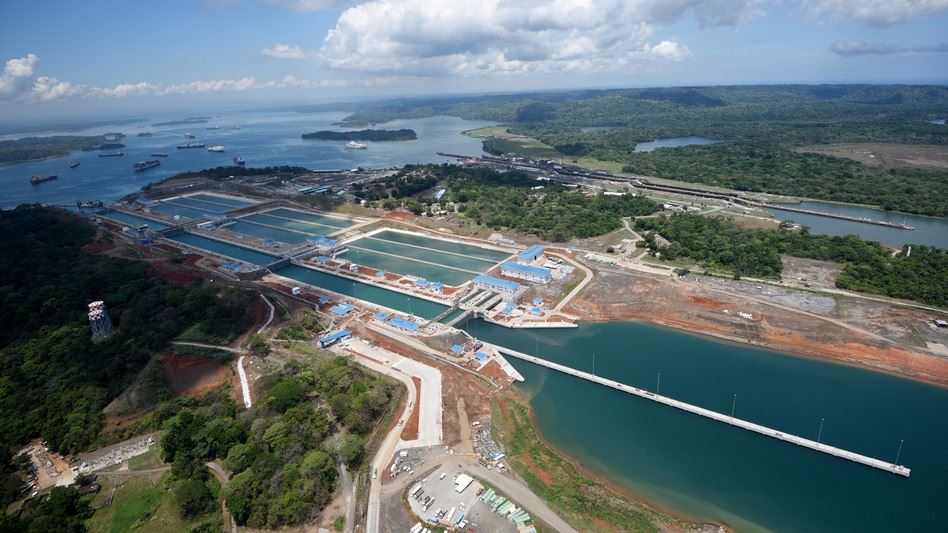
The Panama Canal does not raise a ship 85 feet in one jump. It uses a sequence of lock chambers, like a staircase made of water. On the Atlantic side, the Gatun Locks raise or lower ships in three steps. On the Pacific side, ships pass through Miraflores Locks and Pedro Miguel Locks, with changes in level handled in stages.
This step-by-step arrangement makes the height change manageable. Each chamber only has to handle part of the total lift. Gates close off one water level from the next, and valves move water in controlled amounts. For a ship’s crew, the process may feel slow and precise, but that precision is the point. The lock walls are close, the vessels are large, and small mistakes can become expensive very quickly.
The original locks were also built in pairs, with two lanes side by side. That design helps traffic move and gives the canal flexibility during maintenance. Some vessels are guided by locomotives that run along the lock walls, while the newer expanded locks use tugboats to help position ships. In both cases, the goal is the same: keep the vessel centered and controlled while water levels change around it.
The Pacific side adds another wrinkle. Tides on the Pacific side vary much more than on the Caribbean side, so the lock system has to handle not only the canal’s inland elevation but also changing ocean conditions. The result is a practical blend of geography, physics, and constant operation.
Modern locks changed the scale, not the basic idea
The canal opened in 1914, but ship sizes kept growing. For decades, the dimensions of the original locks shaped a class of vessels known as Panamax ships. These ships were designed to fit the canal’s tight limits. When global shipping moved toward larger container ships, the canal needed a bigger lane.
The expanded canal opened for commercial traffic in 2016 with larger locks at Agua Clara on the Atlantic side and Cocoli on the Pacific side. These locks allow much larger Neopanamax vessels to pass. They use different gate technology and tugboat handling, but they still rely on the same core principle: water levels change, and floating ships rise or fall with them.
The newer locks also show how important water conservation has become. The Panama Canal Authority has described the expanded locks as using water-saving basins that can reuse much of the water from a lockage. In the Agua Clara and Cocoli locks, those basins are designed to reuse 60 percent of the water used in each transit. That does not make the canal water-free, but it reduces waste in a system where freshwater is central to every trip.
This is where the canal’s engineering becomes especially modern. The question is no longer only how to move bigger ships. It is how to move them while protecting a limited water supply. Drought, rainfall patterns, lake levels, and traffic demand all become part of the same operational puzzle.
Why the lock system still matters
The Panama Canal is often explained as a shortcut for trade, and that is true. It saves many ships from traveling thousands of extra miles around South America. But the shortcut only works because the lock system solves several problems at once. It lets ships cross uneven land, controls water between different elevations, manages tidal differences, and turns a freshwater lake into part of a global route.
The locks also make the canal easier to understand as geography in action. Landforms set the challenge. Rivers and rainfall supply the water. Engineers design gates, chambers, and channels around those conditions. Trade then follows the route that geography and engineering make possible.
That is why the Panama Canal is more than a famous construction project. It is a working example of how humans adapt transportation to the shape of the planet. A ship does not climb the isthmus by force. It floats upward, chamber by chamber, carried by water moving under the quiet pull of gravity.




Add comment