
 Akshay Dinesh
A storm does not spin because the air somehow decides to travel in circles. Ocean currents do not bend across maps because water naturally prefers curved paths. On a rotating planet, motion is never quite as simple as drawing a straight arrow from one place to another. The Coriolis effect is the reason large moving systems appear to veer as they travel across Earth, shaping the path of winds, storms, ocean currents, and even the broad circulation patterns that help organize climate.
The idea can feel strange at first because people standing on Earth rotate with the planet. The ground, the air nearby, and the observer are all moving together. But when air or water travels a long distance, it moves across parts of Earth that are rotating at different speeds. That difference makes its path look curved from the rotating surface. For small everyday motions, the effect is too tiny to notice. For weather systems and ocean currents stretching hundreds or thousands of miles, it becomes one of the quiet rules behind the map.
Why a Rotating Earth Changes the Path of Motion
Earth completes one rotation each day, but not every point on its surface moves at the same ground speed. A place near the equator travels a wide circle in 24 hours, while a place closer to the poles travels a much smaller circle in the same time. That means the surface near the equator has a faster eastward motion than the surface at higher latitudes.
Imagine a parcel of air beginning near the equator and moving north. It carries some of its original eastward speed with it. As it reaches latitudes where the ground below is moving east more slowly, the air does not instantly match the new surface speed. From the viewpoint of someone on Earth, the air seems to drift to the right of its path in the Northern Hemisphere. In the Southern Hemisphere, the same kind of motion appears to bend left.
That apparent sideways turning is the Coriolis effect. It is not a mysterious push from nowhere; it is the result of watching motion from a rotating planet. NOAA’s National Ocean Service summarizes the rule simply: moving air is deflected to the right in the Northern Hemisphere and to the left in the Southern Hemisphere. The same idea applies to moving water, although ocean currents are also shaped by coastlines, water density, seafloor depth, and wind.
Why the Effect Is Strongest on Large Scales
The Coriolis effect is often explained with spinning playground equipment, but that can accidentally make the idea seem more dramatic than it is in daily life. A ball thrown across a room will not curve because of Earth’s rotation in any useful sense. A bathtub drain does not reliably spin one way in one hemisphere and the opposite way in the other; the shape of the tub, the motion of the water, and tiny disturbances matter far more at that scale.
Scale changes everything. Weather systems can stretch across entire regions. Ocean currents can move across basins. Air and water in those systems travel long enough, and far enough, for Earth’s rotation to matter. Scientists sometimes describe this using the balance between motion, size, and rotation: the larger and slower-moving the system is, the more Earth’s rotation can shape it. That is why the Coriolis effect belongs in explanations of trade winds, jet streams, cyclones, and ocean gyres, not in explanations of a sink drain.
Latitude also matters. The Coriolis effect is weakest at the equator and stronger toward the poles. Near the equator, the local sideways turning linked to Earth’s spin is very small. This is one reason tropical cyclones generally do not form right on the equator, even though warm ocean water is abundant there. A developing storm needs more than warm water; it also needs enough planetary spin to help organize rotation around a low-pressure center.
How Coriolis Helps Storms Rotate
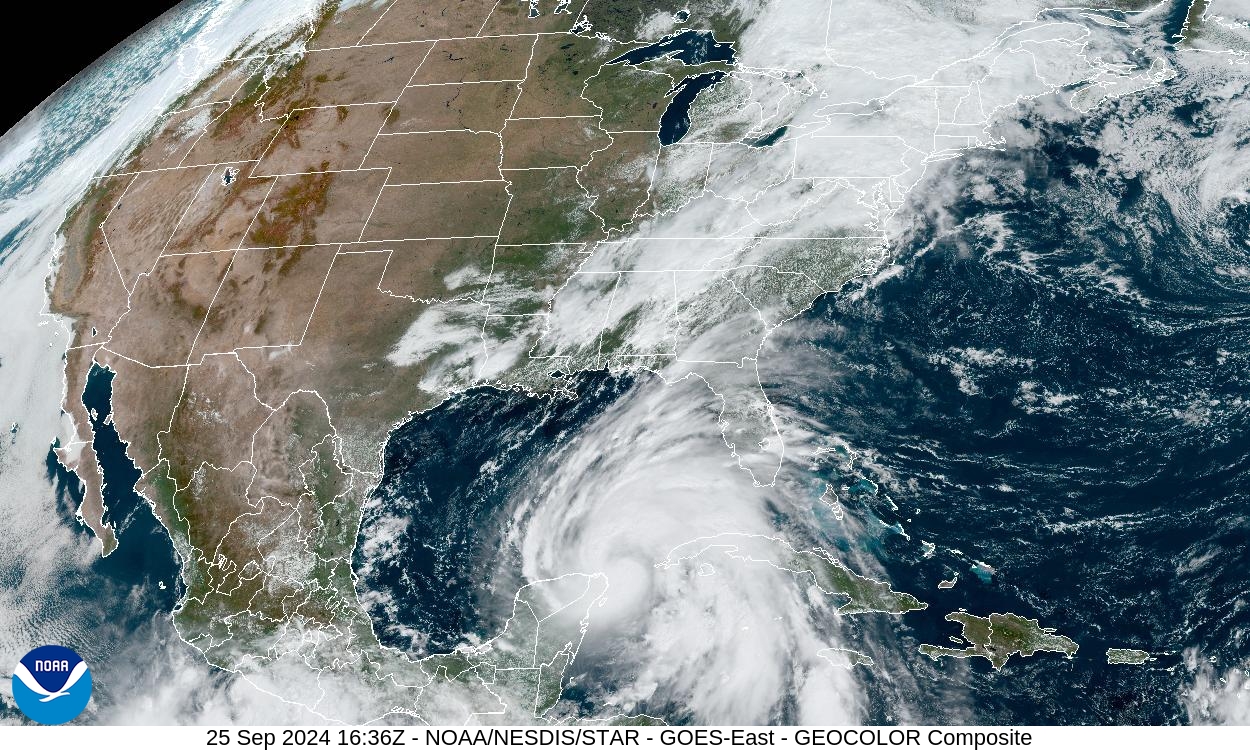
A tropical cyclone begins as warm, moist air rises over warm ocean water. Rising air lowers surface pressure, and surrounding air begins to flow inward toward that lower pressure. If Earth did not rotate, the air would move more directly toward the center. Because Earth does rotate, the inward-moving air curves as it approaches the low-pressure area. In the Northern Hemisphere, the air bends to the right, helping the storm rotate counterclockwise. In the Southern Hemisphere, the air bends left, helping the storm rotate clockwise.
The Coriolis effect does not create a hurricane by itself. A storm also needs warm ocean water, moist air, unstable rising motion, and relatively low wind shear so its structure is not torn apart. Recent hurricane explainers from NOAA’s satellite division describe Coriolis as one part of the larger formation process: it helps the storm’s winds twist around the developing center, while heat and moisture provide the energy. Without enough Coriolis effect, the thunderstorms may stay disorganized instead of tightening into a rotating system.
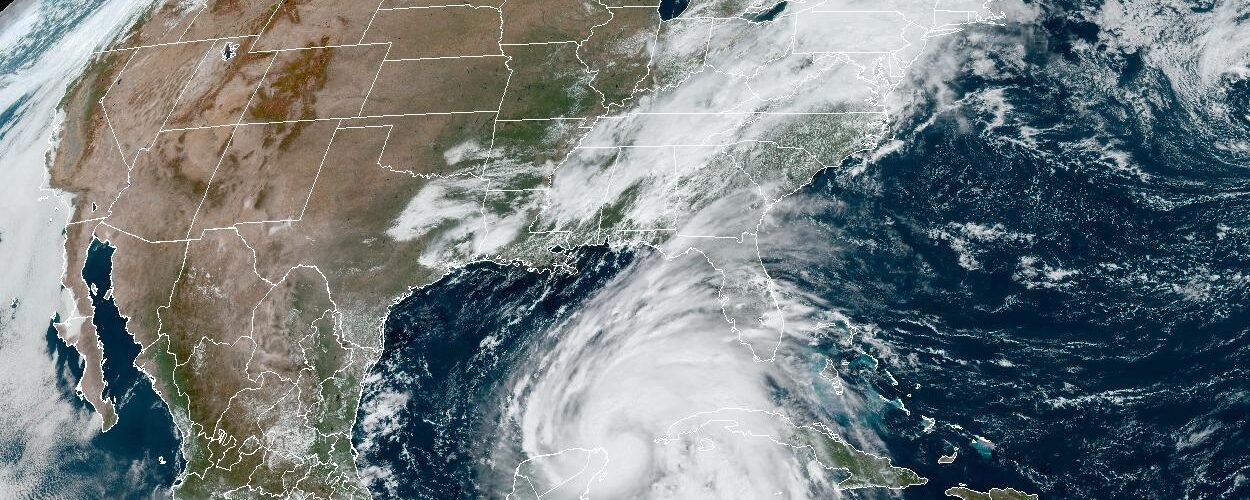
This also explains a common map pattern. Hurricanes, typhoons, and cyclones are different regional names for the same broad type of storm, but their spin direction depends on hemisphere. A satellite image of a powerful Atlantic hurricane usually shows cloud bands curling counterclockwise. A tropical cyclone in the South Pacific or Indian Ocean usually curls the other way. The storm is not obeying different physics; it is responding to the same rotating planet from the opposite side of the equator.
How Winds and Currents Get Organized
The Coriolis effect does more than make individual storms spin. It helps organize the background circulation of the atmosphere. Air warmed near the equator rises and spreads, while cooler air sinks in other regions. If Earth did not rotate, global circulation could be imagined as a simpler north-south exchange between equator and poles. Rotation breaks that simple pattern into wind belts, including the trade winds and mid-latitude westerlies that appear again and again in geography and weather maps.
Those winds matter for the ocean. Wind blowing across the surface pushes water, and the Coriolis effect bends that moving surface water. Over large areas, the bending helps create rotating ocean gyres, such as the great circulating systems in the Atlantic and Pacific. These gyres help move heat, nutrients, floating material, and marine life across huge distances. They are not controlled by Coriolis alone, but without Earth’s rotation their shape would be very different.
National Geographic’s educational material connects the same idea to both cyclones and ocean currents: moving fluids on Earth curve because the planet beneath them is rotating. That word, fluids, is useful because air and water both flow. They have different densities and move through different environments, but at planetary scale they share a common rule. Once they begin moving across latitude, Earth’s spin changes the path seen from the ground.
Common Misunderstandings About Coriolis
One misunderstanding is that the Coriolis effect makes objects curve because they are being physically shoved sideways like a ball hit by a bat. From the rotating Earth frame, it is useful to describe an apparent deflection, but the deeper cause is the rotating reference frame. The object keeps moving according to inertia while the planet underneath it turns.
Another mistake is assuming Coriolis decides every spinning motion. Tornadoes rotate, but their spin is controlled mainly by local thunderstorm structure, wind shear, and pressure changes. Coriolis is too weak to determine the direction of a small, intense vortex. Large hurricanes and mid-latitude storm systems are different because they cover much larger areas and last long enough for planetary rotation to become important.
A third confusion is treating the equator as a wall that storms can never cross. The real point is more subtle. Tropical cyclones rarely form very close to the equator because the Coriolis effect is weak there, but weather disturbances can still move through equatorial regions. The equator is not a physical barrier; it is a place where one important ingredient for organized tropical cyclone spin is near zero.
Why This One Effect Connects So Many Maps
The Coriolis effect is easy to underestimate because it is invisible in ordinary experience. No one feels Earth rotating during a walk to school. A thrown pencil, a soccer pass, and a glass of water behave as if the ground were still. But maps of the atmosphere and ocean reveal a larger pattern: motion over long distances bends, circles, and organizes around pressure systems and basins.
That is why the Coriolis effect is more than a vocabulary term. It helps explain why hurricanes spin in opposite directions across hemispheres, why global wind belts do not blow straight north and south, why ocean gyres rotate, and why latitude matters in weather and climate. It turns Earth from a flat-looking map into a moving sphere where direction, distance, and rotation all matter. Once that idea clicks, many curved arrows on weather charts and geography diagrams stop looking decorative and start looking logical.




Add comment