
 Rishay Dinesh
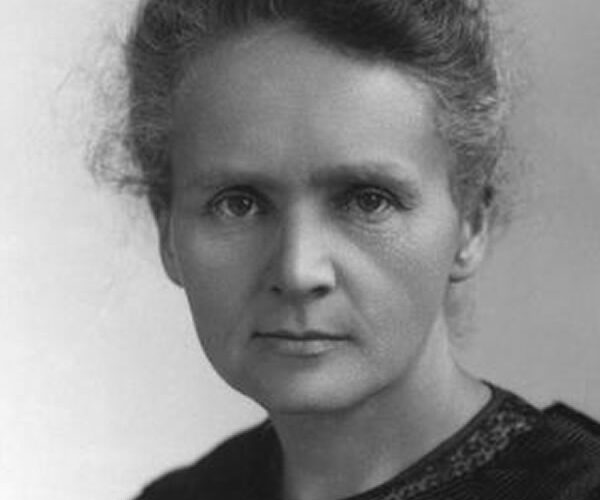
Marie Curie changed the way scientists understood matter. By carefully measuring the mysterious rays emitted by uranium, she helped show that radioactivity came from within atoms rather than from an ordinary chemical reaction. Her work led to the discovery of polonium and radium, earned her Nobel Prizes in both physics and chemistry, and helped open new paths in cancer treatment and medical imaging. Just as strikingly, she built that career while universities and scientific institutions placed formidable barriers in front of women.
From Warsaw to Paris
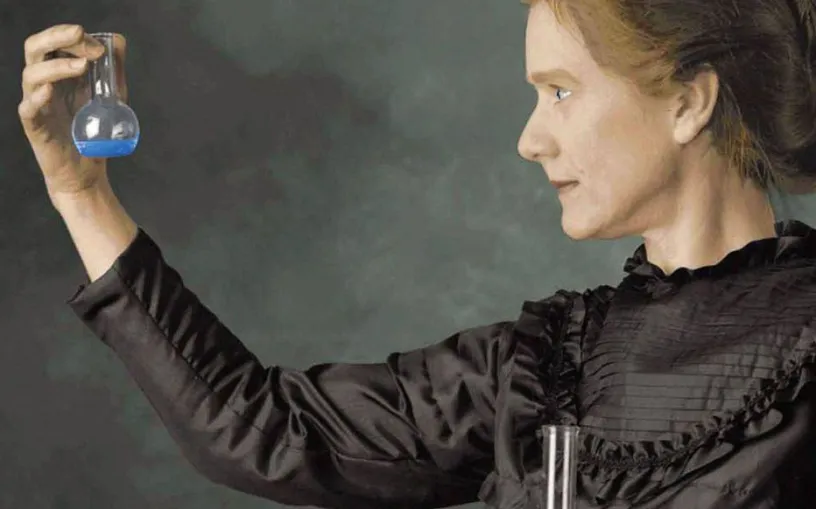
She was born Maria Skłodowska on November 7, 1867, in Warsaw, then under Russian rule. Her parents were teachers, and the family valued education even as political repression and financial hardship shaped daily life. Women could not enroll at the University of Warsaw, so Skłodowska joined the informal “Flying University,” a network that offered lessons outside official institutions. She also worked as a governess to help support her older sister’s medical studies in Paris.
In 1891, she moved to Paris and began using the name Marie. She studied physics and mathematics at the Sorbonne, often living with little money while completing demanding coursework. In 1894 she met Pierre Curie, a physicist known for his work on crystals, magnetism, and precise electrical measurements. They married the next year and formed a scientific partnership in which each brought essential skills: Marie framed the research questions and pursued the new phenomenon of uranium rays, while Pierre contributed instruments and experimental experience.
How Curie Made Radioactivity Measurable
Henri Becquerel had reported in 1896 that uranium salts emitted penetrating rays without first being exposed to sunlight. Curie chose the phenomenon for her doctoral research. Using a sensitive electrometer developed by Pierre and his brother Jacques, she measured how strongly different samples made the surrounding air conduct electricity. The measurements showed that the strength of the radiation depended on the amount of uranium present, not on the compound in which the uranium appeared.
That result pointed toward a startling idea: the radiation was a property of the atom itself. Curie also found that thorium compounds emitted similar rays, and she introduced the term radioactivity for the phenomenon. When the uranium ore pitchblende proved more radioactive than its known uranium content could explain, Marie and Pierre suspected that the ore contained unknown elements. In 1898 they announced polonium, named for Poland, and radium.
Discovering those elements was only the beginning. The Curies processed large quantities of pitchblende residue through repeated crushing, heating, dissolving, and crystallizing steps. Their working conditions were rough, but the chemical separations gradually produced material rich enough in radium to establish that it was a distinct element. The research gave scientists new tools for investigating atomic structure and helped overturn the older picture of atoms as permanent, indivisible units.
Two Nobel Prizes and a New Atomic Picture
In 1903, Marie Curie, Pierre Curie, and Henri Becquerel received the Nobel Prize in Physics for their work on radiation phenomena. Marie became the first woman to receive a Nobel Prize. The award recognized a chain of discovery rather than a single experiment: Becquerel had detected spontaneous radiation, while the Curies measured it systematically and revealed previously unknown radioactive elements.
Pierre died in a street accident in 1906. Marie took over his teaching position at the Sorbonne and became the institution’s first woman professor. Five years later, she received the 1911 Nobel Prize in Chemistry for the discovery of radium and polonium, the isolation of radium, and the study of its nature and compounds. She was the first person to receive two Nobel Prizes and remains the only individual awarded Nobel Prizes in two different scientific categories.

Curie’s recognition did not erase the prejudice around her. French institutions excluded or resisted women, and the press sometimes attacked her through a mix of sexism and hostility toward her Polish background. Yet she continued to lead a laboratory, train researchers, and build an international scientific reputation. Her daughter Irène Joliot-Curie later shared the 1935 Nobel Prize in Chemistry for work on artificial radioactivity, extending the family’s scientific legacy.
X-Rays, Medicine, and Wartime Service
Radium soon became important to early radiation research and treatment. Doctors learned that ionizing radiation could damage living tissue, including tumors, and radium sources became part of the early development of radiotherapy. Modern cancer treatment grew from that history but does not simply repeat it: today’s radiotherapy uses carefully planned doses delivered through technologies such as linear accelerators and sealed radioactive sources, with far stronger safeguards than early practitioners had.
Curie also applied her scientific and organizational skills during World War I. X-rays had been discovered by Wilhelm Röntgen in 1895, but many military hospitals lacked radiology equipment and trained operators. Curie helped equip cars with X-ray machines and electrical generators so medical teams could examine wounded soldiers closer to the front. The mobile units became known as petites Curies, or “Little Curies.” She also helped establish fixed radiology stations and trained women to operate the equipment.
These units allowed surgeons to locate bullets, shrapnel, and broken bones before operating. Curie did not invent the X-ray machine, but she helped turn an existing technology into a practical wartime medical service. That distinction captures an important part of her career: she was not only a discoverer in the laboratory, but also a builder of institutions and systems that connected science with public need.
Radiation Risk and a Lasting Legacy
The dangers of ionizing radiation were poorly understood during much of Curie’s career. Researchers handled radioactive samples with little protection, and Curie carried tubes of radium salts and kept radioactive materials near her work area. She died on July 4, 1934, from aplastic anemia, a disease widely linked to her long exposure to radiation. Her laboratory notebooks remain radioactive and require protective handling.
That history gives her legacy two sides. Her discoveries helped create nuclear physics, radiochemistry, and early radiotherapy, but they also contributed to the long process of learning how radiation can injure the body. Modern radiation science depends not only on understanding what radioactive materials can do, but also on controlling dose, limiting exposure, and protecting workers and patients.
In 1995, the remains of Marie and Pierre Curie were transferred to the Panthéon in Paris. Marie was the first woman honored there for her own achievements. Institutions bearing the Curie name continue to conduct cancer research and treatment, while the units, elements, methods, and questions connected to her work remain part of science education. Her most durable achievement was larger than any single prize: she helped make the inside of the atom experimentally visible and showed how exact measurement could transform a puzzling observation into a new field of science.

 Akshay Dinesh



Add comment