
 Rishay Dinesh
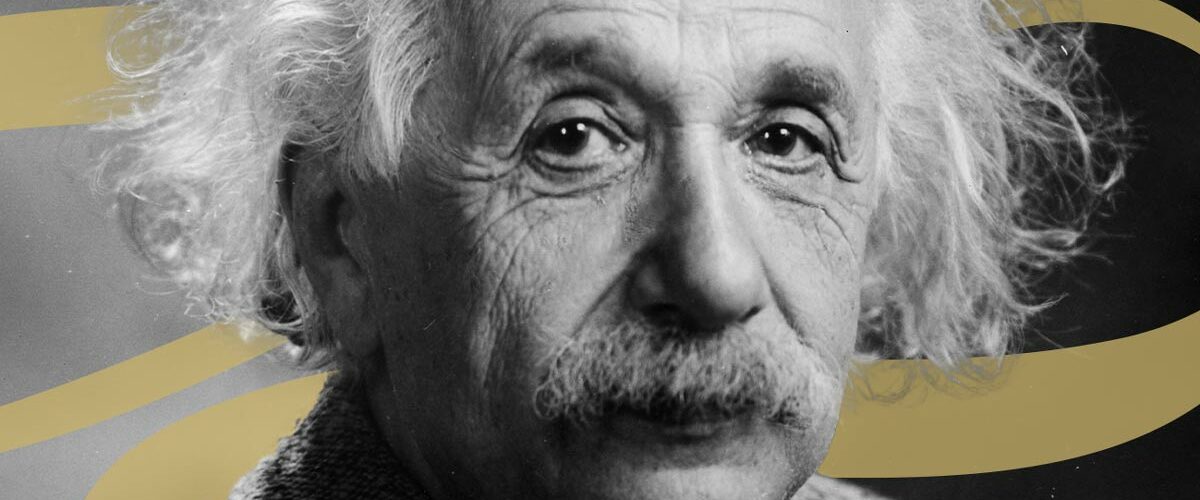
Albert Einstein changed how physicists understand space, time, gravity, matter, and light. Relativity made him a worldwide symbol of scientific genius, but it was only one part of his work: his explanation of the photoelectric effect helped establish quantum physics, and his analysis of Brownian motion strengthened the case that atoms were real. His public life was equally complex. A Jewish refugee from Nazi Germany, Einstein spoke about war, nuclear weapons, civil rights, and the responsibilities of scientists.
Einstein’s Early Life and Education
Albert Einstein was born on March 14, 1879, in Ulm, in the German Empire. His family soon moved to Munich, where his father and uncle ran an electrical engineering business. Popular stories often portray Einstein as a poor student who spoke unusually late, but the record is less dramatic: he performed well in mathematics and physics, even as he disliked rigid teaching and rote discipline.
As a teenager, Einstein studied mathematics beyond the school curriculum and began asking what it would be like to travel alongside a beam of light. After leaving school in Germany, he completed his secondary education in Aarau, Switzerland, and entered the Swiss Federal Polytechnic in Zurich in 1896. He graduated in 1900 but initially struggled to find an academic post. In 1902 he joined the Swiss Patent Office in Bern, work that left him time to think through difficult problems in physics.
The 1905 Papers That Changed Physics
In 1905, while working at the patent office, Einstein published four papers that transformed modern physics. He used light quanta to explain the photoelectric effect, showed how the random motion of particles suspended in a liquid supported atomic theory, developed special relativity, and established the relationship between mass and energy. The range of those papers is why 1905 is remembered as his annus mirabilis, or “miracle year.”
One of the most important papers he published that year was on the special theory of relativity. In this theory, Einstein proposed that the laws of physics are the same for all non-accelerating observers, and that the speed of light is constant, regardless of the motion of the observer. This was a revolutionary idea at the time and challenged the traditional Newtonian understanding of space and time.
A short follow-up paper produced his best-known result, E = mc². The equation says that mass contributes to an object’s energy and that a small change in mass can correspond to a very large change in energy. It later became essential to explaining the energy released in nuclear reactions, although Einstein did not discover nuclear fission or design a reactor or bomb.
Theory of Relativity
Einstein’s work didn’t stop with his special theory of relativity. In 1915, he introduced the general theory of relativity, which expanded upon his earlier ideas. This theory describes how gravity works, not as a force between masses, but as a curvature of space and time caused by massive objects. Imagine a large object, like the sun, sitting on a trampoline. The trampoline bends under the object’s weight, and smaller objects, like planets, move around the dip in the fabric. In a similar way, Einstein showed that massive objects, such as planets and stars, warp the fabric of space and time, causing other objects to move along curved paths.
The general theory of relativity was a radical departure from Newton’s law of universal gravitation. While Newton viewed gravity as a force between two objects, Einstein demonstrated that gravity is the result of how space and time are shaped by the presence of mass and energy.
General relativity made a testable prediction: the Sun’s gravity should deflect light from distant stars. During the solar eclipse of May 1919, teams led by Arthur Eddington and Frank Dyson photographed stars near the darkened Sun and reported results consistent with Einstein’s prediction. Later measurements became far more precise, but the 1919 announcement turned Einstein into an international celebrity almost overnight.
Quantum Mechanics
Although Einstein is best known for relativity, his light-quantum paper was a foundational contribution to quantum theory. He proposed that light transfers energy in discrete packets, explaining why electrons are emitted from a material only when incoming light has a high enough frequency. The Nobel Committee awarded him the 1921 Nobel Prize in Physics, presented in 1922, chiefly for this explanation of the photoelectric effect rather than for relativity.
Einstein nevertheless resisted the idea that quantum mechanics was a complete description of nature. His debates with Niels Bohr focused on whether probability reflected an unavoidable feature of reality or an incomplete theory. In 1935, Einstein, Boris Podolsky, and Nathan Rosen sharpened the dispute with a thought experiment about linked particles. The questions raised by that paper later became central to research on quantum entanglement.
How Einstein’s Physics Appears in Technology
Relativity is built into the Global Positioning System. Satellite clocks run at different rates from clocks on Earth because of both their speed, described by special relativity, and their position in Earth’s gravitational field, described by general relativity. Engineers correct for the combined effect; without those corrections, positioning errors would quickly grow by kilometers.
Other connections are less direct but still important. The photoelectric effect underlies devices that convert light into electrical signals, including many sensors and solar cells. Mass-energy equivalence helps physicists account for the energy released in fission and fusion. These applications grew from broad scientific communities, so it is more accurate to say Einstein supplied essential ideas than to credit him alone with the technologies that followed.
Exile, War, and Civil Rights
Einstein wasn’t just a scientist; he was also an outspoken advocate for peace, civil rights, and humanitarian causes. In the 1930s, as the Nazi party rose to power in Germany, Einstein, who was Jewish, fled to the United States. He accepted a position at the Institute for Advanced Study in Princeton, New Jersey, where he spent the rest of his career.
In 1939, Einstein signed a letter drafted largely by physicist Leo Szilard warning President Franklin D. Roosevelt that uranium could make extremely powerful bombs and that Nazi Germany might pursue them. The letter helped prompt the United States to investigate uranium research; the much larger Manhattan Project began later. Einstein did not work on that project. After the war, he campaigned for international control of nuclear weapons and warned about the dangers of an arms race.
Einstein also used his public standing to oppose racism in the United States. He supported the NAACP, worked with activist and performer Paul Robeson, and offered to appear as a character witness when the federal government prosecuted W. E. B. Du Bois in 1951. Speaking at Lincoln University in 1946, he described racism as a disease of white people. His actions linked scientific fame with a willingness to challenge injustice beyond the laboratory.
A Scientific and Public Legacy
Albert Einstein died on April 18, 1955, in Princeton, New Jersey. His theories still guide research into black holes, gravitational waves, cosmology, nuclear physics, and quantum information. The 2015 detection of gravitational waves by LIGO, announced the following year, confirmed another major prediction of general relativity a century after Einstein developed the theory.
Beyond science, Einstein’s moral and philosophical views also left a lasting impact. He believed in the power of reason, the importance of individual freedom, and the need for global cooperation to solve humanity’s biggest challenges. His humanitarian efforts and political activism showed that scientists can play an important role in shaping society.
Einstein’s lasting importance comes from more than a famous equation. He repeatedly questioned assumptions that appeared settled, then built explanations precise enough to be tested. His life also shows that scientific authority does not remove moral uncertainty: he wrestled publicly with nationalism, war, nuclear weapons, and racial injustice. That combination of intellectual daring and civic engagement keeps his story relevant far beyond physics.

 Akshay Dinesh



Add comment