 Akshay Dinesh
Sor Juana Inés de la Cruz lived in a society that admired her brilliance while placing firm limits on what a woman was supposed to study, write, and say in public. She became one of the great writers of seventeenth-century New Spain, but her most enduring act may have been explaining why the desire to learn could not simply be switched off. In her 1691 Reply to Sister Philothea, she turned a defense of her own reading into a wider case for women’s education. The argument was cautious because it had to be. It was also sharp, personal, and centuries ahead of the institutions around her.
A child who refused intellectual boundaries
Juana Inés de Asbaje was born in San Miguel Nepantla, near Mexico City, in either 1648 or 1651. The date remains disputed: Mexican government and cultural sources now often use November 12, 1648, while an older tradition gives 1651. She grew up on her maternal grandfather’s estate at Panoaya, where his library opened a world far larger than the rural community around her. Much of what is known about her early hunger for knowledge comes from the autobiographical account she later included in the Reply.
She wrote that she followed an older sister to school and persuaded the teacher to give her lessons when she was about three. As a child, she also considered disguising herself as a boy so that she could attend the university in Mexico City. The plan went nowhere, but it reveals how clearly she understood the barrier in front of her. Formal higher learning was not designed for girls, no matter how capable they were.
Juana therefore built an education from whatever she could reach. She studied Latin, rhetoric, philosophy, mathematics, music, theology, and the natural world. In one famous recollection, she said she cut her hair when she failed to learn quickly enough, reasoning that a head should not be decorated with long hair if it was short on knowledge. The story should be read as her own carefully shaped memory, not as an independently verified childhood record. Even so, it captures the discipline and wit that run through her mature writing.
A working life of books, experiments, and poems
As a teenager, Juana entered the viceregal court in Mexico City, where her ability attracted the attention of the viceroy’s wife, Leonor Carreto. A group of learned men reportedly questioned her across many fields to test whether her reputation was deserved. She impressed them, but court recognition did not create an ordinary scholarly career for a woman. Marriage held no appeal for someone determined to preserve time for study, so religious life offered the most workable alternative.
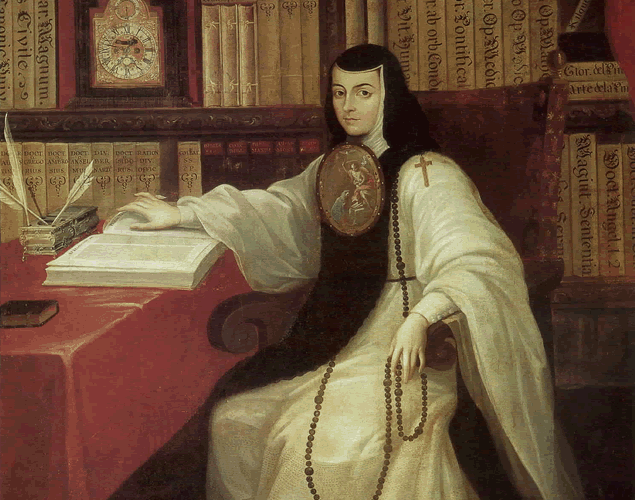
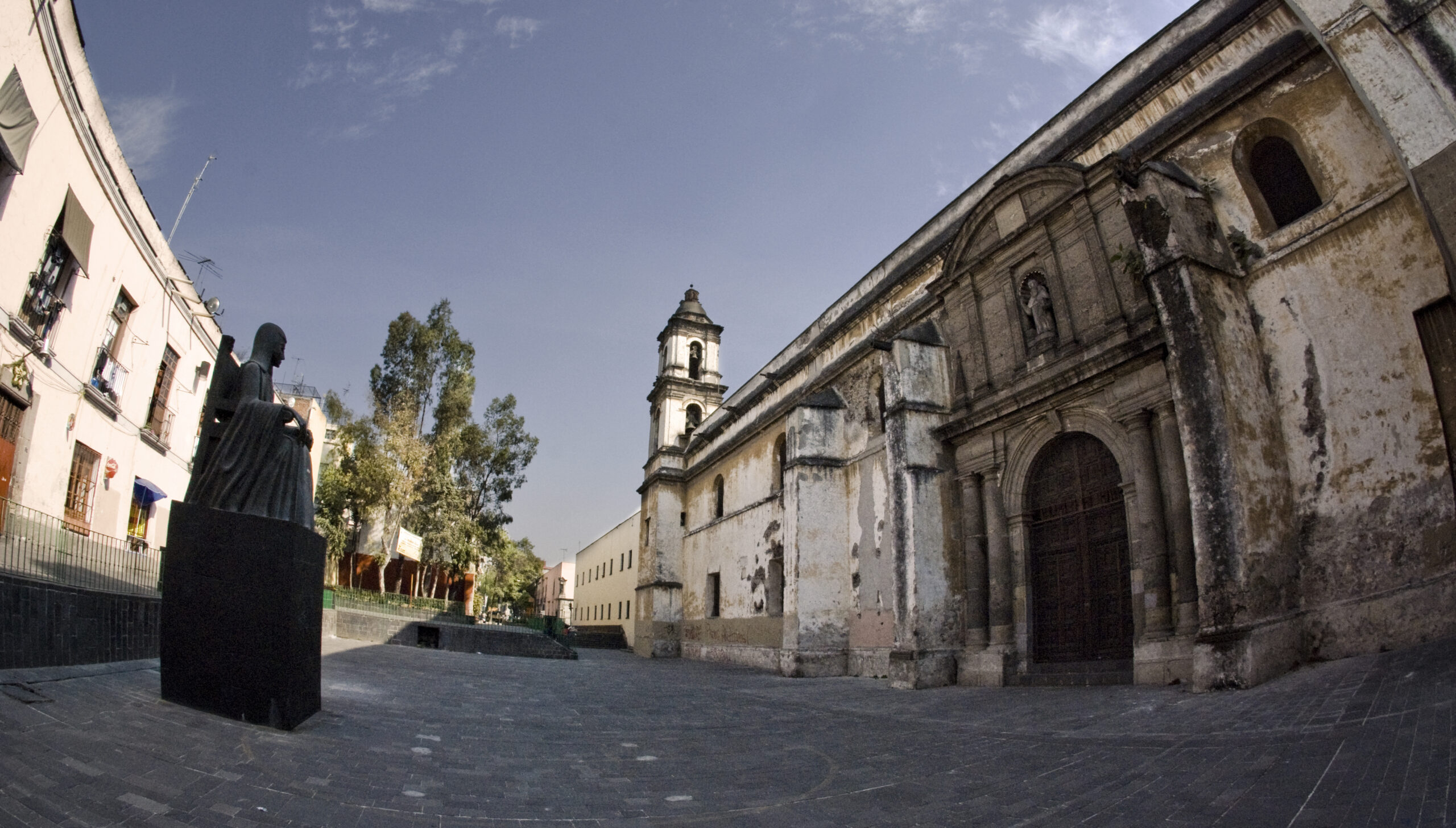
After a brief and physically difficult stay with the Discalced Carmelites, she entered the more flexible Convent of San Jerónimo in 1669. Her cell became a study, writing room, and meeting place. Accounts of her collection describe thousands of books along with musical and scientific instruments. The convent gave her more intellectual room than marriage probably would have, but it did not free her from church authority or from expectations about obedience.
Within those limits, Sor Juana wrote with astonishing range. Her work included love poems, devotional verse, comic plays, philosophical prose, Christmas songs, and the long dream-poem Primero sueño. She could move from a tightly reasoned theological dispute to a poem exposing the double standard by which men condemned women for behavior that men encouraged. Calling her only a poet misses the breadth of her project: she treated knowledge as connected, drawing on astronomy, logic, classical literature, scripture, music, and ordinary observation.
The controversy behind the Reply
The crisis began with a piece of theological criticism. Sor Juana had analyzed a sermon by the celebrated Portuguese Jesuit António Vieira, disagreeing with his interpretation of Christ’s greatest expression of love. The bishop of Puebla, Manuel Fernández de Santa Cruz, arranged for the critique to be printed in 1690 as the Carta Atenagórica. He attached a letter under the female pseudonym “Sister Philothea of the Cross.” The letter praised Sor Juana’s talent, then advised her to devote less attention to secular learning and more to religious study.
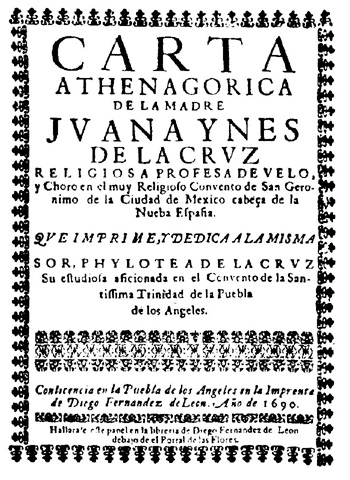
The imbalance of power was unmistakable. “Sister Philothea” sounded like a woman offering private counsel, but the author was a bishop addressing a nun whose life depended on the institution he represented. Sor Juana could not answer as if she were debating an equal. Her response, dated March 1, 1691, therefore combines deference with exacting argument. She thanks the bishop, presents herself as obedient, and repeatedly describes her own limitations. At the same time, she documents a lifetime of study and refuses the idea that intellectual curiosity is a moral fault.
That tension gives the Reply much of its force. It is not a modern declaration of unrestricted individual freedom, and Sor Juana wrote from within a deeply religious worldview. Yet she recognized that commands to remain silent were not distributed evenly. A learned man could speak with institutional authority; a learned woman had to justify having learned at all. Her answer exposes that unfair structure without pretending she stood outside it.
How Sor Juana made the case for women’s learning
Her first line of defense is experience. Sor Juana describes the desire to know as persistent and involuntary. Even when she stopped reading books, the world became a text. She observed how a spinning top remained upright while moving, how lines changed perspective, how ingredients behaved in the kitchen, and how music could be understood through number. Study was not confined to a classroom. Attention itself kept producing questions.
This is why her famous kitchen remark lands with more than comic effect: “If Aristotle had cooked, he would have written much more.” Domestic work, often dismissed because women performed it, also contained chemistry, measurement, cause and effect, and practical knowledge. Sor Juana did not need to leave women’s daily experience behind to prove intellectual ability. She showed that serious thought was already present there, waiting to be recognized.
Her second line of defense comes from history and scripture. She lists learned women from biblical, classical, and Christian traditions to show that female knowledge was neither unnatural nor unprecedented. She also distinguishes teaching publicly from studying privately. Even under restrictive interpretations of religious rules, she argues, women could learn, and educated older women were especially needed to teach younger ones. Without female teachers, families sometimes had to choose between leaving girls uneducated and placing them with male instructors, an arrangement that critics themselves could view as improper.
Finally, Sor Juana presents broad learning as a support for theology rather than a rival to it. Grammar helps a reader understand language; history supplies context; mathematics and music clarify patterns; natural philosophy explains references to the physical world. Scripture could not be interpreted responsibly through ignorance. The argument cleverly meets the bishop on his own ground: if sacred study is the goal, forbidding the supporting disciplines makes that goal harder to reach.
A legacy larger than a heroic legend
Sor Juana’s final years are difficult to reconstruct, and later accounts have sometimes turned them into a simple story of a lone rebel crushed by the church. The record is more complicated. She sold or surrendered books and instruments, renewed religious vows, and withdrew from literary publication. Financial pressure, obedience, spiritual conviction, and institutional coercion may all have played a part. She died in April 1695 while caring for other nuns during an epidemic at the convent.
Her writing survived because readers, editors, and scholars kept returning to it. A 1714 volume of posthumous works included the Reply, and modern institutions in Mexico have preserved her place in the country’s literary history. She appears on Mexican currency, schools and cultural centers carry her name, and her poems remain central to the study of Spanish-language Baroque literature. The Library of Congress has described her as a figure who challenged severe limits on women’s education, while Mexican educational resources present her as a defining writer of New Spain.
Her legacy does not depend on labeling her with a single modern term. What lasts is the precision of the problem she identified. Talent means little when access is blocked; curiosity cannot flourish when a person must apologize for possessing it; and a society loses knowledge when it decides in advance who may produce it. Sor Juana defended herself with the tools her world gave her: memory, theology, history, humor, and formidable logic. In doing so, she made the private wish to read and think into a public argument that still feels alive.