 Akshay Dinesh
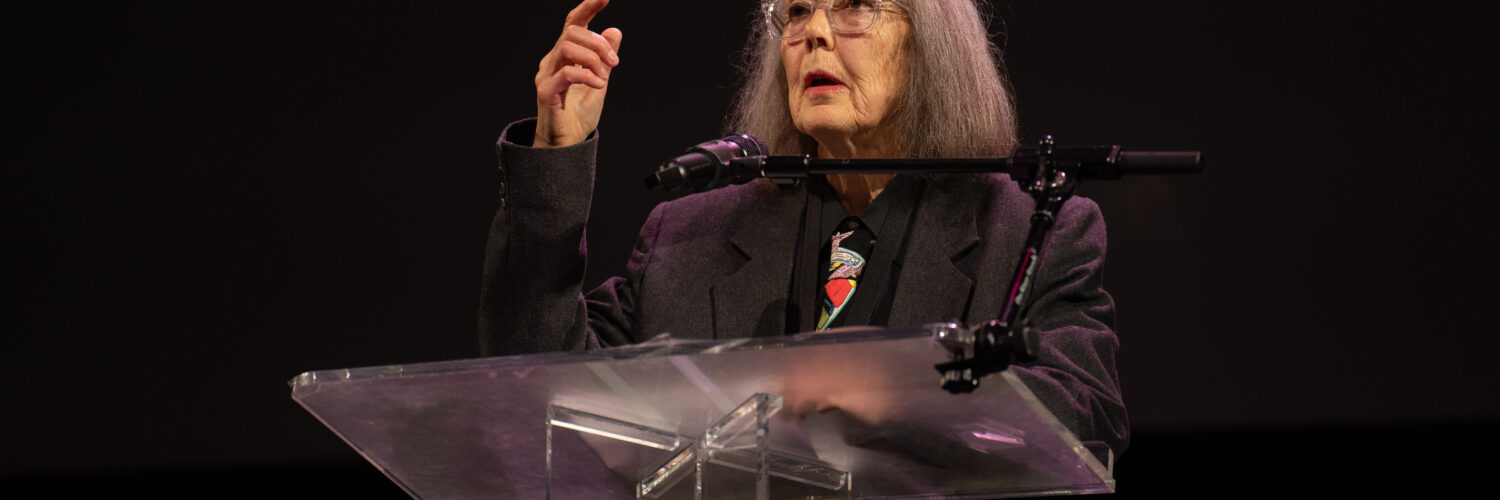
Anne Carson does not write as though poetry, criticism, translation, drama, and fiction belong in separate rooms. A single book may move among several of them, carrying an ancient Greek myth into a modern love story or turning a work of mourning into a physical object that unfolds across a table. That restless approach explains why the Swedish Academy awarded the Canadian writer the 2026 Nobel Prize in Literature.
The Academy praised Carson for an inventive body of work that has created new literary forms through a playful dialogue with the classical tradition. The description points to more than her knowledge of Greece and Rome. Her real achievement is making old texts active again. Rather than treating the classics as sealed monuments, she translates, questions, rearranges, and stages them until they speak to modern experiences of desire, loneliness, jealousy, grief, and change.
A classicist who refused to stay in one genre
Born in Toronto in 1950, Carson trained in classics at the University of Toronto and went on to teach Greek, Latin, and comparative literature at several North American universities. She is a poet and essayist, but also a philologist: a scholar attentive to the history, structure, and smallest choices of language. Those identities do not simply sit beside one another. Her scholarship often moves with the compression and surprise of poetry, while her poems may pause over a Greek word as carefully as a scholarly note.
That combination was visible in Eros the Bittersweet, published in 1986. The book begins with ancient Greek writing about desire, yet it is neither a conventional academic study nor a collection of poems. Carson argues that desire depends on distance: the beloved must remain partly beyond reach for longing to exist. She follows that triangular structure through Sappho, novels, philosophy, and the act of reading itself. A subject from classical scholarship becomes a way to think about how people want, imagine, and make meaning.
Her later books keep crossing borders. Glass, Irony, and God combines essays and verse; Decreation includes poetry, criticism, opera, and oratorio; Float arrives as separate chapbooks that readers can take up in different orders. The shifting forms are not decoration. Carson chooses a structure that lets the reader experience uncertainty rather than merely hear it described.
How an ancient monster became a modern teenager
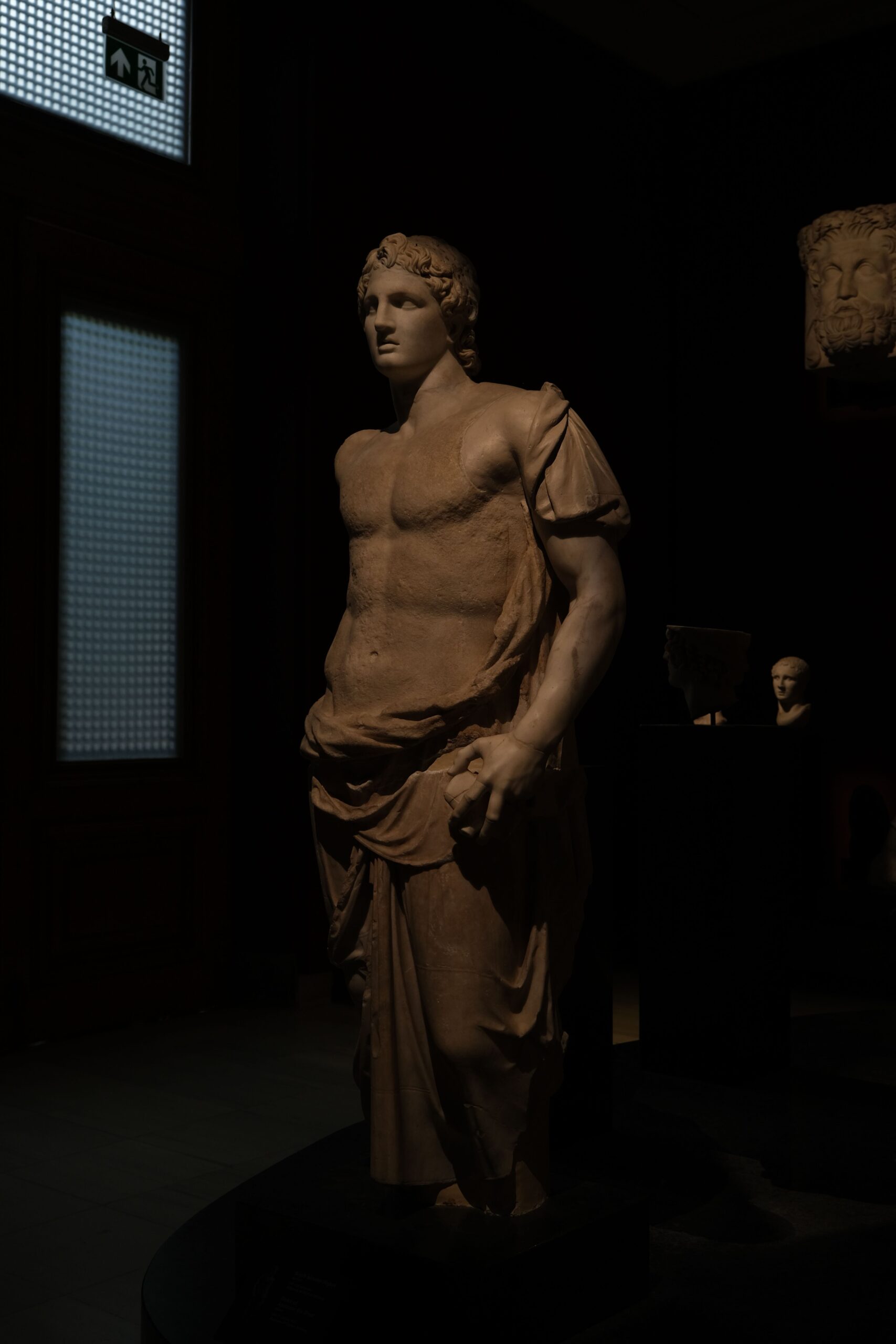
Autobiography of Red, first published in 1998, offers the clearest doorway into Carson’s method. Its distant source is a fragmentary poem by the ancient Greek writer Stesichorus about Herakles and Geryon. In the old myth, Geryon is a winged, red monster with multiple bodies. Herakles kills him and takes his cattle. Carson shifts the center of gravity. Geryon becomes a sensitive red-winged boy who photographs the world and falls in love with Herakles.
The change does not simply update the setting. It asks what happens when a famous heroic story is told from the monster’s side. The figure who once existed mainly to be defeated gains an inner life, a childhood, artistic ambitions, and the difficult memory of a relationship. Herakles is still magnetic, but he can also be careless and cruel. Myth turns into a study of first love and the uneven power between people who do not want the same thing.
Carson calls the work a novel in verse, though even that label cannot hold it neatly. It contains introductory essays, invented interviews, lyric scenes, photographs described in words, and an ending that refuses an ordinary resolution. The broken shape echoes its source: Stesichorus survives only in pieces. Carson does not pretend that the missing ancient whole can be restored. She uses fragmentation as an opening for another voice.
Translation that lets readers see what is missing
Carson’s translations reveal the same respect for gaps. In If Not, Winter: Fragments of Sappho, she places brackets where the surviving papyrus or quotation has lost words. Other translators have sometimes smoothed such spaces into continuous English. Carson leaves the damage visible. A phrase may stand beside a wide blank, allowing silence to become part of the poem’s rhythm.
This is an unusually honest way to present an ancient author whose work survives mostly in fragments. Readers encounter not a falsely complete Sappho but the historical condition in which Sappho reaches us. The brackets are scholarly marks, yet they also produce an emotional effect. They make absence tangible, much as longing in Eros the Bittersweet depends on what cannot be possessed.
Her versions of Greek drama are equally willing to sound contemporary. Antigonick, based on Sophocles’ Antigone, compresses the play and introduces an almost silent figure called Nick, who measures things onstage. The language can be stark, comic, and jarringly modern. Such choices are not attempts to disguise the age of the original. They expose the act of translation itself: every version is a meeting between different languages, eras, and sensibilities.
The Swedish Academy singled out Carson’s translations as creative works in their own right. That judgment captures a central feature of her career. Translation is not a secondary task performed after writing. It is one of the places where her writing happens.
When the shape of a book carries the grief
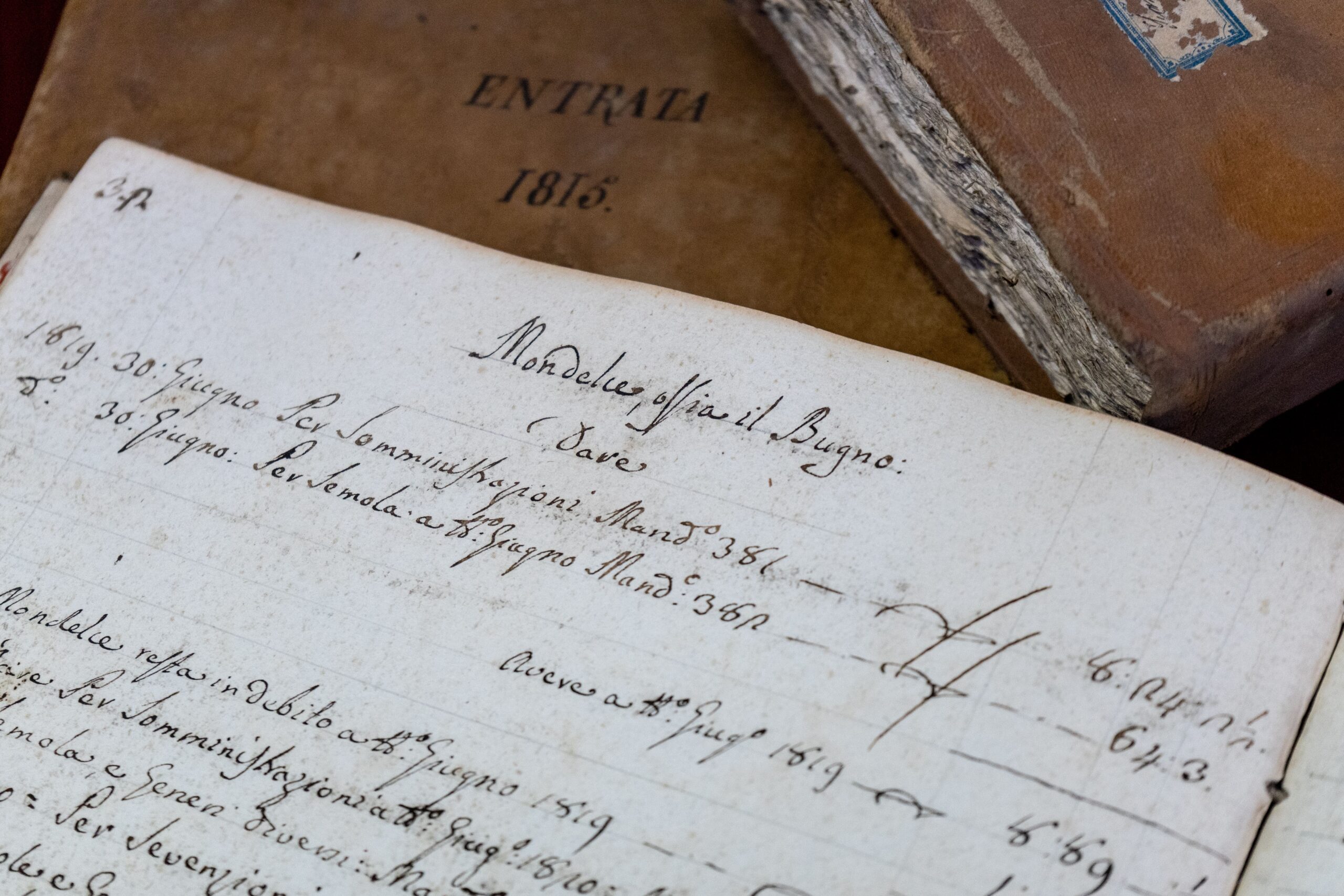
Nox, published in 2010, shows why Carson’s experiments with form can be emotionally necessary. The work mourns her brother Michael, who had lived away from the family for years before his death. Instead of a standard bound volume, it comes in a box. Inside is a long accordion-fold sequence that reproduces photographs, letters, handwritten notes, dictionary entries, stains, and scraps.
Running through the work is Carson’s attempt to translate Catullus 101, a Latin elegy addressed to the Roman poet’s dead brother. The ancient poem gives her a structure for approaching a modern loss, but it cannot solve it. Dictionary definitions multiply possible meanings. Family documents offer evidence without producing a complete life. The book expands physically, yet the person at its center remains partly unreachable.
Here the distinction between container and content disappears. A neat, linear book might imply that grief can be organized from beginning to end. Nox instead asks readers to handle an archive whose fragments never settle into certainty. Its form makes mourning tactile: memory stretches out, folds back, and leaves empty spaces between surviving details.
That is why Carson’s formal inventions carry more than novelty. The verse novel, visible bracket, script, collage, and foldout each answer a particular problem. How can a monster tell his own story? How should a translator represent destroyed lines? What shape can hold a life that cannot be reconstructed? The form becomes part of the thinking.
Where to begin reading Anne Carson
Carson’s reputation for difficulty can make a first encounter seem daunting, but no reader needs to master Greek literature before opening her books. The classical references add depth; they are not an entrance exam. Her strongest work remains grounded in recognizable experiences: wanting someone, losing someone, remembering badly, or finding that ordinary language is inadequate.
Autobiography of Red is the most accessible starting point for readers who enjoy narrative. It has characters, travel, romance, humor, and a clear emotional arc even as its form stays unusual. Readers drawn to translation or ancient poetry may prefer If Not, Winter, where the page itself teaches them how fragmentary Sappho’s survival has been. Nox is best approached slowly as both a text and an object. Eros the Bittersweet offers the clearest view of Carson the scholar, showing how a rigorous argument can move with literary energy.
The 2026 Nobel Prize recognizes a career built on refusing easy divisions: ancient and modern, scholarship and imagination, translation and creation, poetry and prose. Carson’s books do not erase those differences. They make the borders visible, then show how much can happen when a writer works directly on them. Her classics are never merely inherited. They are tested, broken open, and returned to readers with new pressure inside them.