 Akshay Dinesh
Closing a bedroom door before going to sleep can make a striking difference in a house fire. The door does not stop fire forever, and it cannot replace working smoke alarms or a practiced escape plan. What it can do is slow the movement of hot gases, toxic smoke, and flames into the room, preserving more survivable conditions while people wake up, escape, or wait for firefighters.
That protection comes from ordinary physics. A fire turns air and furnishings into a fast-moving mixture of heat and combustion products. An open doorway gives that mixture a broad path into the rest of the home. A closed door interrupts the path. Even a lightweight interior door can temporarily divide the home into smaller compartments, changing where heat and smoke can travel and how quickly they arrive.
A door changes the path of heat and smoke
Hot gases rise above a fire and spread along the ceiling. As they cool or build up, they descend and move through hallways, stairwells, and open doorways. This is why dangerous smoke can reach a bedroom before flames do. Smoke is not just an irritation that makes it hard to see. It may contain carbon monoxide and other combustion products that can confuse, weaken, or incapacitate a person long before the room itself burns.
A closed door adds a physical barrier to that flow. Heat still passes through the door by conduction, and smoke can leak around the frame and beneath it, but both processes are much slower than the movement through a fully open doorway. The room behind the door therefore tends to warm more slowly and receive less smoke during the period when the barrier remains intact.
The door also affects ventilation. Fire needs oxygen, and open doors and windows can create a flow path that supplies fresh air while carrying heat and smoke elsewhere. Closing a door limits that exchange between rooms. It does not make the fire harmless or airtight, but it can keep one room from immediately joining the fire’s larger circulation pattern.
What full-scale fire tests found
The Fire Safety Research Institute, part of UL Research Institutes, has studied door position in full-scale house fires for more than a decade. In its research behind the Close Before You Doze campaign, bedrooms with closed doors remained dramatically cooler and contained far less carbon monoxide than bedrooms with open doors. Across the highlighted tests, closed rooms averaged below 100 degrees Fahrenheit while open rooms exceeded 1,000 degrees. In one comparison, carbon monoxide measured about 100 parts per million in the closed room and 10,000 parts per million in the open room.
A 2017 demonstration made the contrast visible in the same 1,200-square-foot test house. The fire began in the living room while two bedroom doors were closed and another was open. Before suppression, the open bedroom reached life-threatening heat and gas conditions; the closed bedrooms remained far more tenable. Earlier FSRI experiments comparing side-by-side bedrooms reached the same practical finding: a person behind a closed door had a much better chance of remaining conscious and able to act.
Those figures describe particular experiments, not a promise about every home. Results change with the fire’s location, the floor plan, ventilation, door construction, gaps around the frame, and the time before the door fails. A closed hollow-core door is not the same as a rated fire door. The useful point is simpler: an ordinary closed door can buy time, and time is scarce in a modern home fire.
The closed-door alarm problem
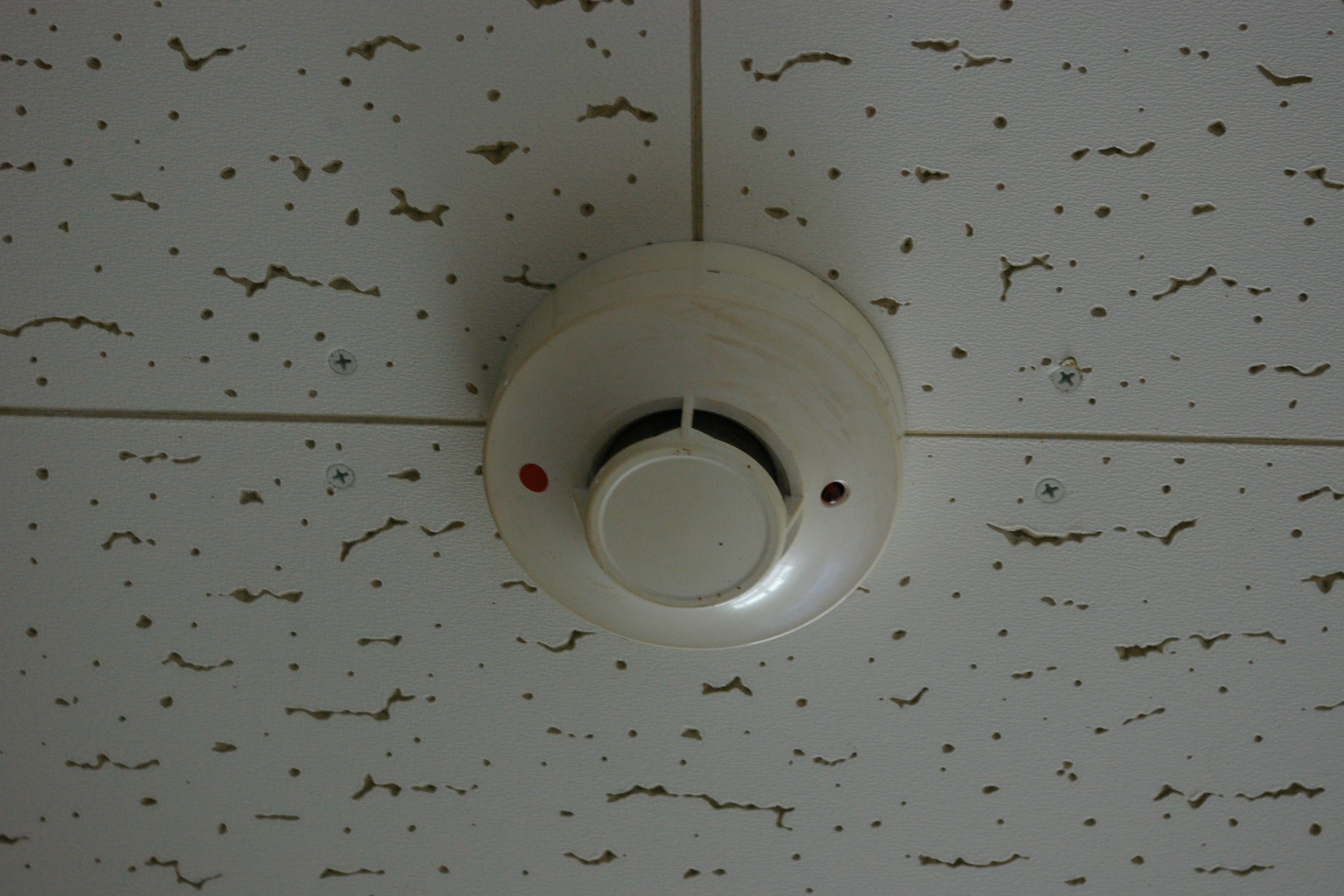
A barrier that slows smoke can also muffle sound and delay smoke from reaching an alarm on the other side. FSRI measured an alarm at an average of 95 decibels with a bedroom door open and 78 decibels with it closed in one test. That was still audible under the test conditions, but sleeping people, children, older adults, people with hearing loss, and anyone using a loud fan or audio device may respond differently.
The National Fire Protection Association has also warned that a closed bedroom door may delay a single alarm in the hallway from detecting a bedroom fire. If the fire starts outside the room, that hallway alarm may not sound loudly enough inside. The solution is not to leave the door open. It is to build a warning system that assumes the door will be closed.
The U.S. Fire Administration recommends smoke alarms inside every bedroom, outside each separate sleeping area, and on every level of the home. Interconnected alarms are especially valuable because when one detects smoke, every linked alarm sounds. People who cannot reliably hear a standard alarm may need listed devices that use strobe lights, bed shakers, or other accessible alerts. Alarms should be tested according to their instructions, and the complete unit generally needs replacement when it reaches the end of its service life.
Build the habit into an escape plan
Closing the bedroom door is most useful when it becomes one layer in a larger plan. The U.S. Fire Administration notes that occupants may have less than two minutes to escape after an alarm sounds. That is too little time to invent a route, search for possessions, or debate whether the alarm is real. Everyone in the home should know what the signal means and where to go.
- Identify two possible ways out of each sleeping room, usually the door and a window.
- Make sure windows and exterior doors open and are not blocked.
- Choose a meeting place outside where everyone can be counted.
- Practice the plan in daylight and darkness, including with children and anyone who may need help.
- Keep bedroom doors closed during sleep and close doors behind you as you leave, when doing so does not delay escape.
- Once outside, stay outside and call emergency services from a safe location.
If an alarm sounds, leave immediately by the safest available route. Do not open a door into obvious heat or smoke simply because it is the usual exit; use the planned second route if it is safe to do so. If escape is blocked, keep the door closed, call emergency services, report exactly where you are, and signal from a window. Local fire departments can help families adapt a plan for upper floors, security bars, mobility needs, or home layouts where the second exit is difficult.
A small barrier, not a shield
A closed door does not make it safe to stay in a burning building. It cannot guarantee clean air, hold back fire indefinitely, or compensate for a missing alarm. If a fire starts inside the bedroom, the closed door may slow its spread to the hall, but the person in the room still needs an alarm, a rapid warning, and a usable escape route.
Its strength is that it changes the starting conditions before an emergency occurs. The barrier is already in place when people are asleep and least prepared to react. Combined with alarms in and around sleeping areas, interconnected notification, and a practiced escape plan, the habit can preserve the minutes and seconds on which a safe exit may depend.
Closing a bedroom door takes almost no time, yet it uses one of the home’s most ordinary objects as passive protection. The science is not that a door defeats a fire. It is that slowing heat and smoke gives people a better environment in which to hear the alarm, make a sound decision, and get out.