
 Akshay Dinesh
On a cold day, the outdoor air can feel damp, yet the air inside a heated home may leave your skin feeling dry and make a sweater crackle with static. The apparent contradiction comes down to temperature. Cold outdoor air often contains relatively little water vapor, even when its relative humidity is high. When that air enters a building and warms up, its relative humidity falls unless enough moisture is added.
A furnace does not normally remove water vapor from the air like a dehumidifier. Instead, heating changes the relationship between the water vapor already present and the amount needed for saturation at the warmer temperature. Air exchange, indoor moisture sources, and cold surfaces all influence the result. Understanding those pieces helps explain both dry rooms and the condensation that can appear on a window at the same time.
Relative humidity changes when air warms
Water vapor is the invisible gaseous form of water mixed into the air. Relative humidity compares the amount of water vapor present with the amount needed for saturation at the same temperature, expressed as a percentage. At saturation, liquid water and water vapor can coexist in balance; cooling the air further can cause some vapor to condense. Warm air needs more water vapor than cold air to reach saturation.
Imagine bringing a parcel of outdoor air inside and warming it without adding or removing water vapor. Its actual moisture content is roughly unchanged, but the saturation level rises, so its relative humidity falls. A vivid example appears in the World Health Organization’s indoor air guidelines: air at minus 8 degrees Celsius and 100% relative humidity would fall to about 15% when warmed to 20 degrees Celsius, assuming no moisture is added. That is an illustration, not a prediction for every room.
This also explains why the phrase “cold air holds less moisture” is a useful shortcut but not the whole physical story. Air is not a sponge with a fixed set of spaces for water. The saturation vapor pressure of water changes with temperature, so the same amount of vapor represents a different fraction of saturation at different temperatures.
How outdoor air changes the indoor balance
Homes and classrooms exchange air with outdoors through ventilation systems, open doors, and small gaps. During cold weather, the incoming air may have a high outdoor relative humidity while still carrying less water vapor than the warmer indoor air it replaces. Once warmed indoors, it tends to lower the room’s relative humidity. The colder the incoming air, the more pronounced that effect can be, although weather and building conditions vary.
People, cooking, showers, plants, and drying laundry add water vapor indoors. How dry a building becomes depends on the balance between these sources and air exchange, as well as its temperature and the moisture absorbed or released by materials. A tightly occupied home can have a very different reading from a drafty building, and a mild or humid winter does not guarantee dry indoor air.
Ventilation still has an essential job: it helps remove indoor pollutants and supply fresh air. The answer to a low humidity reading is not to seal every opening or switch off required ventilation. Measuring the conditions and addressing excess drafts appropriately is more useful than assuming all incoming air is a problem.
Why a dry room can still have wet windows
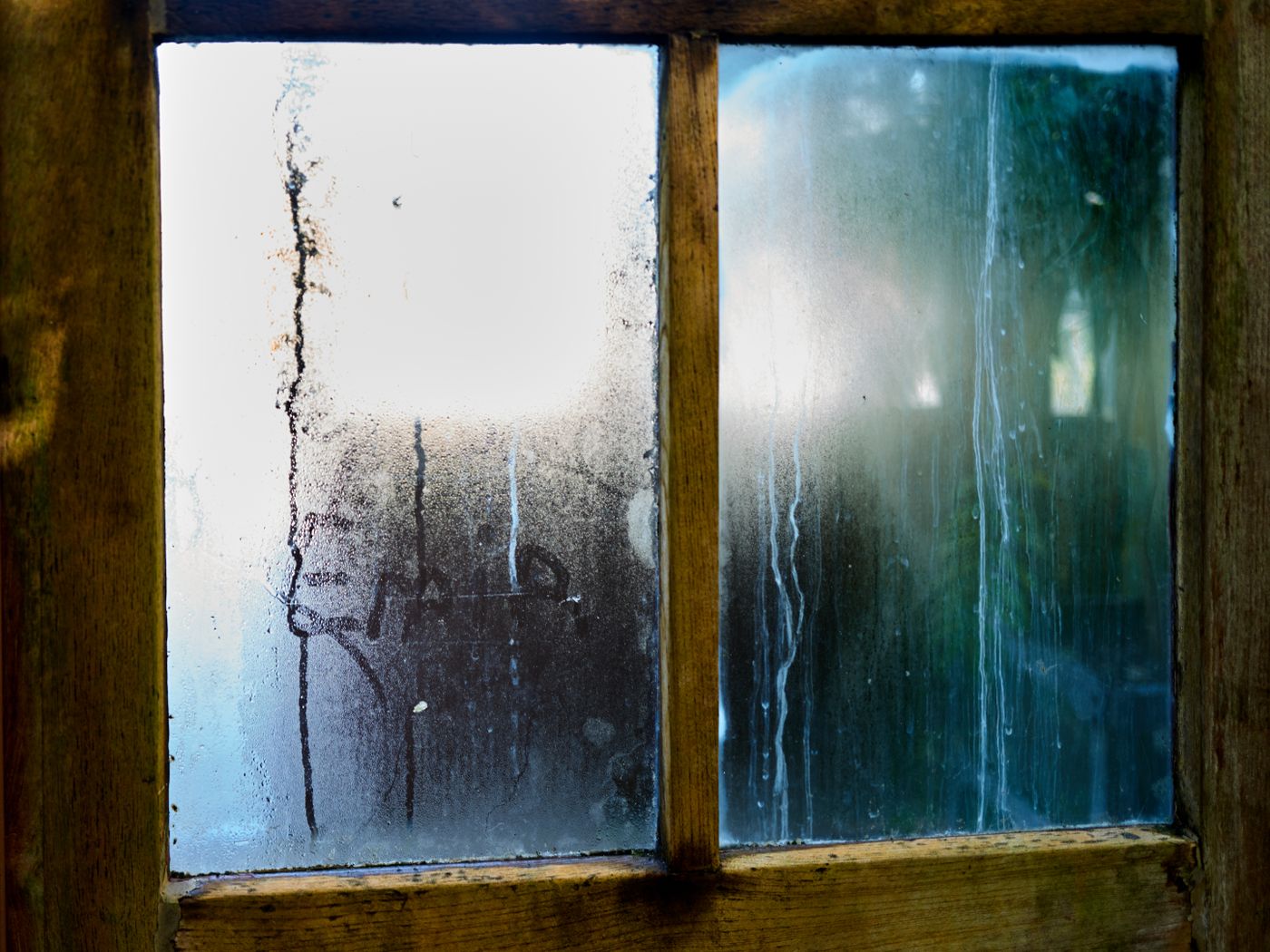
A room’s relative humidity describes the air at the temperature where it is measured. The surface of a window can be much colder than the air in the middle of the room. When air next to the glass cools to its dew point, it reaches saturation; further cooling can deposit liquid water on the glass. If the surface is cold enough, frost can form instead.
That means a room does not have to feel humid for condensation to appear. Lawrence Berkeley National Laboratory notes that cold outdoor conditions can cause moisture to collect on the inside of particularly cold windows even when indoor humidity is not elevated. A single-pane window, a cold corner, and a room’s center can therefore tell different parts of the same story. Persistent moisture should not simply be ignored: damp surfaces can encourage mold and damage materials.
Measure first, then manage moisture
A small instrument called a hygrometer measures relative humidity. Place it in the room you want to understand, away from a humidifier’s direct mist and other unusually wet or hot spots. Readings can vary across a building and from day to day, so a single number is a snapshot rather than a complete diagnosis. Watching the measurement alongside outdoor temperature and signs of condensation is more informative.
The U.S. Environmental Protection Agency advises keeping indoor relative humidity between 30% and 50% where practical. Its humidifier guidance cautions against raising it above 50%. In very cold weather, some buildings may need a lower setting to prevent condensation on cold surfaces; the right balance depends on the building, not just a target on a dial.
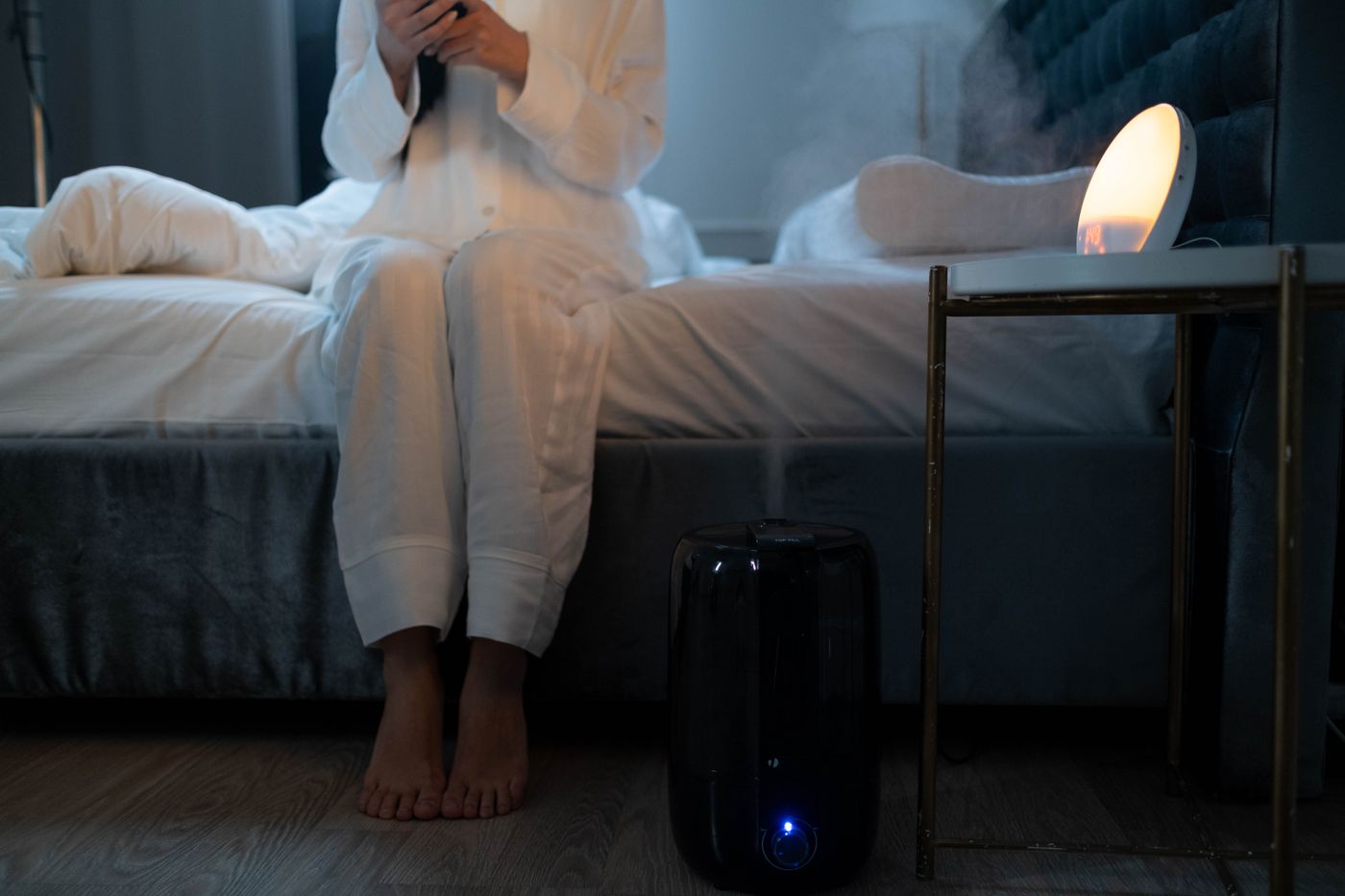
If a humidifier is used, follow the manufacturer’s cleaning and maintenance directions. The EPA warns that poorly maintained units can disperse microorganisms, and it recommends reducing use if condensation appears or nearby materials become damp. Address leaks and persistent wet spots rather than trying to solve every moisture problem by changing the room’s humidity alone.
The winter humidity puzzle is really a balance of temperatures and moving moisture. Warm a given parcel of air and its relative humidity drops; replace moist indoor air with colder, less moisture-rich outdoor air and the building may become drier over time. Yet cool a small patch of that same indoor air against a window and water can appear. The apparent contradiction disappears once temperature and location are part of the measurement.