 Akshay Dinesh
A cold drizzle soaks the shoulders of two sweaters. One soon feels heavy and clammy; the other remains surprisingly comfortable. That familiar contrast is behind the saying that wool keeps you warm when wet. The saying contains a useful truth, but it is easy to stretch too far. Wool is not waterproof, and a saturated wool garment does not insulate as well as a dry one.
What wool does unusually well is manage the awkward middle ground between dry and drenched. Its wavy fibers hold insulating air, its protein structure takes in water vapor without immediately feeling wet, and the absorption process releases a small amount of heat. Together, those effects help explain why generations of sailors, hikers, farmers, and outdoor workers have trusted wool in cold, changeable weather.
Warm clothing works by holding still air
A sweater does not create a permanent supply of heat. Your body creates heat, and clothing slows the rate at which that energy escapes. Air is central to that job because still air conducts heat poorly. A thick fabric that traps many small pockets of air can therefore form a useful thermal barrier between warm skin and cold surroundings.
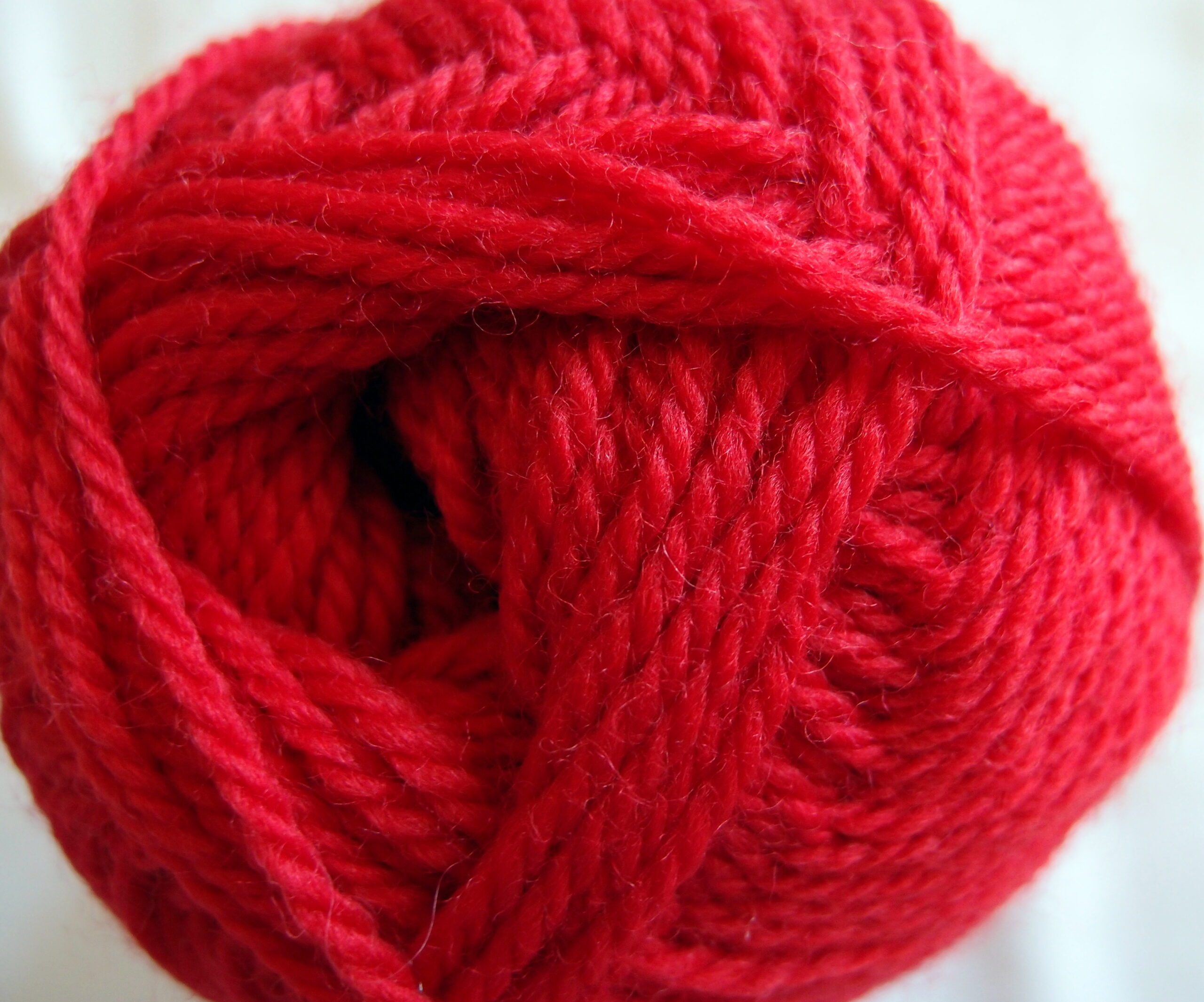
Wool fibers have a natural waviness called crimp. When the fibers are spun into yarn and knitted or woven, that crimp helps produce a bulky, springy structure with room for air. The loops in a knit add even more space. This is why a light, lofty garment can be warmer than a dense garment of the same weight: thickness and trapped air often matter more than the fiber name alone.
Fabric construction changes the result. A loose knit may trap air well when the air is calm but allow wind to push that warm layer away. A tightly woven wool coat blocks more moving air, while a thin Merino base layer mainly manages moisture next to the skin. Wool’s reputation comes from the whole structure of fiber, yarn, and fabric, not from a single mysterious property.
Wool handles liquid water and water vapor differently
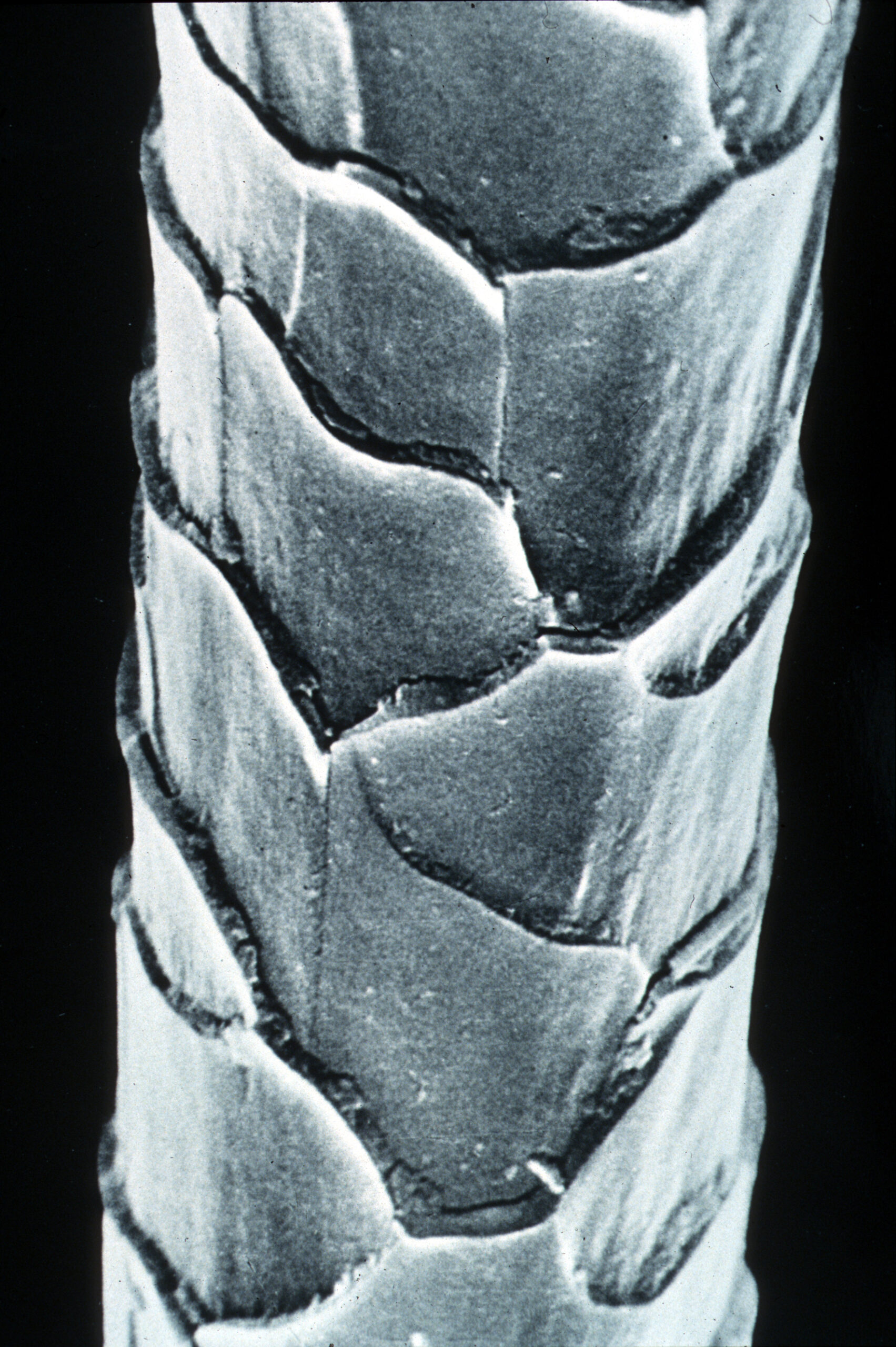
To understand damp wool, it helps to separate liquid water from invisible water vapor. The outer surface of a wool fiber is covered with overlapping scales and fatty compounds that make liquid droplets slow to spread. The fiber is not truly waterproof, especially after processing and repeated wear, but its surface does not behave like an absorbent paper towel.
Inside the fiber, the story changes. Wool is made mostly of keratin, a protein with chemical groups that attract water molecules. Water vapor can move into the fiber and bind within its internal structure. A recent scientific review, Wool: From Properties and Structure to Genetic Insights and Sheep Improvement Strategies, reports that wool can retain roughly one-third of its dry weight in water under very humid conditions. A garment can therefore take up substantial vapor before liquid fills every air space or the surface feels soaked.
This is called hygroscopic behavior. It does not mean that moisture disappears. It means some moisture is stored within the fibers rather than sitting entirely between them or against the skin. That difference can delay the cold, clammy sensation associated with sweat or humid air, while the fabric’s loft continues to preserve some insulating air.
The process also buffers humidity. When the air next to the body becomes humid, wool takes in vapor; when conditions become drier, it releases moisture again. Researchers Y. Li and B. V. Holcombe modeled this coupled movement of moisture and heat in wool fabric in a 1992 Textile Research Journal study. Their work helps show why comfort is dynamic: a fabric is continually exchanging both heat and water with the small climate inside clothing.
Absorbing moisture releases a little heat
When water molecules bind to sites in wool’s protein structure, the process is exothermic, meaning it releases heat. Textile scientists call this the heat of sorption or heat of wetting. The effect is real and measurable. A 2026 study in the journal Fibers used isothermal microcalorimetry to compare wool, cotton, viscose, and polyester fabrics; wool produced the strongest heat response as it absorbed moisture, while polyester’s response was negligible.
This does not turn a sweater into a heater. The warming is temporary, strongest when relatively dry wool first encounters more humid air, and limited by how much moisture the fibers can take up. It cannot replace the continuous heat made by the body or overcome the cooling caused by rain, wind, and evaporation. Its value is subtler: it can soften the temperature drop during a change from dry to damp conditions.
Evaporation pulls in the opposite direction. Water needs energy to change from liquid to vapor, and some of that energy may come from the wearer’s skin and clothing. Slow moisture release can spread that cooling over time, but a wet garment drying in moving air can still chill the body. Wool manages the transition well; it does not cancel the physics.
Why damp wool often beats wet cotton
Cotton is also hygroscopic, so the simple claim that wool absorbs water while cotton does not is wrong. The practical difference lies in how much water the garment takes up, where that water sits, how the fabric structure changes, and how the material feels against skin. Wet cotton fabrics can lose loft, cling closely, and replace insulating air with water. Because water transfers heat much more readily than still air, that collapsed, water-filled structure can carry body heat away quickly.
Wool’s crimp and elastic recovery help it remain bulkier when damp. Some moisture sits within the fiber, leaving more of the spaces between fibers available for air. Laboratory research on dampness perception has also found that wool can feel drier and maintain a warmer skin-contact temperature than less hygroscopic fabrics under particular test conditions. Those results support the everyday observation, but they do not justify treating all wool, cotton, and synthetic garments as identical within their groups.
A thick cotton sweatshirt and a thin wool shirt differ in mass, thickness, fit, weave, and drying conditions. Synthetic fleece absorbs little water into the fiber itself and can dry quickly, while modern blends may combine wool’s humidity buffering with the strength and drying behavior of synthetics. Fair comparisons have to consider the finished garment, not just the raw fiber.
Most of all, damp is not the same as saturated. Once water floods the gaps that once held air, wool loses a large share of its insulating ability too. A dripping wool sweater may still be preferable to an equally soaked cotton one in some conditions, but neither belongs in a cold-weather plan without wind and rain protection.
Use wool as part of a clothing system
Wool performs best when each layer has a clear job. A base layer can move sweat away from the skin and buffer humidity. A loftier middle layer holds air. A breathable shell blocks wind and sheds rain or snow before those insulating spaces fill with water. Openings at the neck, cuffs, and waist allow excess heat to escape before sweating overwhelms the layers.
Garment care preserves those useful structures. Harsh agitation, heat, and sudden temperature changes can encourage wool’s surface scales to lock together, producing felting and shrinkage. Following the care label, using a gentle wool cycle when permitted, and drying the garment without stretching it help protect loft and fit. A compressed, matted sweater cannot trap air as effectively as a resilient one.
If wool becomes soaked outdoors, the priorities remain ordinary and practical: get out of wind and rain, replace the wet garment when possible, and add dry insulation. Do not depend on fiber chemistry to solve prolonged exposure. Wool earns its reputation by buying comfort and resilience during damp, shifting conditions, not by making water harmless.
That narrower claim is more impressive than the myth. The fiber’s curl builds pockets for still air, its keratin stores water vapor, and moisture absorption briefly releases heat. Wool stays useful when conditions stop being perfect because several small physical advantages work at once. It is not warm despite the laws of heat transfer; it is warm because its structure makes unusually good use of them.