 Akshay Dinesh
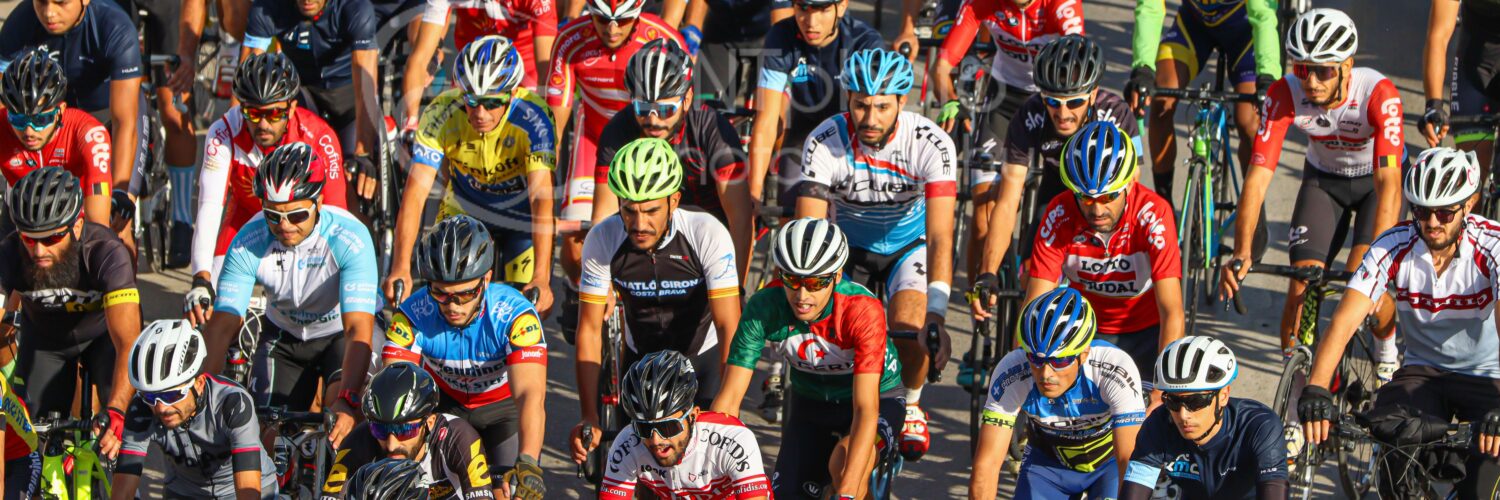
In a road race, the fastest-looking rider is not always the one doing the smartest work. Watch the Tour de France for a few minutes and the same pattern appears again and again: dozens of cyclists gather into a moving pack, shoulder to shoulder, wheels only inches apart. That pack is called a peloton, and it is not just a crowd. It is a physics machine built from air resistance, trust, timing, and shared exhaustion.
The basic reason cyclists ride this way is simple: moving through air costs energy. At racing speed, a rider spends much of their effort pushing air out of the way. By riding close behind or beside other cyclists, riders can reduce that drag, save strength, and stay ready for climbs, attacks, sprints, and long days on the road. The peloton is where individual endurance meets group strategy.
Air Resistance Becomes the Main Opponent
A bicycle looks light and efficient, but a racing cyclist is still moving through a thick fluid: air. At low speeds, rolling resistance from the tires and friction in the bike matter. At high speeds, aerodynamic drag becomes the larger problem. The faster a rider goes, the harder the air pushes back, and the cost rises sharply rather than gently.
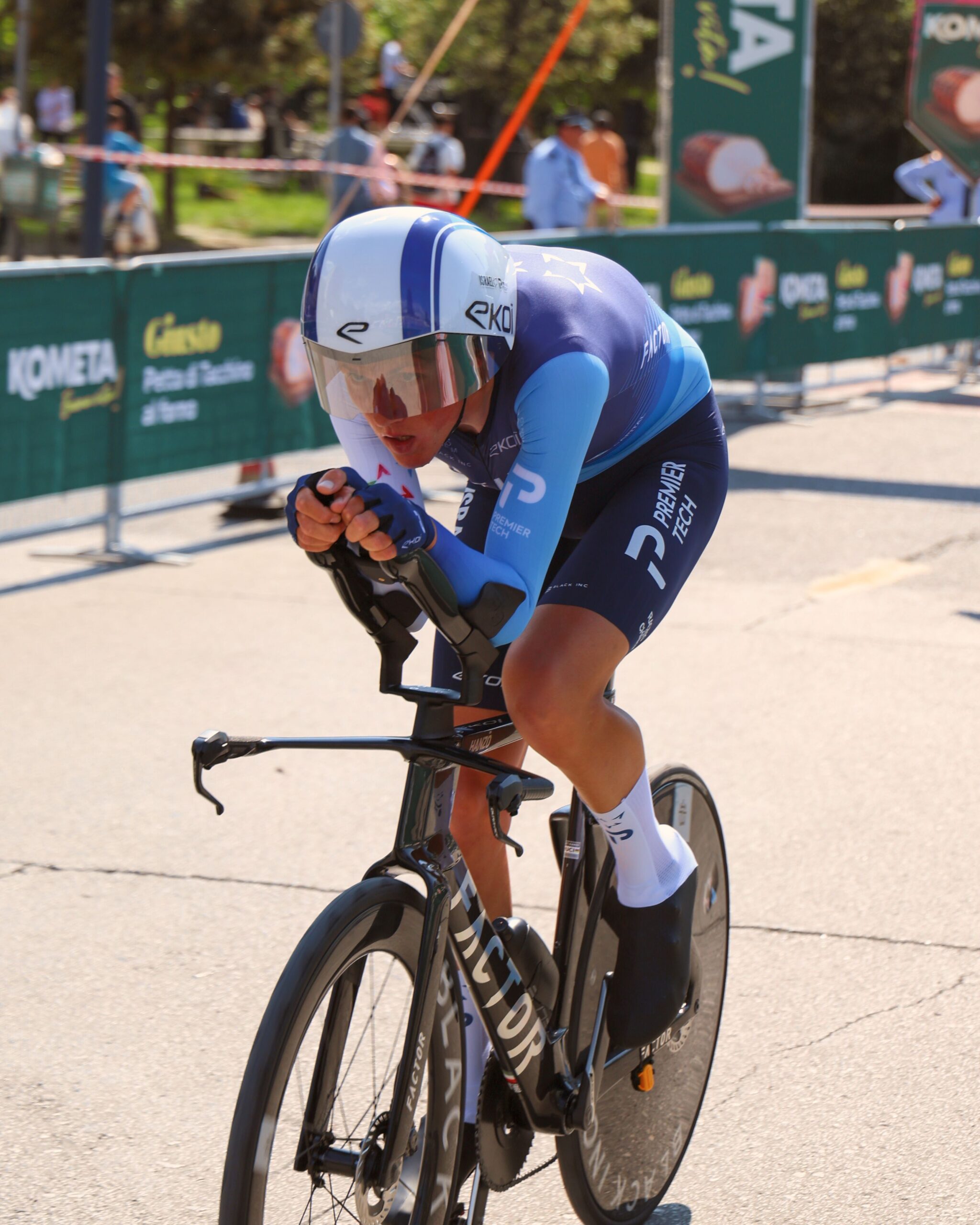
That is why a solo cyclist in a time trial crouches low, narrows the shoulders, tucks the elbows, and uses smooth equipment. The goal is to reduce the frontal area and make the air separate less violently behind the body. A rider sitting upright meets more air. A rider in a tight aerodynamic position gives the air a smaller, cleaner shape to flow around.
The drag force depends on several things: air density, speed, body shape, frontal area, and the way air swirls behind the rider. In racing, speed is the brutal variable. When speed doubles, aerodynamic drag can grow roughly with the square of speed, while the power needed to overcome it rises even faster. That means a small change in shelter or position can become a large difference in energy over an hour of racing.
Drafting Lets Riders Borrow Shelter
Drafting happens when a cyclist rides in the disturbed air behind another cyclist. The leading rider pushes into clean air first, creating a wake of lower-pressure, turbulent air behind them. A following rider in that wake faces less direct air resistance, so the same speed takes less effort. The follower is not being pulled forward like a wagon, but the air around them is easier to move through.
This is why riders line up in pacelines on flat roads. The front rider works hardest for a short stretch, then swings aside and lets another rider take over. Everyone behind gets a break, and the whole group can travel faster than most of its members could manage alone for the same distance. In team time trials, that rotation becomes almost choreographed, because a mistimed pull can waste energy for the entire group.
Researchers have measured the effect in wind tunnels, road tests, and computer simulations. A widely cited 2018 study led by Bert Blocken used high-resolution computational fluid dynamics and wind-tunnel validation to model large cycling pelotons. The result was striking: riders deep inside a dense peloton can experience far less drag than a cyclist riding alone. The exact savings depend on position, spacing, wind, speed, and posture, but the central idea is clear. The pack changes the air for everyone inside it.
The Peloton Is Not Equally Easy Everywhere
From the outside, the peloton may look like one big shelter. Inside, it is more complicated. The riders at the very front still take the cleanest wind and do the most aerodynamic work. Riders tucked just behind them get a meaningful reduction in drag. Riders deeper in the group may save even more, especially when the road is flat and the pack is tightly arranged.
Position matters because air does not flow through the peloton in a neat tunnel. It spills around riders, curls through gaps, and changes whenever the road bends, the speed rises, or the wind shifts. A rider near the middle may feel protected one minute and exposed the next if the group stretches out or a crosswind arrives. The pack is alive, not fixed.
Crosswinds create one of the clearest examples. When wind comes from the side, the best shelter is no longer directly behind the rider ahead. It sits diagonally downwind. Cyclists respond by forming echelons, diagonal lines that spread across the road. Because the road has limited width, only some riders can fit into the best protected positions. Those caught at the back or on the exposed side may suddenly work much harder and lose contact.
That is why professional teams watch wind forecasts so closely. A flat stage can look calm on a map and still become decisive if crosswinds split the peloton. The riders who understand shelter, timing, and road position can turn a weather detail into a race-changing move.
Saving Energy Changes Race Strategy
The peloton does more than make riding easier. It changes what tactics are possible. A rider who spends hours sheltered in the group may have enough energy left to attack on a climb or sprint near the finish. A rider who spends too long at the front may look strong early and pay for it later. In stage racing, that tradeoff matters day after day.
This is why teams protect their leaders. A general classification contender does not usually sit in the wind all afternoon. Teammates guide them through the pack, keep them near the front where crashes and splits are easier to avoid, and take turns absorbing the harder work. The protected rider still suffers, especially on climbs, but they are not wasting energy unnecessarily on flat or rolling roads.
Sprinters rely on the same physics in a different way. Near the end of a flat stage, teammates often form a lead-out train. Each rider takes a high-speed pull, then peels off after spending their effort. The sprinter stays sheltered until the final seconds, when there is no longer any point saving energy. The winning move may look like one sudden burst, but it is often built by several riders spending themselves in order.
Breakaways face the opposite problem. A small group ahead of the peloton may rotate smoothly and cooperate, but it lacks the deep shelter of the main pack. Behind them, dozens of riders can share the workload. If the peloton organizes the chase early enough, the breakaway must either be unusually strong, unusually lucky, or tactically overlooked to survive.
Close Riding Requires Skill and Trust
The benefits of a peloton come with risk. Riders save energy by staying close, but close riding leaves little room for hesitation. A small touch of wheels can cause a crash. A sudden brake, a pothole, a bottle on the road, or a nervous movement can ripple through the group faster than a rider near the back can react.
Experienced cyclists learn to read the pack with more than their eyes. They listen for gear changes and braking, feel speed changes through the line, and watch shoulders and hips for clues about movement. They avoid staring only at the wheel ahead, because safe riding depends on sensing the group several riders deep. The skill is partly physical and partly social: hold your line, communicate danger, do not overlap wheels carelessly, and make predictable choices.
That is why a peloton is not just an aerodynamic formation. It is a temporary agreement among competitors. Riders want to beat one another, but they also depend on shared order. The group can move at astonishing speed because most riders understand the same unwritten rules about spacing, rotation, and risk.
Why the Pack Eventually Breaks Apart
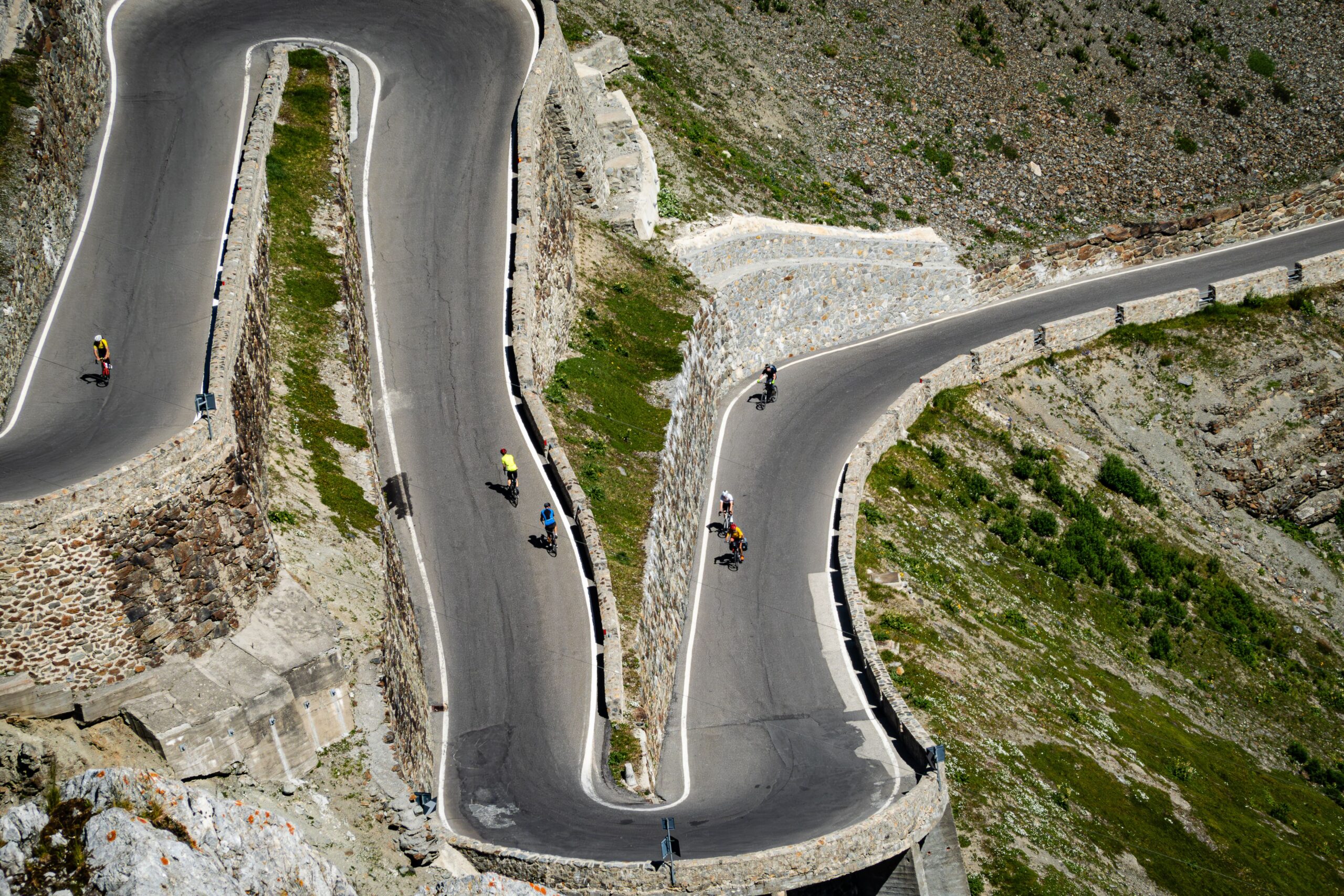
If the peloton saves so much energy, it might seem strange that races ever split. The reason is that shelter helps most on faster, flatter roads where air resistance dominates. On steep climbs, speed drops and gravity becomes the larger obstacle. Drafting still matters a little, but a rider cannot hide from the work of lifting body and bike uphill. Strong climbers use that change to force separation.
Attacks also work by disrupting comfort. A sudden acceleration stretches the pack into a line, reducing the shelter that riders get from sitting in a broad group. Corners, narrow roads, cobblestones, descents, and crosswinds can do the same thing. Once gaps open, the riders behind must spend extra energy to close them. If the gap grows large enough, the physics of the peloton stops helping those who have been dropped.
The drama of road racing often comes from this tension. The peloton protects riders, but it can also trap them. It saves energy, but it demands attention. It makes the race faster, but it punishes anyone who misses the moment when the group changes shape. That is why the sight of a tightly packed field is not a pause in the race. It is the race, written in moving air.
A peloton works because no cyclist can negotiate with physics alone for very long. Air resistance makes speed expensive, drafting makes cooperation valuable, and strategy decides who spends energy now and who saves it for later. The result is one of the clearest examples in sports of science becoming tactics in real time.