 Akshay Dinesh
A heat pump can look strangely dramatic on a cold, damp morning. Its outdoor fan stops. The unit makes a different sound, a white cloud rises from the cabinet, and the air from indoor vents may briefly feel cooler. Those signs can resemble a breakdown, but together they often mean the system is doing exactly what it was designed to do: melting frost from its outdoor coil.
This automatic defrost cycle protects both heating capacity and efficiency. It is a short interruption, not a separate source of heat, and it reveals something easily missed about heat pumps: winter heating still depends on an outdoor heat exchanger that needs open airflow. Knowing what happens during those few minutes makes it easier to distinguish normal operation from ice buildup that deserves attention.
Why frost forms while a heat pump is heating
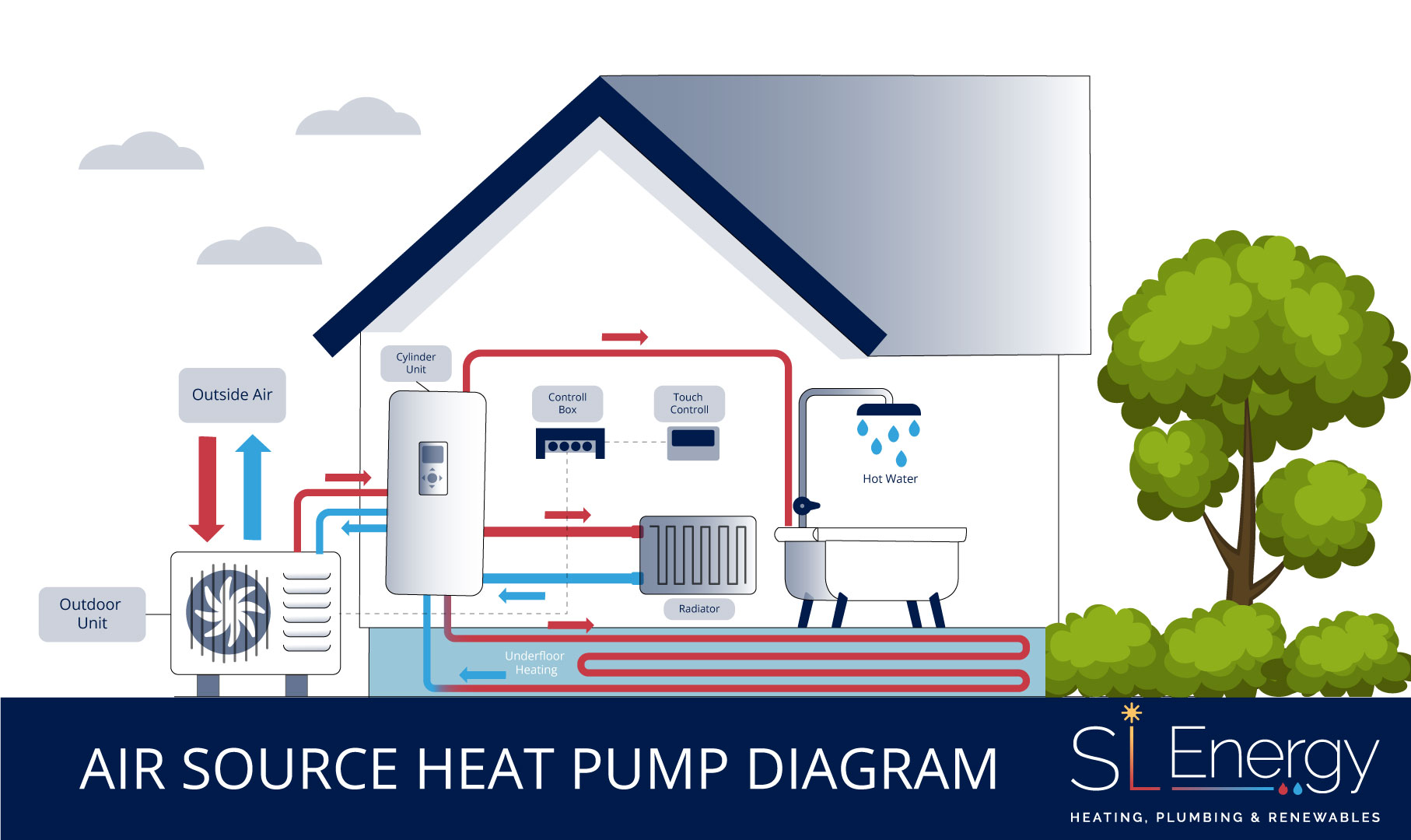
An air-source heat pump does not create most of its heat by warming a metal element. It moves thermal energy. In heating mode, cold refrigerant passes through the outdoor coil and absorbs energy from the air. The compressor then raises the refrigerant’s pressure and temperature, allowing the indoor coil to release that energy into the home. Outdoor air can contain useful heat even when it feels cold to us.
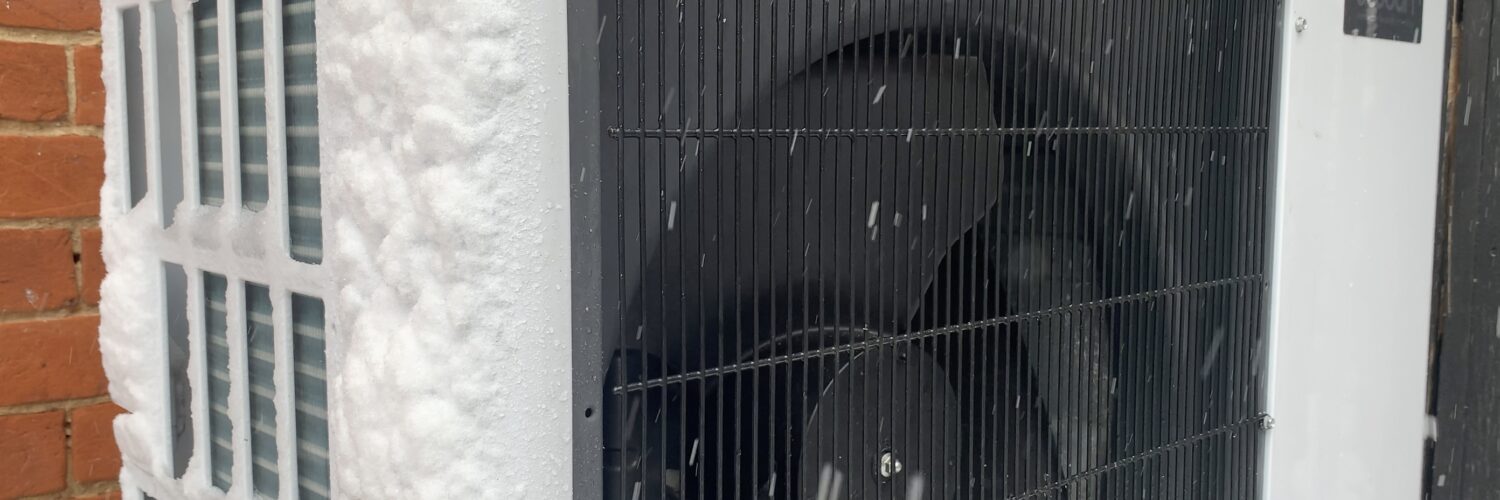
The outdoor coil must be colder than the surrounding air for this transfer to occur. When its surface also falls below the air’s dew point, water vapor condenses on the metal fins. If the fins are below freezing, that moisture becomes frost. Damp air near freezing can therefore create more frosting trouble than much colder, drier air. The weather does not need to be snowy, and frost on the coil does not by itself mean the equipment is failing.
A light coating cannot simply remain there. Frost narrows the spaces between the fins, restricts airflow, and acts as an insulating layer. The fan has to pull air through a growing obstruction while less heat reaches the refrigerant. Left alone, the buildup would steadily reduce the unit’s capacity. Defrost mode is the system’s way of restoring the coil before that happens.
What changes during the defrost cycle
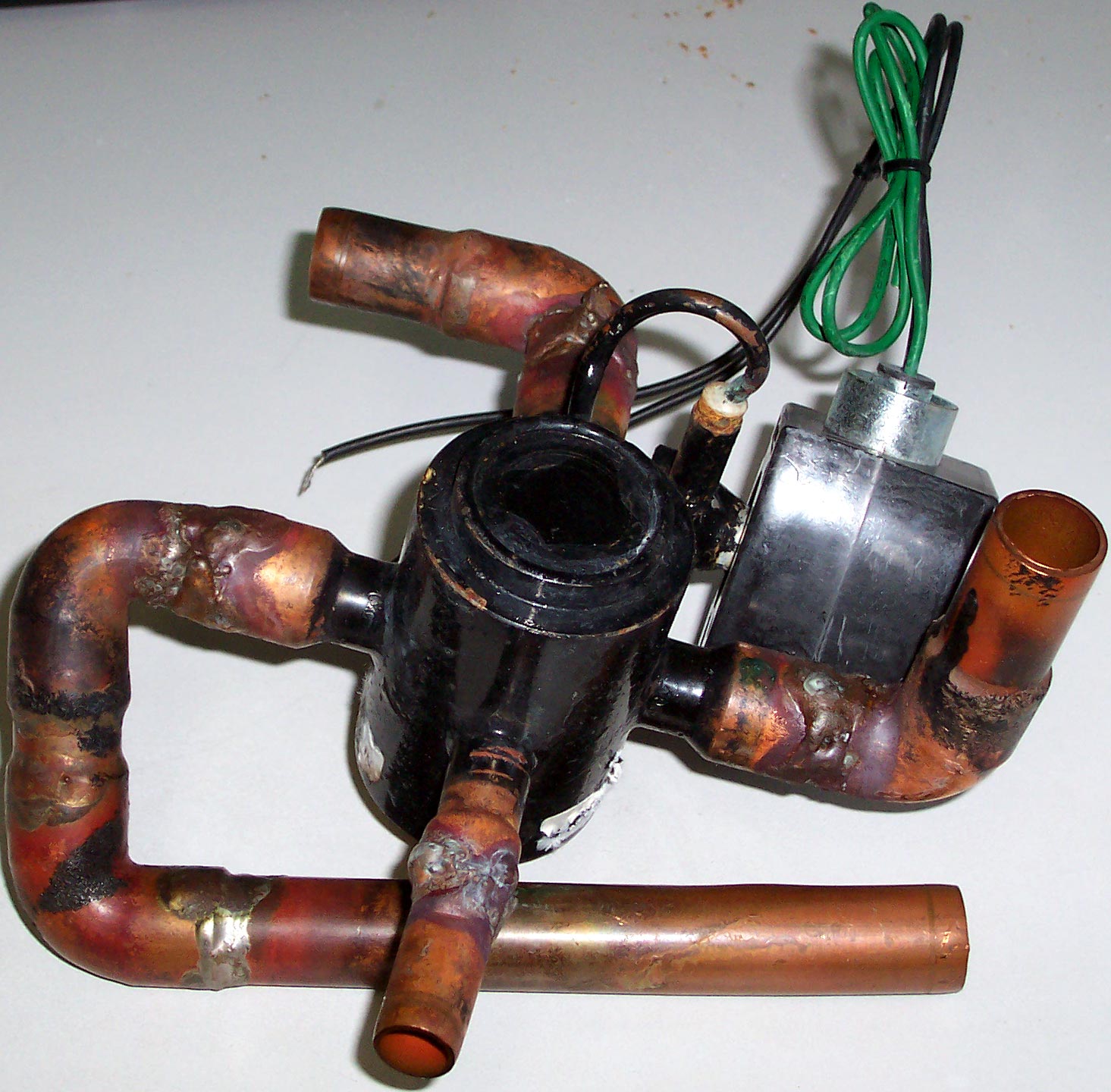
Most air-source heat pumps clear frost by temporarily reversing the refrigerant flow. A component called the reversing valve switches the equipment into a cooling-like arrangement: the outdoor coil becomes hot enough to melt its ice, while the indoor coil becomes cold. The compressor continues running, but the outdoor fan commonly stops so that it does not carry away the heat needed for defrosting.
That reversal explains several odd but normal observations. Meltwater can drain from beneath the outdoor cabinet. Warm, moist air around the coil may produce a white plume when it meets cold outdoor air. The cloud is condensed water droplets, not smoke. A hiss, whoosh, or change in compressor pitch can accompany the reversing valve’s movement and the shift in refrigerant pressure.
Indoors, the system has temporarily stopped delivering heat through the refrigerant circuit. Many ducted heat pumps turn on electric resistance strips during this interval so the vents do not blow distinctly cold air. Other systems reduce or stop the indoor fan, and some allow a short burst of cool air. The Department of Energy’s Building Science Education materials describe typical defrost periods of roughly 5 to 15 minutes, although the actual duration depends on the model, controls, and conditions.
How the system decides when to defrost
Older controls often combine a timer with an outdoor-coil temperature sensor. After the compressor has accumulated a set amount of runtime, the controller checks whether the coil is cold enough to need defrosting. More advanced demand-defrost controls use temperature, pressure, or performance changes to infer that frost is actually interfering with heat transfer. The goal is to clear enough ice without reversing the cycle more often or longer than necessary.
That balance matters because defrost is not free. Energy goes into warming the outdoor coil, and electric auxiliary heat may run indoors at the same time. A National Renewable Energy Laboratory field study of cold-climate heat pumps found that defrosting occurred most often in a band around 20 to 40 degrees Fahrenheit on a wet-bulb basis, where air can be both cold and moist. At several monitored homes, defrost consumed more than 20 percent of the energy attributed to compressor-based heating during the study period. Those results do not describe every installation, but they show why good controls matter.
A cycle that starts only when needed is called demand defrost. One that relies too heavily on elapsed time may run even when the coil is relatively clear; one that waits too long lets frost choke the airflow. Manufacturers tune this logic around their equipment, so there is no universal schedule that a homeowner should try to force. A few cycles on a damp day can be normal, while the same unit may need little or no defrosting during a dry cold spell.
Auxiliary heat is not the same as emergency heat
The thermostat may display AUX HEAT during defrost or during weather when the heat pump cannot meet the home’s full heating demand by itself. In many ducted systems, that label means electric resistance strips have joined the heat pump automatically. They turn electricity directly into heat, so they usually cost more to operate than the heat-pump compressor. Their brief use during defrost keeps the indoor temperature steadier while the outdoor coil is being warmed.
Emergency heat is different. That thermostat setting usually locks out the outdoor heat-pump compressor and relies on the backup source, such as electric strips or a furnace. It is meant for situations in which the heat-pump side cannot operate correctly, not as a way to make a normally functioning system defrost faster. Selecting emergency heat casually can raise energy use and may hide a problem that needs diagnosis.
A short auxiliary-heat indication is therefore not automatically alarming. A display that stays on for long periods in mild weather is more useful evidence. It can point to a large thermostat setback, equipment that is struggling to reach the set temperature, or a fault. Thermostat behavior varies, so the equipment manual is the best guide to what a particular label means.
Normal frost and warning signs are not the same
A thin, fairly even layer of frost that appears in cold, moist weather and disappears after a short cycle is part of normal operation. So are temporary fan stoppage, drainage, a change in sound, and a cloud of water vapor. The unit should return to heating, and the coil should be largely clear when defrost ends.
Heavy or persistent ice tells a different story. A coil encased in solid ice, frost that never clears, repeated cycling every few minutes, or ice that spreads well beyond the coil can indicate blocked airflow, a faulty sensor or control, a fan problem, low refrigerant, or water freezing onto the unit from a roof or gutter. Weak indoor heating, unusual mechanical noise, or a defrost cycle that seems unable to finish also warrants professional attention.
Homeowners can make a few observations without opening the cabinet:
- Keep leaves, drifting snow, and stored objects away from the outdoor unit so air can move freely.
- Check the indoor air filter according to the manufacturer’s schedule.
- Make sure roof runoff is not falling onto the cabinet and refreezing.
- Note the weather, cycle length, thermostat message, and whether the ice clears before calling for service.
Do not cover a working heat pump, chip ice from delicate coil fins, or pour boiling water over the equipment. Refrigerant, electrical components, and control faults belong to a qualified technician. A clear description or short video of the behavior can be more useful to that technician than an attempted repair.
A brief winter interruption protects the whole system
Defrost mode is a small engineering compromise. The heat pump gives up a few minutes of indoor heating and spends some energy to recover an outdoor coil that can again absorb heat efficiently. The steam, stopped fan, and momentary cool draft all follow from that reversal.
The important distinction is whether the cycle completes its job. Frost that comes and goes is expected; ice that stays and grows is not. Once that boundary is clear, one of winter’s more puzzling household sights becomes readable: a white cloud can be evidence of a heat pump maintaining itself, not a machine coming apart.