 Akshay Dinesh
A forest can look peaceful and still be carrying a heavy fire load. Dry grass, fallen needles, small branches, dead leaves, shrubs, and young trees can collect for years on the ground and in the lower understory. When lightning, an escaped campfire, or a power line starts a fire during hot, windy weather, that built-up fuel can help flames climb from the forest floor into tree crowns, where fire becomes harder to slow. Prescribed burning tries to change that story before the most dangerous day arrives.
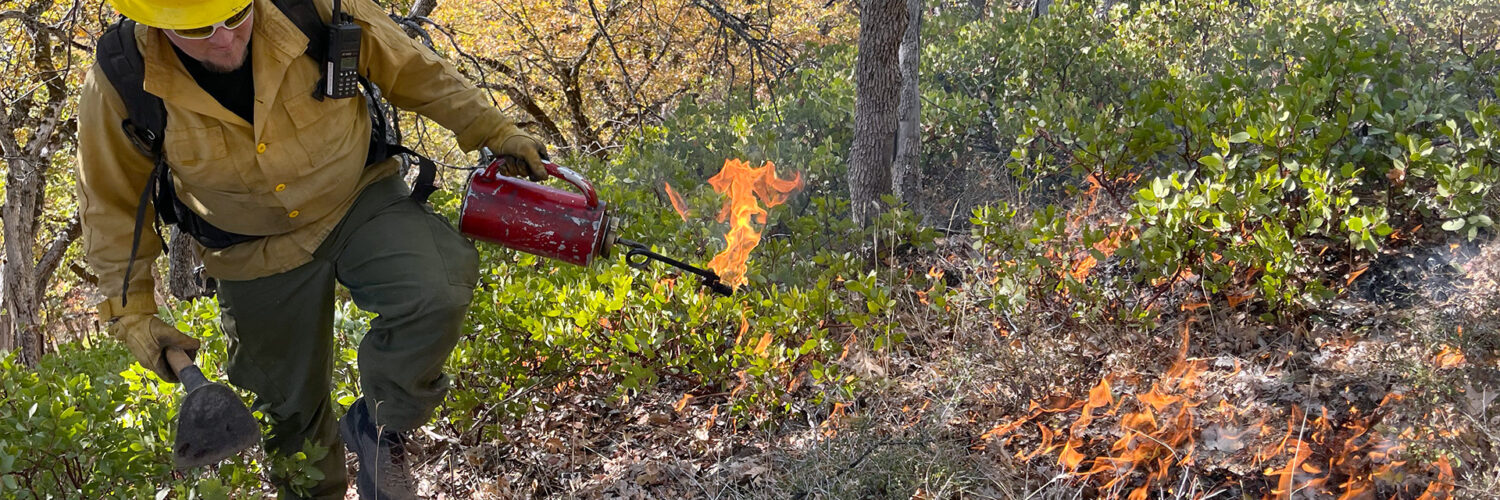
A prescribed burn is a planned, deliberately set fire carried out under specific weather, staffing, and safety conditions. It is not simply a wildfire allowed to wander. Fire managers write a burn plan, study temperature and humidity, watch wind direction, prepare boundaries, notify nearby communities, and keep crews on site while the fire does a carefully chosen job. The goal is usually not to burn everything. It is to let low- to moderate-intensity fire remove the fuels most likely to feed a much more destructive fire later.
Why some landscapes need fire
For much of the twentieth century, land management in the United States often treated fire as an enemy to be put out as quickly as possible. That approach protected lives, homes, timber, and infrastructure in many urgent situations, but it also changed forests, grasslands, and shrublands that had long experienced periodic fire. In many places, natural lightning fires and Indigenous fire stewardship had once helped keep fuels from piling up without interruption.
When fire is excluded for decades, some landscapes become denser than they were historically. Small trees fill gaps, dead wood accumulates, and shrubs grow into continuous layers. These materials can act like kindling and ladders: surface fuels help fire spread along the ground, while ladder fuels help it rise into taller vegetation. A fire that might once have crept through grasses or leaf litter can become a crown fire that races through treetops.
Prescribed fire does not fit every ecosystem, and it cannot erase all wildfire danger. Wet forests, dry pine forests, prairies, oak woodlands, chaparral, and peatlands respond differently to fire. Still, in fire-adapted landscapes, returning carefully managed fire can restore a missing ecological process. It can recycle nutrients, open space for certain native plants, reduce invasive growth in some habitats, and leave larger, fire-tolerant trees with a better chance of surviving the next wildfire.
How a planned burn changes fire behavior
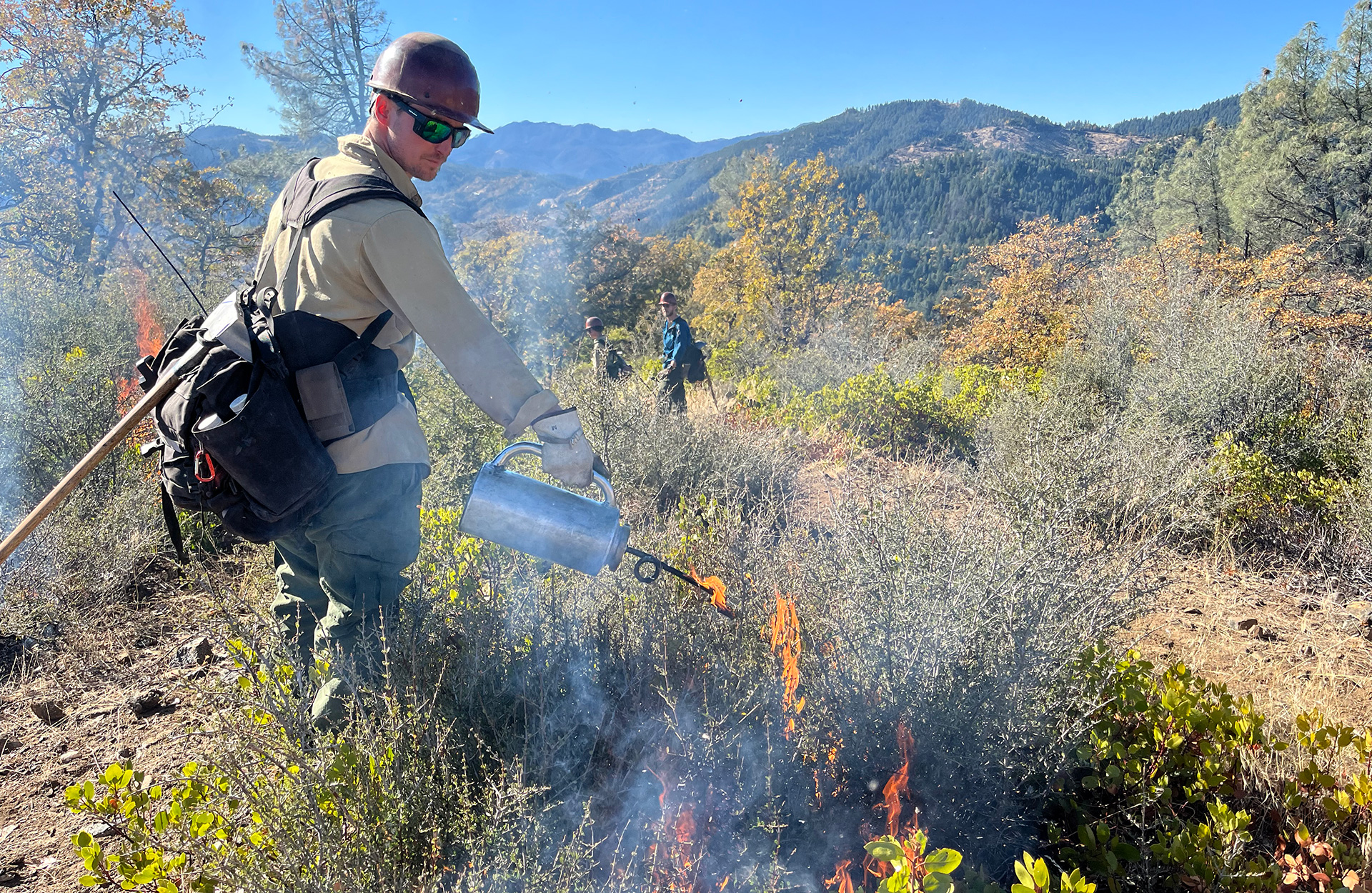
Fire needs fuel, heat, and oxygen. Prescribed burns focus on the part managers can change ahead of time: fuel. By burning leaf litter, grasses, needles, small branches, and low shrubs under moderate conditions, crews reduce the material available to a future wildfire. That matters because fire behavior is not controlled only by the spark. It is shaped by how much fuel is present, how dry it is, how continuous it is, and whether flames can move upward through the vegetation.
A useful way to picture this is to imagine a campfire. A few thin twigs catch quickly and can help ignite larger wood. If there are no twigs, the larger pieces are harder to light. In a forest, fine fuels such as pine needles and dry grasses can play a similar role. When they are abundant and connected across the ground, they help flames spread. When a prescribed burn removes some of that layer, a later wildfire may have less energy and fewer paths to grow.
Fire managers also think about ladder fuels. These include shrubs, saplings, and low branches that can carry flames from the ground into the canopy. Once fire reaches the crowns of trees, wind can push it fast, embers can travel far ahead, and firefighting becomes more difficult. Low-intensity prescribed fire can reduce some ladder fuels, especially when combined with thinning or other mechanical work that removes dense small trees first.
The research base is strong enough to show that this is not just a neat idea on paper. A 2024 review in Forest Ecology and Management examined thinning, prescribed fire, and wildfire effects in western U.S. conifer forests. The authors found that treatments involving prescribed burning reduced later wildfire severity substantially compared with untreated areas, and that thinning alone was less effective when surface fuels were left behind. The effect also weakened as treatments aged, which is why prescribed fire is usually part of ongoing management rather than a one-time fix.
Why timing and weather matter so much
The same fire can behave very differently on two different days. A burn that creeps through grass during cool, damp, calm weather might run fast under hot, dry, windy conditions. This is why prescribed fire depends on a prescription: a set of acceptable conditions for temperature, humidity, wind speed, wind direction, fuel moisture, crew size, equipment, and smoke movement.
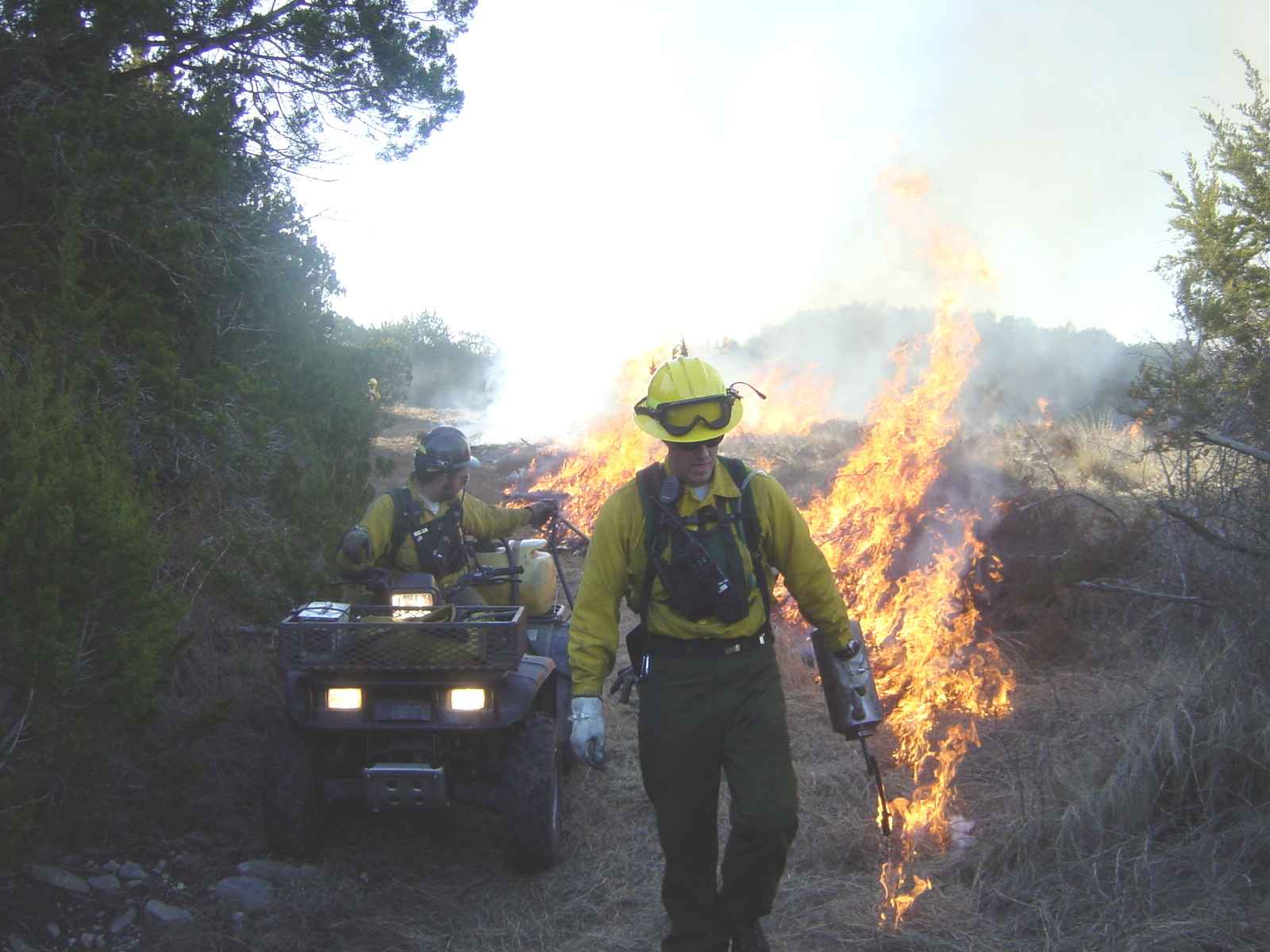
Before a larger burn begins, crews often light a small test fire. If the test fire burns too intensely, does not carry well enough, or sends smoke in the wrong direction, managers can stop before committing to the full operation. If conditions match the plan, crews use tools such as drip torches to place fire in patterns that help flames move at the right pace. Roads, trails, streams, wet lines, cleared strips, or previously burned areas may serve as holding features along the boundary.
This careful timing is one reason prescribed burns often happen in spring, fall, or winter rather than during the worst part of fire season. Managers are looking for a narrow window: dry enough for unwanted fuels to burn, but not so dry and windy that fire becomes difficult to control. The window can close quickly. A shift in wind, a drop in humidity, or a change in staffing can postpone a burn that took months or years to prepare.
That caution is necessary because prescribed burns carry real risk. Escaped prescribed fires are uncommon compared with the total number of planned burns, but they can cause serious harm when they occur. Good fire management does not pretend the risk is zero. It reduces risk through planning, training, local knowledge, backup resources, and the willingness to cancel when conditions are not right.
The smoke tradeoff
Prescribed fire produces smoke, and that smoke matters. Fine particles can irritate eyes and lungs, worsen asthma or heart disease, and create difficult conditions for people who are more sensitive to air pollution. The U.S. Environmental Protection Agency warns that wildfire smoke can affect respiratory and cardiovascular health, and smoke from planned burns still needs careful management even when the fire itself is beneficial.
The argument for prescribed fire is not that smoke disappears. It is that a smaller, planned smoke event may prevent or reduce a larger, uncontrolled smoke event later. Fire managers can choose days when wind carries smoke away from crowded areas, avoid conditions that trap smoke near the ground, communicate with communities, and coordinate with air-quality agencies. Wildfires, by contrast, often burn during the hottest and driest periods, when smoke can last for days or weeks and travel across entire regions.
Recent research has added useful detail to this tradeoff. A Stanford-led study published in 2026, based on two decades of California fire and smoke data, found that low-severity fire can reduce the likelihood of very high-severity wildfire in treated areas and may lower long-term fine-particle smoke pollution when used at meaningful scale. That does not mean every burn automatically improves air quality for every nearby person. It does suggest that smoke planning should compare prescribed fire with the wildfire risk it may reduce, not with a world where no fire ever happens.
For families near a planned burn, the practical question is often immediate: What should we do today? The answer depends on local notices and air-quality readings. People with asthma, heart disease, pregnancy, older age, or very young children may need to limit outdoor activity, use filtered indoor air, or follow medical advice during smoky periods. A successful prescribed fire program earns public trust partly by taking those concerns seriously.
Why prescribed burns are not enough by themselves
Prescribed fire is a powerful tool, but it is not a magic shield around every community. In some places, there is too much built-up fuel for fire to be introduced safely before mechanical thinning reduces dense vegetation. In other places, homes are so close to flammable vegetation that defensible space, building materials, evacuation planning, and utility safety matter just as much as landscape treatment. Fire risk is a system, not a single switch.
Scale is another challenge. Treating a small area can help that area, but regional wildfire behavior depends on many connected landscapes. If treatments are too scattered, too old, or too far from where fires are likely to spread, their effect may be limited. The 2024 Forest Service-linked review found that treatment benefits declined over time, which means communities cannot treat once and walk away for decades. Vegetation keeps growing back.
Prescribed fire also requires skilled workers, equipment, public coordination, liability rules, and days when weather cooperates. Climate change can make those windows harder to find by intensifying heat, drying fuels, and lengthening fire seasons in many regions. The result is a difficult balance: the need for beneficial fire grows, while the safest opportunities to use it may become more limited.
Still, the alternative is not usually between fire and no fire. It is between different kinds of fire, arriving under different levels of control. A planned burn on a mild day can remove fuel in a way that gives firefighters more options later. An unplanned wildfire on a windy, dry day may make all the decisions at once.
A safer relationship with fire
Prescribed burns reduce wildfire risk by changing what is waiting on the ground before the spark arrives. They lower surface fuels, interrupt ladder fuels, help some fire-adapted ecosystems recover, and can make future wildfires less severe when treatments are placed and maintained well. The work is slow, local, and sometimes smoky, but it is grounded in a simple reality: many landscapes will burn eventually.
The question is whether fire arrives only as a crisis or sometimes as a planned tool. Used carelessly, fire can do great damage. Used carefully, with science, training, community notice, and respect for air quality, it can reduce the chance that the next wildfire becomes a fast-moving disaster. Prescribed burning is not about making fire harmless. It is about making some fires smaller, cooler, and more manageable so the worst days have less fuel to work with.