

 Akshay Dinesh
On a cold morning, the liquid inside a parked car’s cooling system faces the same weather as the rest of the vehicle. Plain water could freeze and expand, damaging components. Yet the answer is not simply to fill the system with pure antifreeze. In many vehicles, a carefully chosen mixture of antifreeze and water protects better against freezing than either liquid alone.
Engine coolant has work to do in every season. It carries heat away from the engine, resists boiling when the engine is hot, and helps protect metal parts against corrosion. Understanding how those jobs fit together explains why the right mixture matters more than the strongest-looking one.
What coolant does inside an engine
A running combustion engine produces heat, and some of it must be carried away to keep its parts within their intended operating temperatures. In a liquid-cooled engine, a pump circulates coolant through passages around hot components and through a radiator, where heat passes to the surrounding air. A thermostat helps regulate coolant flow as the engine warms. The same circulating liquid can also supply heat to the passenger compartment.
Water is good at absorbing heat, but it has limitations. At ordinary atmospheric pressure, pure water freezes at 0°C (32°F) and boils at 100°C (212°F). A parked vehicle can encounter temperatures below the first threshold, while a hard-working engine can expose coolant to temperatures above the second. Freezing can obstruct circulation and damage the system; boiling can produce vapor where liquid is needed to carry heat away.
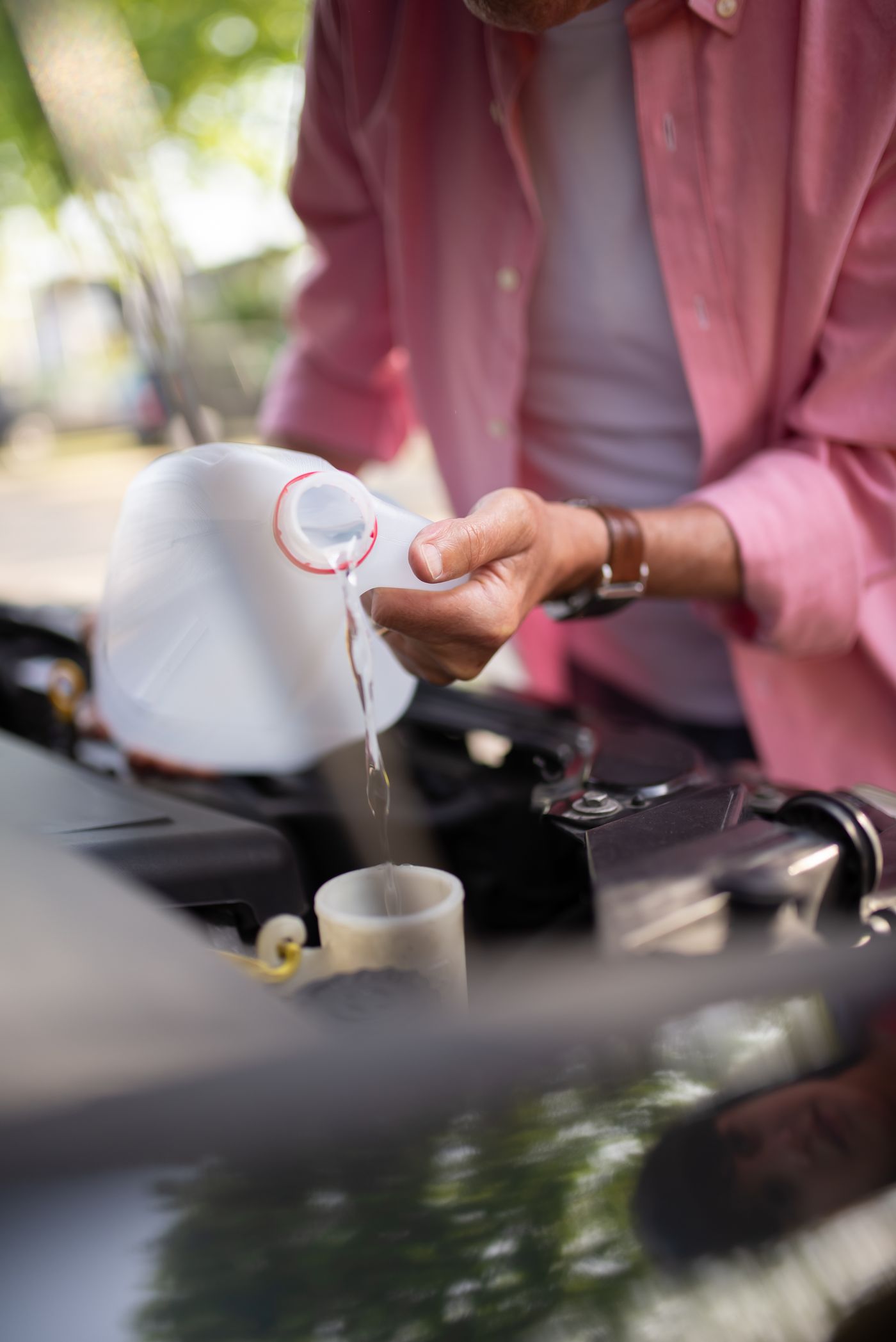
Antifreeze concentrate is formulated to be mixed with water, while premixed coolant is sold ready to use. The terms are often used interchangeably, so the label matters: adding water to a product that is already diluted changes its intended concentration.
Why mixing changes the freezing point
Many automotive antifreezes use ethylene glycol; some use propylene glycol. When glycol and water are mixed, the resulting liquid begins to freeze at a lower temperature than pure water. This is an example of freezing-point depression. The composition of the liquid affects the temperature at which liquid water can coexist with ice, so the mixture must get colder before ice begins to form.
Picture water molecules joining an orderly ice crystal while other molecules remain in the liquid. Dissolved glycol changes the liquid’s thermodynamic balance with the crystal; it is not simply a physical shield wrapped around each water molecule. As ice begins to form, it is mostly water, leaving the remaining liquid richer in glycol. The mixture can therefore become slushy over a range of temperatures rather than turning into a solid block all at once.
The old National Bureau of Standards’ study of automotive antifreezes defines a solution’s freezing point as the temperature at which the first ice crystals appear, not necessarily the point at which all circulation stops. That distinction is useful, but it is not a reason to ignore the protection rating: a slushy coolant can still impair circulation and a cooling system needs an appropriate margin for local conditions.
Why pure antifreeze is not the safest mixture
Adding more glycol does not lower the freezing point indefinitely. For ethylene glycol and water, the freezing point falls as the proportion of glycol rises, reaches a minimum, and then rises again as the mixture approaches pure glycol. The University of Alaska Fairbanks Geophysical Institute describes this surprising reversal: adding water to concentrated ethylene glycol can produce a mixture that begins to freeze at a much lower temperature than the glycol alone.
As an example, one manufacturer service manual specifies roughly −37°C (−34°F) freeze protection for its recommended 50/50 ethylene-glycol coolant and water mixture. That is an illustration, not a universal guarantee: formulations, concentrations and testing methods differ. The vehicle manufacturer’s instructions and the coolant label are the right references for a particular system.
More glycol also changes how readily the liquid moves and carries heat. Water can absorb more heat per unit mass than an ethylene-glycol mixture, while concentrated glycol is more viscous. A cooling system is designed around a specified coolant range, so chasing the lowest possible freezing point can compromise other requirements. Premixed coolant avoids the need to measure the ratio, but it still has to meet the vehicle’s specified product requirements.
Coolant also protects against heat and corrosion
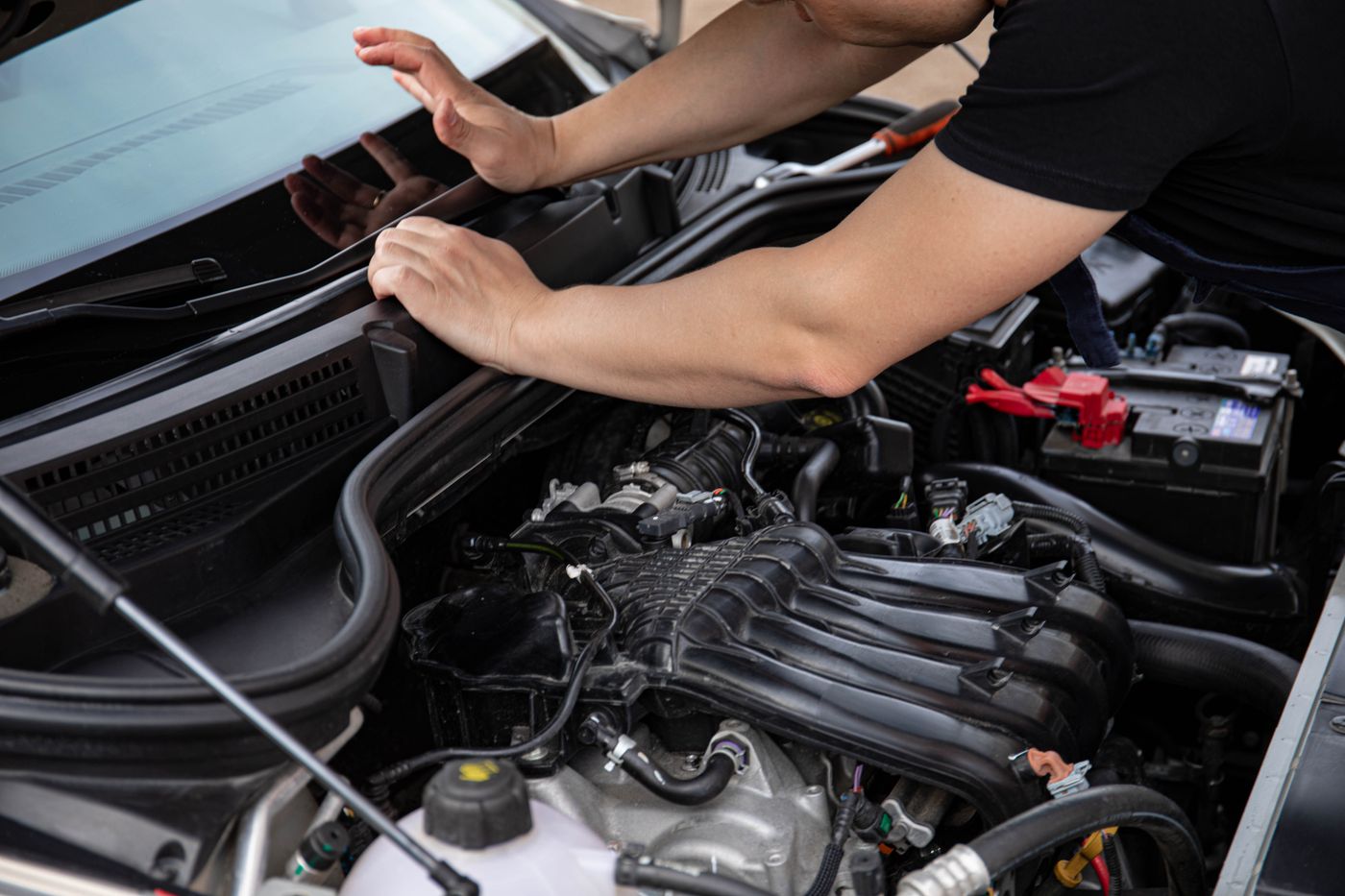
Glycol raises the boiling point of the water mixture as well as lowering its freezing point. The cooling system’s pressure cap contributes separately: raising pressure raises the temperature at which the coolant boils. A boiling-point number quoted for an unpressurized liquid should therefore not be confused with the temperature at which it will boil in a functioning pressurized system. The cap, hoses, radiator and coolant all have to do their part.
Coolant is more than glycol and water. Manufacturers add corrosion inhibitors to protect the different metals and other materials in a cooling system. These additives are one reason two products of the same color are not necessarily interchangeable. SAE’s overview of engine coolant standards identifies freezing, boiling and corrosion protection as separate requirements.
Inhibitors do not last forever, and different vehicles specify different coolant formulations and service intervals. Follow the owner’s manual for the required specification and replacement schedule rather than choosing by color alone. A qualified technician can test the coolant’s condition and concentration when there is uncertainty.
Handling coolant safely
Never open a radiator or pressurized coolant cap when the engine is hot. Hot coolant and steam can escape under pressure and cause serious burns; allow the system to cool and follow the vehicle’s instructions. If a vehicle is overheating or losing coolant, stop safely and seek qualified help rather than treating a top-up as a diagnosis.
Ethylene glycol is poisonous to people and animals. Keep coolant in its original, clearly labeled container, away from children and pets, and clean up spills promptly according to local guidance. Take used coolant to an appropriate collection or recycling facility instead of pouring it onto the ground or down a drain. Suspected ingestion requires immediate help from emergency services or a poison control center; in the United States, Poison Control is available at 1-800-222-1222.
The lesson inside the cooling system is a useful one: the best material for a job is often a balance, not the purest ingredient. Water moves heat well, glycol changes the temperature limits, and additives protect the system that contains them. Together, in the proportion and formulation the vehicle calls for, they help the same liquid cope with both a freezing morning and a hot engine.






Add comment