

 Akshay Dinesh
Salted pasta water has a reputation for boiling faster. The chemistry points the other way: dissolved salt raises water’s boiling point slightly. At the concentrations used in a kitchen, however, that change is so small that it makes little practical difference to cooking time. The reason to salt the water is simpler and more useful: it seasons the pasta as the pasta absorbs water.
The distinction is a good example of how a real scientific effect can be too small to explain an everyday result. It also helps explain why the cloudy water left in the pot can be useful when finishing a sauce.
What salt does to boiling water
Water boils when its vapor pressure matches the pressure around it, allowing bubbles of water vapor to grow throughout the liquid. At normal atmospheric pressure, pure water boils at about 100°C (212°F). Change the pressure and the boiling temperature changes too: at high altitude, for example, lower atmospheric pressure means water boils at a lower temperature.
When table salt dissolves, it separates into sodium and chloride ions dispersed among the water molecules. The dissolved particles lower the water’s vapor pressure compared with pure water at the same temperature. The solution must therefore be heated a little more before its vapor pressure reaches the surrounding pressure. Chemists call this boiling-point elevation.
The size of that elevation depends on the concentration of dissolved particles. For a rough illustration, 10 grams of table salt in one liter of water raises the boiling point by about 0.17°C (0.3°F) at normal pressure, assuming a dilute solution. That is a measurable change, but not a useful shortcut for cooking dinner. The University of Illinois Extension similarly explains that salting the water does not make it reach a boil faster.
Comparisons of timing can be tricky because pots, burners, starting temperatures, and water amounts vary. The small change in the solution’s properties can also affect heat capacity, so it is unwise to promise an exact difference in seconds. The practical conclusion is sturdier: an ordinary amount of salt is not a meaningful way to speed up the process.
Why seasoning the water changes the pasta
Dry pasta is a compact mixture of starch and protein. As it cooks, water enters from the surface and moves toward the center. Heat and water soften the structure: starch granules absorb water and swell, while the protein network changes around them. The outside hydrates first, which is one reason the center can remain firm after the surface has softened.
Salt dissolved in the cooking water can move into the pasta along with the water, seasoning more than just its surface. It is not necessary to make the pot as salty as seawater, and there is no single amount that suits every sauce or diet. A salty cheese, cured meat, or already-seasoned sauce will change how much additional salt a dish needs. People limiting sodium can use less or omit it; the pasta will still cook.
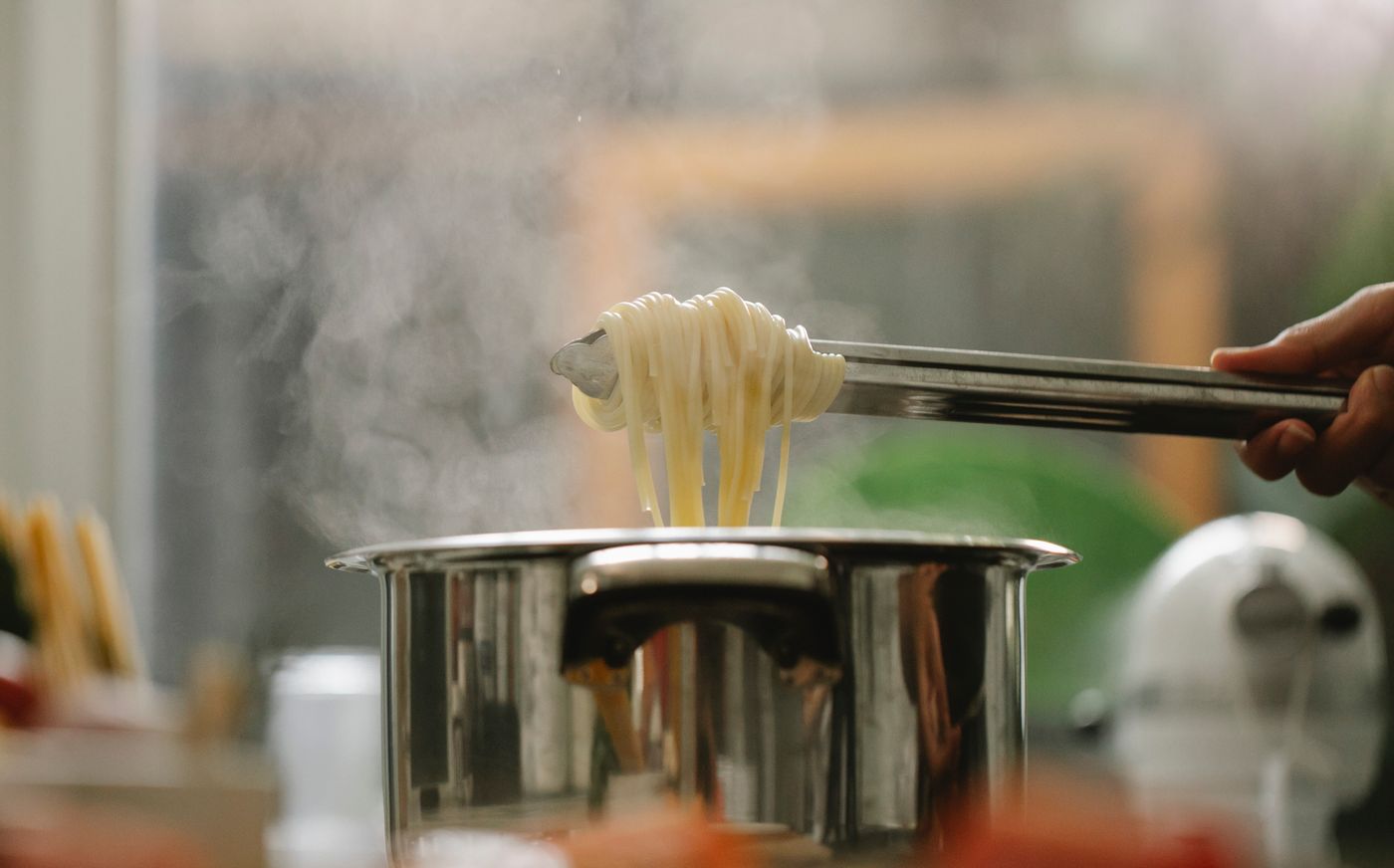
Salt can affect texture as well as flavor, but its effect depends on concentration and the pasta itself. A 2015 study in the Journal of Home Economics of Japan examined spaghetti cooked at several salt concentrations and found changes in hardness. That does not give every brand of pasta the same ideal salt level; it is a reminder that water, starch, protein, and dissolved salt interact in a real food rather than in a simple beaker.
Why pasta water turns cloudy
Some material escapes from the pasta during cooking, including starch and proteins. These dispersed substances make the cooking water cloudy. The effect is often more visible when less water is used, because the released material is less diluted.
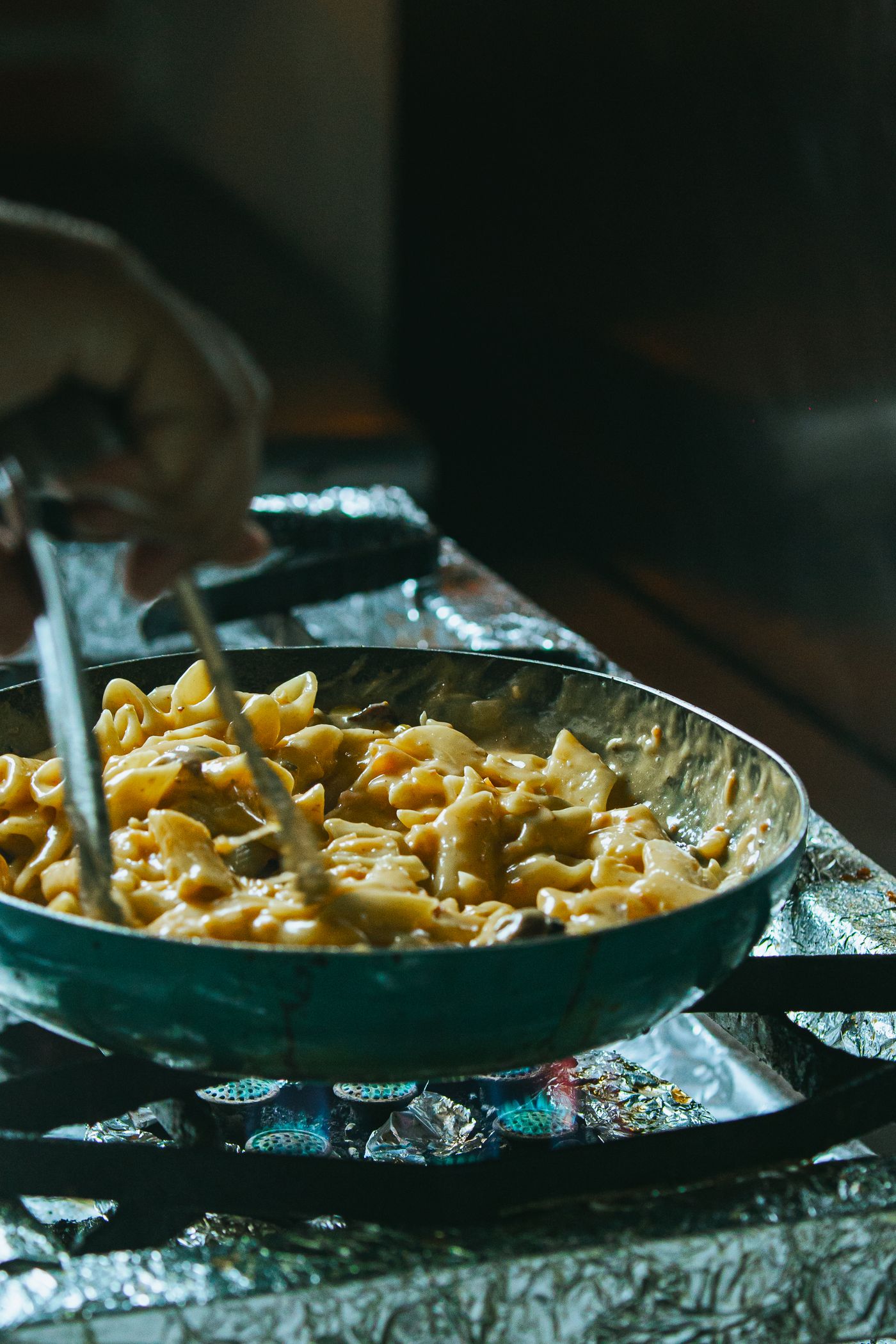
That cloudiness is useful at the end of cooking. A small splash of pasta water tossed with sauce and pasta can help create a more cohesive coating. Starch thickens the liquid and helps stabilize a mixture of water and fat when it is stirred or tossed; it does not make every sauce automatically creamy. A 2024 review in Physics of Fluids describes how leached starch and protein contribute to sauce texture and adhesion.
Reserve a little before draining, then add it gradually while tossing the pasta with the sauce. Too much can thin the sauce, while too much reduction can leave it overly salty. Taste as you go, especially when the cooking water was generously seasoned. The water is an ingredient, not an unlimited substitute for plain water.
Putting the chemistry to work
Use enough water for the pasta to move and stir it after adding it, particularly early in cooking when the surface can be sticky. Follow the package timing as a starting point, then taste a piece to judge its texture. A vigorous boil is not a special temperature above boiling: at a given pressure, more heat mainly produces vapor faster rather than making the boiling liquid much hotter.
Adding salt before or after the water reaches a boil will not make a meaningful difference to the finished pasta if it dissolves before the pasta cooks. Take care around hot water and avoid adding a large amount of salt all at once to a vigorously boiling pot, where bubbling can briefly become more energetic. Stir to dissolve it.
There is a satisfying contrast in the pot: the boiling-point change is genuine but tiny, while the effects on flavor and the usefulness of starchy water are easy to notice. Understanding the scale of an effect is just as important as knowing that the effect exists.




Add comment