

 Akshay Dinesh
A pie can look beautifully browned on top and still have a pale, damp bottom. The problem is often a race: the crust needs enough heat to set and dry, while the filling above it is releasing moisture. Blind baking gives the pastry a head start by baking it before the filling goes in. Depending on the pie, that head start may be a partial bake or a fully baked shell.
The technique is especially useful for custard pies, whose fillings often cook gently, and for cream pies, whose fillings may not go back into the oven at all. It is not a universal requirement for every pie. Understanding what happens at the bottom of the pan makes it easier to decide when the extra step is worthwhile.
Why the bottom of a pie turns soggy
Raw pastry contains flour, fat and water. In the oven, the fat melts, water turns to steam, and the flour’s starch and proteins help the dough set into a structure. For a crisp crust, enough moisture must also escape. A wet filling sitting on the pastry can slow that drying, particularly when the bottom of the pan heats slowly or the pie leaves the oven before the underside has browned.
A pumpkin filling illustrates the challenge. It is fluid when poured into the shell, and its eggs need relatively gentle cooking to produce a smooth custard. The filling can be ready while a raw bottom crust still needs more heat. A partially prebaked shell starts setting before that liquid arrives. King Arthur Baking’s pie guidance recommends considering a partial prebake for pies such as pumpkin that are prone to a pale bottom.
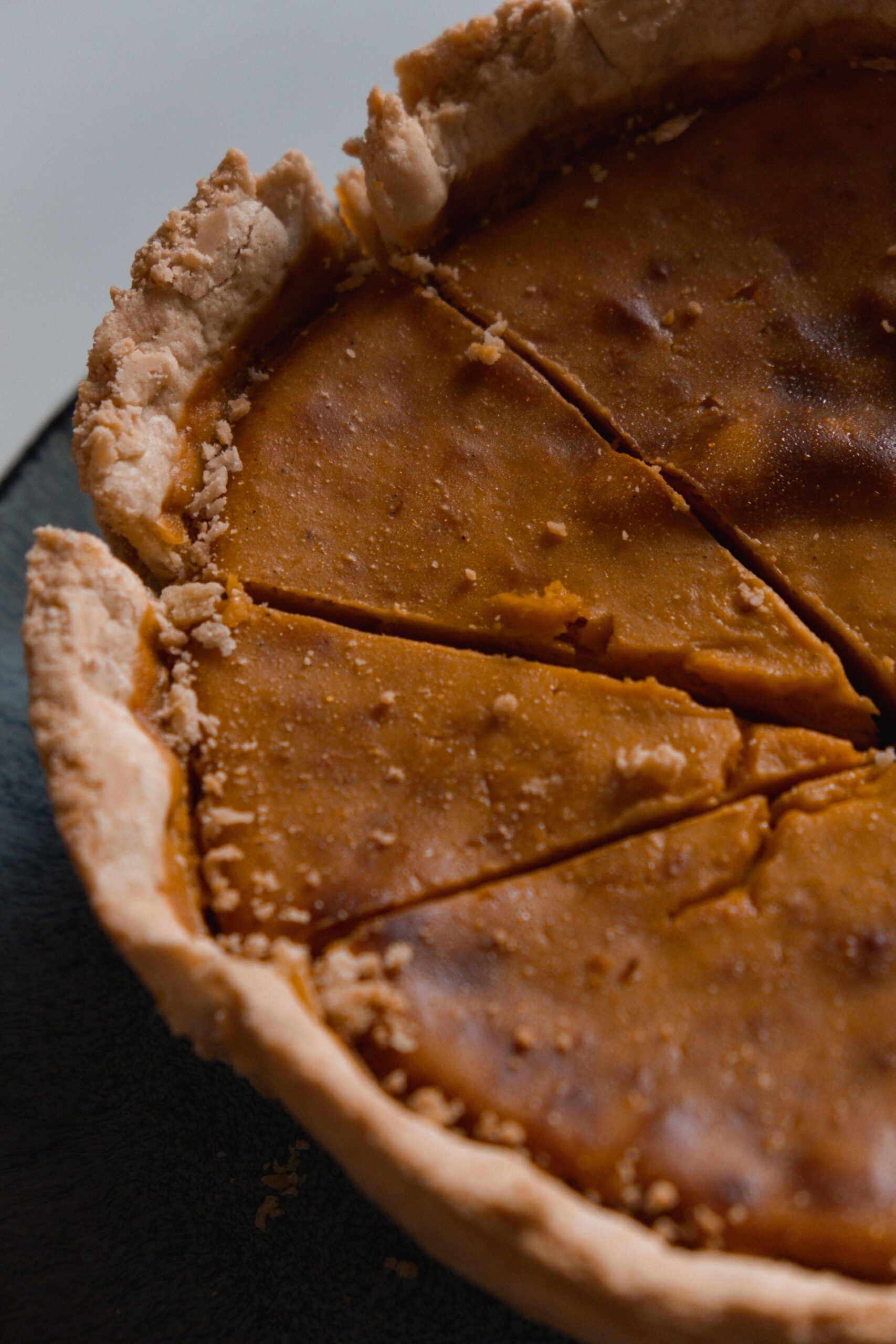
Prebaking helps, but it does not make pastry waterproof. A crust can soften after filling, especially if a very wet filling sits in it for a long time. The thickness of the dough, the pan, oven heat and the filling all influence the result.
Partial bake or full bake?
Choose the stopping point according to what happens next. A partially baked crust is set but not deeply browned; it returns to the oven with a filling that still needs to cook. A fully baked crust is baked through and golden before a ready-to-eat filling is added. Cream pies with a cooked and cooled filling often use the latter approach. Follow the particular recipe for timing and color: a shell baked too dark at the first stage may overbrown during its second trip to the oven.
Fruit pies present a different situation. Many bake long enough for the crust and filling to cook together, so their recipes do not necessarily call for blind baking. A particularly juicy filling, an unusually short bake or a recipe designed around a prebaked shell may change that decision. Blind baking is a tool for a specific heat-and-moisture problem, not a rule that overrides the recipe.
Why an empty shell needs weights
An unfilled crust has no filling to hold it against the pan. As it heats, steam can lift the bottom into bubbles, and the sides can slump. Bakers typically line the chilled dough with parchment and fill it with pie weights or dried beans, spreading them into the corners and up the sides. The weights support the pastry while it begins to set. Once the sides can hold their shape, the lining and weights are removed so the bottom can continue baking and drying.
Some recipes also call for docking: pricking the dough with a fork to give steam a route out. Follow the recipe here too. Holes can allow a liquid filling to leak through, so docking is not automatically the right choice for every custard pie. Handle the hot weights and pan carefully, and follow the parchment manufacturer’s temperature limit.
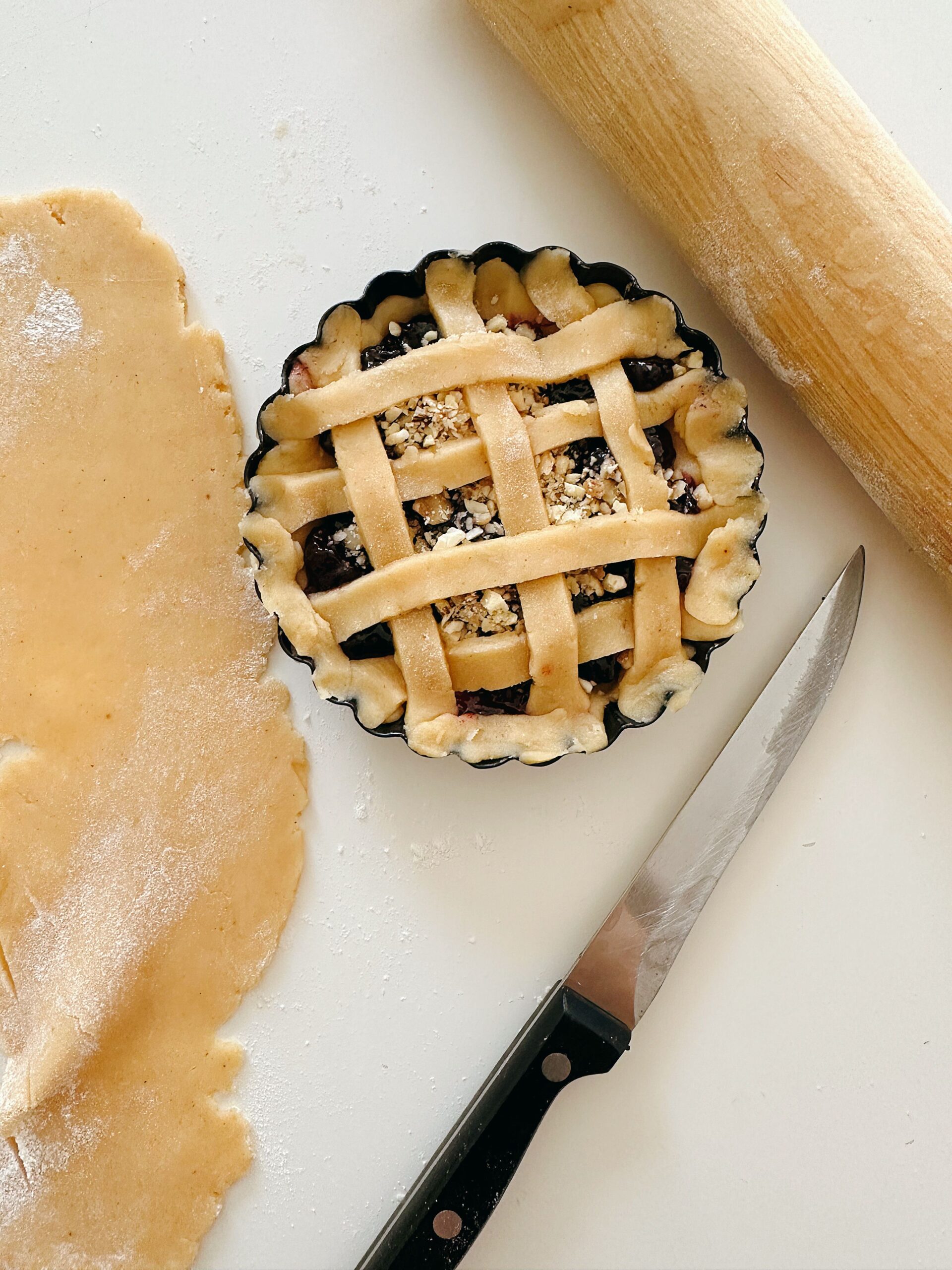
Shrinking is a separate frustration. Stretching dough to fit the dish can make it pull back as it bakes; ease it into the corners instead. Resting and chilling the shaped pastry also help it keep its shape. Montana State University Extension’s pastry troubleshooting guide lists stretching and insufficient resting among causes of excessive shrinkage.
Give the bottom enough heat
The pan is the bridge between oven heat and pastry. A metal pan transfers heat readily; a glass dish has the advantage of letting a baker look underneath. Whatever the material, a properly preheated oven matters. A recipe may also place the pie on a lower rack or a preheated baking sheet to encourage the base to set. Use equipment and temperatures suited to the pan, and avoid sudden temperature changes with glass or ceramic.
For a filled pie, look beyond the color of the rim. If the edge is browning too quickly while the center or bottom needs more time, a loose shield of foil can protect the edge as baking continues. A clear glass pan can help reveal an underbaked underside; with an opaque pan, use the recipe’s visual cues and tested timing. A browned top alone is not proof that the base is done.
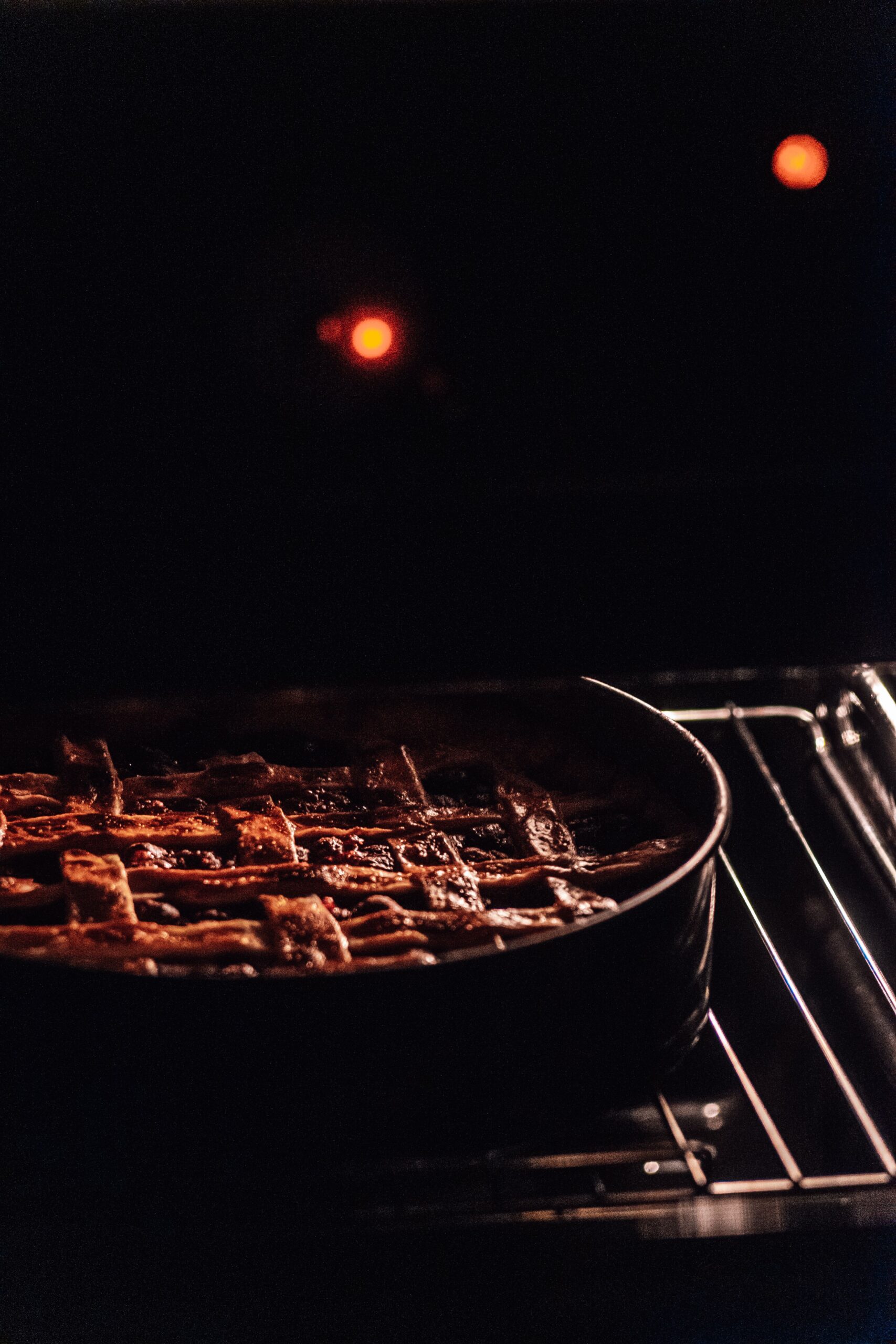
The simple idea behind blind baking is to let the crust do some of its cooking before it has to contend with the filling. Give a no-bake filling a fully baked home, give a gently cooked custard a head start when the recipe calls for one, and let a long-baked fruit pie follow its own instructions. The result depends on the whole pie, but the bottom no longer has to start the race behind.



Add comment