

 Akshay Dinesh
A spoonful of flour can turn thin pan juices into gravy that coats a plate. Drop the same flour straight into hot broth, though, and the result may be a collection of stubborn lumps. Both changes begin with starch: tiny granules that take up water and swell as they heat. When they are spread evenly through the liquid, they thicken it; when they stick together too soon, they trap dry flour inside.
The distinction is useful beyond a holiday meal. The same behavior helps explain a smooth white sauce, a cornstarch-thickened stir-fry sauce, or a soup that becomes unexpectedly thick as it cools. Understanding what happens in the pan makes it easier to choose a method and recover when the texture goes wrong.
What starch does in hot liquid
Flour contains starch packed into microscopic granules, along with protein and other components. Cornstarch is much more concentrated in starch. In cool water, ordinary raw starch granules disperse but do not immediately produce the thick sauce associated with cooking. Given time, a cornstarch mixture can settle, which is why a slurry often needs another stir just before it goes into the pan.
As a starch-and-water mixture heats, water enters the granules and they swell. Their ordered internal structure becomes less organized, and some starch molecules, especially amylose, can move into the surrounding liquid. This heat-driven change is called gelatinization. The swollen granules and dispersed molecules make it harder for the liquid to flow, so the sauce thickens. The exact temperature range depends on the starch and the rest of the mixture; there is no single temperature at which every gravy suddenly changes.
Thickening is not simply water disappearing. A sauce can also become concentrated as water evaporates, but starch changes the way the remaining water and suspended material behave. The Exploratorium’s cooking science explanation describes how granules swell as liquid is added to a roux and why stirring helps keep the mixture dispersed.
Why lumps form so quickly
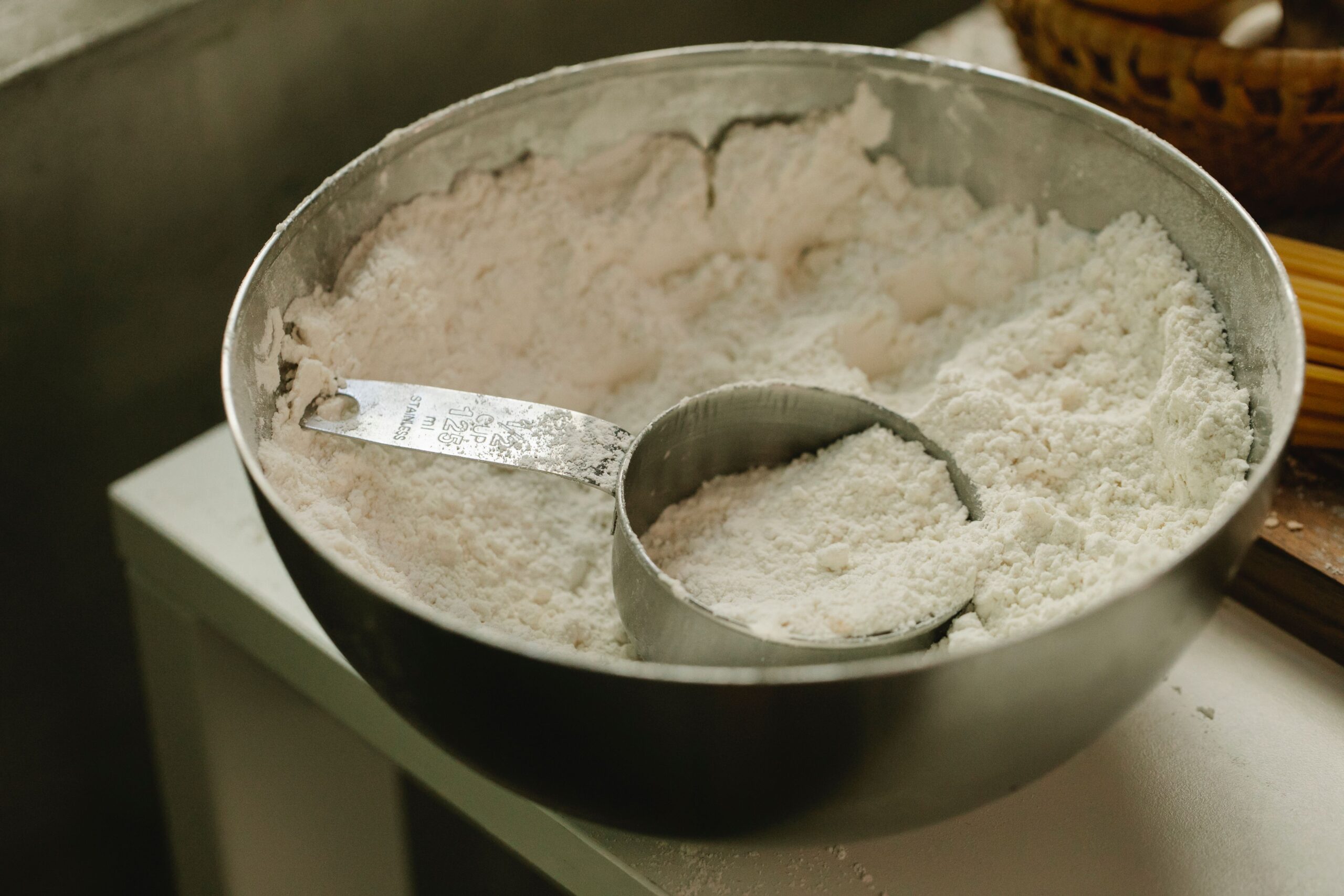
Imagine adding a spoonful of dry flour to a pan of hot stock. The outside of the heap meets hot liquid first. Those outer particles hydrate and thicken, forming a sticky coating around the less-wet flour in the middle. Stirring can break up some clusters, but it may push others around the pan with their dry centers still protected. The problem is not that starch is unwilling to absorb water; it is that water has trouble reaching every particle evenly.
That is why prevention starts before the starch hits the hot liquid. A roux disperses flour in fat, commonly butter or pan drippings, before stock is added. Stirring the flour into the fat separates the particles, making them easier to distribute as liquid is whisked in. Cooking the roux also changes its flavor. A dark roux has a different flavor and generally less thickening power than a lightly cooked roux, so the two are not interchangeable in the same quantity.
A slurry takes another route: mix a starch with a little cool liquid until smooth, then stir it into the hot liquid. The cool liquid helps separate the particles before they encounter enough heat to thicken rapidly. Add the slurry gradually while stirring, and allow the sauce to heat as directed by the recipe. Flour and cornstarch do not behave identically, so use a recipe intended for the starch you have rather than swapping equal quantities without adjustment.
From thin stock to a smooth sauce
With a roux, add the stock gradually at first and whisk until the mixture is smooth before incorporating the rest. It may look unusually thick when only a little liquid has gone in; that is not necessarily a failure. As more stock is worked in, the mixture loosens, and further heating lets the starch develop its thickening effect. Michigan State University Extension uses gravy as a demonstration of how heated starch changes a liquid’s texture.
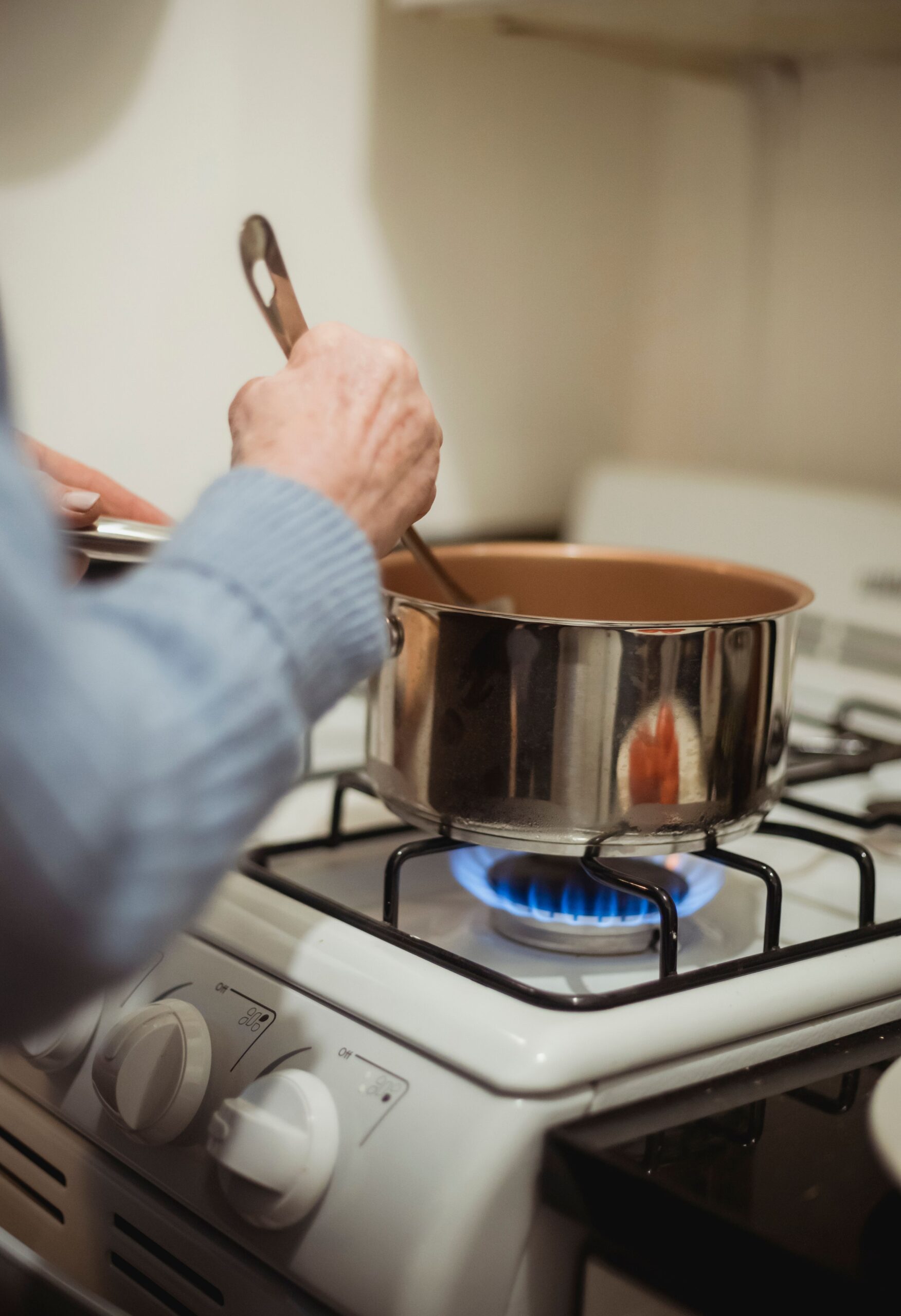
With a cornstarch slurry, stir the settled mixture again and pour it into the simmering liquid in a thin stream while stirring. Give the sauce time to heat and thicken before deciding it needs more. Adding several spoonfuls in quick succession can produce a sauce much thicker than intended once the starch has fully heated. If it becomes too thick, whisk in a little more stock or water and heat it through.
There is no need to throw away a lumpy gravy. A fine-mesh strainer can remove lumps, although some thickener and flavor may be left behind. Iowa State University Extension also suggests blending lumpy gravy until smooth. Take care with hot liquids: follow the blender manufacturer’s instructions, work in small batches, and never seal hot liquid in a container not designed for it. Recheck the consistency after straining or blending, since it may have changed.
Why gravy changes as it cools
Gravy that pours easily from the pan may become noticeably thicker at the table or in the refrigerator. As a cooked starch mixture cools, starch molecules can associate with one another and form a more structured network. Food scientists call this reorganization retrogradation. It is related to, but distinct from, gelatinization: heating with water disrupts the granules’ original organization, while cooling allows some starch chains to associate again in a different arrangement.
Not every sauce sets to the same degree. The starch source, concentration, cooking conditions and other ingredients all affect the result. Reheating and stirring with a little added liquid can loosen a thickened gravy, though it may not restore exactly the same texture. Some starch-thickened sauces can also release water after storage or freezing as their structure changes.
For leftovers, food safety is separate from texture. The USDA recommends refrigerating perishable leftovers within two hours, or one hour when the ambient temperature is above 90°F (32°C), and reheating leftovers to 165°F (74°C). Bring sauces and gravies to a rolling boil when reheating, following USDA guidance. A sauce can look and smell normal without that telling you whether it has been stored safely.
A smooth gravy is therefore less a matter of whisking harder than of giving starch room to work. Separate the particles first, add liquid thoughtfully, and let heat do the thickening. Once that small sequence makes sense, many sauces become easier to read and adjust.
Sources
- Exploratorium: Why roux sauces thicken
- Iowa State University Extension: Gravy, Getting It Right
- Michigan State University Extension: Teaching kids about science with gravy
- USDA Food Safety and Inspection Service: Leftovers and Food Safety
- Chemical Reviews: Molecular Gastronomy, including starch gelatinization and cooling





Add comment