
 Akshay Dinesh
The Leonid meteor shower is active throughout much of November, but its best viewing window in 2026 comes before dawn in the middle of the month. NASA recommends watching during the early morning hours of November 17 and 18, after the Moon has set. Under ideal conditions, the shower could produce about 15 meteors per hour, although most people will see fewer. The useful part is that no telescope is needed: a dark sky, a broad view, warm clothing, and enough time for your eyes to adjust matter much more than equipment.
When to watch the 2026 Leonids
Two reputable calendars describe the peak with slightly different night labels. The International Meteor Organization lists the peak night as November 16–17, while NASA’s November skywatching guide points observers to the early mornings of November 17 and 18. That is not a contradiction worth losing sleep over. Meteor-shower peaks are predictions for a moving stream of dust, the Leonids remain active from November 6 through November 30, and the best local window depends on when Leo rises, when the Moon sets, and when morning twilight begins.
For most viewers in the Northern Hemisphere, the strongest practical window will be after midnight and especially in the last dark hours before dawn. Leo, the constellation containing the shower’s radiant, climbs higher as morning approaches. At the same time, Earth’s pre-dawn side faces forward along the planet’s orbit, so it runs more directly into particles in space. Viewers south of the equator can also see Leonids, but Leo generally sits lower in the sky and the shower is less favorably placed.
The Moon will be a waxing crescent near the peak. The International Meteor Organization gives it about 39 percent illumination on the night of November 16–17. Moonlight can erase faint streaks while the Moon is above the horizon, but NASA notes that it sets before the best pre-dawn viewing period. Check a reliable local moonset and twilight time rather than using a single national schedule. A viewer in Maine, California, London, or Sydney will not share the same clock time even when watching the same stream.
What “15 meteors per hour” really means
The often-quoted rate of about 15 Leonids per hour is a zenithal hourly rate, or ZHR. It describes what a skilled observer might count under very dark, clear skies if the radiant were directly overhead and the shower were at maximum activity. Real observing rarely matches all those assumptions. Haze, nearby lamps, trees, the height of Leo, the Moon, and ordinary variation within the debris stream can reduce the count sharply.
NASA’s permanent Leonids page gives a more conservative figure of fewer than three meteors per hour under dark skies, while its current November guide says the 2026 shower could reach around 15 per hour under ideal conditions. The figures answer different questions: one sets a typical expectation and the other describes the predicted ideal maximum. A suburban observer may wait a long time between streaks. Even at a dark site, meteors do not arrive at evenly spaced four-minute intervals; a quiet stretch can be followed by two or three in quick succession.
The Leonids are still distinctive even when the count is modest. They enter the atmosphere at roughly 71 kilometers per second, making them some of the fastest annual meteors. A bright Leonid may leave a persistent train, a glowing path that remains after the meteor itself disappears. Some are colorful, and an occasional larger particle produces a fireball. Those features can make a small number of meteors more memorable than a rate alone suggests.
Why Tempel-Tuttle produces the shower
Leonid meteors begin as tiny pieces of comet 55P/Tempel-Tuttle. Each time the comet approaches the Sun, heat releases dust and small fragments from its nucleus. The material spreads along the comet’s orbit into trails rather than following as one compact swarm. Every November, Earth crosses part of that broad debris stream. The particles collide with the upper atmosphere at tremendous speed, compressing and heating the air and stripping material from their surfaces until a brief streak of light appears.
A meteor is therefore not a star falling from the sky, and most shower particles never reach the ground. The visible event occurs high in the atmosphere and usually destroys the small particle completely. The comet itself is only about 3.6 kilometers across and takes roughly 33 years to orbit the Sun. Its current location is not what determines whether Leonids appear on a particular night; Earth encounters dust released during earlier passages.
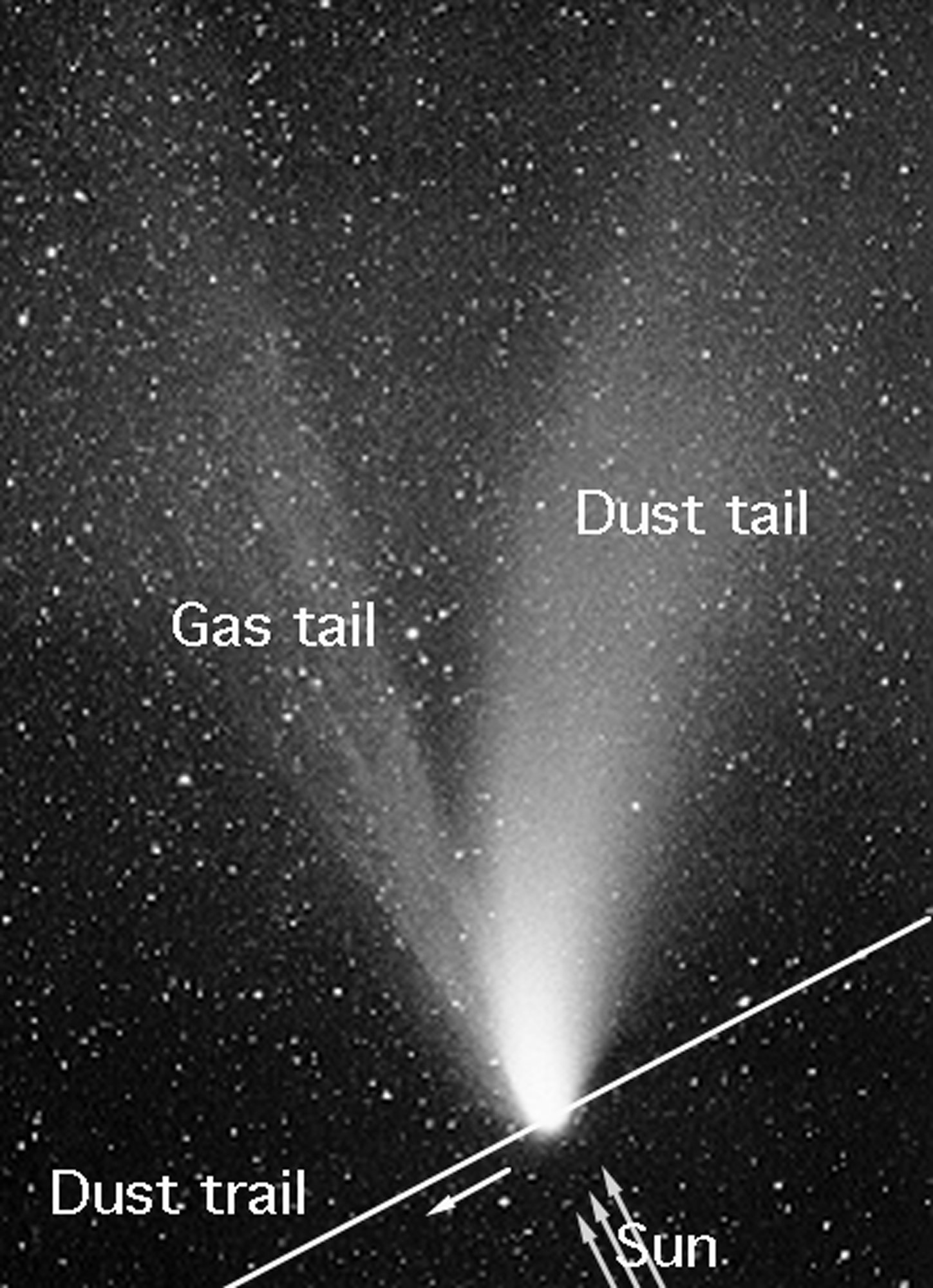
Tempel-Tuttle’s 33-year period explains the Leonids’ famous history. Dense trails can line up with Earth near some returns of the comet, producing meteor storms rather than ordinary showers. Observers reported spectacular storms in 1833, 1866, 1966, 1999, 2001, and 2002. NASA defines a meteor storm as at least 1,000 meteors per hour, and the 1966 event briefly produced thousands per minute in some locations. The International Meteor Organization does not expect Earth to encounter a comparably dense cloud in 2026, so descriptions promising a storm this year should be treated skeptically.
Where to look without staring at Leo
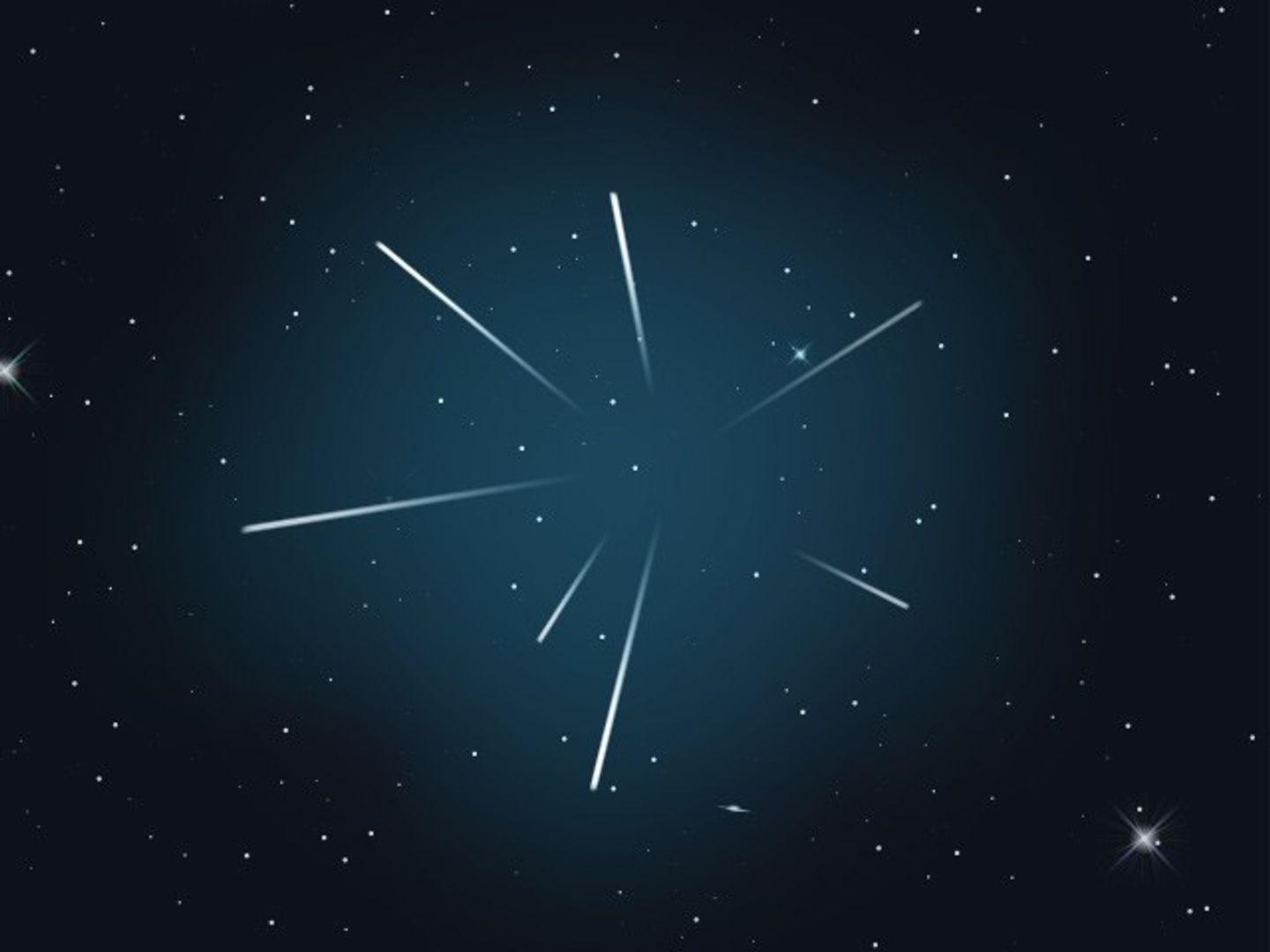
The Leonids are named for their radiant, the point in the constellation Leo from which their paths appear to spread. The meteoroids are not coming from Leo’s stars. They travel on nearly parallel paths through space, and perspective makes those paths seem to meet in the distance, much as parallel railway tracks appear to converge near the horizon.
Knowing the radiant helps identify the shower, but staring directly at it is a poor observing strategy. Meteors close to the radiant look short because they are moving almost toward you. Farther away, the same paths can draw longer streaks across the sky. NASA recommends lying back with your feet generally toward the east and taking in as much sky as possible. A direction roughly halfway between the horizon and straight overhead usually provides more useful sky than a narrow view of Leo itself.
Telescopes and binoculars make the task harder because they show only a tiny patch of sky. The unaided eye can monitor a much larger area and notice a streak wherever it appears. A reclining chair, blanket, or sleeping bag is more valuable than magnification. If the Moon is still up, place it behind a building, tree, or hill while keeping the rest of the sky open.
A realistic plan for a cold pre-dawn watch
Start by checking cloud cover, moonset, and the beginning of astronomical or nautical twilight for your location. Choose a safe, legal site away from direct lights, with an open view of the sky. Arrive early enough to settle in, and allow about 30 minutes for your eyes to adapt. White phone light can quickly undo that adjustment, so finish navigation and setup first, then dim the screen or put it away.
- Watch for at least 45 to 60 minutes. Short visits are easily defeated by natural gaps in activity.
- Dress for standing still. Pre-dawn temperatures feel colder when you are not moving, so use more layers than a brief walk would require.
- Skip magnification. Meteors can appear anywhere, and a wide field of view gives you the best chance.
- Look away from direct glare. Even one unshielded lamp can reduce the number of faint meteors your eyes can detect.
- Keep expectations grounded. The advertised rate assumes ideal conditions; seeing several fast Leonids can still be a successful watch.
Not every moving light is a Leonid. Aircraft usually blink, satellites move steadily for many seconds or minutes, and sporadic meteors can arrive from unrelated directions. Trace a meteor’s path backward in your mind: if it points toward Leo, it may belong to the shower. A bright streak that leaves a brief glowing train is especially consistent with the Leonids’ high speed.
The 2026 Leonids are not expected to turn the sky into a continuous storm. Their appeal is more patient than spectacular: pieces of a small comet meet Earth’s atmosphere at nearly 71 kilometers per second, and a dark-sky observer gets a momentary glimpse of that encounter. Use the mornings of November 17 and 18 as the main target, keep the neighboring night in reserve for weather, and give the sky enough uninterrupted time to surprise you.