

 Akshay Dinesh
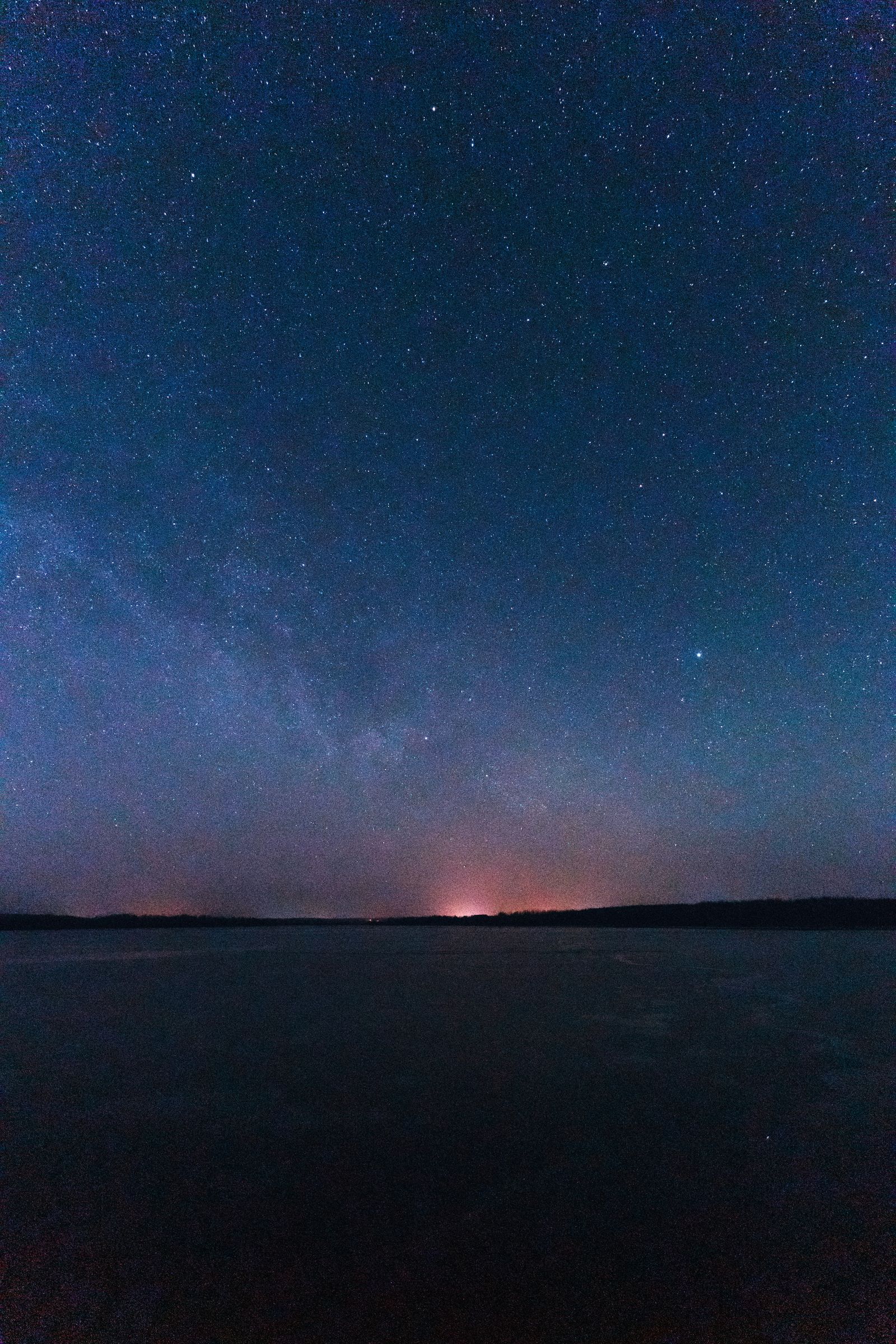
On a clear night, a bright star can seem to flicker, change color, or dance in place. A nearby planet may look surprisingly steady. The difference is mostly not in the objects themselves: it is in the way their light travels through Earth’s moving atmosphere and in how large each object appears on the sky.
Stars are so distant that, to our eyes, they are effectively points of light. The visible planets also look like points without magnification, but their apparent disks are larger. Turbulent air distorts light from both; the light arriving from different parts of a planet’s disk tends to average out the fluctuations. Astronomers call the rapid variation in a star’s apparent brightness scintillation, or twinkling.
Moving air bends starlight
Earth’s atmosphere is not a uniform sheet of air. Pockets with different temperatures and densities are continually moving and mixing. Light changes direction slightly as it passes between regions with different refractive properties, much as a straw appears bent where it enters water. Unlike a still glass of water, however, the atmosphere is constantly rearranging itself.
As these irregularities move across the path between a star and an observer, they redirect the light in changing ways. At one instant more light may be concentrated toward the eye; a moment later less may arrive. The star can appear to brighten and dim rapidly, while its apparent position shifts by a tiny amount. NASA’s Ask an Astrophysicist describes the closely related blurring of a telescopic image as atmospheric “seeing.”
The familiar flicker is therefore usually a local effect, not a star repeatedly switching on and off. Some stars really do vary in brightness, sometimes in a regular cycle or during an eruption, but that is a different phenomenon from the quick, irregular sparkle caused by air above the observer.
Why planets usually look steadier
A planet is not necessarily physically larger than a star. It looks larger in angular size because it is vastly closer. Even when the naked eye cannot resolve Jupiter or Venus into a disk, the light reaching the eye comes from a small but extended patch of sky rather than the effectively point-like image of a distant star.
Imagine that patch as many tiny neighboring sources. Their light passes through slightly different paths in the atmosphere, so their fluctuations do not all rise and fall together. Added together, they tend to smooth one another out. The planet’s total light generally changes less noticeably than the light of a single star. This averaging, explained in NASA’s Radio Astronomy Tutorial, is the key distinction; it is not simply that planets are brighter.
“Usually” matters. A planet low in the sky or viewed through particularly turbulent air can shimmer too, and the amount of twinkling varies from night to night. Conversely, a star high overhead in exceptionally steady air may barely appear to flicker. Twinkling is a useful clue for telling a star from a planet, but it is not a reliable identification test on its own.
Why stars near the horizon sparkle more
Look straight up and starlight crosses the atmosphere by a relatively short route. Look toward the horizon and the light travels through a longer path in the air before reaching you. That gives turbulent layers more opportunity to disturb it. Trees, roofs and other obstacles can also make the view close to the horizon less convenient.
A bright star such as Sirius can be especially striking when it is low: its apparent brightness may flutter and flashes of color can catch the eye. The atmosphere bends different wavelengths by slightly different amounts, and turbulence changes the view rapidly. The colors do not mean Sirius itself is cycling through those colors. Brightness makes the effect easier to notice, even though fainter stars are also affected.
For a simple comparison, choose a clear evening when a bright planet is visible and use a current sky chart to identify it. Watch it for a minute, then compare it with a bright star at a similar height above the horizon. Similar height makes the comparison fairer because both objects’ light passes through a comparable thickness of atmosphere. Repeat the observation on another night; a steadier-looking sky can give a noticeably different result.
What twinkling means for telescopes
For an astronomer, the same unsteady air that makes a star sparkle also smears detail in an image. A large telescope can collect enormous amounts of light, but atmospheric distortion can prevent it from showing all the fine detail its mirror could otherwise resolve. A clear sky is not necessarily a steady one: clouds may be absent while moving air still blurs the view.
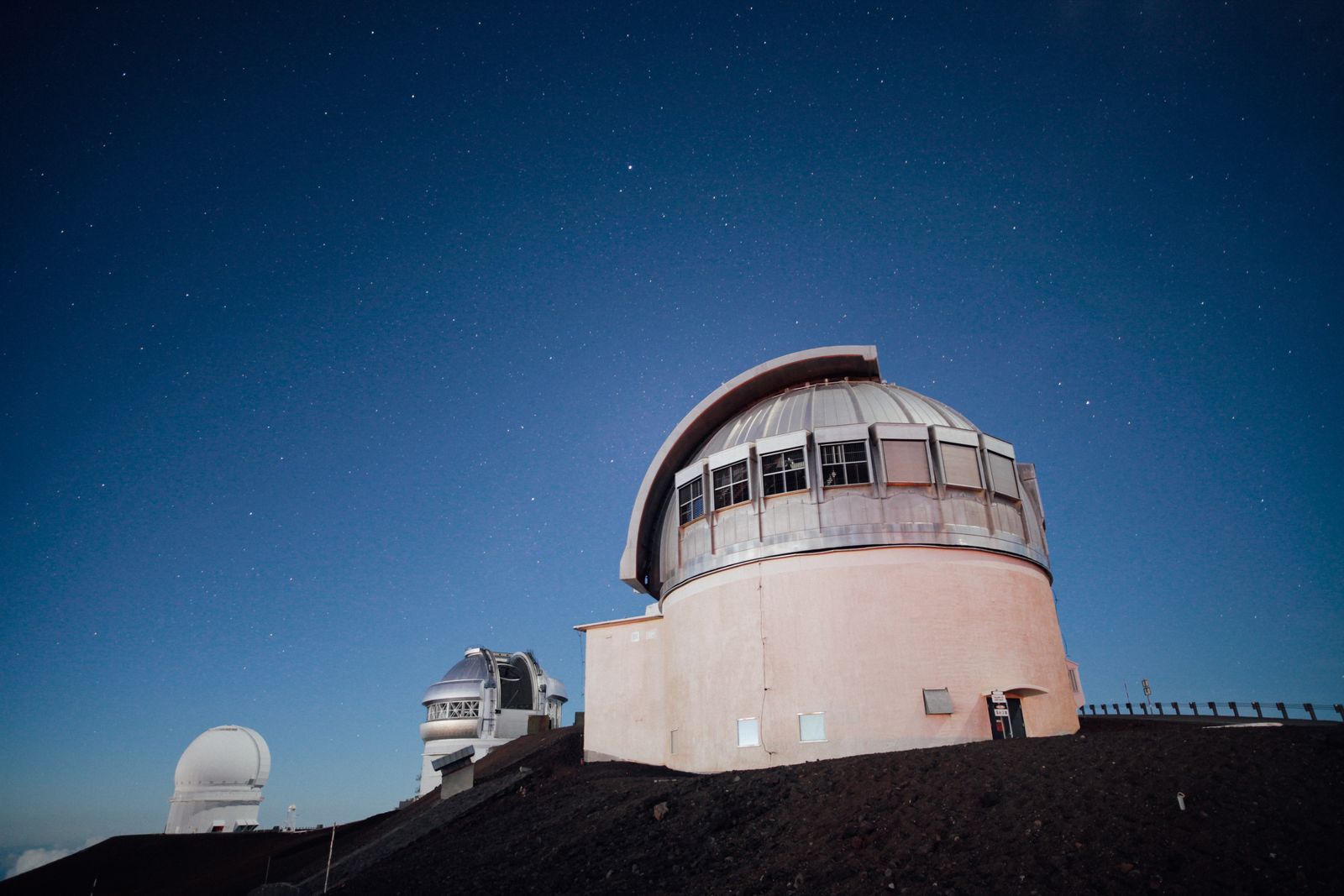
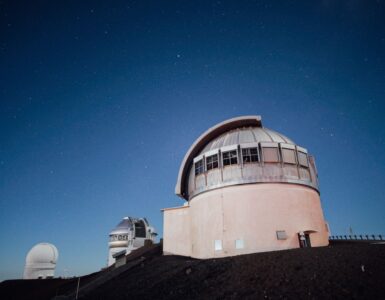
Observatories often seek sites known for stable air as well as dark skies. Some large ground-based telescopes also use adaptive optics: instruments measure distortions using a bright reference star or an artificial guide star made with a laser, then rapidly adjust a deformable mirror to counter much of the distortion. The European Southern Observatory describes how this helps sharpen the view. It does not remove every atmospheric effect, but it can reveal details that would otherwise be blurred.
Space telescopes take another route: they observe from above most or all of Earth’s atmosphere and avoid this particular source of twinkling. The next time a star flashes above the horizon, its light has completed a journey across space only to be visibly reshaped in the final stretch through the air around our own planet.



Add comment