
 Akshay Dinesh
A single photograph of the night sky can be beautiful, but it freezes the universe as if nothing is moving. That is not how space really behaves. Asteroids drift against the background stars, distant stars pulse, supernovae flare and fade, and galaxies carry clues from billions of years of cosmic history. The Vera C. Rubin Observatory was built to catch those changes by returning to the same wide patches of sky over and over again.
On June 30, 2026, the NSF-DOE Vera C. Rubin Observatory officially began its 10-year Legacy Survey of Space and Time, often shortened to LSST. From Cerro Pachon in Chile, Rubin will repeatedly scan the southern sky with the largest digital camera ever built. The result is less like one heroic telescope portrait and more like a time-lapse record of the universe, made from millions of careful images gathered night after night.
Why Repeating the Same View Changes Astronomy
Traditional astronomy often asks a telescope to stare deeply at one object or region. Rubin takes a different approach. It combines a large mirror, a huge camera, fast movement across the sky, and a wide field of view so it can photograph broad areas repeatedly. That repeated coverage is the key idea behind the phrase Legacy Survey of Space and Time.
If two images of the same region are taken days, hours, or even minutes apart, any difference between them becomes scientifically interesting. A dot that has shifted may be an asteroid. A point of light that grows brighter may be a variable star, a supernova, or another transient event. A faint pattern that becomes clearer after many images are combined may reveal distant galaxies, star-forming regions, or subtle structures too weak to stand out in one exposure.
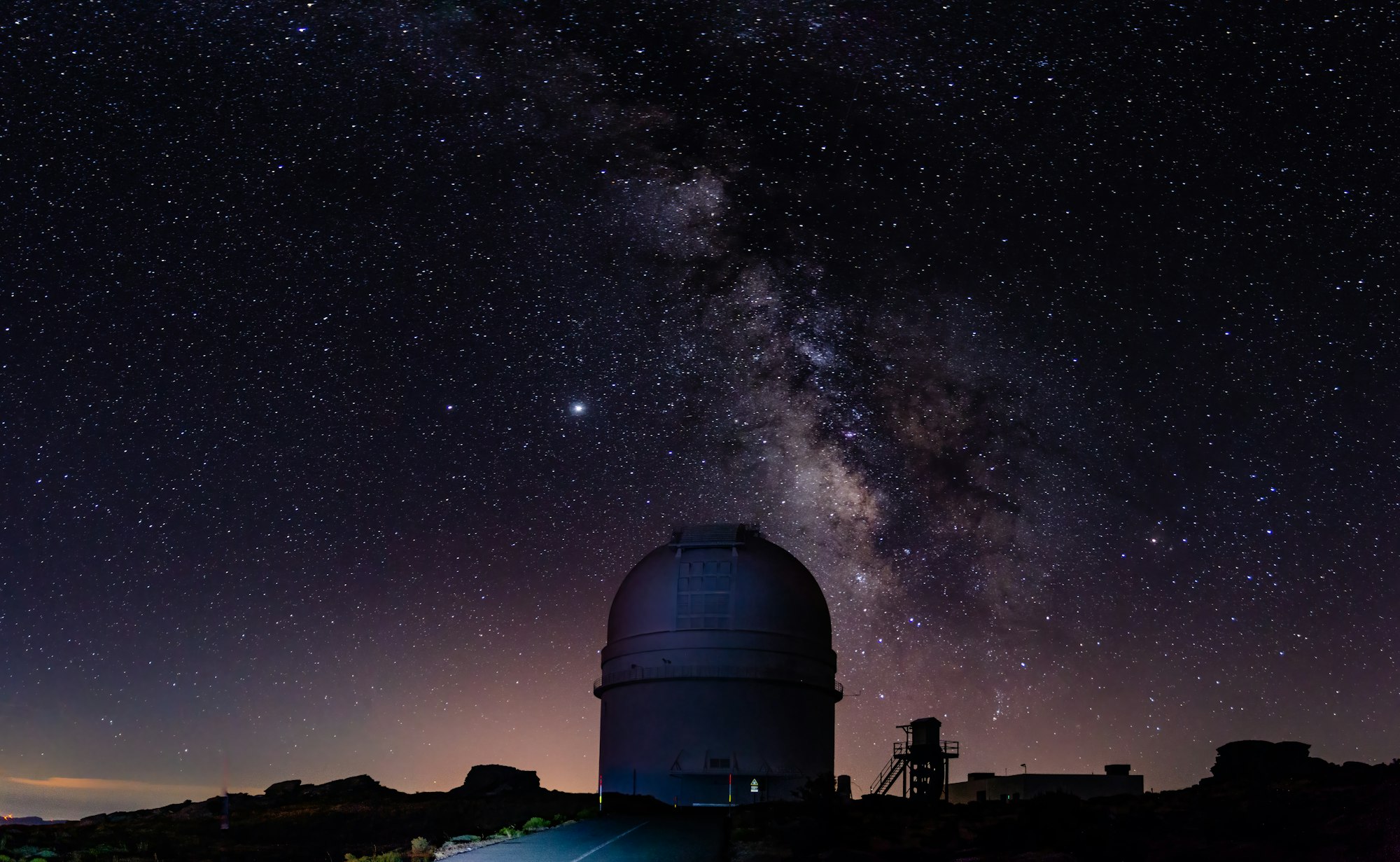
This is why Rubin is often described as making a movie of the sky. The comparison is not just poetic. A movie works because still frames are placed in sequence, allowing motion and change to appear. Rubin does something similar for astronomy, except the frames are enormous scientific images and the actors include asteroids, exploding stars, galaxies, and objects that may not yet have familiar names.
The Camera Makes the Survey Possible
Rubin’s LSST Camera is a major reason the project can work at this scale. It is a 3,200-megapixel camera, far larger than anything found in ordinary photography. Each image covers a patch of sky about as large as 45 full Moons, which means Rubin can gather both detail and breadth at the same time. That combination is rare. Some telescopes see deeply but narrowly; others see widely but with less sensitivity. Rubin was designed to do both well enough for a decade-long survey.
The observatory can capture a detailed image roughly every 40 seconds during operations. Each night, it is expected to collect about 10 terabytes of data and issue millions of alerts when something appears to change. Those alerts matter because many cosmic events do not wait politely for astronomers to notice them. A supernova brightens and fades. An asteroid moves. A flare may last only briefly. Rubin’s value comes not only from taking pictures, but from quickly identifying which changes deserve follow-up.
The camera’s wide view also helps students understand why modern astronomy is becoming more data-rich. Discoveries no longer depend only on a scientist looking through an eyepiece and recognizing something unusual. They increasingly depend on carefully designed instruments, data pipelines, comparison methods, and teams that can sort the flood of observations into useful patterns. Rubin makes the sky searchable in a new way.
What Rubin Can Find Close to Home
One of Rubin’s most immediate jobs is to improve the inventory of the Solar System. Asteroids and comets are small compared with planets, and many are faint. They are easiest to notice when their positions change from one image to the next. Because Rubin will revisit the sky so often, it can connect those moving points into orbits and help astronomers understand where the objects came from and where they are going.
Rubin’s early testing already showed how powerful that method can be. In just over 10 hours of test observations released with its first imagery in June 2025, the observatory detected 2,104 previously unseen asteroids, including seven near-Earth objects that posed no danger. During later early optimization surveys, Rubin reported more than 11,000 never-before-seen asteroids, including near-Earth and trans-Neptunian objects. Those numbers are not the final goal; they are a preview of what repeated scanning can do once the full survey builds momentum.
This matters beyond collecting impressive totals. A more complete map of asteroids helps scientists study how the Solar System formed, how small bodies migrate, and which objects may someday need closer attention. It also gives astronomers more chances to notice unusual visitors, including rare objects that pass through the Solar System from interstellar space.
What Rubin Can Reveal Far Away
Rubin is not only a Solar System search tool. Its survey is also designed to help answer some of the largest questions in cosmology. The observatory is named for Vera C. Rubin, whose work on galaxy rotation helped strengthen the evidence for dark matter. Dark matter does not shine like a star or glow like a nebula, but its gravity affects how galaxies move and how light from distant objects travels through space.
Rubin’s repeated images will help scientists study dark matter by mapping galaxies and the subtle distortions caused when gravity bends light. It will also help with dark energy, the name given to the mysterious driver of the universe’s accelerating expansion. Supernovae are especially useful here because certain types can serve as distance markers. By finding many of them across time and distance, astronomers can better measure how the universe has expanded.
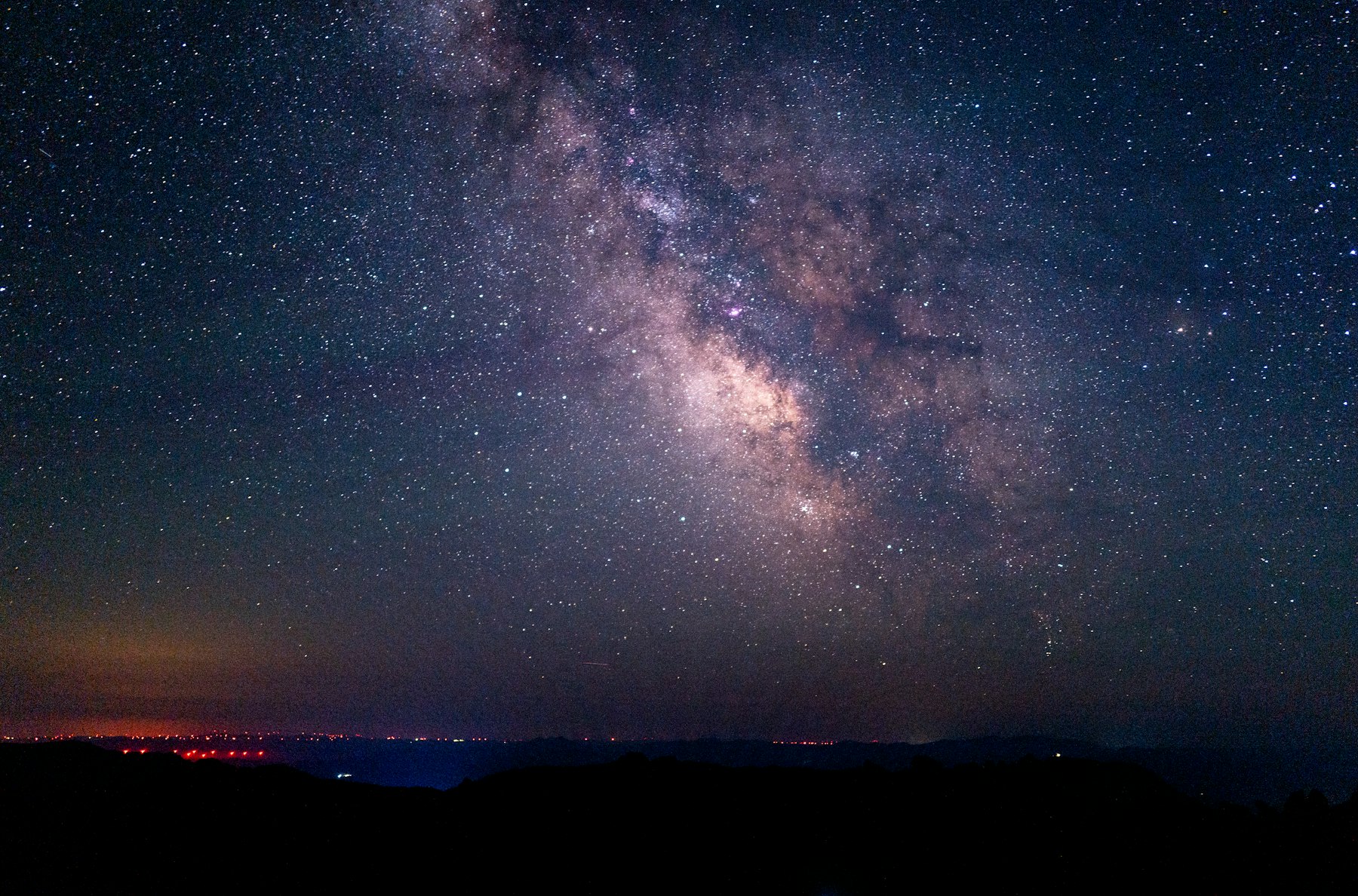
The same survey also supports a closer study of the Milky Way. Stars are not identical points of light. Some brighten and dim in regular rhythms. Some move in ways that reveal their history. By watching enormous numbers of stars over years, Rubin can help astronomers trace our galaxy’s structure, its stellar populations, and the smaller galaxies that have merged with it over time.
Why the Data Will Matter for More Than One Discovery
A project like Rubin is not built for a single headline result. Its strength is that the same observations can serve many kinds of research at once. One image may help identify an asteroid, strengthen a galaxy catalog, catch a variable star, and add another frame to a long-term record of cosmic change. Over 10 years, those layers become more valuable because they can be compared across time.
That is what makes the word legacy meaningful. Rubin’s survey will create a dataset that researchers can return to long after the first discoveries are announced. Some questions that scientists ask with Rubin data may not be obvious yet. A rare object might be understood only after enough similar objects are found. A pattern may emerge only after years of repeated measurements. A student learning astronomy today may one day use Rubin data to investigate a question that was barely imaginable when the survey began.
The size of the dataset also changes who can participate in discovery. Most researchers who use Rubin observations will never operate the telescope in person. Instead, they will work with released data through remote tools and scientific archives. That turns the observatory into more than a mountaintop instrument. It becomes a shared record of the changing sky, built for many questions and many future readers of the data.
A New Habit of Looking at the Sky
Rubin Observatory is exciting because it treats the universe as active, not static. The night sky may look calm from the ground, but that calm hides constant motion and change. Some changes are nearby and quick, like an asteroid shifting position. Others are distant and dramatic, like a star exploding in another galaxy. Others are slow, statistical, and subtle, visible only when enormous amounts of data are gathered carefully.
The 10-year survey gives astronomy a new habit of looking. Instead of asking only what is out there, Rubin keeps asking what changed. That question is simple enough for any learner to understand, yet powerful enough to reshape how scientists study the Solar System, the Milky Way, distant galaxies, and the large-scale structure of the universe. A sky that once seemed like a still picture is becoming a record with motion, memory, and surprise.




Add comment