
 Akshay Dinesh
On August 12, 2026, the Moon’s shadow will cross a striking route over the Northern Hemisphere. The path of totality will touch parts of northern Russia, Greenland, Iceland, the North Atlantic, Spain, and a small corner of Portugal, while a much larger region will see the Sun only partly covered. That alone would make the event worth noting, but the eclipse is especially interesting because of where and when it happens: near the Arctic, across island and ocean landscapes, and close to sunset for many viewers in Europe.
A total solar eclipse is sometimes described as a simple lineup of the Sun, Moon, and Earth. That is true, but it leaves out the more interesting part. The shadow does not fall evenly across the planet. It races along a narrow track, changes shape as it crosses Earth’s curved surface, and gives different observers very different experiences depending on their exact location. The 2026 eclipse is a useful way to see how astronomy, geography, time zones, and safety all meet in one brief event.
A Narrow Path Across a Wide Hemisphere
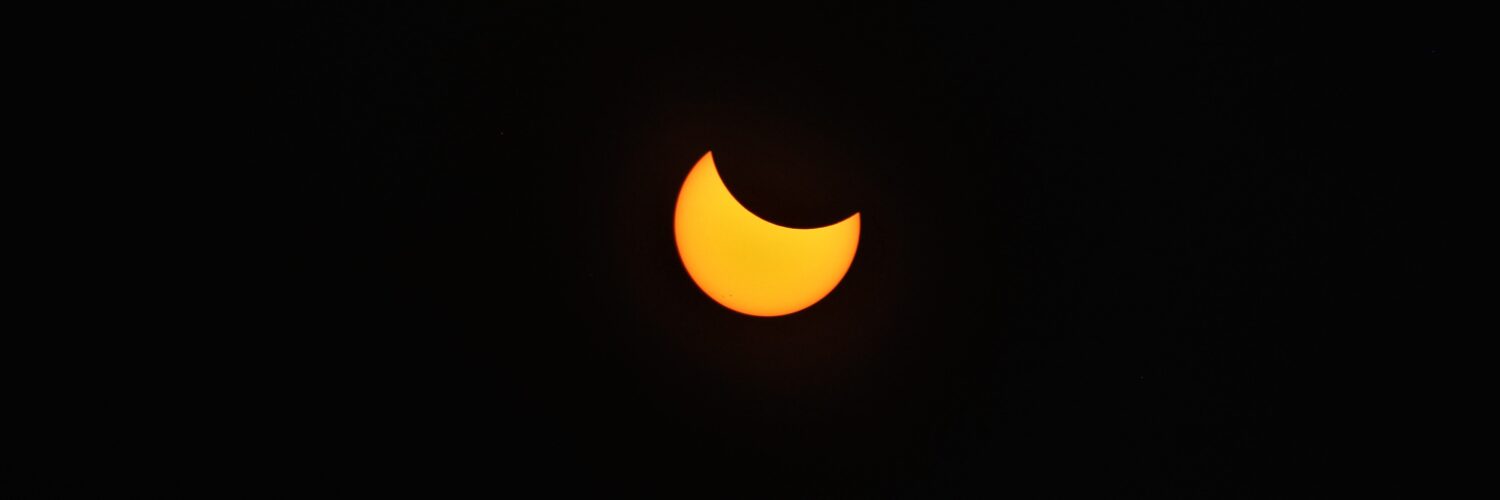
NASA describes the August 12, 2026 eclipse as a total solar eclipse whose central path sweeps across Greenland, Iceland, northern Russia, the Atlantic Ocean, Spain, and a small part of Portugal. People inside that narrow path can experience totality, when the Moon completely covers the Sun’s bright face. People outside it may still see a partial eclipse, but the Sun will never be fully covered from their viewpoint.
The difference comes from the Moon’s shadow. The darkest inner shadow is called the umbra. If the umbra passes over your location, totality is possible. Around it lies the broader penumbra, where only part of the Sun is blocked. NASA’s Scientific Visualization Studio map for the 2026 eclipse shows this clearly: a thin red band marks the total eclipse path, while broad surrounding curves show where the partial eclipse can be seen.
That narrowness is part of what makes total solar eclipses feel rare from any one place. Total solar eclipses happen somewhere on Earth roughly every year or two, but most of Earth is ocean, and the path of totality is usually only a small strip on the globe. A person could live for decades without having one pass over their home, even though the event itself is not rare on a planetary scale.
Why This Eclipse Has Such a Distinctive Route
The 2026 path is not a neat straight line across a map because a flat map hides what is really happening. Earth is rotating, the Moon is orbiting Earth, and the Moon’s shadow is falling onto a curved, tilted planet. The NASA visualization notes that the shadow’s movement depends on the Moon’s orbital motion, which carries it eastward faster than Earth rotates beneath it. Earth’s curvature and the Moon’s position then make the path look even more complex on the ground.
This is why the eclipse can begin in the high north, cross Arctic and North Atlantic regions, and then reach Spain near the end of the day. The path has a strong north-south character because the Moon is crossing near one of the points where its tilted orbit meets the plane of Earth’s orbit around the Sun. That crossing point is called a node. Solar eclipses can happen only near such nodes, because most new moons pass slightly above or below the Sun from our point of view.
The route also helps explain why different places will experience the event at very different local times. In Greenland and Iceland, totality occurs in the late afternoon or early evening. In Spain and the far northwestern edge of Portugal, it happens late in the evening, shortly before sunset. For some areas in mainland Europe and Africa, NASA notes that the Sun will set while it is still partly eclipsed, creating a sunset eclipse rather than a midday one.
Totality Is Brief, Even When the Event Feels Large
The whole eclipse can last for hours from first partial contact to final partial contact, but totality itself is short. NASA reports that most places in the path of totality will see the Sun fully covered for less than two minutes. Locations closer to the center of the path in Greenland, northern Russia, or the North Atlantic may get a little longer, but still less than two and a half minutes.
That briefness comes from the shadow’s speed and geometry. The Moon is small compared with Earth, so its umbra reaches only a limited patch of the surface. As the Moon moves in orbit and Earth rotates below it, that patch slides along quickly. The closer an observer is to the centerline of the path, the deeper and longer the umbra covers that location. Near the edge of the path, totality can last only a few seconds, or the observer may miss it entirely.
The Moon’s apparent size matters too. A total eclipse requires the Moon to look large enough in the sky to cover the Sun completely. Because the Moon’s orbit is elliptical, its distance from Earth changes from month to month. When the Moon appears slightly too small, an annular eclipse occurs instead, leaving a bright ring of sunlight around it. In August 2026, the alignment allows totality along the central path, but the exact duration still depends on the Moon’s distance, the observer’s position, and the shape of the shadow where it reaches Earth.
The Partial Eclipse Will Be Much More Widespread
Far more people will see a partial eclipse than a total one. NASA lists many places in the Northern Hemisphere where at least part of the Sun will be covered, including most of Canada, much of Europe, northwestern Africa, and parts of the northern United States. In the United States, the partial eclipse will be modest for many locations, with only a small bite taken from the Sun, while places closer to the totality path will see a much larger partial eclipse.
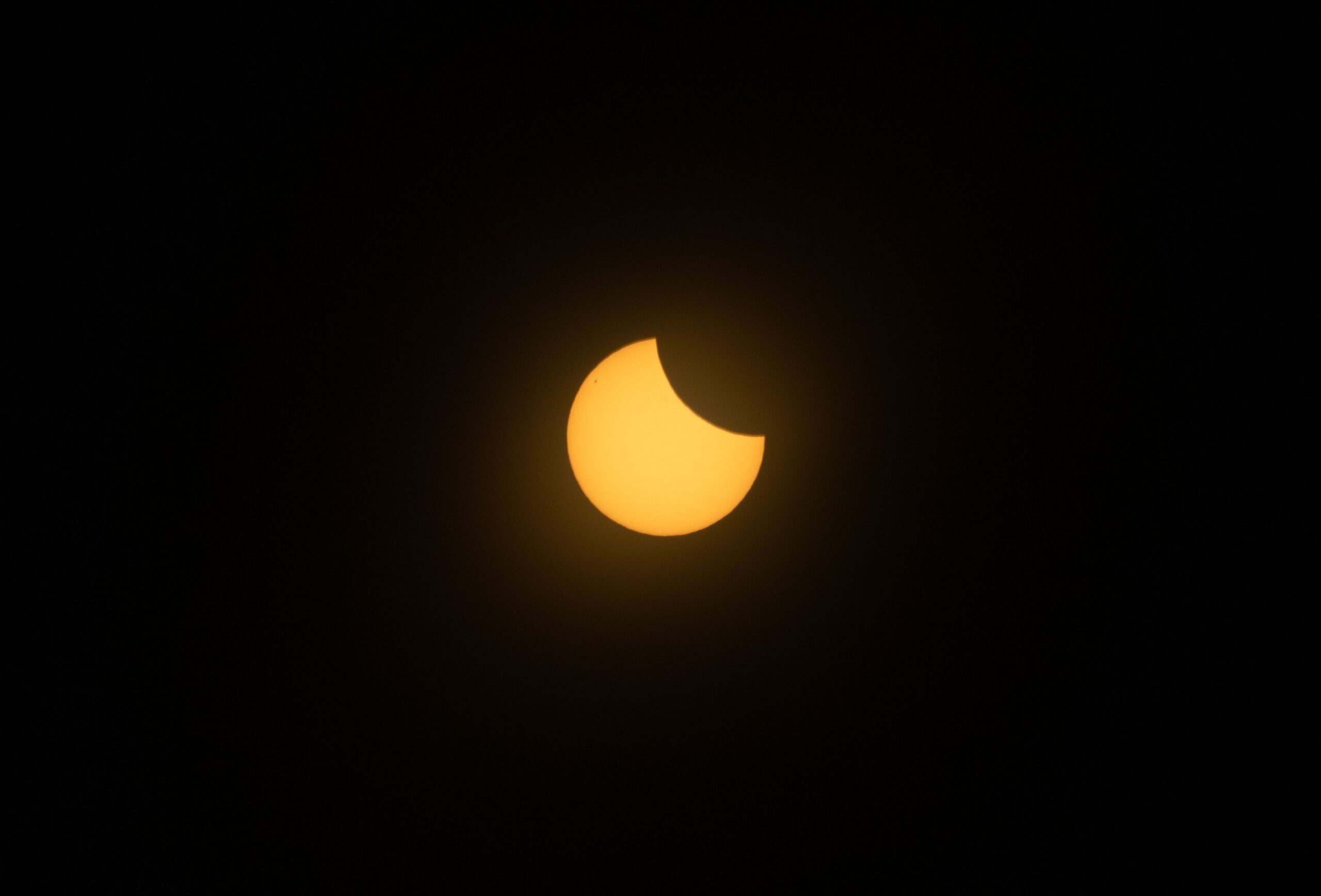
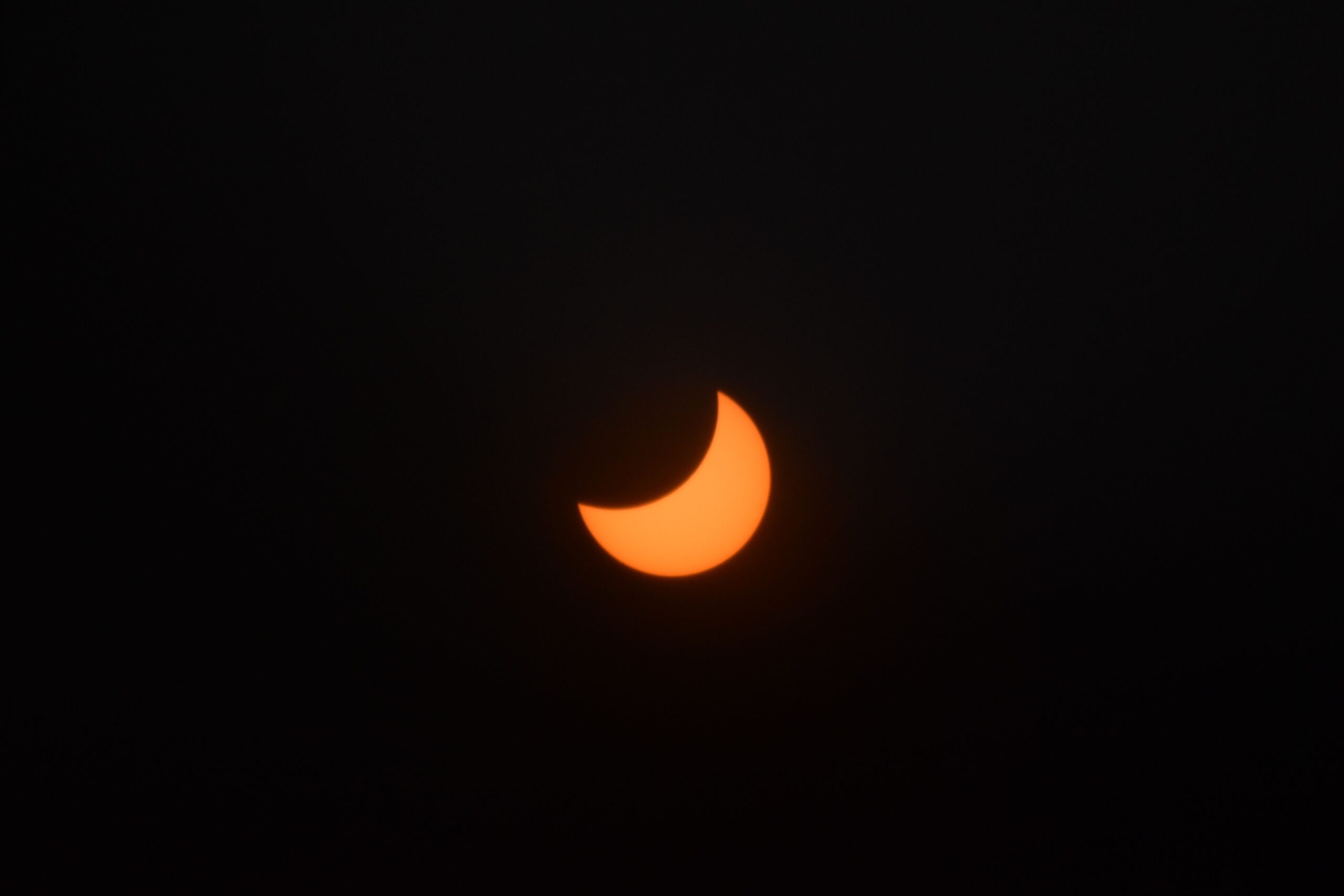
This can make maps a little confusing. A city may be close enough to notice the eclipse clearly but still far outside the path of totality. Even a very deep partial eclipse is not the same as totality. If a sliver of the Sun’s bright surface remains visible, the sky does not darken in the same way, the corona does not appear, and direct viewing remains unsafe without proper solar protection.
For learners, that contrast is one of the best parts of the event. It shows why location matters so much in astronomy. The Sun and Moon are the same objects for everyone, but the view changes because each observer stands at a different point on Earth. A few dozen miles can separate a total eclipse from a partial one near the edge of the path.
Safety Depends on the Phase, Not the Excitement
The National Solar Observatory and NASA both emphasize the same essential rule: the Sun is safe to look at directly only during the brief total phase, and only from within the path of totality. Before totality, after totality, and during any partial eclipse, viewers need proper solar viewing glasses or handheld solar viewers. Regular sunglasses, even very dark ones, are not safe for looking at the Sun.
The reason is simple physics. The Sun is still intensely bright even when most of it is covered. The remaining visible portion can damage the eyes, and the danger is worse because the unusual view may make people stare longer than they normally would. Optical devices add another risk. Looking at the Sun through a camera lens, telescope, or binoculars without the correct front-mounted solar filter can concentrate sunlight and cause serious injury.
There are safe indirect ways to watch the partial phases. A pinhole projector can cast a small image of the Sun onto a surface, and gaps between leaves can make many tiny projected crescents on the ground. These methods are useful because they show the changing shape of the Sun without requiring anyone to look at it directly.
What Makes the 2026 Eclipse a Good Learning Moment
The August 2026 eclipse is more than a travel event or a dramatic sky photograph. It is a compact lesson in orbital motion. The Moon must be new, close to one of its orbital nodes, and lined up closely enough with the Sun for its shadow to reach Earth in the right way. The path then depends on the Moon’s motion, Earth’s rotation, the tilt of both orbits, and the curved surface where the shadow lands.
It is also a geography lesson. Iceland, Greenland, northern Spain, and the North Atlantic will not share the same experience simply because they lie along the same eclipse path. Weather, local horizon, time of day, and distance from the centerline will all shape what observers can actually see. In Spain, the low evening Sun makes the horizon especially important; a hill, building, or cloud bank near sunset can matter as much as the astronomical alignment.
The best way to understand the event is to think of it as a moving shadow rather than a single moment. The Moon blocks the Sun for a narrow strip, the penumbra spreads a partial eclipse across a much wider region, and every place along the route has its own clock. That is what makes the August 12, 2026 eclipse unusual: not just that the Sun will briefly disappear in some places, but that the disappearance will trace a path shaped by the exact mechanics of the Earth-Moon-Sun system.



Add comment