Akshay Dinesh
On October 20, 2026, Japan’s Martian Moons eXploration spacecraft is scheduled to begin a five-year round trip to Phobos, the larger of Mars’s two small moons. Known as MMX, the mission is designed to bring at least 10 grams of Phobos material back to Earth. That amount could fit in a small container, yet it may be enough to settle a much larger question: did the Martian moons form from debris blasted off Mars, or are they captured asteroids that came from elsewhere in the solar system?
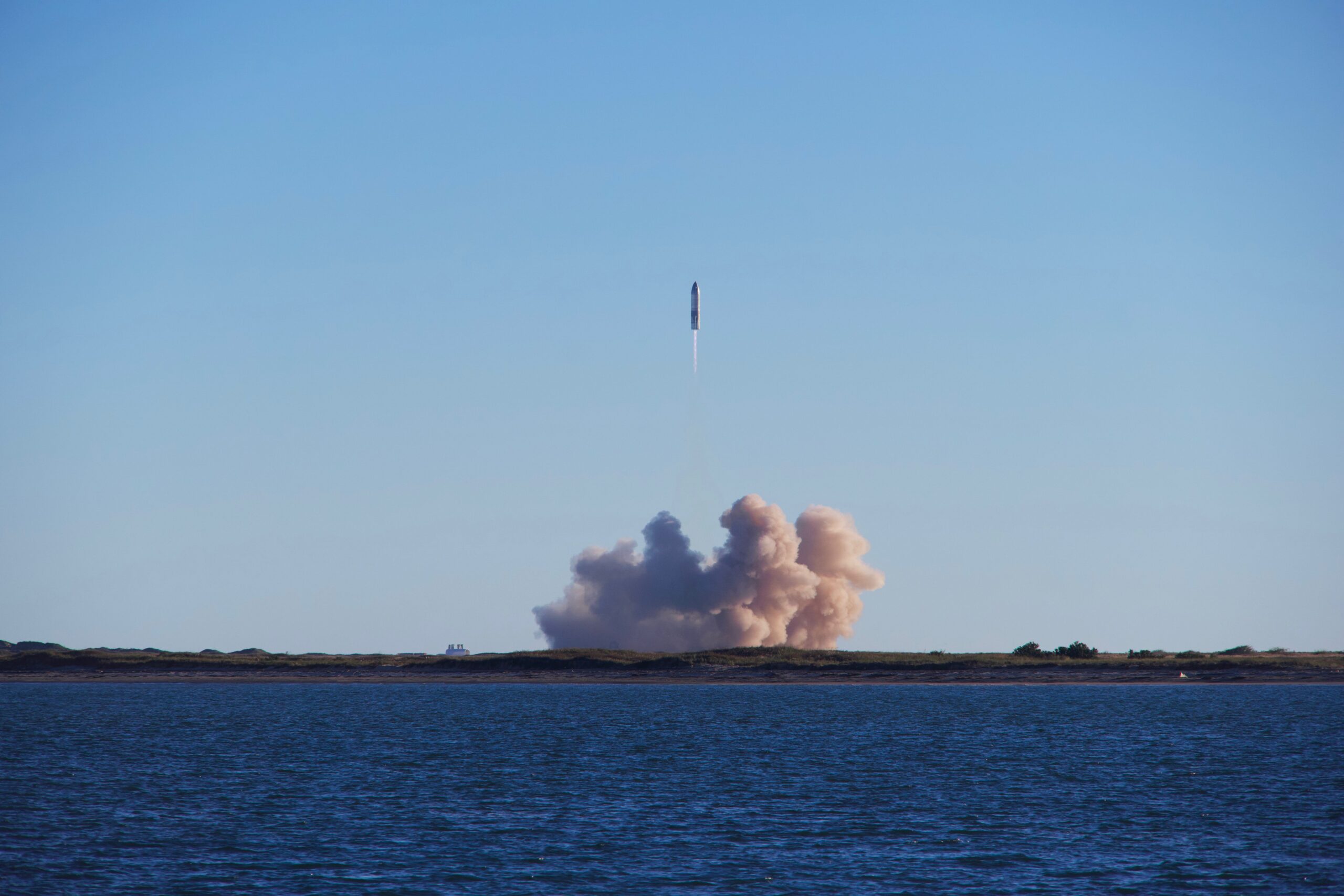
The Japan Aerospace Exploration Agency, or JAXA, is leading the mission with contributions from NASA, France’s CNES, Germany’s DLR, and other international partners. MMX will do more than grab a sample. It will map Phobos in detail, deploy a rover, make two landings, study the more distant moon Deimos, and carry the sample home for laboratory analysis. The launch is targeted for 4:41 a.m. Japan Standard Time on October 20, which is 3:41 p.m. EDT on October 19, aboard an H3 rocket from Tanegashima Space Center.
A Small Moon With Two Origin Stories
Phobos and Deimos do not look much like Earth’s large, round Moon. Both are tiny, dark, and irregularly shaped. Phobos is only about 22 kilometers across at its widest dimension and circles Mars so closely that it completes an orbit in less than eight hours. Deimos is smaller and farther out. Their asteroid-like appearance helped inspire the idea that Mars captured them long ago.
Capture is not a simple explanation, however. An object arriving from another part of the solar system would usually enter a stretched or tilted orbit unless something removed a great deal of its energy. Phobos and Deimos instead travel in nearly circular paths close to Mars’s equatorial plane. Those orderly orbits fit another possibility: a large object struck early Mars, throwing a disk of debris into orbit, and the moons assembled from that material.
Each hypothesis points to a different planetary history. A captured Phobos could preserve material from the outer part of the asteroid belt or another region where water-rich minerals and organic compounds were common. A moon born from an impact would contain material connected to Mars and the body that struck it. Remote observations have narrowed the possibilities, but Phobos’s dark, altered surface can make different materials look frustratingly similar from a distance.
Why a Physical Sample Can Change the Answer
A spacecraft can measure the color, shape, temperature, and chemical signals of a distant surface, but a laboratory can ask far more precise questions of a grain held on Earth. Researchers can determine the ratios of different isotopes, identify minerals at microscopic scales, and examine textures created by melting, shock, water, or long exposure to space. Several independent tests can be applied to the same grain, and new instruments can return to the preserved material decades later.
The chemical pattern will be especially revealing. If Phobos resembles primitive carbon-rich asteroids, its minerals and isotopes should carry a signature unlike most Martian rocks. If it formed from an impact around Mars, the returned grains may show mixtures, melting, or other evidence linked to a violent collision. The result may not be a single dramatic marker. Scientists will compare many measurements and ask which origin story explains the complete set with the fewest contradictions.
Phobos may also hold stray pieces of Mars. Large impacts on the planet can launch fragments fast enough to reach the moon, which orbits only about 6,000 kilometers above the Martian surface. JAXA estimates that Phobos could contain far more Mars-derived material than Deimos because of that proximity. A scoop of its regolith may therefore include grains ejected from different Martian locations and different periods, providing a scattered record of the planet without lifting a sample directly from Mars’s much stronger gravity.
How MMX Will Reach and Sample Phobos
After launch, MMX is expected to spend about a year traveling to the Mars system. Phobos’s weak gravity makes an ordinary orbit around the moon unstable and difficult to maintain, so the spacecraft will use a quasi-satellite orbit. It will circle Mars on a path that keeps it moving near Phobos, allowing repeated close observations while both bodies continue around the planet.
The spacecraft will first build maps of the moon’s shape, surface composition, and hazards. It will then release IDEFIX, a small rover developed by CNES and DLR, before the main spacecraft attempts its own landing. Data from the rover can show how the loose surface behaves and help engineers judge the conditions that the lander and sampling tools will encounter. On a world with extremely weak gravity, even wheel motion and contact with the ground require careful control.
MMX carries two ways to collect material. Its coring sampler is designed to push about two centimeters into the regolith and secure subsurface grains in a tube. NASA’s pneumatic sampler will release a burst of nitrogen gas, lofting surface particles into a collection container in a fraction of a second. Using different mechanisms improves the chance of success and may gather material with different histories of exposure to sunlight, radiation, and micrometeorite impacts.
The mission plan calls for two spacecraft landings and the collection of more than 10 grams of material. MMX will also observe Deimos during a flyby before departing the Mars system in 2030. The return capsule is scheduled to reach Earth in 2031 and land in Australia, where the sample can be recovered and transferred to controlled laboratories.
The Instruments That Prepare the Landing
Sampling only becomes meaningful when scientists know where the grains came from. MMX carries 13 scientific and technology instruments that will connect each collected particle to the wider moon. The TENGOO narrow-angle camera can image details as small as roughly 40 centimeters, while the OROCHI wide-angle camera observes reflected light in several visible wavelengths. Together they will help map terrain, distinguish surface units, and identify a landing site that is both safe and scientifically useful.
A laser altimeter called LIDAR will measure distance to the surface and refine the moon’s shape. The MIRS near-infrared spectrometer will look for minerals, water-related substances, and organic material across wavelengths from 0.9 to 3.6 micrometers. NASA’s MEGANE instrument will measure gamma rays and neutrons produced when cosmic rays strike the surface. Those signals reveal the abundance of elements and provide chemical context for the small patch that the samplers touch.
Other instruments will study dust, charged particles, the loss of material from the Martian atmosphere, and the space-radiation environment. No single reading can prove where Phobos formed. The strength of the mission comes from combining global maps, close surface measurements, rover observations, and laboratory results from a documented sampling site.
What Success Would Add to Mars Exploration
MMX builds on Japan’s experience with Hayabusa and Hayabusa2, which returned particles from the asteroids Itokawa and Ryugu. Phobos presents a different challenge because the spacecraft must travel to the Martian system, work near a moon whose motion is dominated by Mars, land, sample, leave Mars’s gravity, and protect the material during the journey home. Each step develops techniques that could support later sample-return and deep-space missions.
The scientific payoff reaches beyond the two moons. If Phobos is captured, its composition can reveal how material moved between regions of the young solar system. If it formed after an impact, the sample can test how moons assemble from debris around a planet. Either answer will sharpen models of planetary formation rather than merely attaching a label to one small object.
There is also a valuable possibility that the result will be messier than either textbook picture. Phobos’s surface has endured billions of years of impacts, radiation, and contamination by material from Mars. A returned sample may contain several populations of grains with different origins. That complexity would still be useful because researchers could separate the histories with laboratory tools and compare them with the spacecraft’s maps.
Ten grams sounds modest beside a planet, but sample-return science has never depended on bulk. It depends on knowing where material came from, protecting it from contamination, and letting many precise measurements test the same story. If MMX completes that chain, a handful of dark grains from Phobos could explain how Mars gained its moons and preserve fragments of the planet’s own ancient past.