Akshay Dinesh
The Orionid meteor shower returns every October, but the 2026 display comes with a complication: a bright waxing gibbous Moon will hide many of the faintest streaks. That does not make the shower a lost cause. It changes the strategy. The best views should come during the few hours before dawn on October 22, after the Moon has moved lower or set for many locations and Orion has climbed well into the sky. A dark site, a patient watch, and realistic expectations will matter far more than any special equipment.
When the 2026 Orionids peak
NASA lists the Orionids as active from October 2 through November 7 in 2026, with the peak on the night of October 21 into the morning of October 22. Under genuinely dark skies, the shower may produce about 10 to 20 meteors per hour near its best. That figure describes favorable conditions with the radiant high, a wide-open sky, and little interfering light. It is not a promise that every observer will count a meteor every three to six minutes.
The Moon is the main limitation this year. NASA’s October skywatching forecast notes that the bright waxing gibbous Moon will wash out fainter meteors and recommends looking before dawn after moonset. Exact moonset and twilight times depend on location, so a local astronomy app, planetarium program, or almanac can identify the darkest available window. If the Moon remains above the horizon, place a building, hill, or tree behind you to block its direct glare without blocking too much sky.
The shower is visible from both the Northern and Southern hemispheres after midnight. Orion rises and reaches a more useful position as the night continues, while Earth’s morning side turns into the stream of particles. The effect is a little like riding in the front of a moving vehicle: the side facing forward encounters more of what lies in its path. For most viewers, that makes the hours before dawn more productive than the evening.
Why Halley’s Comet makes an October shower
Every Orionid begins as a small piece of debris shed by comet 1P/Halley. When the comet approaches the Sun, heat releases gas and dust from its nucleus. Those particles spread along the comet’s orbit rather than remaining in a single compact cloud. Each October, Earth crosses part of that debris stream. Particles strike the upper atmosphere at roughly 66 kilometers per second, or about 41 miles per second, and their enormous speed produces the brief streaks of light we call meteors.
The glow does not come from a tiny rock burning like a coal all the way to the ground. A fast meteoroid slams into the atmosphere, compressing and heating the air around it while material is stripped from its surface. Excited atoms in the meteoroid and surrounding air emit light. Most visible shower particles are destroyed high above the surface, so watching the Orionids does not mean standing beneath a dangerous rain of rocks.
Halley’s Comet last passed through the inner solar system in 1986 and is not expected back until 2061, yet its older debris remains distributed around its long orbit. That is why Earth can meet Halley material every year while the comet itself is far away. The same parent comet also supplies the Eta Aquariid meteor shower in May, when Earth crosses a different portion of the stream.
Where to look and why the radiant can mislead you
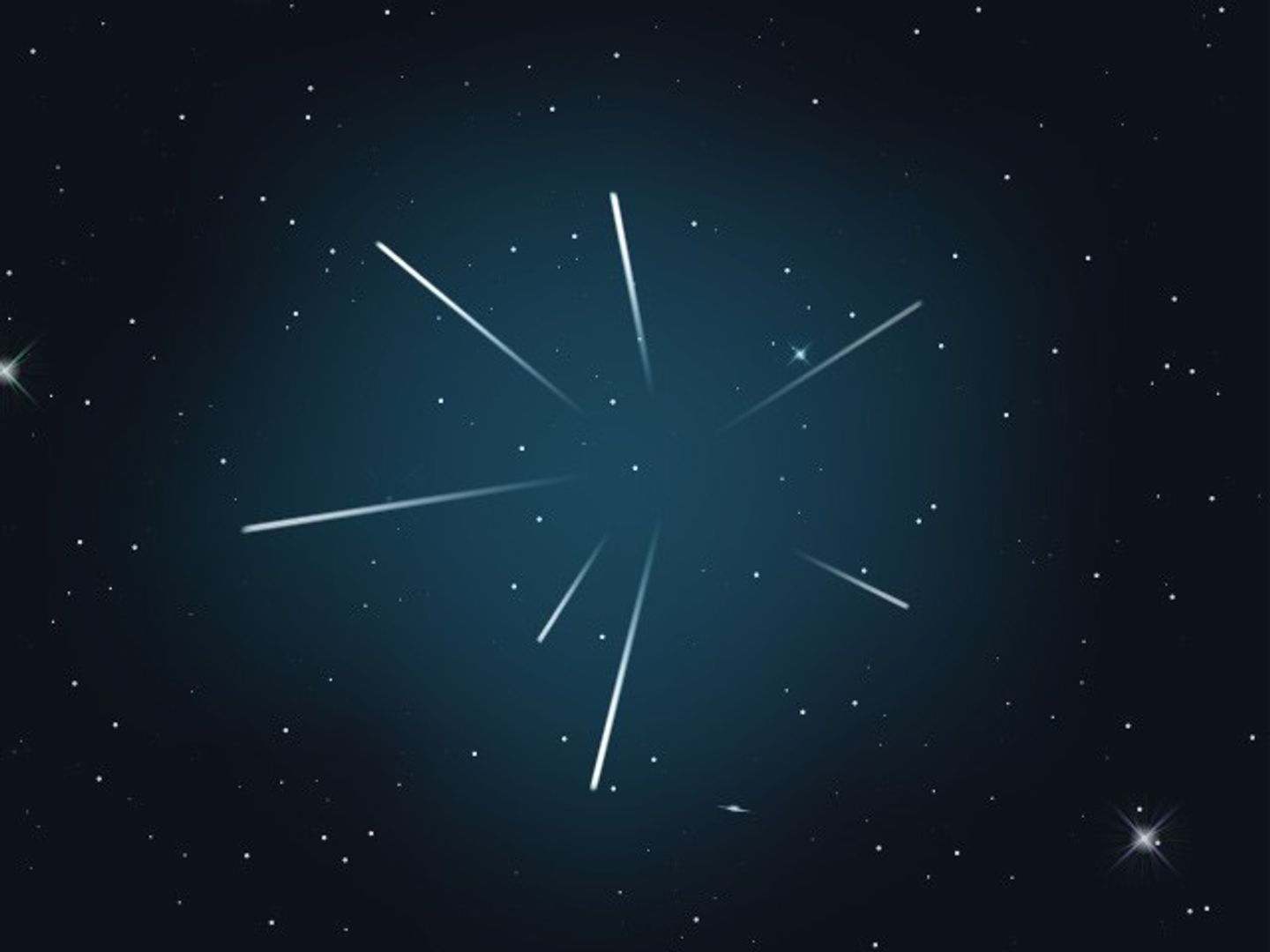
The Orionids are named for their radiant, the point from which their paths appear to spread. NASA places it just north of Betelgeuse, the reddish star marking one of Orion’s shoulders. This apparent convergence is a perspective effect. Parallel tracks seem to meet in the distance for the same reason railroad rails appear to narrow toward the horizon. The particles do not originate in the constellation, and Orion’s stars are vastly farther away.
Finding Orion is useful for confirming that the shower is active, but staring directly at the radiant is not the best way to watch. Meteors close to that point look short because they are coming almost toward the observer. NASA recommends looking roughly 45 to 90 degrees away, where the same paths appear longer across the sky. Let your gaze wander over a broad area rather than locking onto a single star.
A reclining chair or blanket helps because it keeps more sky in view without straining the neck. Binoculars and telescopes work against the goal: they magnify a tiny patch of sky and sharply reduce the chance that a random meteor will cross the field. The unaided eye is the right instrument. If Orion is hidden by a tree or building but much of the surrounding sky is open, the shower can still be watched successfully.
How to give yourself the best chance
Light control is the biggest practical improvement available. A rural site is helpful, but even in a suburb it may be possible to move away from streetlights and choose a spot with an open horizon. Allow about 30 minutes for your eyes to adapt to darkness, as NASA recommends. A quick glance at a bright phone screen can undo part of that adjustment, so lower the screen brightness, use a red-light setting if available, and finish essential setup before settling in.
- Check the weather first. Thin cloud can erase faint meteors even when stars remain partly visible.
- Find a safe, legal observing site. Avoid roadsides, closed parks, uneven ground, and isolated places where personal safety is uncertain.
- Dress for the actual temperature. Remaining still before dawn feels much colder than taking a short walk outside.
- Watch for at least 30 to 60 minutes. Meteors arrive unevenly, with quiet gaps and occasional clusters.
- Face away from the Moon. Use a solid object to shade your eyes from direct moonlight while preserving a wide view overhead.
Do not use the ideal hourly rate as a scoreboard. The American Meteor Society’s zenithal hourly rate assumes excellent skies and a radiant placed favorably overhead. Trees, haze, city glow, moonlight, and the radiant’s height all reduce a real observer’s count. Seeing only a handful can still reveal what makes the Orionids distinctive: their speed, occasional brightness, and trains that may linger briefly after the meteor itself vanishes.
What a bright meteor can reveal
The Orionids are among the faster annual meteors. Speed makes a streak seem sudden, but it can also leave a glowing train along the path. NASA notes that these trains may remain visible for seconds and, in unusual cases, longer as high-altitude winds distort the luminous trail. A particularly bright meteor is called a fireball, though most Orionids are much less dramatic.
Not every streak seen that night will necessarily be an Orionid. Sporadic meteors occur on any clear night, and other weak showers can overlap in time. Mentally tracing a meteor’s path backward helps: an Orionid should point generally toward the shower’s radiant near Orion. A streak that points somewhere else may belong to another source. Satellites move more slowly and steadily, while aircraft usually show blinking lights, so neither has the sudden appearance and disappearance of a meteor.
The 2026 Orionids are unlikely to produce a sky filled continuously with streaks, especially under a bright Moon. Their appeal is quieter. Dust released by Halley’s Comet long ago will meet Earth’s atmosphere in flashes lasting only a moment, and anyone with a dark enough view can watch without a telescope. Choose the darkest pre-dawn window available, give your eyes and the sky time, and let the fast meteors come to you.