 Akshay Dinesh
In mid-September, the change in daylight can feel sudden. One week, evening still seems to belong to summer. A short time later, sunset is noticeably earlier, morning light arrives later, and the day seems to be shrinking faster than it did in July or August. The pattern is real. Daylight does not shorten at the same pace all year.
The fastest daily changes happen near the equinoxes, the points in Earth’s orbit when the Sun appears to cross the plane of the equator. In 2026, the September equinox falls on September 23 at 00:05 UTC, which is the evening of September 22 in many U.S. time zones. Around that part of the year in the Northern Hemisphere, daylight is falling quickly. Around the March equinox, it rises quickly. Near the solstices, by contrast, the change slows down so much that the longest and shortest days seem to linger.
The Equinox Is Where the Sun’s Path Changes Most Quickly
The reason begins with Earth’s tilted axis. NASA explains the seasons through that tilt: as Earth orbits the Sun, one hemisphere leans more toward the Sun for part of the year and more away from it for the opposite part. That tilt changes how high the Sun climbs in the sky and how long it stays above the horizon.
At the June solstice in the Northern Hemisphere, the Sun’s apparent path is near its highest and longest. At the December solstice, it is near its lowest and shortest. The equinoxes sit between those extremes. They are not just middle dates on a calendar; they are the steepest part of the seasonal daylight shift.
A helpful way to picture it is a swing. Near the highest point of a swing’s arc, the motion briefly slows before changing direction. Near the middle of the arc, the swing is moving fastest. Daylight behaves in a similar rhythm through the year. Near a solstice, the Sun’s path is close to a turning point, so the day-to-day change in daylight is small. Near an equinox, the Sun’s path is moving through the middle of its seasonal shift, so the daily change is larger.

Why Solstices Feel Like a Pause
The word solstice comes from the idea of the Sun standing still. Of course, the Sun is not actually stopping in the sky. The phrase describes what people notice: for several days around a solstice, sunrise and sunset times change only a little. The seasonal movement is still happening, but it is flattening out near an extreme.
That is why late June does not suddenly begin losing daylight at full speed after the longest day. The shortening starts gently. In many mid-latitude places, daylight loss in the first days after the June solstice is small enough that people may not notice it without a sunrise table. By August, the pace has increased. By September, the loss can become obvious in ordinary life, especially during commutes, evening practices, and after-school routines.
The same pattern works in winter. After the December solstice, daylight begins to return, but at first the gain is slow. By February and March, the lengthening becomes easier to feel. The equinox is the part of the cycle where the change has momentum.
Latitude Changes How Dramatic the Shift Feels
The daylight change is not equally dramatic everywhere. Latitude matters because the Sun’s path cuts across the horizon at different angles in different places. Near the equator, day length stays fairly close to 12 hours throughout the year. Seasonal change still exists, but it is modest compared with higher latitudes.
Farther from the equator, the swing grows larger. A city in the northern United States loses more daylight per day near the September equinox than a city in the tropics. Move farther north into Canada, Alaska, or Scandinavia, and the change becomes even more striking. The same is true in the Southern Hemisphere, only the seasons are reversed.
This is one reason a single phrase like “days are getting shorter” hides a lot of local variation. In Miami, the September shift is noticeable but moderate. In Minneapolis or Seattle, it can feel sharper. In Anchorage, the daylight curve becomes part of daily planning. The equinox is a global astronomical moment, but daylight is experienced from a particular latitude, on a particular horizon, in a particular season.
The Clock Shows the Change in Two Different Places
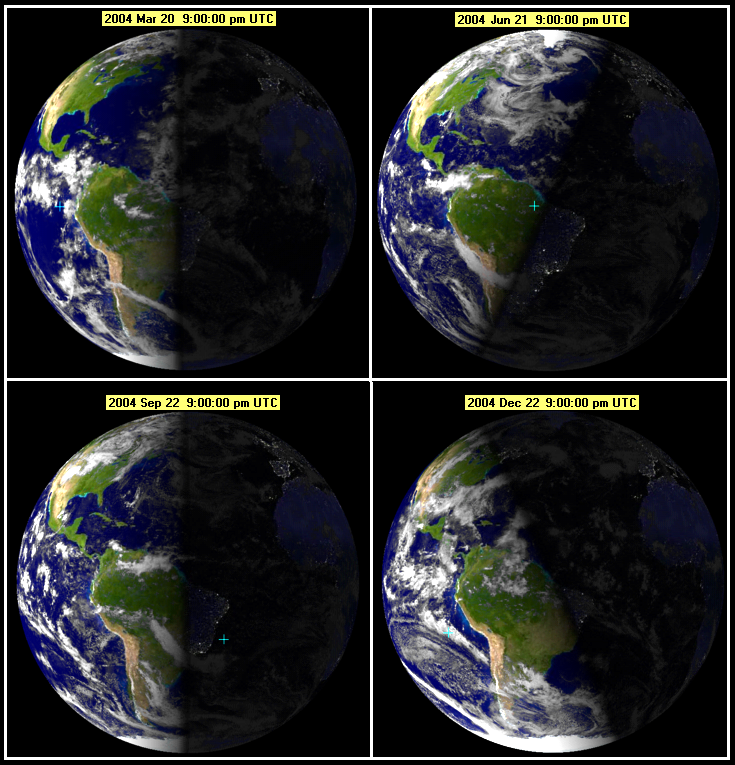
When daylight changes, it does not always divide neatly between morning and evening. Sunrise may shift later, sunset may shift earlier, and the exact split depends on location, time zone, and the changing relationship between clock time and solar time. That is why someone tracking only sunset may notice one pattern, while someone who leaves home before school or work may notice another.
Near the September equinox in the Northern Hemisphere, both ends of the day are moving in the darker direction: sunrise generally comes later and sunset generally comes earlier. The combined effect is the shorter day. Near the March equinox, the reverse happens: sunrise tends to come earlier and sunset tends to come later, creating the quick feeling of lengthening days.
Local geography can make the experience even more personal. Hills, buildings, trees, and mountains change when the Sun first becomes visible or disappears from view, even though official sunrise and sunset tables assume a standard horizon. A person in a valley may feel the day close earlier than someone on open flat ground. The astronomy sets the pattern; the landscape shapes the view.
Why the Equinox Is a Good Time to Notice the Sky
The equinox is often described as equal day and night, but its more interesting lesson may be motion. Around this time, the Sun’s rising and setting points slide quickly along the horizon. For many observers, the Sun rises close to due east and sets close to due west near the equinox, then continues shifting as the season advances.
That makes September and March good months for skywatching without special equipment. A window, a sidewalk, or a familiar sports field can become a quiet measuring tool. Notice where sunrise appears against nearby buildings or trees. Watch where sunset falls along the horizon from week to week. The shift is easier to see near the equinox because the seasonal change is moving quickly.
This also helps explain why daylight affects daily routines so strongly in early fall and early spring. The change is not just psychological. The geometry of Earth’s orbit is moving the Sun’s apparent path at its fastest seasonal pace. Sleep schedules, evening activities, morning commutes, outdoor practices, and even when a room feels bright can all reflect that steady astronomical rhythm.
The Fast Change Is Part of a Smooth Cycle
Although the September daylight drop can feel abrupt, it is part of a smooth annual curve. Earth is not lurching into autumn. The Sun’s apparent path is steadily shifting because of the planet’s tilt and orbit. The equinox simply lands where that shift is most noticeable from one day to the next.
That smoothness matters because it keeps the explanation from becoming a calendar myth. The equinox does not flip a switch from summer to fall. Weather may lag behind daylight. Warm afternoons can continue after sunsets begin arriving earlier. Plants, animals, school schedules, and human routines respond to the changing light in different ways and at different speeds.
Still, daylight is one of the clearest seasonal signals available. It is written into shadows, sunrise times, evening walks, and the angle of light through a classroom window. Near the equinox, that signal speaks louder because the change is moving faster. The shorter days of fall and the longer days of spring are not random impressions. They are the everyday result of living on a tilted planet moving around the Sun.