 Akshay Dinesh
A distant galaxy does not arrive in a telescope with a label saying how far away it is or how fast it is moving. What astronomers receive is light: faint, stretched, filtered by space, and separated into colors. Redshift is one of the main clues hidden in that light. When the light from many distant galaxies is shifted toward longer, redder wavelengths, it tells astronomers that the space between galaxies has been growing while the light has been traveling.
That idea can sound strange at first because redshift is easy to confuse with ordinary motion. A siren changes pitch when an ambulance passes; light can also shift when a star or galaxy moves toward or away from us. But cosmological redshift is deeper than a simple object speeding through space. It is evidence that the universe itself has changed scale. NASA describes this as the stretching of light as it travels through an expanding universe, while the European Space Agency points out an important twist: two distant objects can gain redshift even if neither is racing through space in the everyday sense, because the space between them is expanding.
Redshift Starts With Wavelength
Light travels in waves, and each color of visible light has a different wavelength. Blue light has shorter wavelengths; red light has longer wavelengths. Beyond visible red sits infrared light, and beyond visible violet sits ultraviolet light. When astronomers talk about redshift, they do not mean every distant galaxy literally looks bright red to the eye. They mean that the wavelengths in its light have been stretched compared with where those patterns would appear in a laboratory.
The most useful markers are spectral lines. When atoms absorb or emit light, they leave patterns at particular wavelengths, almost like bar codes made of color. Hydrogen, calcium, sodium, and other elements have recognizable signatures. If those same signatures appear shifted toward longer wavelengths in light from a galaxy, astronomers can measure how much the light has been stretched. That measured stretch is called redshift and is often written as z.
A small redshift means the wavelength has grown only a little. A large redshift means the light has been stretched much more. In modern astronomy, redshift is not just a color change. It is a measurement that helps connect galaxy light to distance, time, and the history of the universe.
How Expanding Space Stretches Light
One common classroom picture uses dots on the surface of a balloon. As the balloon inflates, the dots move farther apart, even though no dot crawls across the rubber on its own. The analogy is imperfect because the universe is not expanding into an empty room around it, but it captures one useful point: when space expands, distances between far-apart galaxies can grow.
Light traveling through that expanding space gets stretched along the way. Imagine a wave crest leaving a galaxy when the universe was smaller. While the light crosses billions of light-years, the distance scale of the universe increases. By the time the wave reaches a telescope, the spacing between its crests has lengthened. A short-wavelength signal has become a longer-wavelength signal.
This is why redshift can reveal more than motion through space. Nearby objects may have Doppler shifts mainly because they are moving toward or away from us. For very distant galaxies, the expansion of space becomes the main story. The farther the light has traveled through the expanding universe, the more stretching can accumulate.
Hubble’s Law Turned Redshift Into Evidence
In the early 20th century, astronomers were still debating the scale of the universe. Edwin Hubble helped show that many fuzzy patches in the sky were not small clouds inside the Milky Way but separate galaxies far beyond it. Then came the relationship that changed cosmology: more distant galaxies generally showed larger redshifts.
This pattern became known as Hubble’s law. In simple form, it says that a galaxy’s recession speed is proportional to its distance. A galaxy twice as far away tends, on average, to recede about twice as fast. The pattern does not mean Earth sits at a special center. In a uniformly expanding universe, observers in other distant galaxies would also see faraway galaxies receding from them.
The word receding needs care. Galaxies are not all flying away from Earth through a fixed background like sparks from an explosion. On large scales, the space between galaxy groups is expanding, so the distance between them increases. Gravity still holds together smaller systems such as planets, stars, galaxies, and many galaxy clusters. The expansion matters most across enormous cosmic distances where local gravitational binding is weaker than the large-scale expansion of space.
What Redshift Can and Cannot Tell Us
Redshift is powerful, but it is not a complete biography of a galaxy. It can estimate distance when combined with a model of cosmic expansion, and it can reveal that the light we see left the galaxy long ago. A galaxy with high redshift is seen as it was in the young universe, not as it is right now. That makes redshift a kind of lookback tool: the farther astronomers look, the older the light usually is.
Still, astronomers do not rely on redshift alone for every question. Nearby galaxies can have extra motion caused by gravity from neighboring galaxies and clusters. That local motion can slightly complicate the clean expansion pattern. Dust, telescope limits, and the type of galaxy being observed can also affect what is easy to measure. For precise cosmology, astronomers combine redshift with other distance tools, such as standard candles, galaxy surveys, and observations of the cosmic microwave background.
The strength of redshift is that it turns light into a measurable record. A galaxy’s spectrum is not just a pretty band of colors. It contains shifted atomic patterns that can be compared with known wavelengths. Once those shifts are measured across many galaxies, a large-scale pattern appears: the universe is not static.
Why Redshift Matters Beyond Astronomy Class
Redshift is one reason astronomers can study the past without leaving Earth. Light from a galaxy billions of light-years away began its journey billions of years ago. By catching that light now, telescopes observe an earlier stage of cosmic history. This is how deep surveys can compare young galaxies with older, nearby galaxies and trace how structure grew over time.
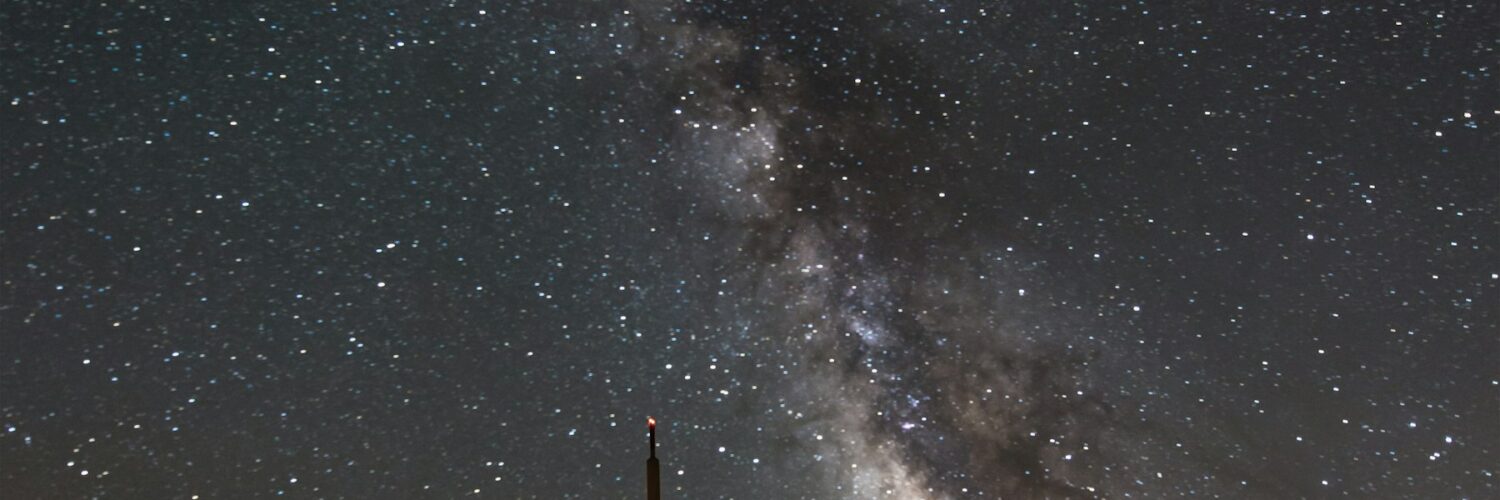
Redshift also helps explain why the night sky is a scientific archive. The universe has not looked the same forever. Galaxies formed, merged, changed their star formation, and gathered into larger patterns. Measuring redshift lets astronomers place distant objects into a timeline instead of treating them as scenery at one single moment.
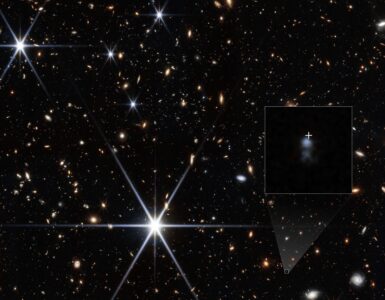
Modern observatories use redshift in many ways. Large galaxy surveys map how matter is distributed across the universe. Space telescopes use redshift to identify extremely distant galaxies whose visible light has been stretched into infrared wavelengths. That is one reason infrared astronomy is so important for studying the early universe: the light may have started as ultraviolet or visible radiation but reached us in a much redder form.
The Big Idea Hidden in Stretched Light
Redshift gives a surprisingly quiet answer to one of the largest questions humans can ask. The universe is not a fixed stage where galaxies simply sit in place. Across vast distances, space itself has been expanding, and light carries the evidence of that expansion in its stretched wavelengths.
The idea is subtle because it asks us to think beyond everyday motion. A galaxy can be far away not only because it moved through space, but because the distance scale of the universe changed while its light was traveling. That is what makes redshift so valuable. It turns faint colors and spectral lines into a map of cosmic expansion, showing that the universe has a history written into the light arriving from its most distant galaxies.