 Akshay Dinesh
On November 18, 2026, Voyager 1 is expected to reach a distance from Earth that sounds almost imaginary: one light-day. That is about 16.09 billion miles, or 25.9 billion kilometers. Light and radio waves travel that distance in 24 hours, so a message from Earth needs a full day to reach the spacecraft. Any reply needs another day to come home.
The milestone does not mark a border in space, and Voyager 1 will not notice the moment it passes. Its value is more revealing than ceremonial. It turns an abstract distance into a practical measure of how mission controllers communicate with the most distant human-made object, and it shows how far a machine built in the 1970s has carried scientific instruments from Earth.
A light-day is a distance, not a travel time
A light-day is the distance light travels through a vacuum in 24 hours. Because light moves at exactly 299,792,458 meters per second, multiplying that speed by 86,400 seconds gives roughly 25.9 billion kilometers. The same idea produces a light-second, light-minute, and light-year. These units are useful because ordinary kilometers become unwieldy across the solar system and beyond.
Earth is about eight light-minutes from the Sun, which means sunlight reaching us is already about eight minutes old. Neptune is roughly four light-hours from the Sun, although the exact distance varies as planets move in their orbits. Voyager 1’s one-light-day separation from Earth is therefore about six times the Sun-to-Neptune distance when expressed as light-travel time. Even so, one light-day is tiny beside the distances between stars: the nearest star system beyond the Sun is more than four light-years away.
NASA’s Jet Propulsion Laboratory calculates that Voyager 1 will be about 16.09 billion miles from Earth on November 18. Distance from Earth and distance from the Sun are not always identical, so rounded figures can differ slightly depending on the reference point and date. The milestone is best understood as a communication distance: the spacecraft’s radio signal takes about a day to cross the space between Voyager and Earth.
A two-day conversation with a spacecraft
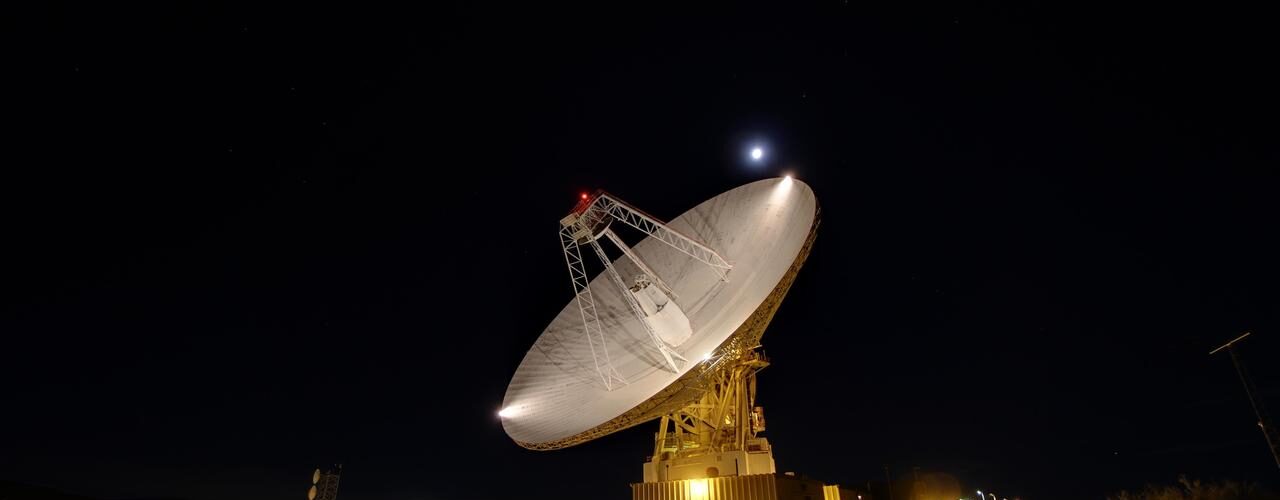
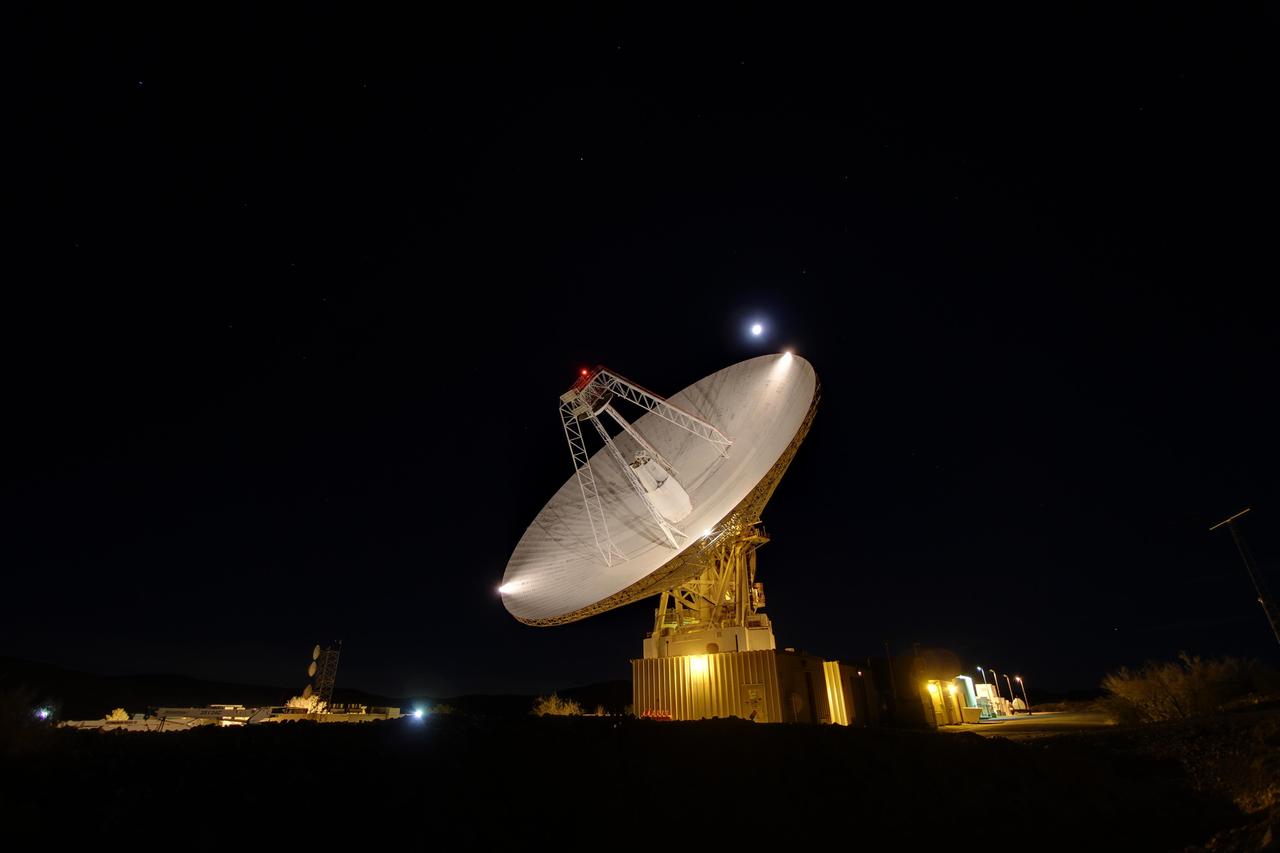
Voyager 1 does not use light in the visible colors our eyes detect. It communicates by radio, another part of the electromagnetic spectrum that travels at the same universal speed. NASA’s Deep Space Network listens with large antennas near Goldstone in California, Madrid in Spain, and Canberra in Australia. Their spacing around Earth allows at least one complex to face the right part of the sky as the planet rotates.
At one light-day, the shortest possible round trip for a question and answer is about 48 hours. That assumes the spacecraft can respond immediately and a receiving antenna is ready, which is not how most troubleshooting works. Engineers must schedule antenna time, collect a faint stream of data, examine it, design commands, check those commands carefully, and then wait another day to learn what happened. A single diagnostic exchange can stretch across several days.
That delay rules out real-time control. Voyager 1 relies on onboard computers and fault-protection routines to keep itself stable when something goes wrong. In October 2026, the Deep Space Network missed its signal during two scheduled contacts after one set of thrusters went offline and backups switched on. The signal returned before engineers could send a corrective command. The episode showed why a distant spacecraft must be able to protect itself while Earth is still learning that a problem exists.
The signal is also extraordinarily weak by the time it arrives. Radio energy spreads outward as it travels, much as the light from a lamp becomes dimmer with distance. The Deep Space Network uses sensitive receivers, precise pointing, and signal-processing methods to recover information that has crossed billions of miles. Distance does not merely make the conversation slow; it makes every bit harder to hear.
Voyager reached interstellar space, but not the edge of the solar system
Voyager 1 launched in 1977 and used Jupiter and Saturn for gravity assists, borrowing a tiny amount of each planet’s orbital momentum to change speed and direction. Its close views transformed knowledge of both worlds and their moons. After the planetary encounters, the spacecraft continued outward on a path that will not bring it back.
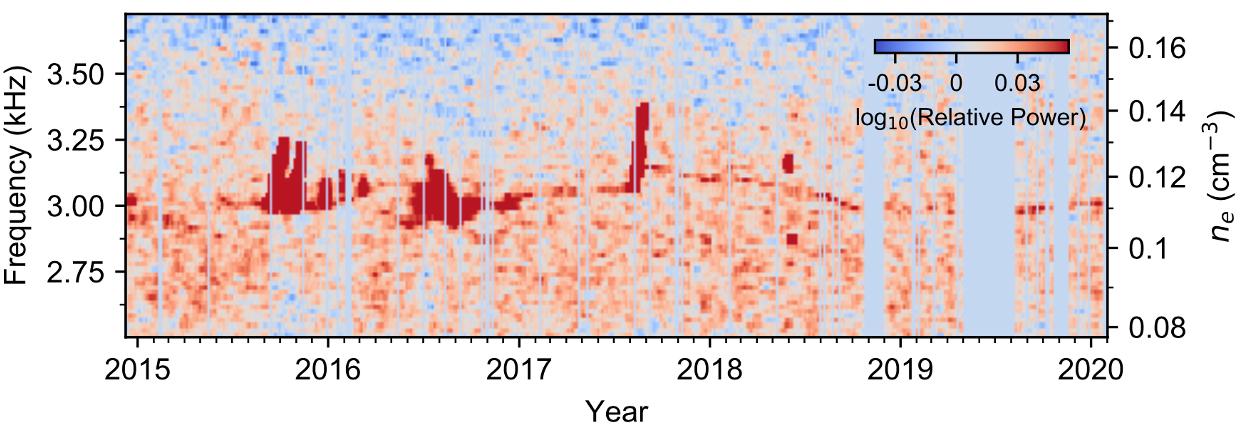
In August 2012, Voyager 1 crossed the heliopause. This is the boundary where the outward pressure of the solar wind, a stream of charged particles from the Sun, gives way to the surrounding interstellar medium. Crossing it made Voyager 1 the first spacecraft to measure interstellar space directly. The region is not empty: instruments can detect charged particles, magnetic fields, and waves in the thin material between stars.
Leaving the heliosphere is not quite the same as leaving the solar system. The Sun’s gravity extends far beyond the heliopause, and distant icy bodies in the Oort Cloud are still considered part of the solar system. Voyager 1 will take many thousands of years to travel through that vast outer region. “Interstellar” describes the surrounding material it now measures, not a clean escape from every part of the Sun’s domain.
The mission is now a careful exercise in energy
Distance is only one of Voyager 1’s limits. The spacecraft is powered by radioisotope thermoelectric generators, which turn heat from the natural decay of plutonium-238 into electricity. That power falls gradually. According to JPL, each Voyager loses about four watts of electrical power per year, so controllers must continually decide which heaters, instruments, and support systems can remain on.
In 2026, engineers completed an energy-saving operation that replaced three devices with three lower-power alternatives. The simultaneous change, nicknamed the “Big Bang” by the mission team, preserved the heat distribution the spacecraft needs while reducing demand. Without it, JPL estimated that another science instrument might have needed to be switched off as early as summer 2027.
This work is delicate because Voyager was never designed for easy repair or modern software updates. Its computers have far less memory than an ordinary phone, its hardware has endured nearly half a century of radiation and temperature changes, and every command carries a long delay. Mission longevity comes from knowing the old machine intimately, conserving narrow power margins, and giving the spacecraft enough autonomy to survive problems before Earth can react.
What the milestone tells us about cosmic scale
Voyager 1 is moving at about 38,000 miles per hour, yet its increasing distance adds only a little over three light-seconds per day. That contrast is a useful lesson in scale. A speed that could circle Earth in well under an hour barely changes a one-day radio delay. Space becomes enormous faster than familiar motion can make it manageable.
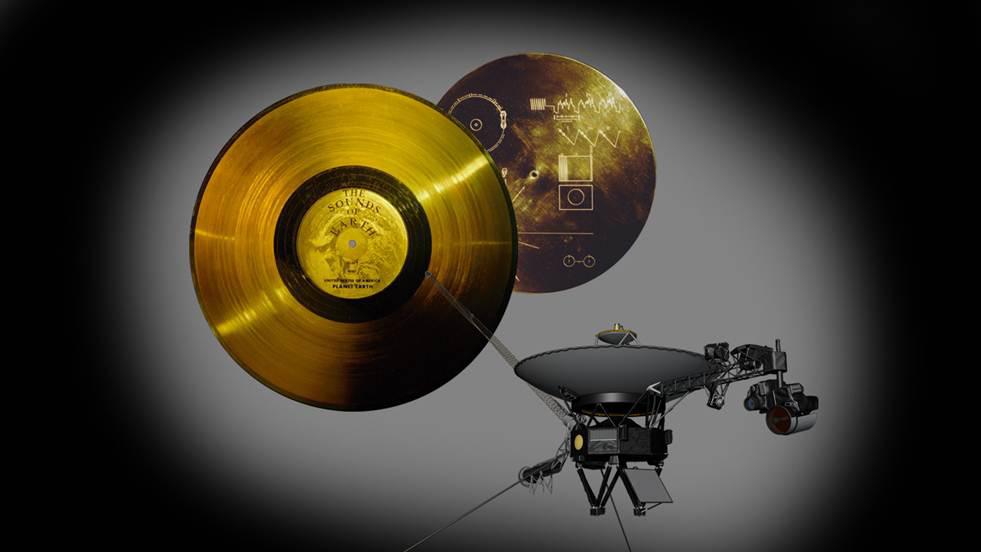
The spacecraft’s famous Golden Record carries greetings, music, natural sounds, and images chosen to represent Earth. It was created as a message for a remote possibility, not as a realistic attempt at conversation with another civilization. At one light-day, Voyager remains close enough for the Deep Space Network to hear, but far enough that every exchange requires patience and planning.
Nothing flashes, clicks, or changes aboard Voyager 1 when the counter reaches one light-day. The milestone matters because people can still communicate with it at all. A spacecraft launched before personal computers became common is measuring interstellar material while engineers on Earth wait two days for the fastest possible reply. One light-day is both an immense achievement and a reminder that Voyager has only begun to enter the distances between stars.