 Akshay Dinesh
A meteorite found in a desert does not arrive with a return address. Yet scientists can sometimes show that a dark, weathered stone began as molten rock on Mars, was blasted into space by an impact, traveled between planets, and finally fell to Earth. No single test proves that story. The identification rests on several independent clues that agree: minerals formed under Martian conditions, isotope ratios shared with other Martian rocks, shock features from a violent launch, and tiny pockets of gas that resemble the atmosphere measured on Mars. A newly studied specimen called Teghaza 001 shows how those clues can turn an unfamiliar stone into a sample of another planet.
First, the stone has to pass the meteorite test
Most rocks brought to laboratories as possible meteorites turn out to be ordinary Earth rocks or industrial material. A fusion crust, unusual density, attraction to a magnet, and metal grains can make a specimen worth examining, but none is a planetary passport. Some terrestrial rocks resemble meteorites, while many genuine stony meteorites look less dramatic than people expect. Reliable identification therefore depends on a laboratory studying a cut or polished surface, often with microscopes, chemical instruments, and mineral analysis.
The first question is whether the rock formed beyond Earth. Meteorites commonly preserve minerals and textures unlike the weathered rocks around them, along with evidence of rapid heating at the surface during atmospheric entry. Scientists also look for chemical patterns associated with solar-system material. Once a specimen is accepted as a meteorite, its broad family can be determined. Most meteorites are pieces of asteroids; only a small minority have been linked to the Moon or Mars.
A Martian candidate is usually an igneous rock, meaning that it crystallized from magma. Many belong to groups called shergottites, nakhlites, and chassignites, named after representative finds. Their minerals resemble volcanic rocks on Earth, so appearance alone cannot separate them. The difficult work begins when researchers compare the rock’s chemistry with the growing collection of known Martian meteorites and with measurements made on Mars itself.
Chemistry acts like a planetary fingerprint
Oxygen is especially useful because it occurs in nearly every rock-forming mineral and comes in several stable isotopes. These isotopes are atoms of the same element with different numbers of neutrons. The relative amounts of oxygen-16, oxygen-17, and oxygen-18 vary slightly among planetary bodies because each body formed and evolved under its own conditions. A laboratory can measure those differences with great precision.
Martian meteorites cluster in a recognizable oxygen-isotope pattern. When an unfamiliar specimen falls within that family, the match does not by itself prove a Martian origin, but it is powerful evidence. Teghaza 001 was classified as Martian in part because its oxygen isotopes match those in other accepted Martian meteorites. Its igneous minerals and overall geochemistry also fit a rock that formed in the crust of a differentiated planet rather than in a small, primitive asteroid.
Scientists do not expect every Martian meteorite to have identical chemistry. Mars has volcanoes, ancient highlands, impact basins, and rocks altered by water, so its crust is diverse. Researchers look for a coherent combination: mineral types, elemental abundances, isotope ratios, crystallization ages, and signs of processes known to occur on Mars. Agreement among these clues is far more persuasive than any one measurement.
Trapped gas provided the crucial comparison
The strongest link between these meteorites and Mars came from gas sealed inside some of the rocks. A large impact can produce veins and pockets of melted material in Martian crust. As that melt forms under extreme pressure, it can trap a sample of the surrounding atmosphere. The melt then cools quickly, preserving gases inside the rock even after it travels through space and lands on Earth.
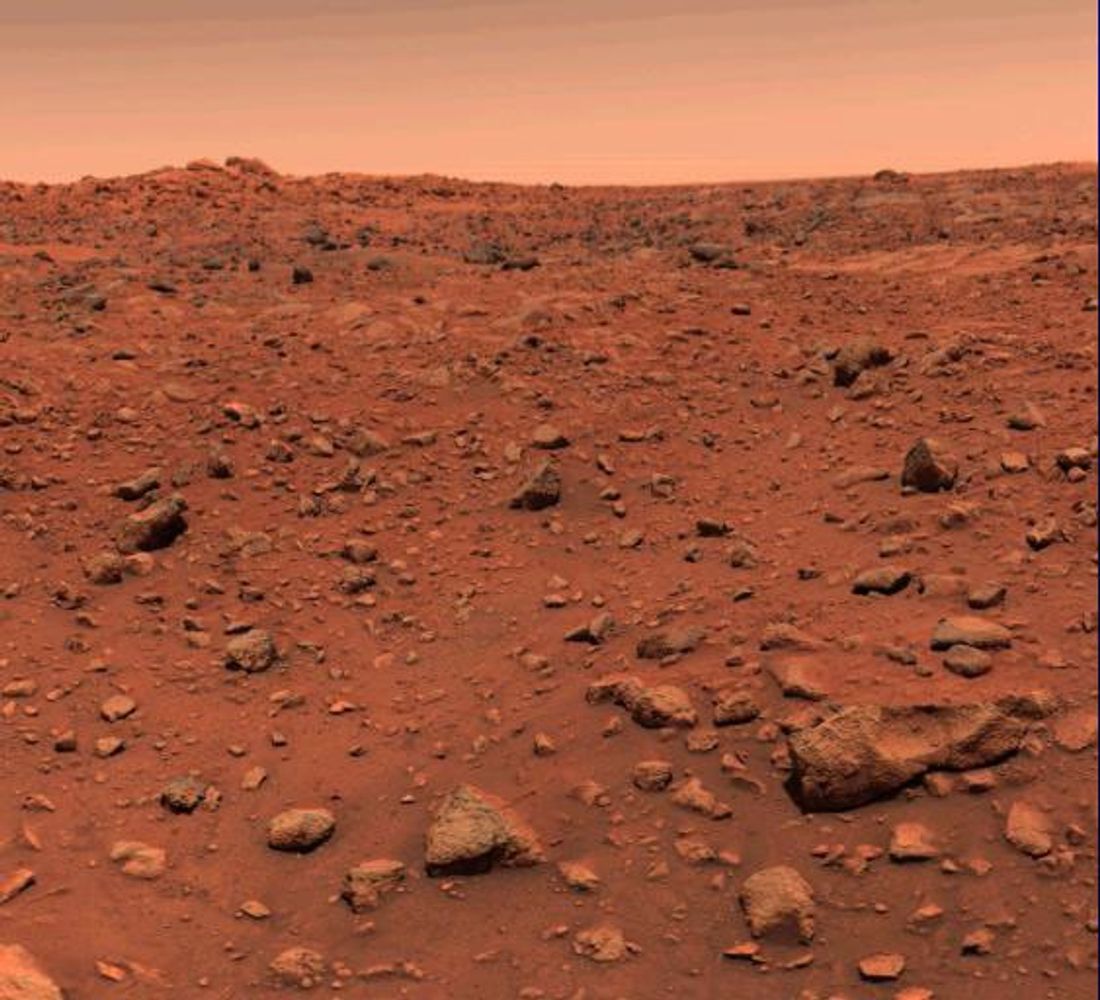
NASA’s Viking landers measured the composition of the Martian atmosphere in 1976. Years later, researchers found that noble gases and other atmospheric components trapped in shock-melted pockets of certain meteorites closely matched the Viking measurements. Ratios involving argon, krypton, xenon, nitrogen, and carbon dioxide supplied a reference that an asteroid could not easily imitate. The match connected a family of unusual meteorites to a world that spacecraft had examined directly.
This is a good example of scientific evidence becoming stronger over time. Some stones had already been grouped together because of their minerals and chemistry. Viking did not collect those meteorites, and the meteorites did not guide Viking to its measurements. The independent datasets met later and told the same story. Measurements from orbiters and rovers have since expanded the comparison, allowing researchers to test mineral and chemical clues against particular Martian terrains.
The rock must also tell a believable travel story
A stone cannot simply drift away from Mars. It needs an impact energetic enough to accelerate fragments beyond the planet’s escape speed, about 5 kilometers per second, without completely melting or vaporizing them. Martian meteorites carry microscopic evidence of that violence. Minerals may be fractured, transformed by high pressure, or crossed by veins of material that briefly melted during the impact.
After launch, the fragment follows an orbit around the Sun until chance and gravity bring it to Earth. Scientists can estimate how long it traveled through space by measuring changes produced by cosmic rays. Those exposure ages are generally much shorter than the age when the rock crystallized. That difference is expected: the stone may have remained in the Martian crust for billions of years before an impact launched it relatively recently.
Earth then begins changing the sample. Water, oxygen, heat, and microbes can alter a meteorite after it lands, especially if it sits exposed for a long time. Researchers must distinguish minerals formed on Mars from weathering products formed in a desert or on Antarctic ice. They examine where a mineral occurs, whether it cuts across older structures, and how its isotopes compare with Martian and terrestrial reservoirs. Good analysis preserves uncertainty instead of treating every feature as untouched evidence from Mars.
Teghaza 001 shows both the power and the limits of the method
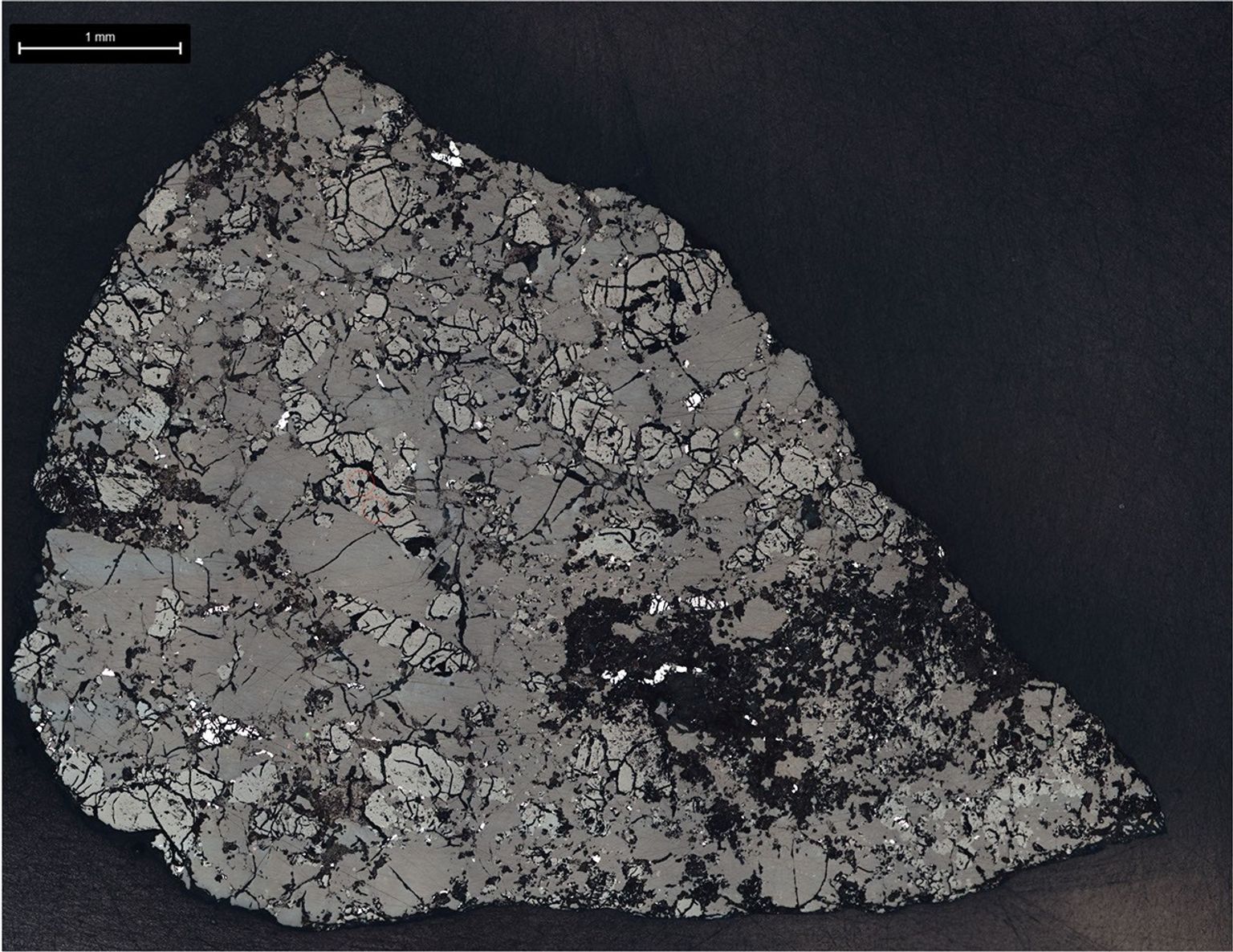
Teghaza 001 was found near a salt plain in Mali in 2022. The roughly 800-gram, rose-colored meteorite initially appeared to be another shergottite. Closer study revealed unusual textures and a mix of igneous minerals that made it far more informative. A team led by Yang Liu of NASA’s Jet Propulsion Laboratory reported in Science in October 2026 that the rock formed at least 4.1 billion years ago, placing it among the oldest Martian meteorites known.
The team studied tiny zircon crystals and dated individual mineral grains with an in-situ rubidium-strontium method, preserving most of the rare sample. A separate 2026 study in Science Advances examined hydrogen isotopes in phosphate minerals and found evidence connected to Mars’s ancient water. Together, the work suggests that the rock records early crust formation, interaction between water and rock, and atmospheric loss during a poorly sampled chapter of Martian history.
Researchers could narrow the source without pretending to know the exact launch site. Mineral and chemical data from Teghaza 001 were compared with observations from NASA’s Mars Reconnaissance Orbiter. Thirteen candidate regions in the southern highlands offered plausible matches. The result is a probability map, not a pinpoint address, because similar rocks may occur in places hidden by dust or beyond the resolution of orbital instruments.
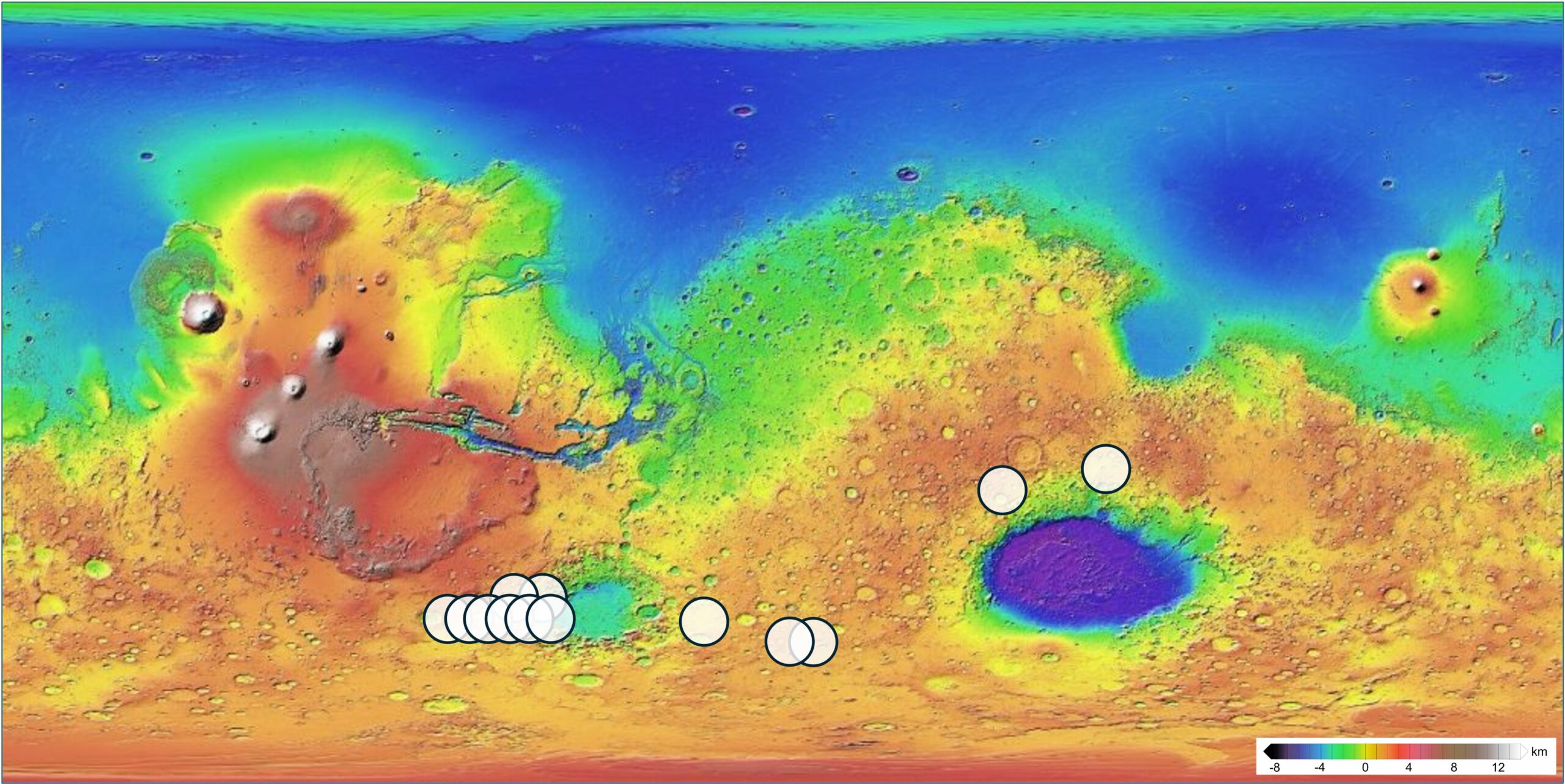
That remaining uncertainty is not a weakness in the identification. Scientists can be highly confident that a meteorite came from Mars while remaining unsure which crater launched it. The claim depends on convergence: a planetary isotope signature, compatible minerals, Martian atmospheric gas, impact shock, exposure history, and agreement with spacecraft observations. Each clue answers a different part of the journey. Together they make a rock found on Earth into a physical record of Mars long before any mission returns a freshly collected Martian sample.