 Akshay Dinesh
Look at the Moon through binoculars, and the smooth gray disk suddenly becomes a rough landscape. Bright rings, dark plains, long shadows, and circular pits crowd the surface. Those marks are not random decoration. They are impact scars, and they preserve a record that Earth has mostly erased from its own surface.
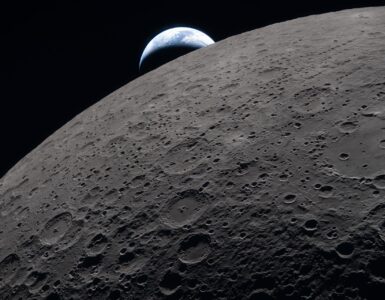
The Moon is close enough for ordinary observers to see its geology, yet quiet enough to keep ancient damage in view. NASA’s Lunar Reconnaissance Orbiter has mapped craters, basins, peaks, and rough ejecta in remarkable detail, but the basic story can begin from a backyard view. A crater is what remains after a fast asteroid, meteoroid, or comet slams into the Moon. The shape it leaves depends on size, speed, impact angle, and the ground it strikes.
Why the Moon Keeps Its Scars
Earth and the Moon both formed in a solar system shaped by collisions. Small pieces of rock and ice still travel around the Sun, and sometimes they cross the paths of larger worlds. On Earth, an impact crater may be buried by sediment, worn down by rain, broken apart by plate tectonics, or softened by plants and weather. The Moon has no oceans, no steady rainfall, no wind-driven erosion, and no plate tectonics like Earth’s. That does not mean its surface never changes, but change happens much more slowly.
This is why lunar craters can remain visible for enormous stretches of time. A sharp, bright-rayed crater may be young in lunar terms, while a softened, overlapping crater may be far older. The surface acts almost like a frozen notebook of impacts. Newer craters are written over older ones, and scientists read that layering to understand which regions formed first.
The difference is easy to miss until you compare the Moon with Earth. Arizona’s Meteor Crater is only about 50,000 years old and remains well preserved partly because the local climate is dry. On the Moon, craters millions or even billions of years old can still be visible. The contrast shows why the Moon is so useful for studying the violent early history of the inner solar system.
What Happens During an Impact
A lunar impact is not like dropping a pebble into dust. The incoming object is usually moving at tremendous speed, carrying enough energy to compress, shatter, melt, and throw rock outward. In the first moment, the surface is driven down and out, creating an excavation cavity. Then the ground rebounds, the crater walls slump, and debris settles into a new shape. NASA describes crater formation as a two-part process: excavation followed by modification.
The material blasted out of the crater is called ejecta. Close to the crater, ejecta may form a rough blanket of broken rock. Farther away, it can land in rays, chains, or clusters. Some secondary craters are made not by the original incoming object but by large pieces of ejecta that crash back down. This is one reason a major impact can disturb an area much wider than the crater itself.
Some impact energy becomes heat. Rock can melt, flow briefly, and then cool into glassy or fragment-filled deposits. The Moon’s breccias, including samples returned by Apollo astronauts, are rocks made from shattered pieces fused together by impact energy. They are a physical reminder that craters are not just holes. They are explosion zones where solid rock briefly behaves in ways that feel almost fluid.
Simple Craters, Complex Craters, and Basins
Small lunar craters often look like clean bowls. NASA classifies many of these as simple craters, and on the Moon they are generally no more than about 6 to 9 miles across. Their rims are raised, their floors are rounded, and their shapes are close to what many people imagine when they hear the word crater. A small crater can still hold clues: sharp rims suggest relative youth, while softened rims suggest long exposure to later impacts and surface disturbance.
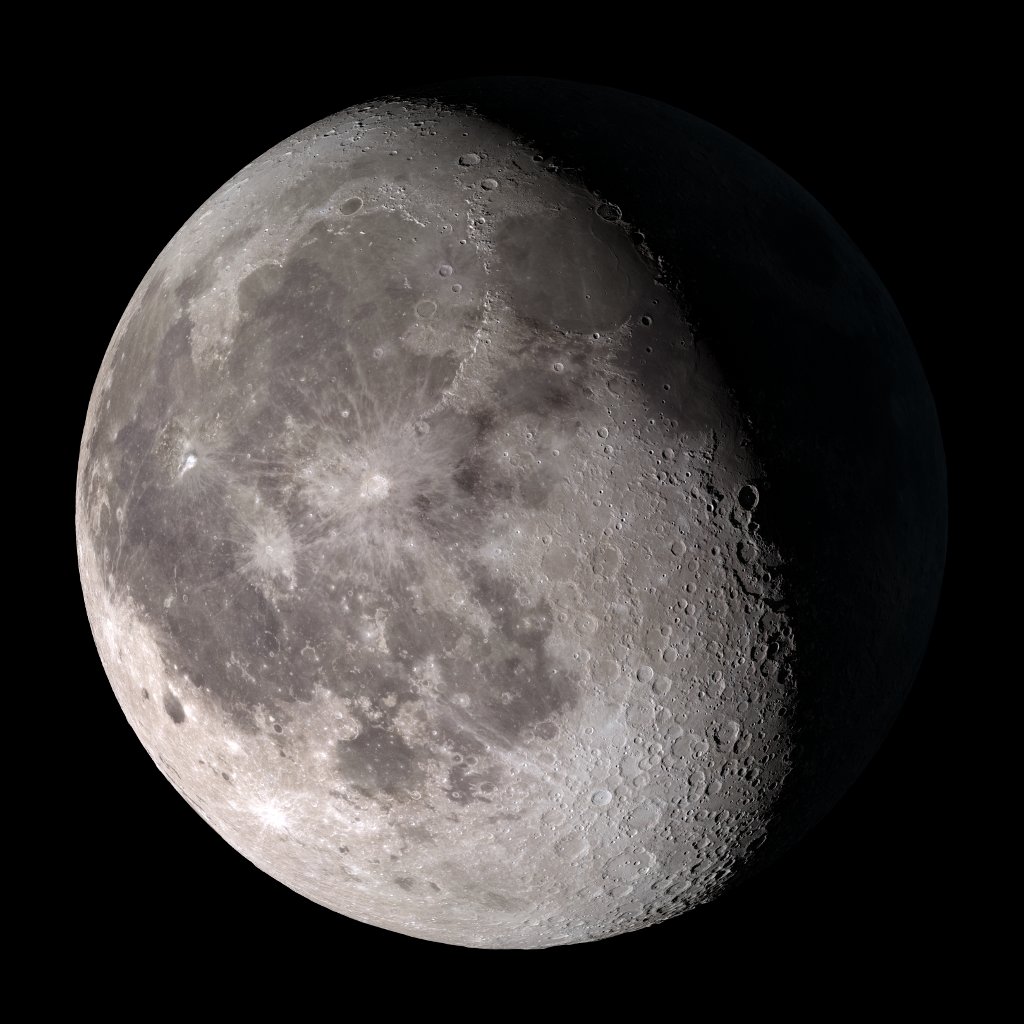
Larger craters become more complicated. Complex craters can have flat floors, terraced walls, and central peaks where the shocked ground rebounded after impact. Tycho, one of the Moon’s most famous craters, is about 53 miles across and has a central peak complex that stands out when sunlight hits it at a low angle. Aristarchus is another dramatic example, with terraced walls and bright surrounding material. These craters show that the Moon’s surface can collapse, rebound, and rearrange itself after a single collision.
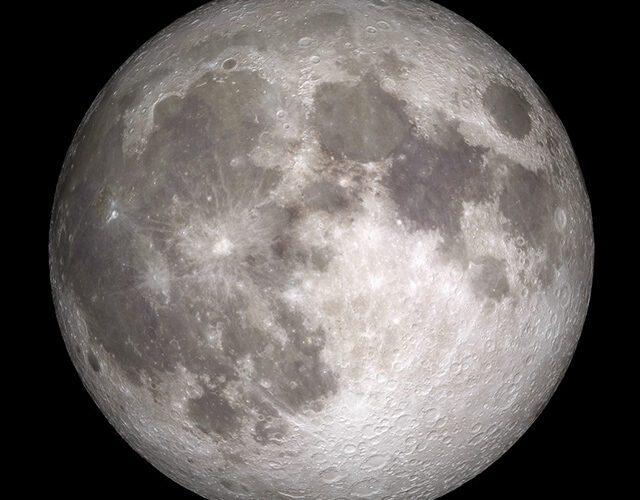
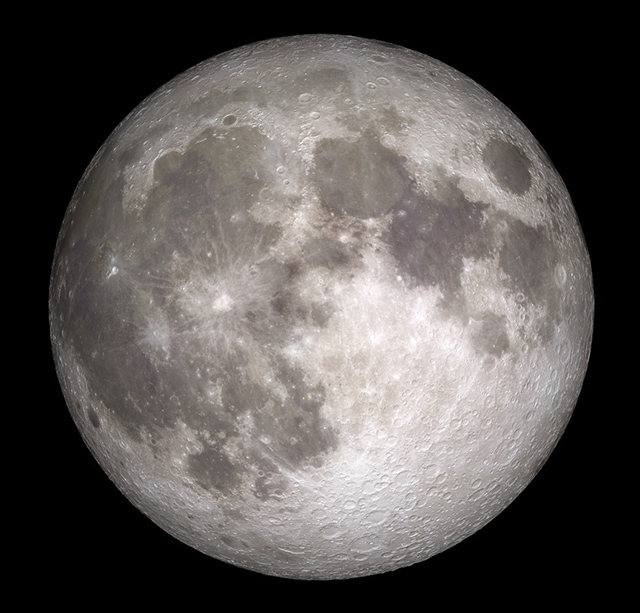
The biggest impact structures are basins. NASA describes lunar basins as enormous craters more than 186 miles across, and the Moon has more than 40 of them. Many formed billions of years ago, during a period when large impacts were far more common than they are now. Some basins later filled with basaltic lava, creating the dark plains called maria. Those dark patches, once mistaken for seas, are among the easiest features to notice with the unaided eye.
Why Shadows Make Craters Easier to See
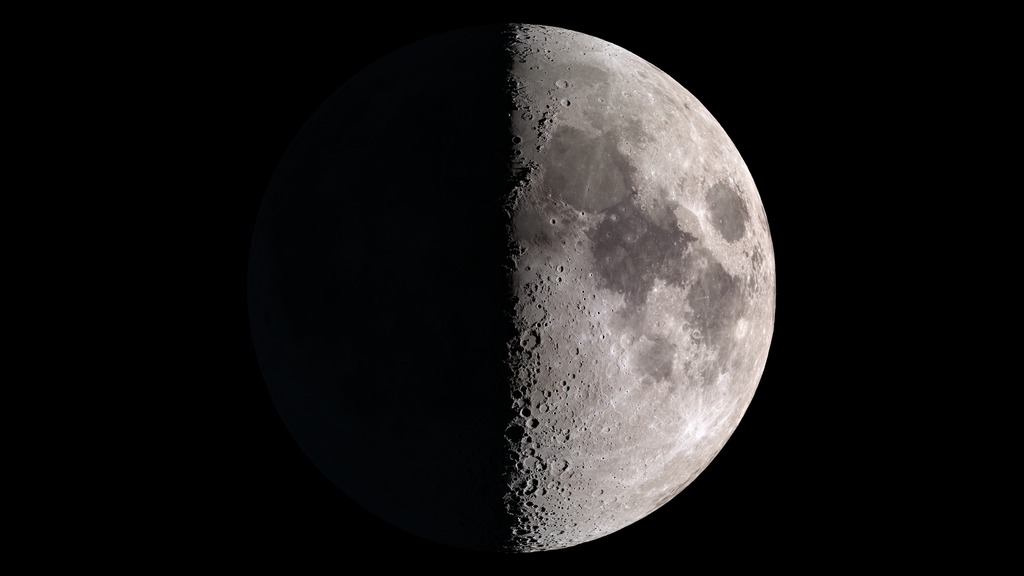
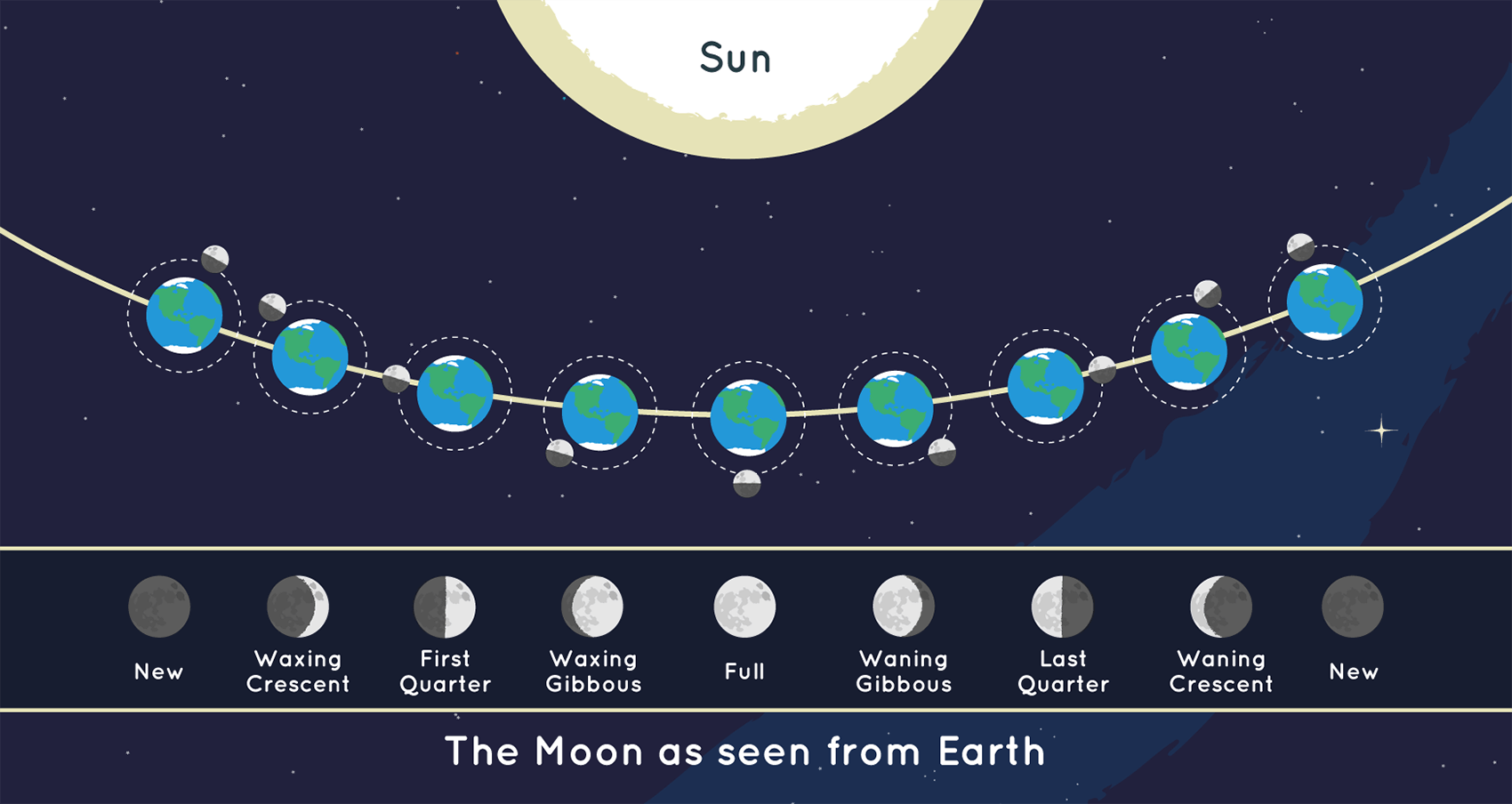
The Moon is not equally revealing at every phase. A full Moon looks bright and impressive, but its surface can seem flatter because sunlight falls more directly from our point of view. Craters often stand out better near the line between lunar day and night, called the terminator. There, sunlight comes in from the side, stretching shadows across rims, walls, and peaks. The same crater that looks subtle under high sunlight may look dramatic when the Sun is low over that part of the Moon.
This is why first-quarter and gibbous phases are so useful for observation. The terminator crosses different lunar regions from night to night, revealing new shadows and hiding others. A pair of binoculars can show major craters, maria, and rugged highlands, while a small telescope can reveal smaller details. The best view is not always the brightest view. It is often the view with the most useful angle of light.
International Observe the Moon Night, scheduled by NASA for September 19, 2026, is timed to encourage people to look closely rather than simply glance upward. The point is not only to admire the Moon, but to notice structure. Crater rims curve. Rays spread from younger impacts. Dark plains interrupt brighter highlands. Once those patterns become familiar, the Moon stops looking like a symbol and starts looking like a place.
What Craters Tell Scientists
Craters help scientists compare the ages of different lunar landscapes. A surface packed with craters is usually older than a smoother surface with fewer impacts, because it has had more time to collect scars. This method, called crater counting, is not just used on the Moon. It also helps researchers estimate relative ages on Mars, Mercury, icy moons, and other solid worlds where samples are limited or unavailable.
The Moon’s craters also connect to questions about exploration. Permanently shadowed craters near the lunar poles can preserve extremely cold environments where water ice and other volatile materials may survive. NASA missions have studied polar regions because those deposits can reveal how water arrives, moves, and persists on airless worlds. A crater, in that setting, is not only an old wound. It can become a cold trap and a scientific archive.
Large basins matter for an even bigger reason. Impacts helped shape the Moon’s crust, influenced volcanic flows, and created low areas later filled by lava. The South Pole-Aitken Basin, one of the largest known impact basins in the solar system, remains a major target of scientific interest because it may expose material from deep in the Moon’s crust. Studying such basins helps scientists connect the surface we see with the hidden structure below it.
A Familiar Moon With a Deeper Story
The Moon is familiar because it is visible from almost everywhere, but familiarity can make it easy to overlook. Its craters turn the night sky into evidence. They show that the solar system was built through collision, that surfaces keep or lose history depending on their environment, and that light can change what we notice. A simple backyard look can lead to questions about speed, rock, time, and planetary change.
The next time the Moon is partly lit, look near the shadow line first. Notice the rough boundary between bright highlands and dark plains. Follow the rings of large craters and the rays that stretch from younger ones. Those shapes are not just marks on a distant object. They are the visible remains of impacts that helped write the history of the Moon, and they give Earth a nearby record of a past our own active planet has mostly covered over.