
 Akshay Dinesh
The Opium Wars were not only military conflicts. They grew out of a collision between trade, empire, addiction, and sovereignty in the nineteenth century. Britain wanted wider access to Chinese markets, especially for tea, silk, and porcelain. Qing officials wanted to control foreign trade, protect social order, and stop the spread of opium, a drug that was damaging families, draining silver from the economy, and weakening trust in the state.
The result was a pair of wars that changed the relationship between China and the Western powers. The First Opium War, fought between Britain and Qing China from 1839 to 1842, ended with the Treaty of Nanking. The Second Opium War, fought from 1856 to 1860, brought Britain and France deeper into China’s ports, diplomacy, and trade. Together, these conflicts became a defining part of what many Chinese historians later called the “century of humiliation,” a period when foreign powers used military pressure to force concessions from a weakened Qing government.
Trade, Silver, and the Growth of Opium
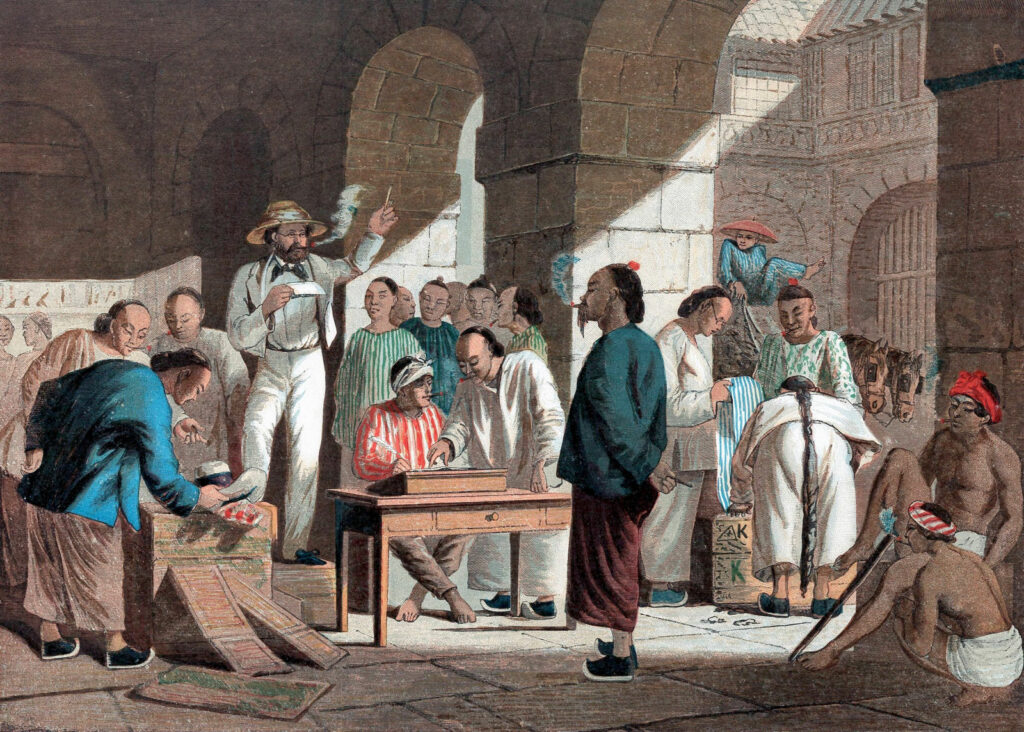
For much of the eighteenth and early nineteenth centuries, European merchants wanted Chinese goods more than Chinese consumers wanted European products. British demand for tea was especially high, but Qing trade rules limited foreign merchants mainly to the port of Guangzhou, often called Canton in older English sources. British traders paid heavily in silver, which created a trade imbalance that worried merchants and officials in Britain.
Opium became the illegal answer to that imbalance. The British East India Company and private traders used opium grown in British-controlled India to supply smugglers who sold the drug into China. Opium had been known in China before this period, but the scale of the nineteenth-century trade was different. By the 1830s, addiction had become a major social and political problem, and silver was flowing out of China in large quantities.
Qing officials saw the trade as more than a health crisis. It challenged the authority of the state. Foreign merchants were profiting from a substance the Chinese government had banned, while corrupt local networks made enforcement difficult. The emperor appointed Lin Zexu as imperial commissioner in 1839 and sent him to Guangzhou to stop the trade. Lin demanded that foreign merchants surrender their opium stocks and wrote a famous moral appeal to Queen Victoria, asking why Britain allowed a harmful drug to be sold abroad when it was restricted at home.
The First Opium War
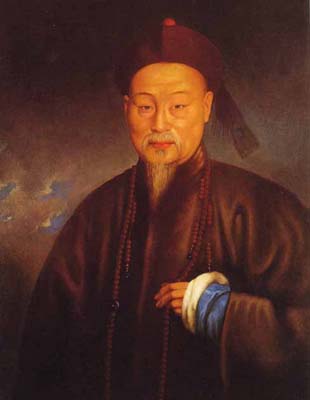
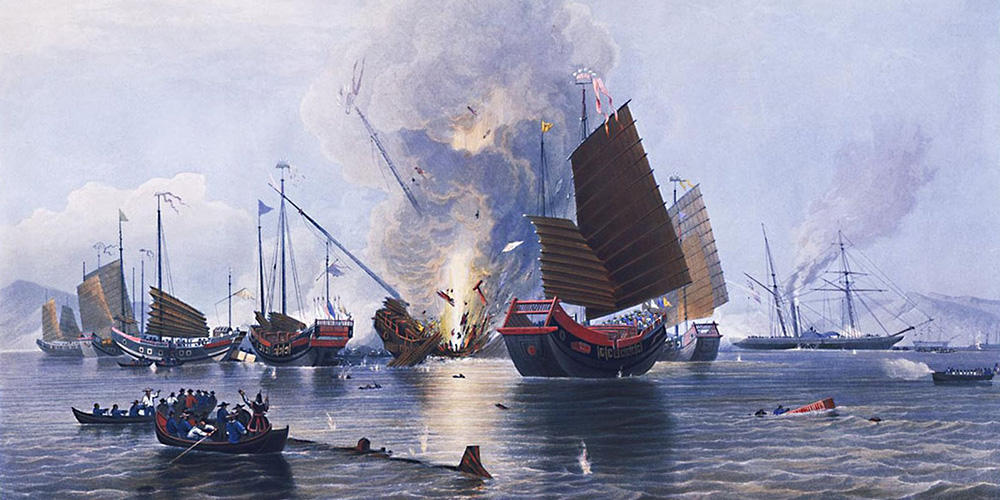
Lin Zexu’s crackdown led to the seizure and destruction of large quantities of opium at Humen near Guangzhou. To Qing officials, this was law enforcement against illegal smuggling. To British merchants and politicians, it became a dispute over property, trade access, and diplomatic status. Britain sent naval forces to China, and the conflict quickly revealed a sharp difference in military technology and organization.
British steam-powered ships, naval artillery, and disciplined expeditionary forces gave Britain a major advantage along China’s coast and rivers. Qing forces fought back, but many local defenses were poorly prepared for modern naval warfare. British forces captured important positions, threatened major waterways, and pressured the Qing government into negotiation.
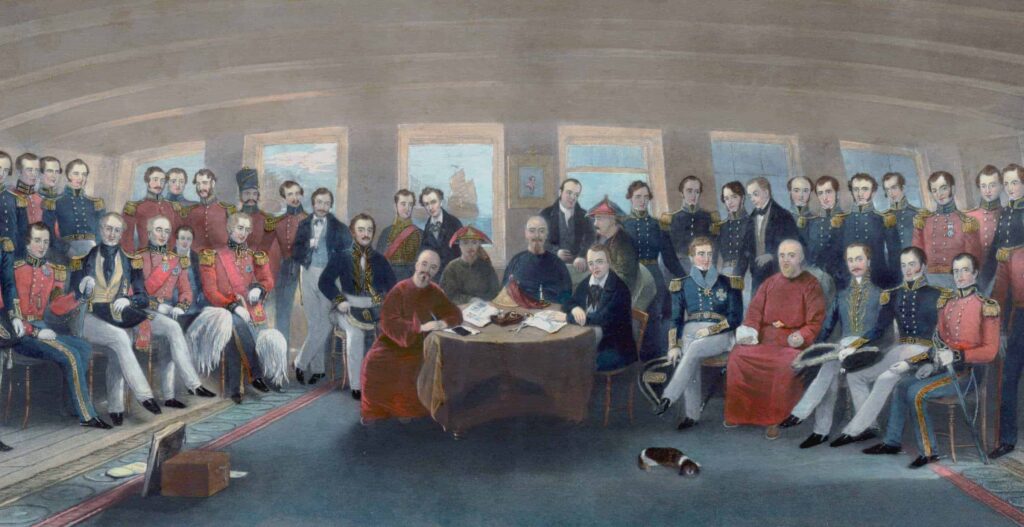
The Treaty of Nanking, signed in 1842, ended the First Opium War. It required China to pay a large indemnity, open five treaty ports to British trade, and cede Hong Kong Island to Britain. The treaty also changed the diplomatic relationship between the two countries by treating Britain as a more equal negotiating power rather than as a distant tributary visitor under Qing-controlled trade rules. Later agreements expanded foreign privileges, including extraterritorial rights, which meant that some foreign citizens in China could be tried under their own country’s legal systems rather than Qing law.
The Second Opium War
The first treaty settlement did not end tension. British officials and merchants wanted more ports, a permanent diplomatic presence in Beijing, broader legal rights for foreign residents, and greater access to the Chinese interior. Qing officials, already under pressure from internal crises such as the Taiping Rebellion, resisted deeper foreign intrusion.
The immediate trigger came in 1856 with the Arrow incident. Chinese officials boarded a ship associated with British registration and arrested several Chinese crew members. Britain argued that Qing authorities had violated British rights, while Qing officials disputed the claim. France soon joined Britain, using the killing of a French missionary as its justification for military action. The war widened into another unequal confrontation between Qing China and Western military power.
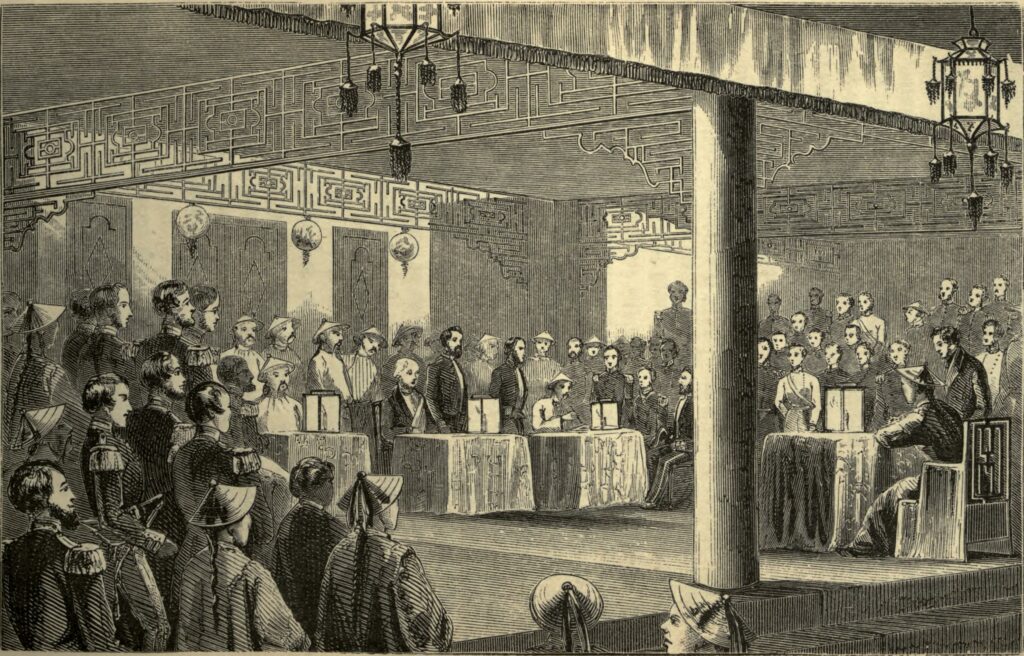
The Treaty of Tianjin in 1858 opened more treaty ports, allowed foreign diplomats to be stationed in Beijing, expanded missionary activity, and increased foreign access to trade. Fighting resumed when the Qing government resisted parts of the settlement. In 1860, British and French forces entered Beijing and burned the Old Summer Palace, one of the most painful symbols of foreign invasion in modern Chinese memory. The Convention of Peking confirmed further concessions and deepened the Qing dynasty’s weakness.
Why the Treaties Mattered
The treaties after the Opium Wars are often called unequal treaties because they were forced on China after military defeat and gave foreign powers privileges that China did not receive in return. They opened ports, transferred territory, demanded payments, protected foreign legal rights, and weakened Qing control over trade and diplomacy. The issue was not only opium. The wars also marked a broader struggle over who had the power to set the rules of international exchange.
The consequences reached far beyond the nineteenth-century battlefield. The Opium Wars exposed the Qing dynasty’s military and administrative weaknesses at a time when China was also facing rebellion, population pressure, fiscal strain, and regional instability. Some Chinese officials responded by supporting the Self-Strengthening Movement, which tried to adopt Western military technology and industrial methods while preserving Confucian political order. The reforms were uneven, but they showed that many Qing leaders understood the need for change.
The wars also changed how later generations understood Chinese history. They became a warning about the dangers of internal weakness, foreign imperialism, and unequal diplomacy. In Britain, the conflicts have often been remembered through debates about commerce, empire, and the moral cost of using military force to defend a drug trade. In China, they remain part of a larger story about sovereignty, national humiliation, reform, and the struggle to regain control over the country’s future.
The Lasting Legacy
The Opium Wars matter because they show how economic pressure can become political domination when backed by military power. A conflict that began with trade restrictions and illegal opium sales grew into a major turning point in China’s modern history. It reshaped ports, law, diplomacy, and public memory.
They also complicate simple stories about progress and modernization. Western technology helped Britain win, but the deeper lesson was not that one civilization was naturally stronger than another. The wars showed how industrial power, imperial ambition, weak diplomacy, and domestic crisis could combine to produce lasting damage. For China, the Opium Wars became the beginning of a long fight to rebuild authority in a world where old assumptions about empire, trade, and sovereignty no longer held.




Add comment