
 Akshay Dinesh
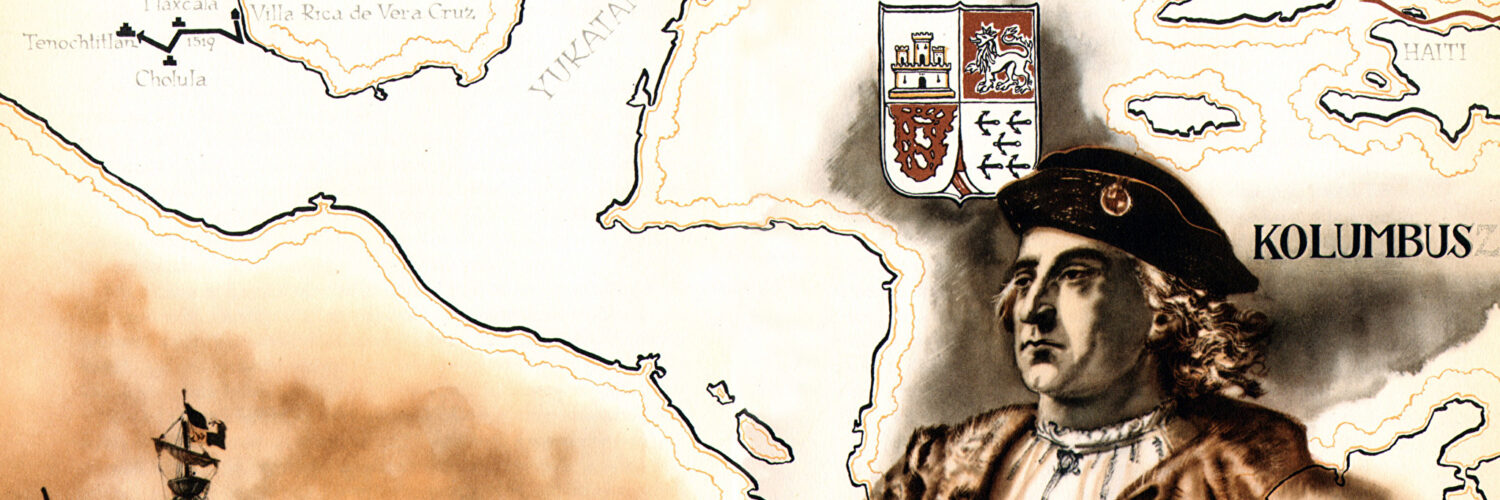
Christopher Columbus is often remembered for the 1492 voyage that connected Europe and the Americas across the Atlantic. That memory, however, is only part of the story. Columbus was a skilled navigator who sailed for Spain in search of a western route to Asia, but the voyages he led also opened the door to conquest, forced labor, disease, and lasting harm for Indigenous peoples in the Caribbean. Understanding his legacy means holding both parts together: the maritime achievement and the human consequences that followed.
Why Columbus Sailed West
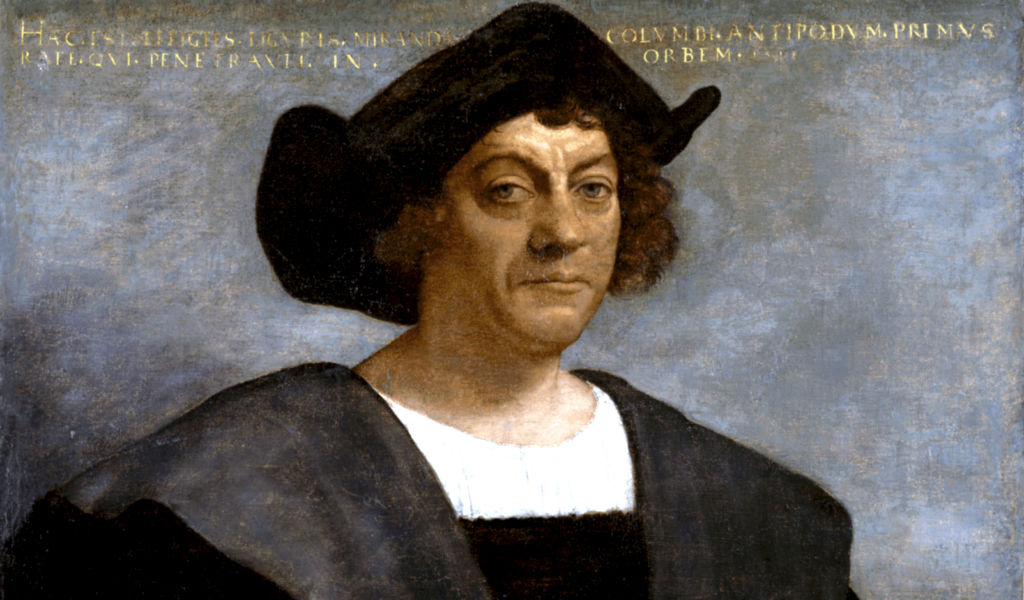
Columbus was born in Genoa, a trading city in present-day Italy, around 1451. As a young sailor and merchant, he learned about navigation, Atlantic winds, maps, and the commercial ambitions of European kingdoms. By the late 1400s, spices, silk, and other Asian goods were highly valued in Europe, but overland trade routes were expensive and difficult. Portugal was exploring routes around Africa, while Columbus argued that a ship could reach Asia by sailing west across the Atlantic.
His idea was not that the Earth was flat. Educated Europeans of his time generally knew the Earth was round. The real problem was distance: Columbus badly underestimated the size of the globe and believed Asia lay much closer to Europe than it actually does. Portugal rejected his proposal, but Spain’s Ferdinand and Isabella eventually agreed to support him after completing their conquest of Granada in 1492.
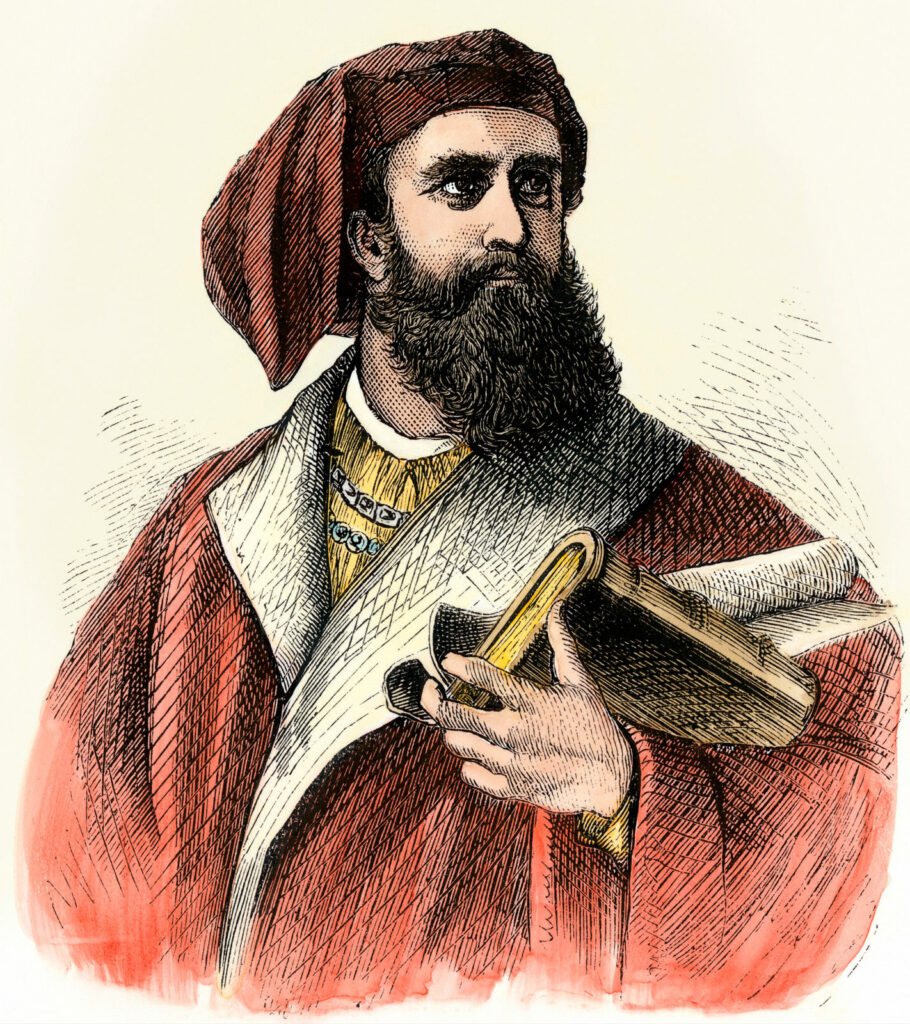
Stories about Asian trade, including accounts associated with Marco Polo, shaped European ideas about wealth and distance. Columbus read within that world of travel writing and commercial ambition, but his calculations made the westward route seem far easier than it was.
The First Voyage and the Caribbean Landing
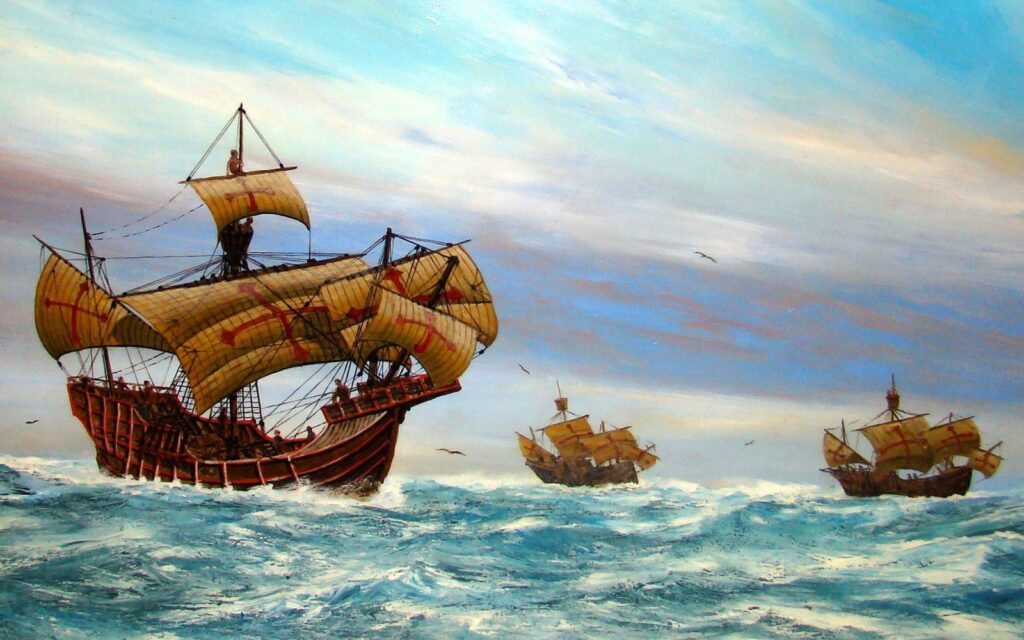
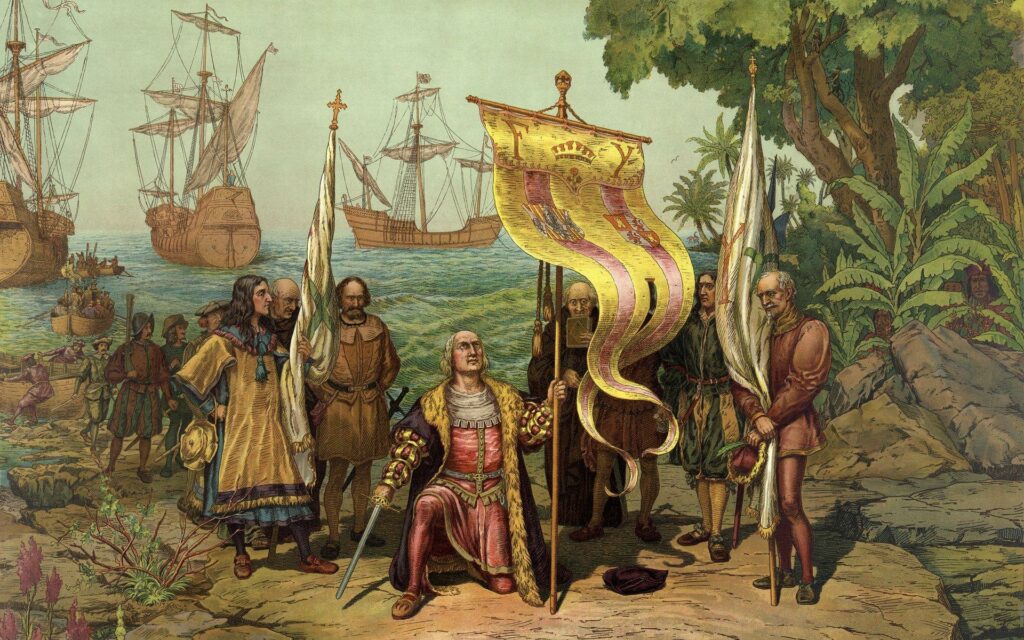
Columbus left Palos de la Frontera on August 3, 1492, with three ships: the Niña, the Pinta, and the Santa Maria. After stopping in the Canary Islands, the fleet crossed the Atlantic for more than a month. On October 12, 1492, the expedition reached an island in the Bahamas known to its Indigenous inhabitants as Guanahani. Columbus renamed it San Salvador and claimed it for Spain.
Columbus thought he had reached islands near Asia, which is why Europeans came to call the region the West Indies. In reality, he had arrived in the Caribbean. He met Lucayan and Taino communities whose societies were already established, organized, and skilled in farming, navigation, fishing, craftwork, and trade. These were not empty lands waiting to be discovered; they were inhabited places with their own histories.
Encounter With the Taino
Early European accounts often described the Taino in ways that revealed more about European ambitions than about Taino life itself. Columbus noticed their generosity, their unfamiliarity with European weapons, and the gold ornaments some people wore. He quickly began asking where more gold could be found. What began as contact turned into possession, extraction, and control.
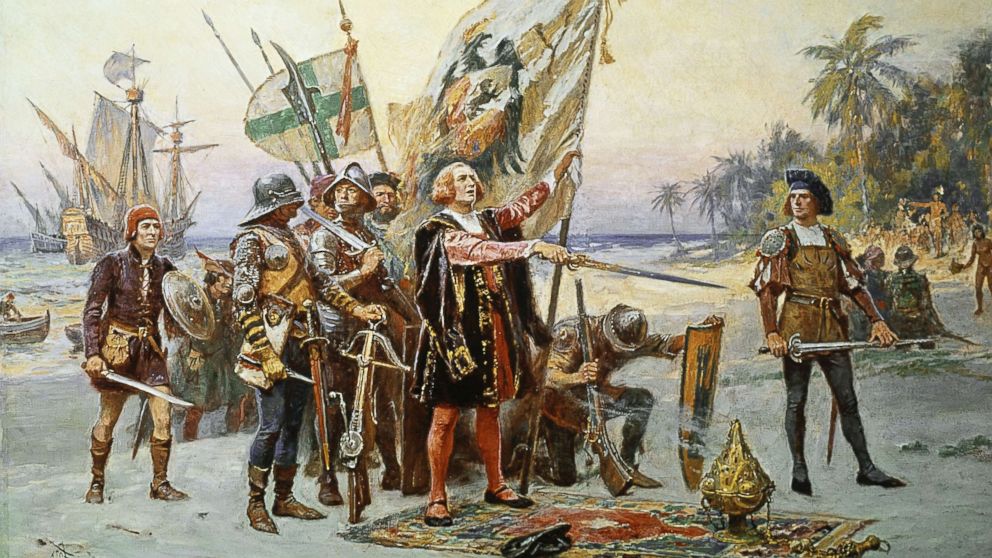
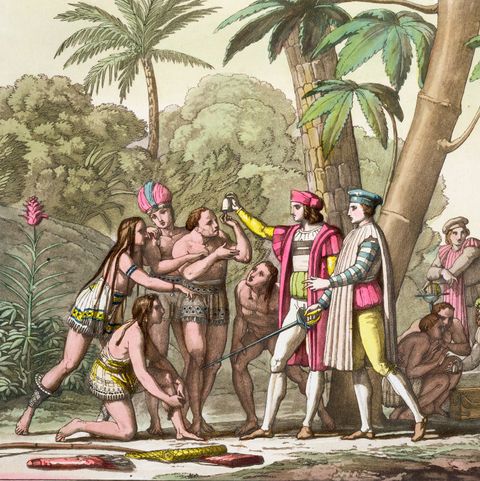
On later voyages, Spanish settlement in the Caribbean expanded. Columbus returned with more ships, colonists, soldiers, and livestock. Indigenous communities faced forced labor, violence, tribute demands, enslavement, and epidemic disease. The damage was not caused by one event alone; it came from the combined pressure of colonization, disease, war, and exploitation. The Taino population declined sharply after European arrival, and many communities were devastated within a few generations.
Columbus as Governor and the Crisis in Hispaniola
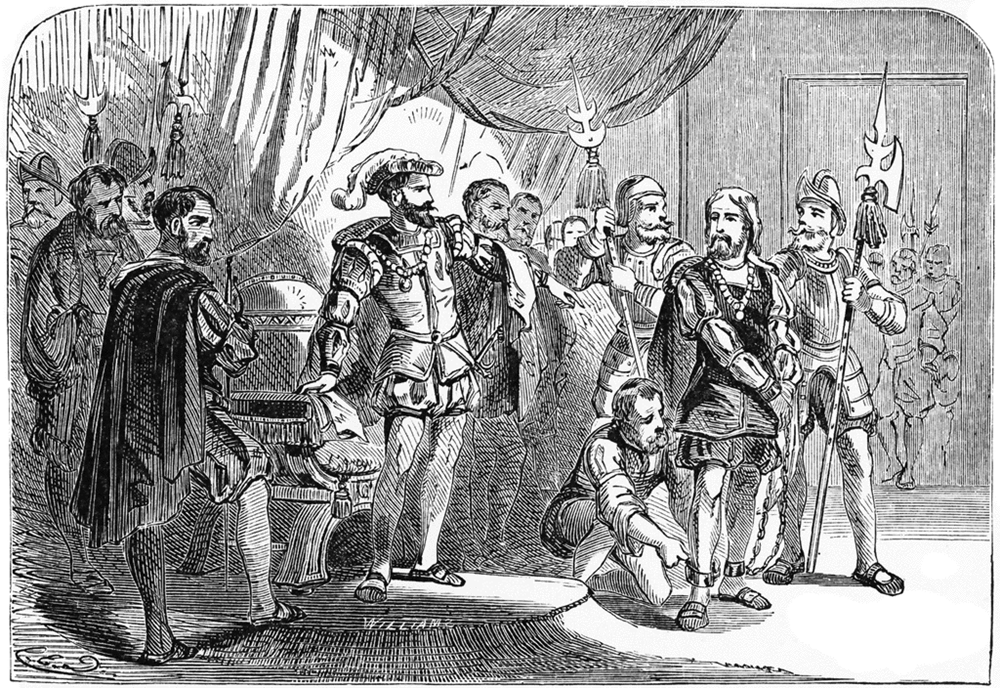
Columbus made four Atlantic voyages between 1492 and 1504. His first voyage made him famous, but his work as a colonial governor exposed serious failures. Spanish settlers complained about his leadership, and Indigenous people suffered under the labor systems and violence that accompanied Spanish rule. In 1500, the Spanish Crown sent Francisco de Bobadilla to Hispaniola to investigate. Bobadilla arrested Columbus and his brothers and sent them back to Spain in chains.
Columbus was later released and allowed to sail again, but he did not regain the same authority as governor. His final voyage took him along parts of Central America, still searching for a route to Asia. He died in Spain in 1506, continuing to believe that his voyages had brought him close to Asia rather than to continents previously unknown to Europeans.
Why His Legacy Is Contested
Columbus’s voyages changed world history because they began a sustained period of contact between Europe, Africa, and the Americas. Crops, animals, people, diseases, technologies, and ideas moved across the Atlantic in both directions, a process often called the Columbian Exchange. Foods such as maize, potatoes, tomatoes, cacao, and chili peppers reshaped diets far beyond the Americas, while European livestock and crops transformed American landscapes. At the same time, smallpox and other diseases, combined with conquest and forced labor, caused enormous suffering for Indigenous peoples.
That is why Columbus remains such a debated figure. He was an ambitious sailor whose voyages altered the map of European knowledge, but he was also part of a violent colonial system that treated Indigenous people as labor and property. A balanced understanding does not need to turn him into either a simple hero or a simple villain. It asks a better historical question: what did his voyages make possible, who benefited from them, and who paid the price?






Add comment