

 Rishay Dinesh
Carl Linnaeus is one of the most important figures in the history of science, especially in the fields of biology and taxonomy. Known as the “Father of Modern Taxonomy,” he developed a classification system that is still used today in the scientific community. His work brought structure and consistency to the naming of living organisms, making it easier for scientists around the world to communicate and share knowledge. Linnaeus’s system helped lay the foundation for many branches of science, including ecology, zoology, botany, and environmental science.
Before Linnaeus, European naturalists often described species with long Latin phrases that could vary between authors. Linnaeus did not invent the idea of two-part names, but he applied it consistently and helped make it the shared language of biological nomenclature. A scientific name now pairs a genus with a specific epithet, giving researchers a concise way to identify a species across ordinary languages. That practical reform became his most durable contribution to science.
Early Life and Education
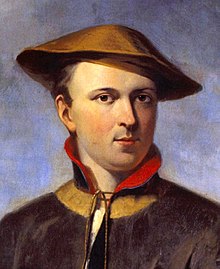
Carl Linnaeus was born on May 23, 1707, in the village of Råshult, located in the province of Småland, Sweden. He was the eldest child of Nils Linnaeus and Christina Brodersonia. His father, a Lutheran minister and amateur botanist, introduced young Carl to the wonders of nature at an early age. Carl spent much of his childhood exploring the fields and forests near his home, collecting plants and insects and observing the natural world with intense curiosity.
Despite his love of nature, Linnaeus did not perform well in school. He struggled with traditional academic subjects like Latin and mathematics, which were essential for higher education at the time. However, his teachers noticed his deep knowledge of plants and encouraged him to pursue medicine, as botany was closely related to the medical sciences.
In 1727, Linnaeus enrolled at the University of Lund but later transferred to the University of Uppsala, which had better resources and more opportunities for botanical research. At Uppsala, Linnaeus’s talents quickly became apparent. He impressed his professors and even began giving lectures to other students, despite still being a student himself. These early academic experiences helped shape his scientific methods and sparked his desire to classify the natural world.
A Practical Language for Naming Species
One of Linnaeus’s most significant contributions to science was the development of a standardized naming system for living organisms. Before his work, scientific names were long and descriptive, often including multiple words that varied from one scientist to another. This made it difficult for researchers to communicate clearly and led to a lot of confusion.
The first edition of Systema Naturae, published in 1735, presented an ambitious framework for arranging nature. Linnaeus later applied two-part species names consistently in Species Plantarum in 1753, while the tenth edition of Systema Naturae in 1758 established the zoological starting point used by modern nomenclature. A name such as Homo sapiens joins a capitalized genus with a lowercase specific epithet. This approach made scientific naming shorter and more stable across languages.
The system caught on quickly because it was simple, logical, and efficient. Scientists around the world began using Linnaeus’s system, which helped standardize biological classification. Over time, Linnaeus continued to expand and refine his work, releasing multiple editions of Systema Naturae. Each edition included more species and updated classifications based on new discoveries.
Expanding the Classification System
Linnaeus paired naming with ranked classification, but the familiar modern sequence did not arrive all at once. His system used ranks including kingdom, class, order, genus, species, and variety; family and phylum became standard parts of the hierarchy later. The enduring contribution was the practice of nesting organisms within ranked groups and applying names consistently, not the invention of every rank now taught in biology.
In addition to classifying plants, Linnaeus also applied his system to animals. He was the first scientist to place humans in the same group as primates, based on anatomical similarities. This idea was controversial at the time but has since been supported by modern evolutionary science. Linnaeus’s animal classifications laid the groundwork for later discoveries in biology and anthropology.
Linnaeus’s classification system became the foundation for modern taxonomy. Although scientific knowledge has advanced significantly since his time, and genetic analysis is now used to determine relationships between species, his basic system remains in use. It serves as a crucial tool for organizing biological information and studying the diversity of life on Earth.
Books, Classification, and a Global Network
Carl Linnaeus was a prolific writer who produced many important scientific works during his lifetime. His most famous publication, Systema Naturae, went through several editions and grew significantly in size as more species were discovered and classified. Another key work was Species Plantarum, published in 1753, which is considered the starting point for modern botanical nomenclature.
Species Plantarum included descriptions of over 5,000 plant species and applied the binomial naming system consistently. This book became a critical reference for botanists and helped standardize plant names across the scientific community. Linnaeus also published Genera Plantarum, which outlined criteria for defining plant genera, and Philosophia Botanica, which explained his methods and principles for classification.
In addition to his botanical work, Linnaeus made important contributions to zoology, mineralogy, and medicine. He classified animals based on characteristics like teeth, diet, and limb structure. He also created a system for naming minerals, although this work is less well-known today. His medical studies included research on plant-based remedies, which were commonly used at the time.
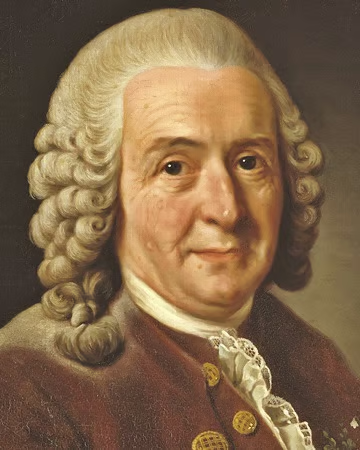
Personal Life and Career Achievements
In 1739, Linnaeus married Sara Elisabeth Moraea, the daughter of a prominent Swedish physician. They had seven children, and Linnaeus continued his scientific work while raising a family. In 1741, he became a professor at Uppsala University and took charge of the university’s botanical garden. Under his leadership, the garden became a center for botanical research and education.
Linnaeus also trained a group of students known as the “Apostles of Linnaeus.” These students traveled around the world to collect plant and animal specimens, spreading Linnaeus’s ideas and expanding his classification system. Their discoveries helped build one of the most comprehensive collections of natural history in Europe.
Linnaeus received many honors during his lifetime. In 1761, he was ennobled by the King of Sweden and given the name Carl von Linné. He became a member of several prestigious scientific societies, including the Royal Society of London and the French Academy of Sciences. He died in 1778, but his influence on science continues to this day.
How Modern Biology Uses and Revises His Work
Carl Linnaeus’s legacy is still felt in almost every branch of biology. His system of classification provides a common framework that helps scientists organize and communicate information about living organisms. This framework is essential for research, conservation, and education.
One of the most significant impacts of Linnaeus’s work is its influence on evolutionary biology. Although Linnaeus believed that species were fixed and unchanging, his classification system made it easier for scientists like Charles Darwin to recognize patterns in nature. These patterns eventually led to the development of the theory of evolution by natural selection.
Linnaeus’s system also plays a vital role in environmental science and conservation. By identifying and naming species, scientists can monitor biodiversity, track endangered species, and develop strategies to protect ecosystems. Accurate classification is essential for preserving the natural world and understanding how different species interact with each other.

Relevance for Students and the Future
For students studying biology, Carl Linnaeus serves as an inspiring example of how curiosity and determination can lead to major scientific breakthroughs. Despite struggling in school, he followed his passion for nature and made lasting contributions to science. His story reminds us that success often comes from pursuing what we love and thinking in new ways.
Linnaeus’s work also highlights the importance of clear communication in science. His naming system brought order to a chaotic field and allowed scientists to build on each other’s work. In today’s world, where global collaboration is more important than ever, having a universal system for naming organisms is crucial.
As new species are discovered and technology advances, Linnaeus’s system continues to evolve. Scientists now use genetic information to refine classifications, but the basic structure he created remains a cornerstone of biological science. His work laid the groundwork for understanding the complexity and beauty of life on Earth.
Why Linnaeus Still Matters
Carl Linnaeus was a pioneer whose work transformed the way we study and understand the natural world. By creating a simple, consistent system for naming and classifying organisms, he made it easier for scientists to communicate and build on each other’s discoveries. His influence can be seen in modern biology, medicine, conservation, and education.
Linnaeus’s legacy is a testament to the power of curiosity, observation, and innovation. His story encourages students to explore the world around them, ask questions, and look for patterns in nature. Whether you’re studying biology, exploring a garden, or participating in a science fair, Carl Linnaeus’s work has likely touched your life in some way. As we continue to discover new species and explore the wonders of nature, we can thank Carl Linnaeus for giving us the tools to understand and appreciate the diversity of life on our planet.

 Akshay Dinesh



Add comment