 Akshay Dinesh
A frozen pipe does not always split where the ice is thickest. In fact, the crack may appear in a section that still contains liquid water, several feet from the cold spot. That seems backward until the pipe is treated as a pressure system rather than a container being pried open by a solid plug.
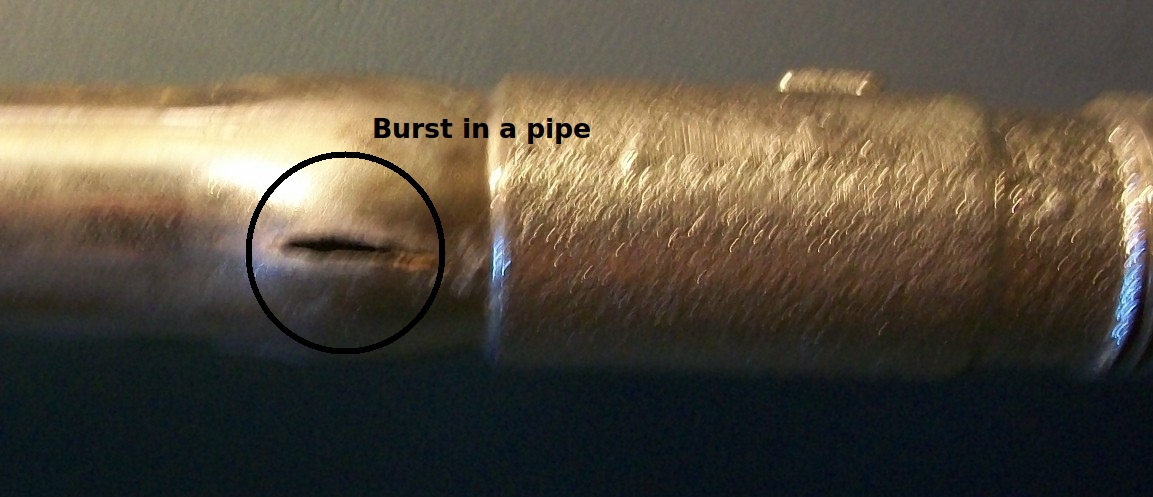
The usual sequence has two stages. Cold first creates an ice blockage. Continued freezing then pushes liquid water into a confined space, where pressure can rise until a pipe, joint, valve, or fitting gives way. The leak may remain small or completely hidden while ice blocks the flow. When the plug thaws, full water pressure can turn that unseen break into a damaging release.
Freezing starts with heat leaving the pipe
Water freezes when it loses enough thermal energy to form an ordered crystal structure. In a building, that heat usually travels from the water through the pipe wall and into colder surrounding air or materials. A pipe touching a cold exterior surface, sitting in a drafty crawl space, or crossing an unheated garage can lose heat much faster than plumbing surrounded by warm indoor air.
The first ice may form along the inner wall, where the water is closest to the cold pipe surface. As freezing continues, crystals grow inward and narrow the passage. Flow can stop before every drop in the line has frozen. Research on freezing tubes has shown that branching ice crystals can obstruct a passage while much of its water remains liquid.
This is why a faucet can suddenly slow to a trickle even though most of the supply line is not a solid cylinder of ice. The blockage is local. It often develops where plumbing passes through the coldest, least protected part of the building envelope: near an exterior wall, above a vented crawl space, under a sink against an outside wall, or beside an opening that admits cold air.
The dangerous pressure builds beside the ice plug
Liquid water becomes less dense when it freezes, so the same mass occupies about 9 percent more volume as ice. The familiar explanation says this expansion presses outward on the pipe wall until it splits. That can happen in a completely confined container, but residential supply pipes usually fail through a more specific process.
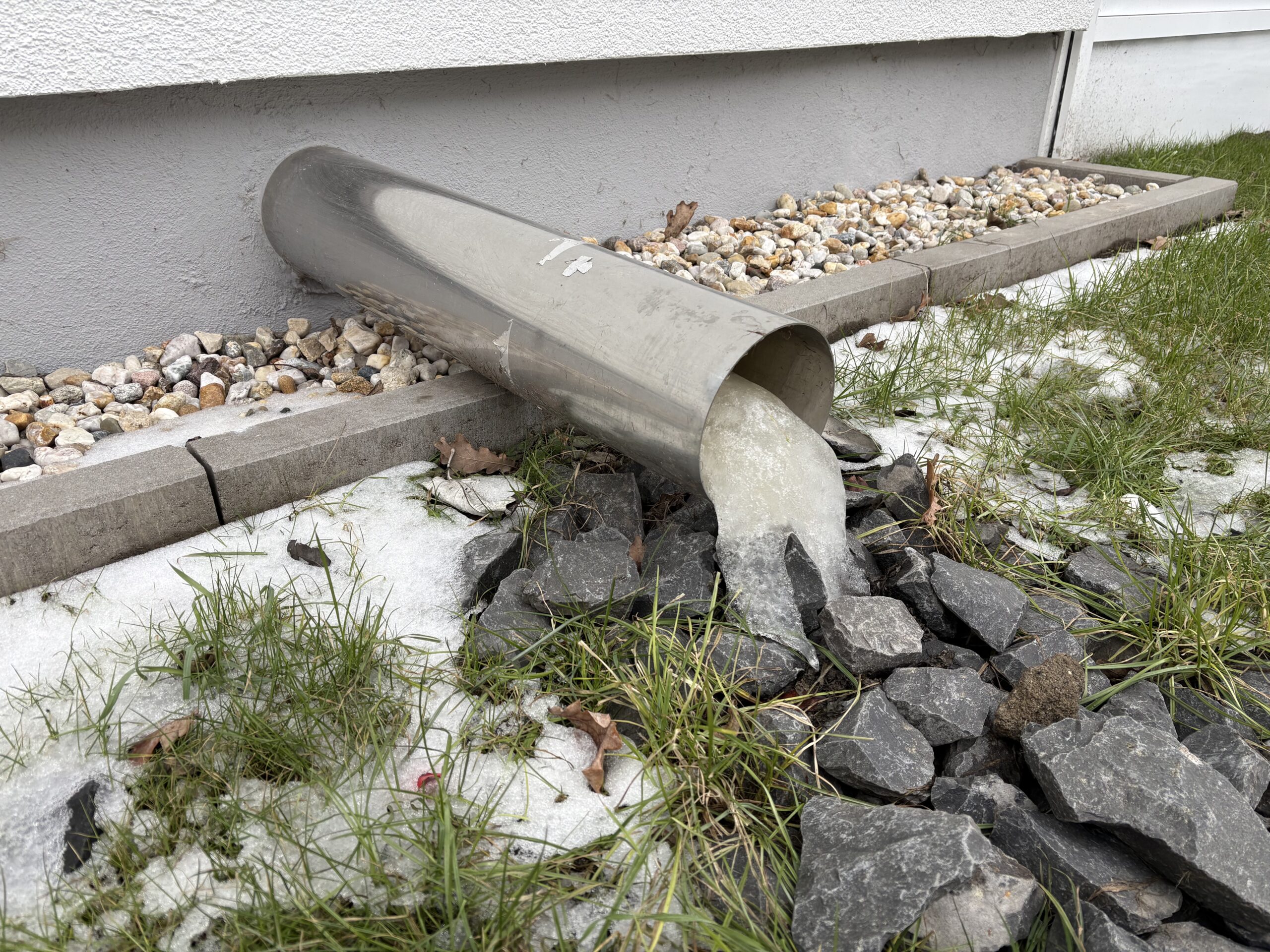
Once an ice plug spans the pipe, additional ice growth acts like a slowly advancing piston. On the supply side, displaced water may be able to move back toward the water main or another open part of the system. On the faucet side, however, the plug and a closed valve can trap a pocket of liquid. As ice grows into that pocket, it pushes on water that is very difficult to compress.
Pressure travels through the trapped liquid, so the weakest point may be well away from the frozen section. A 1996 Building Research Council report from the University of Illinois confirmed this sequence in laboratory and field work: an ice blockage forms first, then further growth raises pressure in a confined water volume. The pipe fails when that pressure exceeds the strength of the pipe wall or one of its connections.
That mechanism also explains why freezing is not an automatic sentence for every pipe. If water has room to move, pressure may never reach the failure point. Different pipe materials and fittings also tolerate deformation differently. Flexible tubing may expand more than rigid copper, but no common plumbing system should be treated as freeze-proof.
A burst can stay quiet until the thaw
The word burst suggests an immediate spray, yet a newly split pipe may release little water while it remains frozen. The same ice that produced the pressure can block flow from the supply. A crack may therefore sit behind a wall or above a ceiling without an obvious puddle.
The danger becomes visible when warmer air reaches the pipe. As the plug melts, the normal supply pressure returns. Water can then escape through the split continuously, especially if no one notices the first damp patch or sound of running water. This is why a home may appear to survive the coldest night and show damage later, during a sunny afternoon or after the heat comes back on.
A loss of flow during freezing weather deserves attention even when nothing is leaking. One weak faucet can point to a local blockage; several affected fixtures may indicate a larger cold zone. Knowing where the main shutoff valve is located matters because stopping the supply is the quickest way to limit damage if a hidden split begins to leak.
Why some pipes freeze before others
Air temperature is only one part of the problem. Time matters: a moderately cold space that stays below freezing for many hours can remove more heat than a brief temperature dip. Exposure matters too. Moving air strips away the thin layer of slightly warmer air beside a pipe, so a draft through a foundation gap can cool plumbing faster even though weather-service wind chill is a measure designed for skin, not an alternate thermometer for objects.
Location often matters more than whether the line carries hot or cold water. Both can freeze if they sit unused in a cold enough space. Outdoor hose connections, sprinkler lines, pipes in attics and crawl spaces, and lines against poorly insulated exterior walls are frequent trouble spots. Plumbing in a cabinet may also be isolated from room heat when the doors remain closed.
Insulation slows the rate of heat transfer; it does not create warmth. A foam sleeve can buy time during a cold spell, especially when a pipe is near but not far below freezing. It may not protect a line exposed to prolonged severe cold or a strong draft. Sealing air leaks, keeping vulnerable spaces warm enough, and placing pipes inside the conditioned part of a building address the cause more directly.
Why a small drip can help
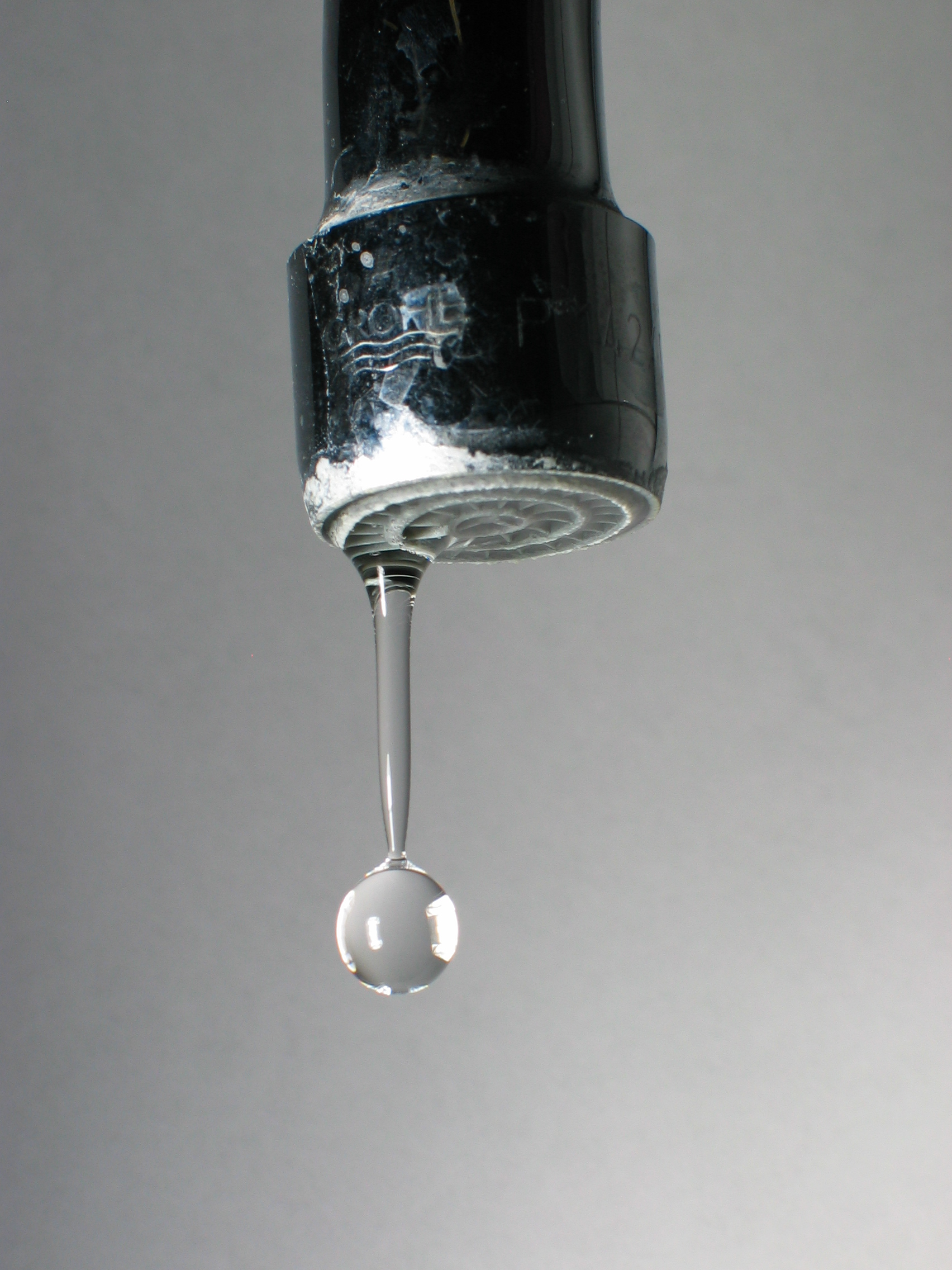
Letting a vulnerable faucet drip is often described as keeping water moving, and motion can delay the formation of a complete blockage under some conditions. Its other job is just as important: an open path gives displaced water and rising pressure somewhere to go. A National Weather Service cold-weather guide specifically notes that dripping an exposed line relieves pressure between the ice blockage and the faucet.
A drip is a temporary measure for a known at-risk line, not a substitute for insulation, heat, or repairs. The American Red Cross also recommends closing garage doors when water lines run through the garage, opening sink cabinets so room air can reach plumbing, and keeping the thermostat steady during very cold weather. When a home will be vacant, it advises leaving the heat on and set no lower than 55 degrees Fahrenheit.
Longer-term prevention begins with mapping where supply lines travel. Pipes in unheated or exterior spaces can be insulated, drafts can be sealed, and outdoor hoses can be disconnected and drained. Heat cable should be a listed product installed exactly as its manufacturer directs. Antifreeze should not be added to drinking-water lines, and open flames should never be used around plumbing.
What to do when a faucet only trickles
If a faucet produces little or no water during freezing weather, leave it open and look for an accessible cold section along the line. The Red Cross recommends gradual heat from an electric heating pad, a hair dryer, towels soaked in hot water, or a portable space heater kept clear of flammable materials. Heating should continue from the faucet end toward the blockage so melting water has an open route out.
Never use a blowtorch, propane heater, charcoal stove, or other open flame to thaw a pipe. Fire can start inside a wall where it is difficult to see, and rapid heating can create additional hazards. Standing water also raises the risk of electric shock, so electricity and portable heaters require extra caution around a leak.
Stop and call a licensed plumber when the frozen area cannot be found, is hidden inside a wall, cannot be reached safely, or does not respond to gentle warming. If a crack is visible or water begins escaping, shut off the main supply before attempting cleanup. Other faucets should be checked as well because plumbing exposed to the same cold conditions may have frozen in more than one place.
The key clue is pressure. Ice starts the event, but trapped liquid usually delivers the force that breaks the system. Once that is clear, the useful precautions make more sense: slow heat loss, keep cold air away, preserve a path for water to move, and be ready to stop the supply when thawing reveals damage.