Akshay Dinesh
A bowl can come out of the microwave with a bubbling edge, a cool center, and one bite hot enough to burn. That unevenness is not simply a weak oven or a bad timer. It comes from the way microwave energy forms patterns inside a metal box, the way different parts of food absorb that energy, and the limited speed at which heat moves from a hot region into a cold one. A turntable helps, but it cannot make every spoonful follow the same heating path.
Understanding those three processes explains why stirring, covering, using lower power, and waiting after the timer ends work so well. It also matters for safety: the U.S. Department of Agriculture warns that cold spots can allow harmful bacteria to survive even when another part of the dish is steaming.
Microwave energy does not fill the oven evenly
A microwave oven starts with a device called a magnetron. It converts electrical energy into electromagnetic waves, usually at a frequency near 2.45 gigahertz. The waves enter the cooking chamber, reflect from its metal walls, and travel through one another. Where their electric fields reinforce each other, the field is relatively strong; where they cancel, it is relatively weak.
This interference creates a three-dimensional pattern of high- and low-energy regions. Physicists call the stable version of such a pattern a standing wave. Food sitting in a strong region absorbs energy faster than food sitting in a weak region, so a stationary plate can develop a map of hot and cool patches. A classroom demonstration makes the pattern visible by removing the turntable and heating a flat layer of marshmallows or chocolate: melting begins at separated points rather than everywhere at once. That experiment should only be attempted with appropriate supervision and according to the appliance maker’s instructions.
The turntable is an engineering response to this pattern. As food rotates, each part passes through several field strengths, which averages the heating over time. Some ovens instead use a rotating metal fan-like device called a mode stirrer to redirect the waves. Neither method erases the pattern, and a wide rectangular container, an off-center bowl, or food with an irregular shape may still spend unequal amounts of time in the strongest regions.
The food changes the heating pattern too
Microwaves do not simply target water and ignore everything else. Their alternating electric field acts on polar molecules and dissolved ions, and the resulting molecular motion turns electromagnetic energy into thermal energy. Water-rich foods often absorb microwave energy readily, but salt concentration, fat content, temperature, density, and structure all change how efficiently a region heats. A casserole is therefore not one uniform absorber. Its sauce, noodles, vegetables, meat, and pockets of air respond differently.
Geometry adds another layer. Thin areas can receive energy through much of their volume, while the center of a thick mass may be reached less directly. The USDA notes that microwaves generally penetrate food only about 1 to 1.5 inches; in thicker food, the center warms mainly when heat conducts inward from hotter layers. Conduction is far slower than the rapid production of heat in regions that absorb the waves well. That is why the outside of a dense serving can overcook while its core remains cool.
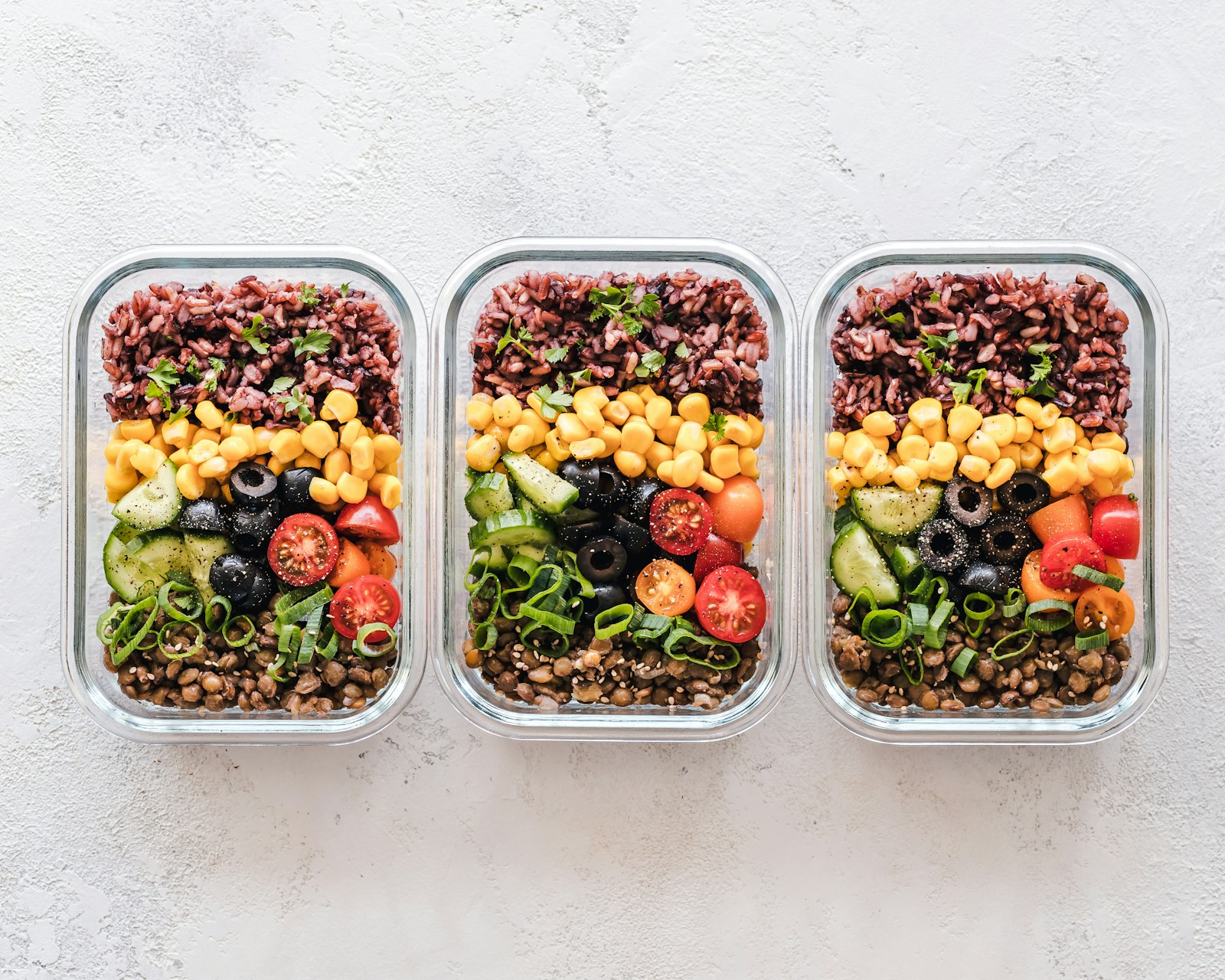
Frozen food can be especially uneven. Liquid water absorbs microwave energy more effectively than ice, so a thawed patch can warm rapidly while a nearby frozen patch lags behind. Once one region begins to melt, it may absorb still more energy, widening the temperature difference. Corners and edges may also heat faster because their shape exposes them to energy from more than one direction. Packaging directions that specify arrangement, venting, stirring, and standing time are designed around these effects, not added merely as ritual.
Why stirring, lower power, and resting work
Stirring attacks the temperature pattern directly. It moves hot material into cooler regions, cool material into warmer ones, and redistributes liquid around solid pieces. Turning food over does the same job when stirring is impossible. A rotating plate changes where the food meets the electromagnetic field; stirring changes the location of the food itself. Using both is more effective than relying on the turntable alone.
Lower power can be useful for thick or delicate foods, although the control may not weaken the waves in the way its label suggests. In many conventional microwave ovens, a 50 percent setting runs the magnetron at full output for part of the time and switches it off for the rest. During each off interval, conduction has time to move heat away from hot spots before more microwave energy arrives. The total process takes longer, but the temperature has more time to equalize.
Covering food traps moisture and promotes steam, which transfers heat around the surface and helps prevent exposed parts from drying. A spoonful of water can help when reheating rice, pasta, or another food that has lost moisture, provided the food and its instructions make that appropriate. The cover must be microwave-safe and vented so pressure does not build.

Resting continues the same equalization after the magnetron stops. Hot regions conduct energy into cooler ones, and steam continues moving through covered food. The meal is not receiving new microwave energy, but its internal temperature can keep changing for several minutes. This carryover period is why a package may tell you to leave the food covered before eating. Skipping it can mean eating at the moment when the temperature difference is greatest.
Cold spots can become a food-safety problem
An unevenly warmed mug of coffee is mostly a comfort problem. Unevenly cooked raw meat, poultry, fish, eggs, or an incompletely reheated leftover can be a safety problem. Steam at the edge and a hot container do not prove that the coldest part of the food reached a temperature that destroys pathogens. The container may itself have been heated by contact with hot food while the center remained much cooler.
USDA Food Safety and Inspection Service guidance recommends stirring, rotating, or turning foods during microwave cooking and checking temperature in several places. For reheated leftovers, the agency advises reaching 165 degrees Fahrenheit, followed by standing time. Its microwave guidance also recommends at least three minutes of standing time after cooking meat, poultry, fish, and eggs before checking internal temperature. Product directions can specify a different process, so the instructions for the particular food remain important.
A clean instant-read food thermometer provides evidence that sight and touch cannot. Check the thickest area and more than one location, avoiding bone when measuring meat. If one reading is low, continue heating and repeat the stir-and-rest cycle. People often add more time immediately, but a short interval, another stir, and a fresh check reduce the chance of scorching one area while another is still unsafe.
A more even way to reheat food
Even heating begins before the door closes. Break up dense clumps, separate pieces that are frozen together, and arrange food in a shallow layer when possible. For a plate of leftovers, placing thicker or denser pieces toward the outside and leaving the center less crowded can help. A loose ring often heats more evenly than a tall mound because more of the food is exposed and less depends on slow conduction into a deep center.
- Use a microwave-safe container: follow the label and the appliance manual rather than assuming every takeout tub can tolerate cooking temperatures.
- Cover and vent: a suitable cover holds moisture while allowing steam to escape.
- Choose time and power together: thick foods often benefit from a longer interval at reduced power.
- Pause to stir or turn: move food from the center toward the edge and from the bottom toward the top.
- Respect standing time: keep the food covered for the stated period so temperatures can equalize.
- Verify when safety matters: check several spots with a food thermometer rather than trusting steam, color, or the warmth of the dish.
The microwave is fast because it generates heat within the food’s outer volume instead of first heating an entire oven and the surrounding air. The same speed makes differences in absorption easy to notice. Hot spots form quickly, while conduction needs time to catch up. Rotation, stirring, gentler power cycles, and resting do not fight the appliance’s physics; they complete the process that the electromagnetic waves begin. Once that is clear, the instructions on a frozen meal stop looking fussy and start reading like a compact plan for managing energy.