 Akshay Dinesh
A windshield can turn cloudy in seconds even when no rain is falling. The haze is not smoke trapped in the glass; it is a layer of tiny water droplets on one surface of it. Those droplets scatter light, so headlights and streetlamps bloom into glare while signs and lane markings lose contrast. The fastest way to clear the view depends on which side of the glass is wet and why the moisture formed.
Most cold-weather fog develops inside the vehicle when warm, damp cabin air touches cold glass. In hot, humid weather, the pattern can reverse: air conditioning chills the windshield enough for outdoor moisture to collect on the exterior. A defogger works by changing the temperature and moisture balance at the glass, not simply by blowing harder.
Fog begins when glass crosses the dew point
Air can contain water vapor without looking wet. For any particular amount of vapor, there is a temperature at which the air next to a surface becomes saturated and water begins to condense. That threshold is the dew point. The National Weather Service describes it as the temperature at which water vapor changes into liquid droplets.
A car window creates a narrow boundary between two different environments. On a chilly morning, the glass is cooled by the outdoor air. People enter with warm breath, damp coats, wet shoes, or snow on the floor mats, adding vapor to the cabin. When the moist interior air meets glass colder than its dew point, vapor condenses into droplets on the inside surface.
The droplets are small, but their optical effect is large. A clean pane transmits light in an orderly way. A film of curved droplets refracts and scatters that light in many directions, producing the milky veil drivers recognize as fog. Night driving makes the effect especially obvious because bright points of light spread across the wet surface.
Relative humidity helps describe how close air is to saturation, but it changes with temperature. Warm air cooled beside the windshield can reach 100 percent relative humidity even though no new water was added. That is why a crowded car may fog almost immediately after the doors close, and why the problem grows worse when moisture is trapped in upholstery or carpet.
The wet side changes with the weather
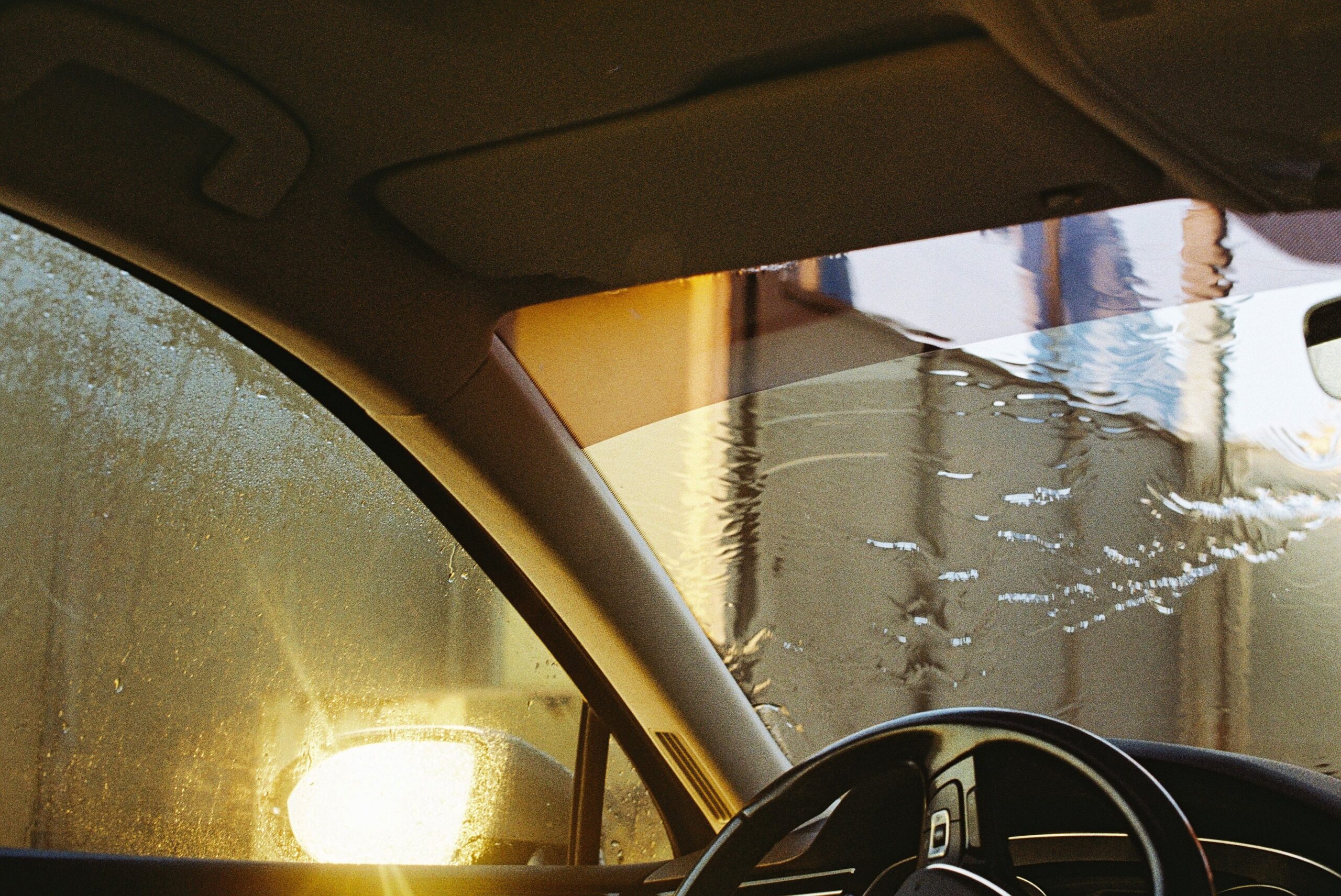
Cold-weather fog is usually an inside job: humid cabin air meets a windshield cooled from outdoors. Rain makes this common even at moderate temperatures because passengers bring water into the cabin and closed windows limit ventilation. Recirculation can make matters worse by repeatedly sending the same moist air through the vehicle instead of replacing it with drier outside air.
Summer fog may appear outside. Suppose the air outdoors is hot and humid while the air conditioner keeps the cabin cool. The windshield can fall below the outdoor dew point, allowing droplets to form on its exterior surface. Windshield wipers may clear that film briefly, while raising the cabin temperature slightly or reducing the cold airflow aimed at the glass addresses the cause.
A simple observation identifies the side without smearing the whole windshield. If the wipers clear the haze, moisture is outside. If the wipers make no difference and the dashboard vents begin opening a clear patch from below, it is probably inside. When visibility is too poor to tell safely, pull over before experimenting with controls or wiping the interior glass.
Fog and frost are related but different. Fog is liquid water condensed on glass. Frost is ice deposited or frozen on a surface at or below freezing. An exterior layer of frost needs heat and time to melt or loosen, followed by safe removal; blasting the wipers across firmly frozen ice can strain or damage them.
A front defroster uses heat, airflow, and drier air
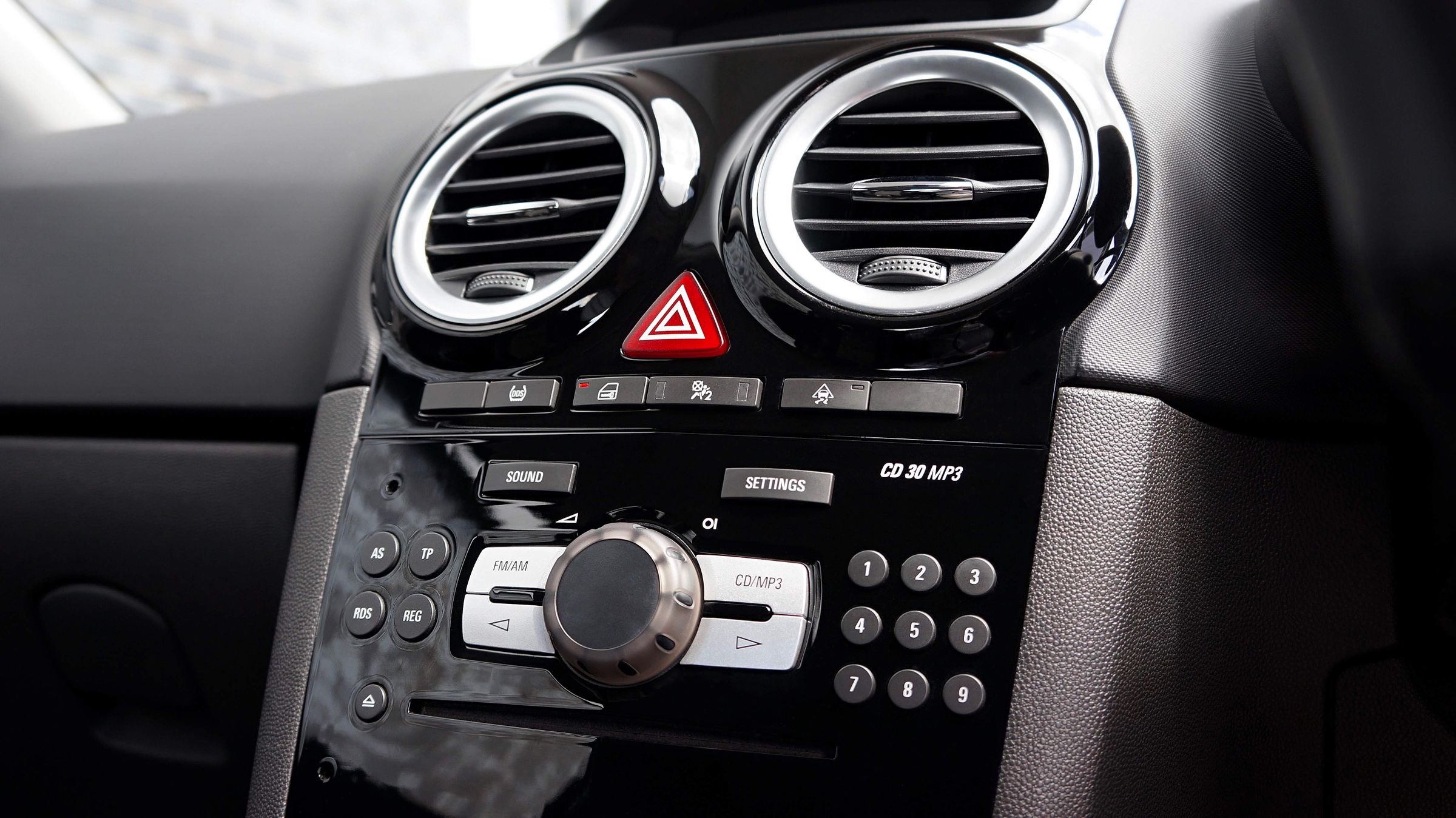
The windshield symbol on a climate-control panel directs a broad stream of air through vents at the base of the glass. That airflow attacks the problem in several ways. Warm air heats the windshield above the dew point, moving the surface away from the condition that allowed condensation. Moving air also carries evaporated moisture away instead of letting saturated air remain against the pane.
In many vehicles, selecting the windshield-defrost mode automatically engages the air-conditioning system. That may sound backward in winter, but the compressor is being used as a dehumidifier. Moist air passes over the cold evaporator, where some water condenses and drains away. The system can then warm the drier air before sending it toward the windshield. Compressor behavior varies with vehicle design and outdoor temperature, so the owner’s manual remains the best guide to a particular control panel.
Fresh-air mode often clears interior fog faster than recirculation because it replaces moisture released by breath, clothing, and carpeting. The exception comes when outdoor air is exceptionally humid or polluted, but recirculation is rarely the best long-term setting for a wet winter cabin. Cracking a window briefly can also exchange damp air for drier air when conditions allow.
This visibility function is significant enough to be covered by U.S. vehicle standards. Federal Motor Vehicle Safety Standard No. 103 sets performance requirements for windshield defrosting and defogging systems. The rule does not make every dashboard operate identically, but it reflects the safety purpose: the driver needs a usable field of view, not merely a comfortable cabin.
The rear-window grid solves the problem differently
The rear-window button usually activates thin conductive lines bonded to the glass. Electric current meets resistance in those lines and produces heat. The warmer pane encourages interior droplets to evaporate and loosens exterior frost or ice. This is a direct heating system rather than a miniature air conditioner, which is why the rear glass clears in visible bands around the grid lines.
Some vehicles use similar heating elements around mirrors or within the windshield. Others rely mainly on ducted air at the front. The familiar terms can therefore be confusing: drivers often call both systems defrosters, even though one conditions and moves air while the other heats the glass electrically.
The grid lines are functional parts, not decoration. Scraping the inside of the rear glass with a hard edge, using abrasive cleaners, or pulling adhesive across a line can break the circuit. A single damaged section may leave a narrow strip that refuses to clear. Cleaning that glass gently helps preserve the conductors.
Rear defoggers commonly switch off after a timed interval to limit electrical load and unnecessary heating. If the window remains cloudy, the cabin may still be carrying too much moisture, or a grid connection may have failed. The rear system clears its own pane; it does not remove the wet coats, saturated mats, or leaking seals that keep supplying vapor.
Clear the view first, then remove the moisture source
When fog blocks the windshield, visibility comes before schedule. Stop in a safe place if the road cannot be seen clearly. Select the windshield-defrost mode, raise the fan, choose a warm temperature, and allow the air conditioner to operate if the vehicle enables it. Switch from recirculation to fresh air, turn on the rear grid, and open a window slightly if the cabin remains humid. Do not drive away until the windshield and the windows needed for mirrors are clear.
Once the immediate haze is gone, a few habits reduce repeat fogging:
- Shake snow and water from shoes and outerwear before entering.
- Dry soaked floor mats and check beneath them for trapped moisture.
- Keep the inside of the glass clean, because oily film makes glare and haze more noticeable.
- Replace a badly clogged cabin-air filter according to the vehicle’s maintenance schedule.
- Use anti-fog products only as directed and never as a substitute for working ventilation.
Fog that returns constantly can point to more than ordinary weather. Water may be entering through a door seal, sunroof drain, windshield edge, or body seam. A sweet odor, greasy film on the glass, unexplained coolant loss, or dampness near the dashboard can indicate a heater-system leak that needs professional diagnosis. A weak fan, stuck air door, failed compressor, or blocked intake can also slow defogging.
There is no single temperature setting that works fastest in every climate and vehicle. The physics, however, stays consistent. Condensation stops when the glass is warmed above the relevant dew point, the nearby air is dried, or humid air is replaced. A working defogger combines those moves so the droplets evaporate and the road comes back into focus.