 Akshay Dinesh
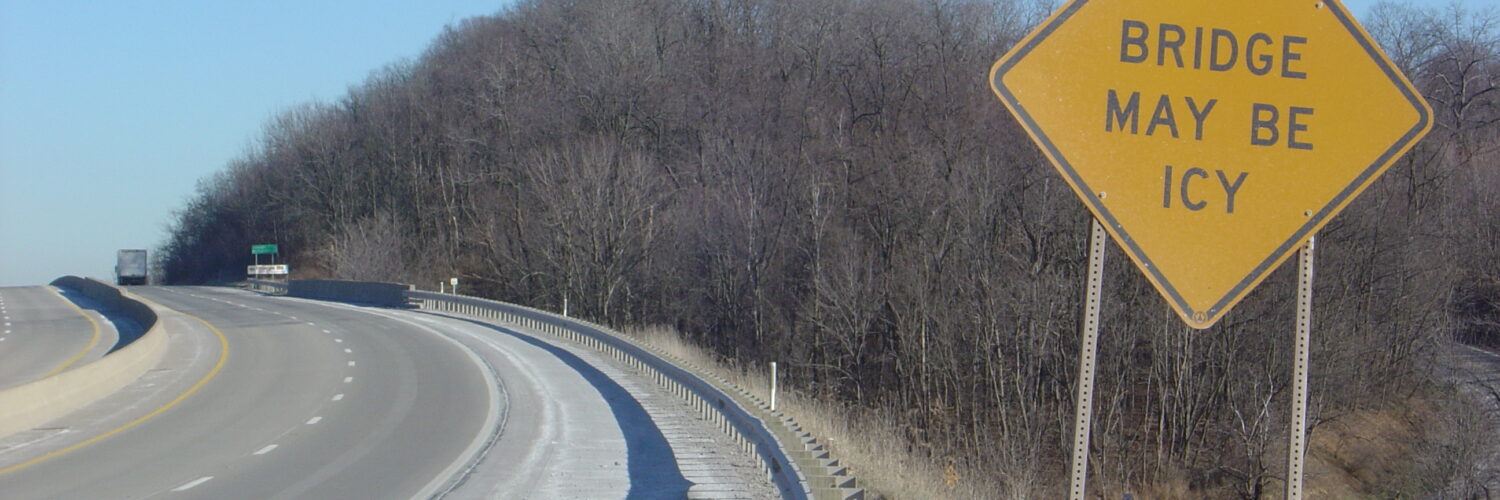
A driver can leave wet pavement, cross an overpass, and suddenly meet a sheet of ice even though the road on either side still has traction. The warning sign that says a bridge may freeze before the road is describing a real difference in how the two surfaces gain and lose heat. A road resting on the ground has a large store of warmth beneath it. A bridge deck is exposed to cold air on both sides, so its temperature can fall faster and cross the freezing point sooner.
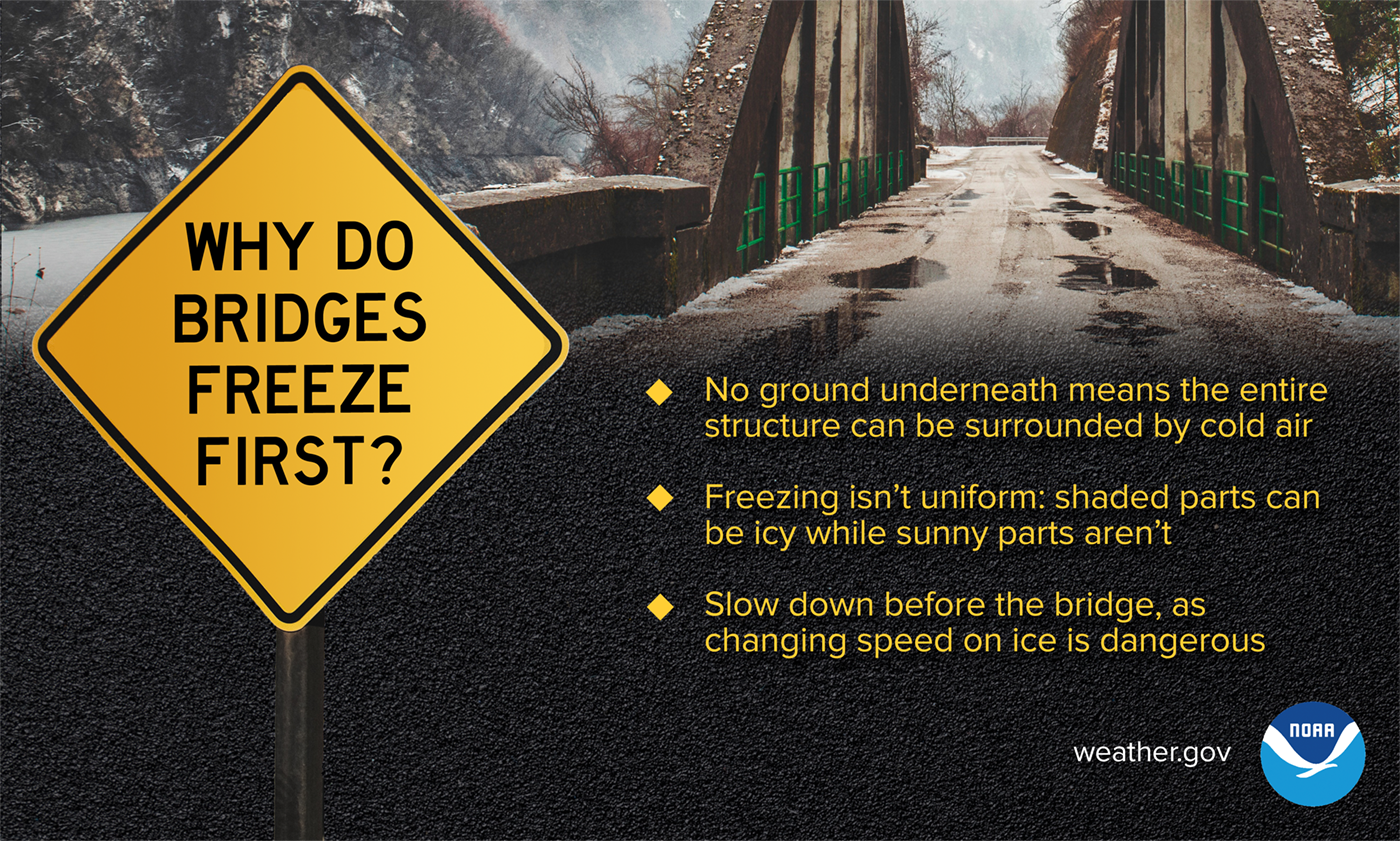
That difference matters most when temperatures hover near 32 degrees Fahrenheit, or 0 degrees Celsius. In bitter cold, almost every wet surface may be frozen. Near the threshold, however, a change of only a degree or two can separate ordinary wet asphalt from nearly invisible ice. The National Weather Service warns that freezing is not uniform: one bridge can be icy while nearby pavement, or even a sunnier part of the same bridge, remains clear.
The ground acts like a slow-release heat source
During the day, sunlight warms pavement and the soil or rock below it. After sunset, the road surface begins losing energy to cooler air and to the night sky. Heat stored deeper in the ground then conducts upward, replacing some of what the surface loses. The ground is not a heater in the everyday sense, but its enormous mass changes temperature slowly. On a marginal night, that stored energy can hold a road surface just above freezing for hours.
A typical road also sits on layers of aggregate and compacted soil. Together, those materials form a thick thermal reservoir. The surface may be only a thin layer of asphalt or concrete, yet it is connected to much more material underneath. Even when the air slips below freezing, the pavement temperature can lag behind it. This is why the temperature displayed by a car is not a direct measurement of the road itself.
A bridge has no comparable bank of earth beneath its deck. Its concrete slab, steel supports, and asphalt wearing surface store heat, but the structure contains far less warm material than the ground-supported roadway approaching it. Once that smaller reserve has been drained, there is no broad mass of warmer soil immediately below to replenish it.
A bridge can lose heat from every exposed side
The top of any road exchanges heat with the air. A bridge deck does that from above and below. Cold air can flow across the driving surface and underneath the span, carrying heat away by convection. Wind strengthens that exchange because it continually replaces the slightly warmer air next to the structure with colder air. An ordinary road has wind above it, but soil blocks that same cooling from below.
The deck also sends infrared energy toward the sky. On a clear night, this longwave radiation can cool a surface below the temperature of the surrounding air. The effect is familiar from frost forming on grass when a thermometer several feet above the ground still reads a little above freezing. Federal Highway Administration research describes bridge decks losing energy to the night sky faster than the structure can replace it, creating brief icing conditions that sometimes appear near sunrise and disappear soon afterward.
Bridge design changes the details without removing the basic risk. A thin steel deck responds to temperature changes quickly. A thick concrete deck changes more slowly, but it still lacks direct contact with the ground and remains exposed underneath. Shading, wind direction, the size of the span, traffic, surface color, and the warmth of the water or land below can all shift the timing. “Bridges freeze first” is a useful warning, not a promise that every bridge will always be colder than every road.
Ice needs moisture as well as a cold surface
A deck below freezing does not become slick unless water reaches it. That moisture may arrive as rain, freezing drizzle, melting snow, spray from tires, condensation, or frost. Liquid rain can fall through a shallow layer of air that is above freezing and then freeze when it touches a colder bridge. Meltwater can also refreeze after the sun sets or when a cold front pushes pavement temperatures downward.
Moist air adds another path. If the bridge deck cools below the air’s frost point, water vapor can deposit as ice or condense and then freeze. Bridges over rivers and low, damp ground may have a ready source of moisture nearby, although the open-air exposure of the deck is still the central reason for its rapid cooling. Shaded sections and spots where water collects can ice before the rest of the span.
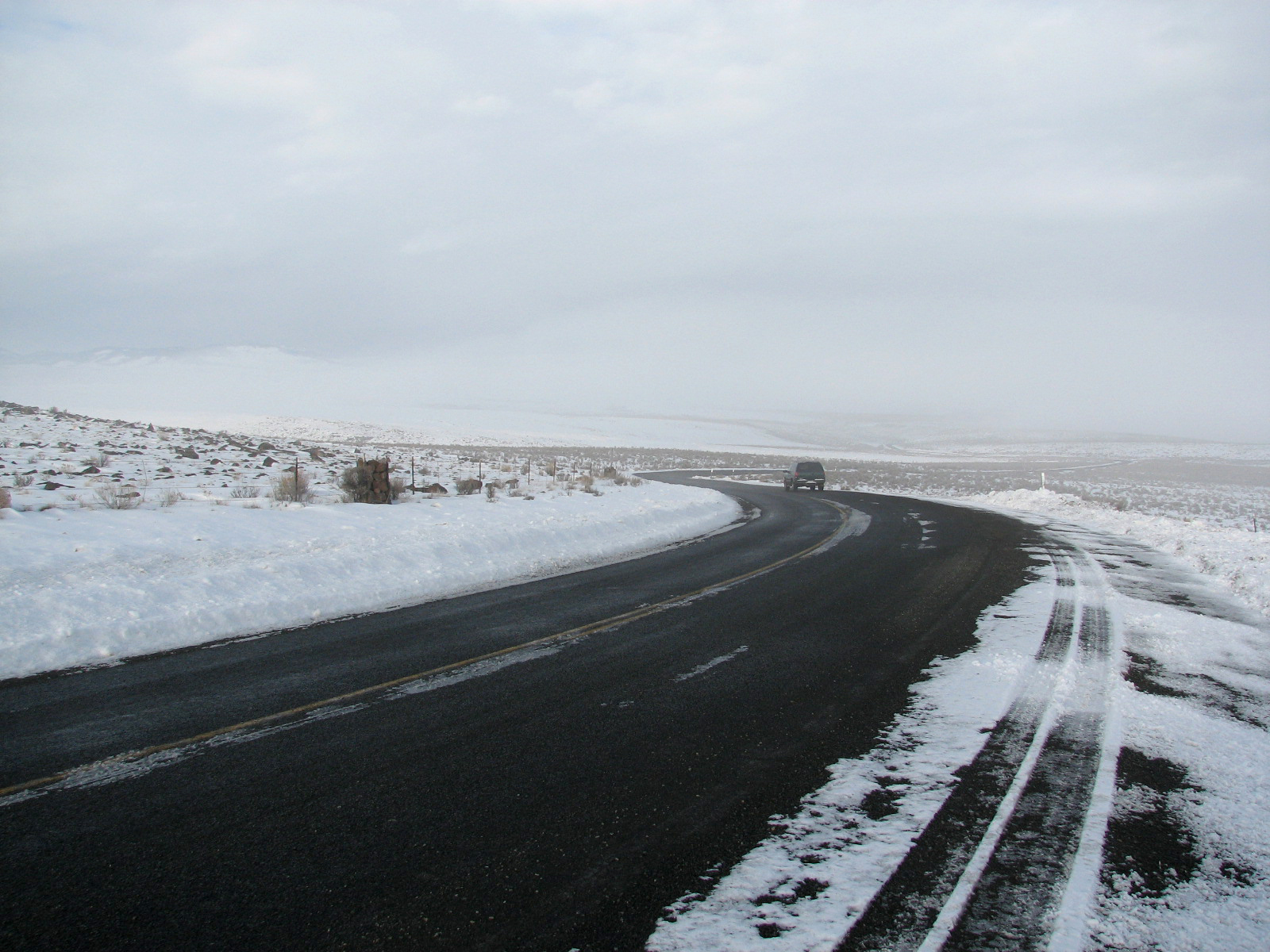
When the ice layer is thin and clear, drivers often call it black ice. The ice is not black; the dark roadway shows through it. That makes a wet-looking bridge especially deceptive at night, around dawn, or in shadow. Headlights may reveal a glossy reflection, but visibility is an unreliable test. A surface can lose much of its tire grip before the ice looks obviously white.
The most dangerous moment is often the transition
A long stretch of clear pavement can train a driver to expect normal traction. The bridge then introduces a colder surface with little visual warning. Tires depend on friction to brake, steer, and accelerate. On ice, asking them to do more than one of those jobs at once makes a skid more likely. Four-wheel drive can help a vehicle move forward, but it cannot restore the missing friction needed to stop or turn.
Conditions near freezing are particularly uneven. A bridge exposed to clear sky may ice while a tree-covered approach does not. A north-facing span may remain shaded after sunrise while another bridge warms. Salt left from earlier treatment can lower the freezing point in one lane, while runoff has diluted it in another. Traffic can add a little heat and move water, yet it can also polish snow into a slippery layer. None of these effects makes a bridge reliably safe based on appearance alone.
The National Weather Service advises slowing before reaching a bridge when icing is possible. Braking sharply, accelerating, or making an abrupt steering change after the vehicle is already on ice can use up the small amount of grip that remains. Extra following distance also creates time to respond gradually. The safest choice during significant freezing rain or official travel restrictions may be to delay the trip and follow local transportation and weather guidance.
Road crews measure the surface, not just the air
Transportation agencies know that air temperature cannot tell the whole story. Road Weather Information Systems place sensors at bridges and other trouble spots to measure pavement temperature and whether the surface is wet or dry. Some installations also track the concentration of deicing chemicals and the temperature at which the remaining moisture would freeze. Cameras, nearby weather instruments, and thermal maps help crews see how conditions vary across a route.
That information supports anti-icing, which tries to prevent ice from bonding firmly to pavement, and deicing, which breaks or melts ice that has formed. Timing matters. Applying material where and when it is needed can improve safety while limiting unnecessary salt use, equipment time, and damage to bridge materials. Some especially vulnerable bridges use fixed spray systems that can treat the deck automatically when sensors detect a developing hazard.
The familiar sign is therefore more than a winter slogan. It compresses several pieces of physics into a few words: the ground stores heat, a bridge is surrounded by moving air, exposed surfaces radiate energy to the sky, and water can freeze wherever the pavement temperature falls below its freezing point. The road ahead may look unchanged, but the thermal environment has changed the moment the tires leave solid ground.