
 Akshay Dinesh
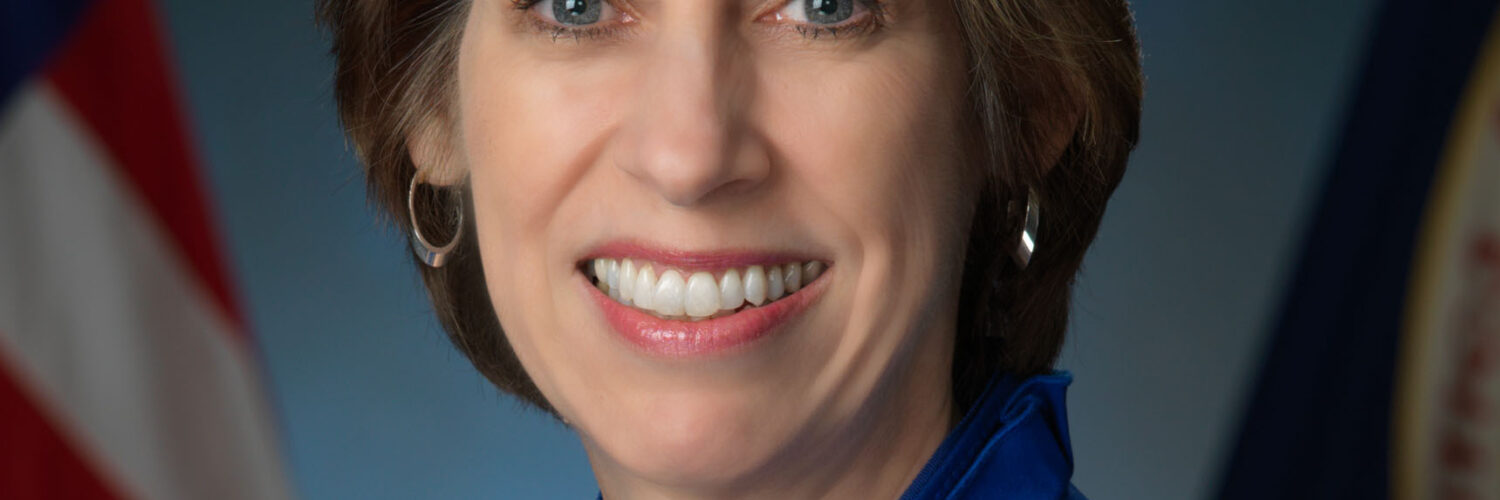
Ellen Ochoa is often introduced with a historic first: in 1993, she became the first Hispanic woman to travel to space. That milestone matters, but it is only the doorway into a larger story. Ochoa was also an engineer, inventor, researcher, mission specialist, payload commander, flight operations leader, and director of NASA’s Johnson Space Center. Her career shows how space exploration depends not only on rockets, but on people who can connect careful science, technical judgment, teamwork, and leadership under pressure.
Her path was not built around a single dramatic moment. It grew from years of studying physics and electrical engineering, working on optical systems, applying for the astronaut corps, flying complex shuttle missions, and later managing some of NASA’s most demanding human-spaceflight work. Ochoa’s story is especially powerful because it joins two ideas that students sometimes see as separate: technical excellence and representation. She did not become important because she was first. She became first because she had already built the skill, persistence, and credibility to do difficult work at a very high level.
From Physics Student to Optical Engineer
Ellen Lauri Ochoa was born in Los Angeles in 1958 and grew up in La Mesa, California. She studied physics at San Diego State University, then earned a master’s degree and a doctorate in electrical engineering from Stanford University. That combination matters because her later NASA work did not begin with piloting spacecraft. It began with light, images, and the challenge of helping machines process visual information.
Before joining the astronaut corps, Ochoa worked as a researcher at Sandia National Laboratories and NASA’s Ames Research Center. Her specialty was optical systems, including ways to analyze patterns and improve image processing. NASA’s biographical materials credit her as a co-inventor on optical inspection and recognition systems, the kind of work that sits quietly behind many modern technologies. When a machine needs to notice a defect, recognize a pattern, or interpret visual information, it needs more than a camera. It needs a method for turning light into useful evidence.
That research background gave Ochoa a distinctive entry into spaceflight. She was not simply someone who wanted to go to space; she was a scientist and engineer whose work already fit NASA’s larger problem-solving culture. By the time NASA selected her as an astronaut candidate in 1990, she had spent years learning how to ask exact questions, test ideas, and work in technical teams where small details could change the result.
The First Flight and the Meaning of a First
Ochoa became an astronaut in 1991 and flew her first mission two years later aboard Space Shuttle Discovery on STS-56. The mission studied Earth’s atmosphere and the Sun’s effect on the ozone layer, using a laboratory payload called ATLAS-2. For the public, the headline was clear: Ochoa had become the first Hispanic woman in space. For the crew, the mission was also a packed scientific operation that required discipline, timing, and constant coordination.
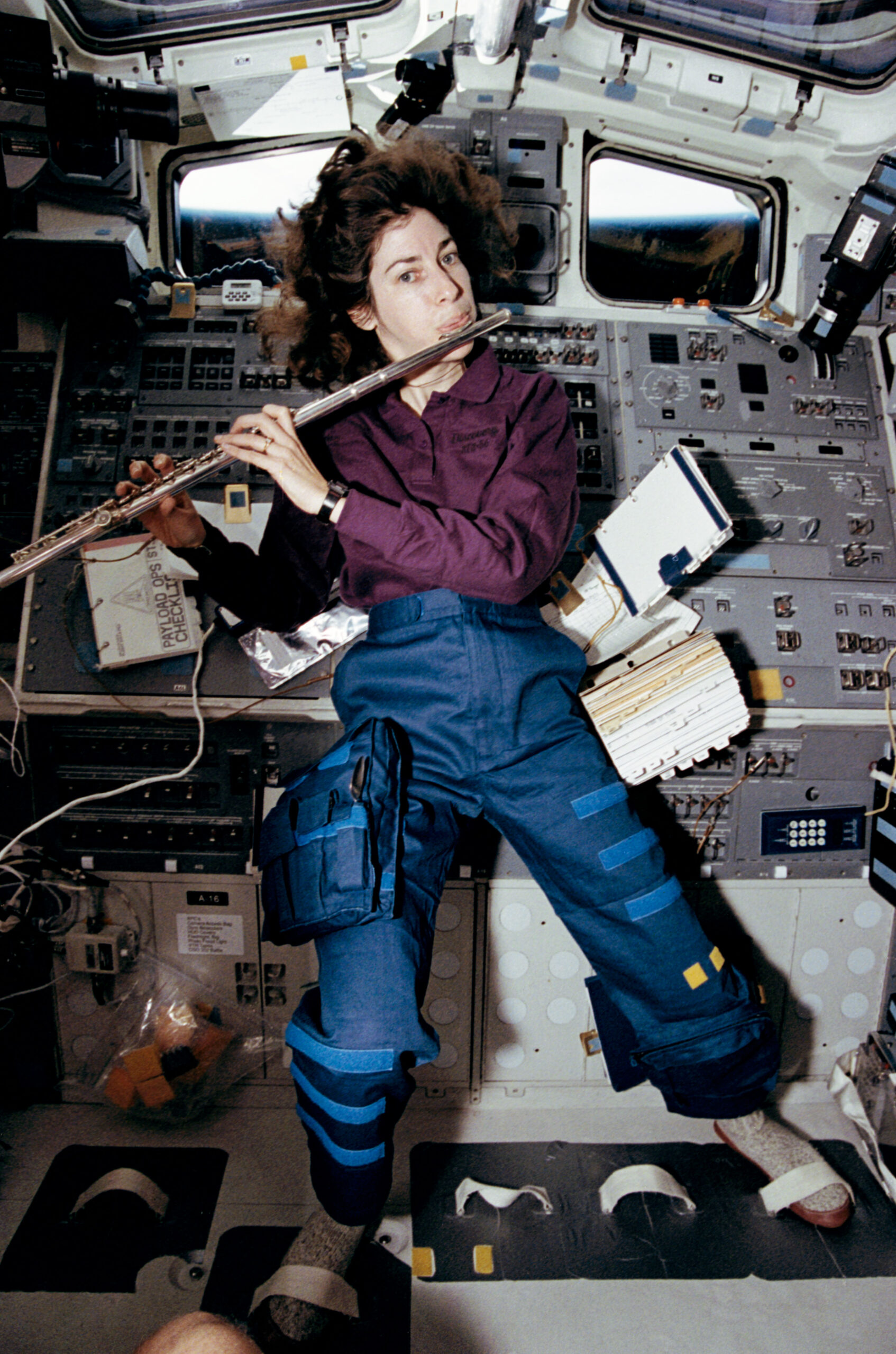
One memorable image from that flight shows Ochoa playing the flute in microgravity. It is a small scene, but it captures something important about her career. Spaceflight is not only machinery and checklists; it is human life carried into an unusual environment. Ochoa was a trained classical flutist as well as an engineer, and the photograph reminds readers that scientists and astronauts are not flat symbols. They bring full lives, interests, and identities into their work.
The historic first should not be reduced to a poster slogan. Representation matters most when it expands what people can realistically imagine for themselves. Ochoa’s first flight showed Hispanic students, girls interested in science, and many other young people that aerospace was not reserved for one kind of person. At the same time, her achievement was rooted in rigorous preparation. The lesson is stronger when both parts are kept together: the barrier broke because a highly prepared engineer was ready when the opportunity arrived.
Four Shuttle Missions and Nearly a Thousand Hours in Space
Ochoa flew four shuttle missions: STS-56 in 1993, STS-66 in 1994, STS-96 in 1999, and STS-110 in 2002. NASA records list more than 978 hours in space across those flights. That total represents far more than time spent in orbit. It includes experiment operations, crew coordination, robotic work, docking tasks, equipment transfer, and the physical demands of living and working in microgravity.
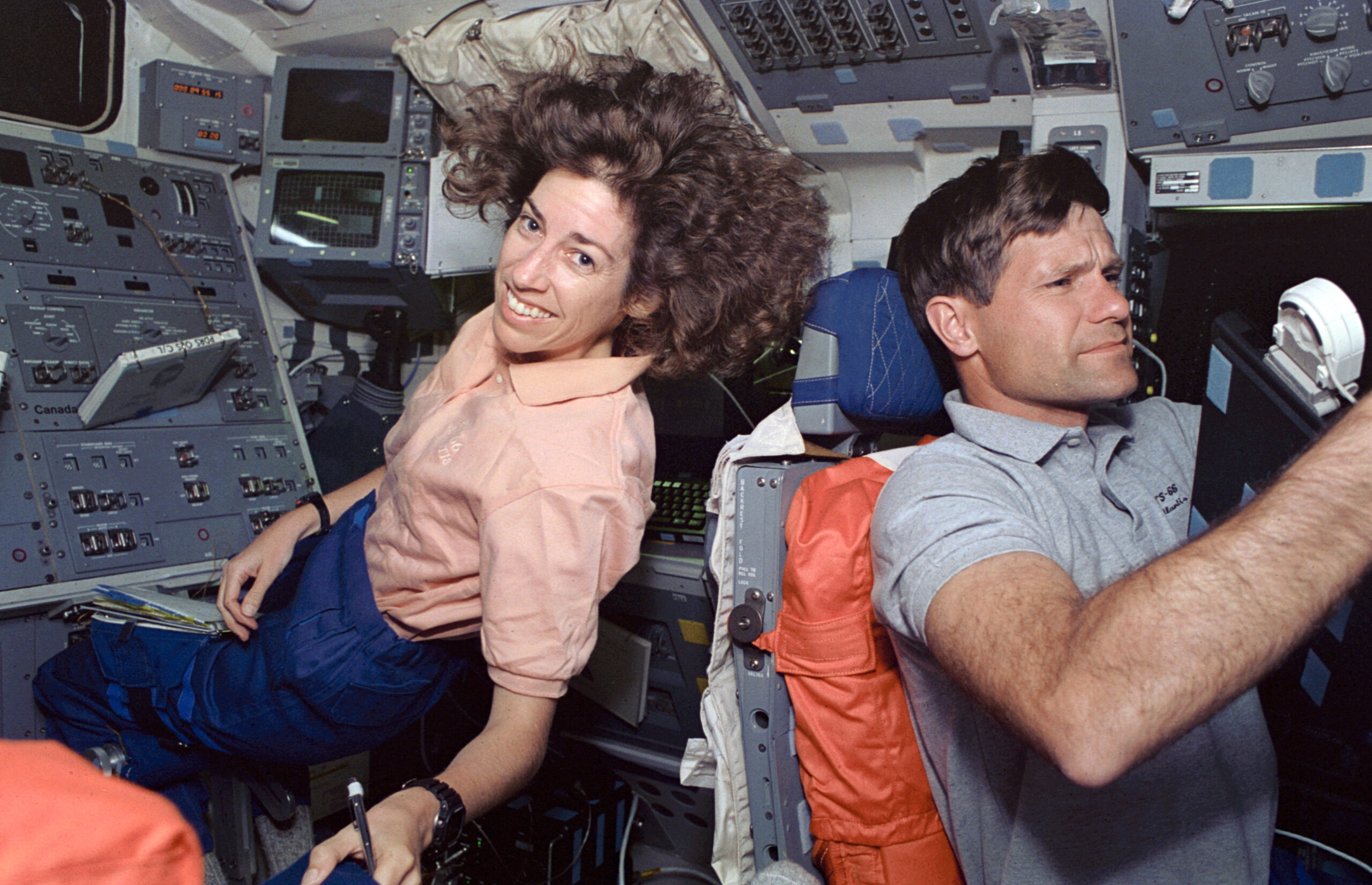
Her second mission, STS-66, returned to atmospheric science with the ATLAS-3 laboratory. As payload commander, Ochoa had a leadership role in the mission’s science work. That title may sound technical, but it points to a crucial responsibility: keeping experiments, crew tasks, and mission goals aligned while the shuttle is already in orbit. Space missions depend on planning, but they also depend on people who can make good decisions when plans meet real conditions.
Her later flights connected directly to the International Space Station. STS-96 in 1999 was the first shuttle mission to dock with the station, bringing supplies and equipment while the station was still being assembled. STS-110 in 2002 carried a major truss segment that became part of the station’s backbone. These missions placed Ochoa inside one of the most complex engineering projects ever attempted: building a working laboratory in orbit, piece by piece, with international partners and unforgiving physics.
Leadership After Spaceflight
After her flights, Ochoa’s NASA career moved deeper into leadership. She held major positions in flight crew operations and became director of the Johnson Space Center in 2013. Johnson is one of NASA’s central human-spaceflight hubs, home to astronaut training, Mission Control, and work tied to spacecraft, station operations, and future exploration. Leading that center meant guiding people as much as managing programs.
Ochoa was the 11th director of Johnson Space Center, the first Hispanic director, and the second woman to hold the role. Those facts are historically significant, but the job itself was not ceremonial. Johnson Space Center has to prepare astronauts, support missions, manage risk, coordinate with contractors and partners, and keep long-term exploration goals moving while daily operations continue. Leadership in that setting requires technical literacy and trust. A director does not personally solve every problem, but must understand enough to ask the right questions and create conditions where specialists can do their best work.
Her tenure also came during a period when NASA was adapting after the shuttle era. Human spaceflight was shifting toward commercial crew partnerships, continued International Space Station operations, and new exploration goals. Ochoa’s career bridged eras: she flew on the shuttle, helped assemble the station, and later helped lead the institution responsible for training crews and supporting missions beyond her own astronaut years.
Why Her Story Still Matters
Ochoa’s legacy is not only that she reached space. It is that she widened the story of who belongs in science and engineering while showing what belonging demands: preparation, curiosity, resilience, and serious work. She also complicates the simple version of astronaut fame. Many students picture astronauts mainly as pilots or explorers, but Ochoa’s career highlights research, optics, robotics, mission operations, and management. Spaceflight needs many kinds of minds.
That broader view is useful for learners choosing their own paths. A student who loves music and math does not have to treat those interests as enemies. A student who likes physics but does not see themselves as a future astronaut can still find a place in aerospace, computing, medicine, climate science, or engineering. Ochoa’s work began with questions about images and information, then carried her into orbit, then into leadership. Careers often grow through connections that are hard to see at the beginning.
In 2024, NASA announced that Ochoa would receive the Presidential Medal of Freedom, one of the United States’ highest civilian honors. The recognition fit a career that had already moved beyond one flight or one title. Her life in science shows how a first can become more than a milestone when it is followed by decades of contribution. Ellen Ochoa helped make spaceflight more open, more visible, and more human, not by standing outside the technical work, but by doing it with excellence.

 Rishay Dinesh
