 Akshay Dinesh
Auroras do not follow the calendar as neatly as school terms or holiday seasons, but they do have patterns. One of the stranger ones is that geomagnetic activity often rises near the March and September equinoxes. That does not mean an aurora is guaranteed on the first day of spring or fall, and it does not mean the sky suddenly becomes charged with magic at sunset. It means that Earth’s position and magnetic orientation can make it easier for energy from the solar wind to couple into the planet’s magnetic field.
That seasonal boost matters because auroras are not just pretty lights. They are visible clues to a larger space-weather system that can disturb radio communication, satellite operations, GPS accuracy, and power grids during strong events. For skywatchers, the equinox months can bring a useful hint: if the Sun sends a stream of charged particles toward Earth, the timing of the year may help turn that energy into stronger geomagnetic activity. The explanation sits at the meeting point of astronomy, magnetism, and a bit of three-dimensional geometry.
Auroras Begin With the Solar Wind
The Sun is constantly sending out the solar wind, a thin flow of charged particles and magnetic field that moves through the solar system. Most days, Earth’s magnetic field acts like a protective bubble around the planet. It does not stop every particle, but it shapes where charged particles can go and keeps most of the solar wind from striking the atmosphere directly.
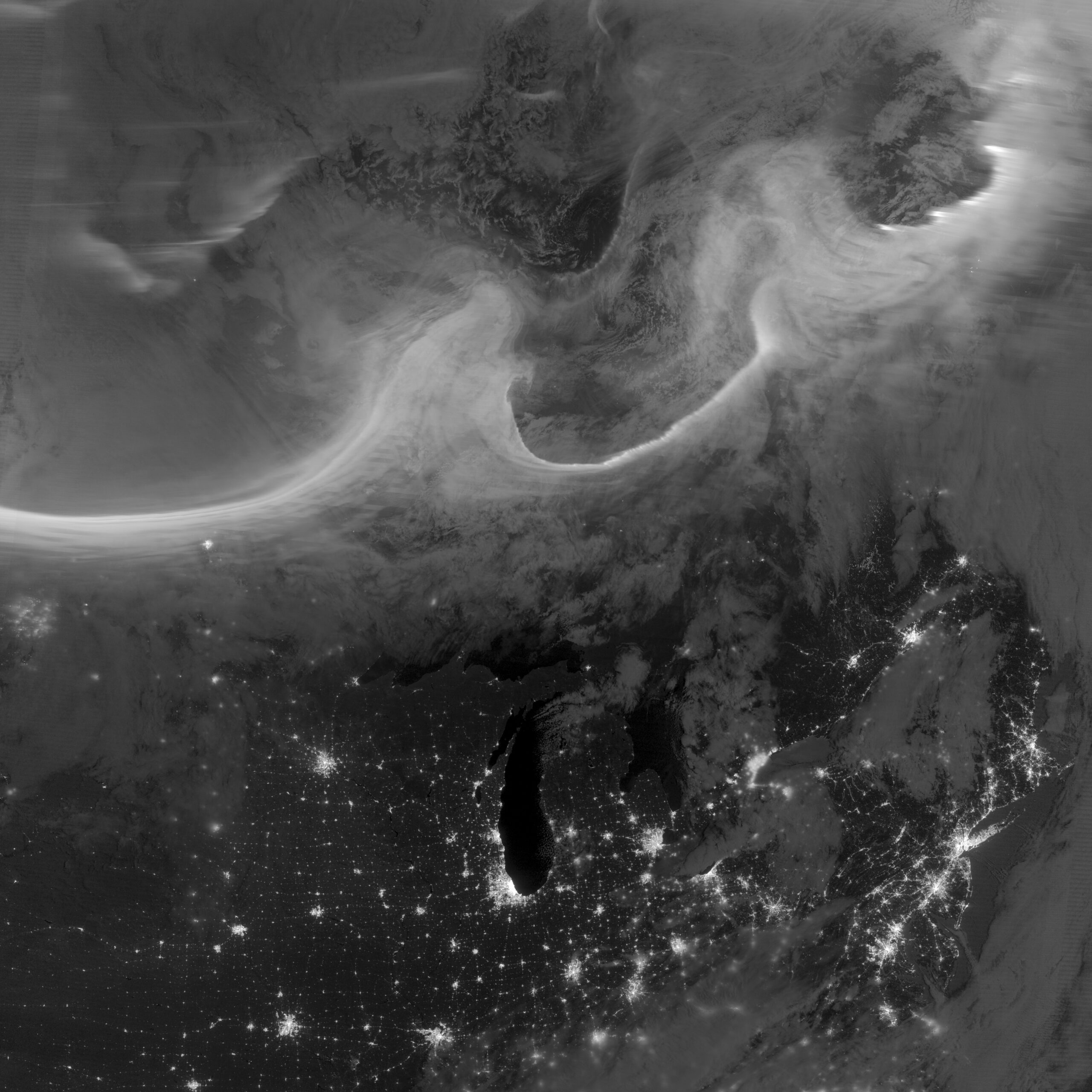
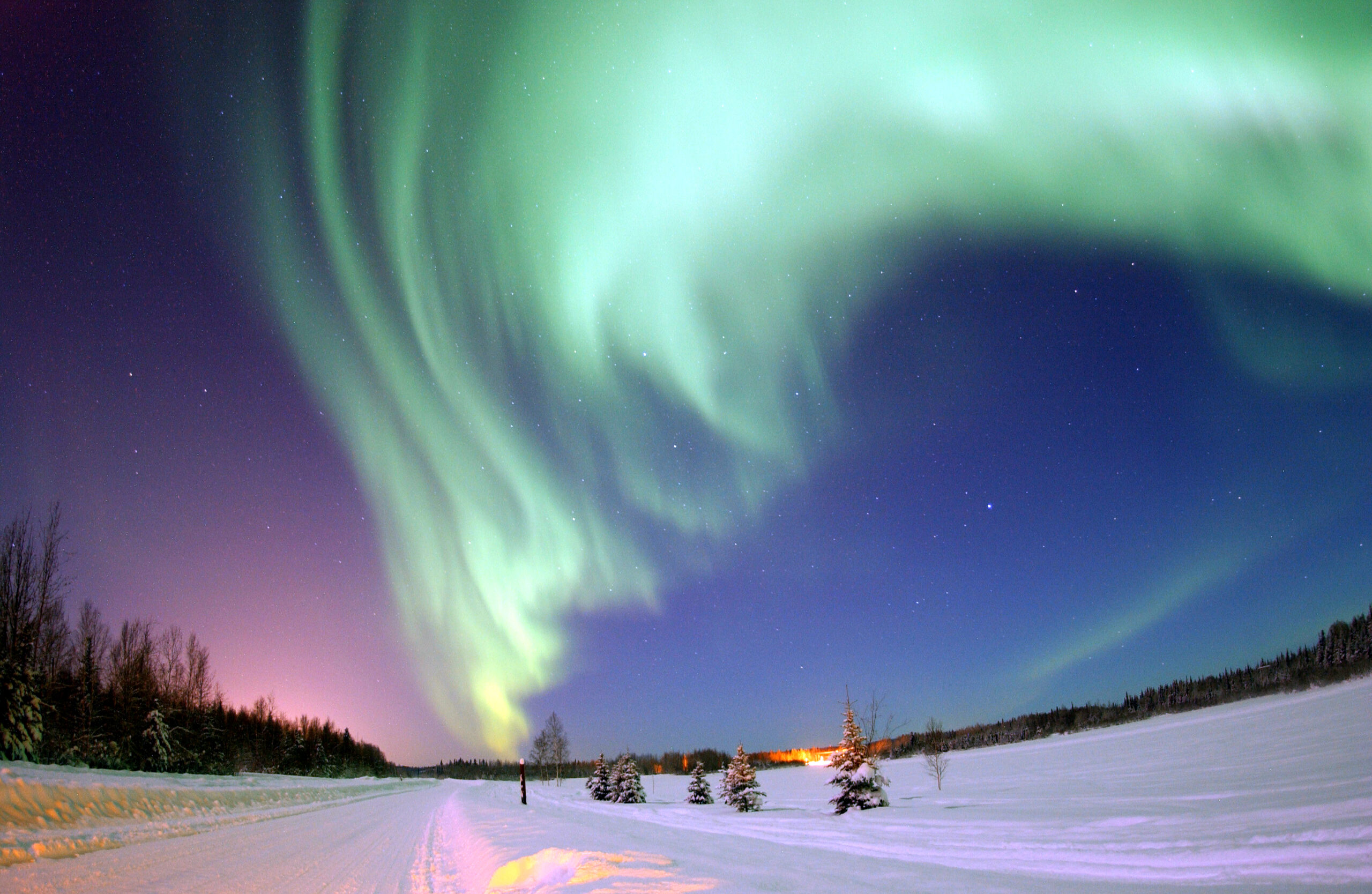
During more active space-weather periods, the Sun may send faster solar-wind streams or coronal mass ejections toward Earth. When those disturbances arrive, they can compress and shake the magnetosphere, the region controlled by Earth’s magnetic field. Some particles are guided along magnetic field lines into the upper atmosphere near the polar regions. There, they collide with oxygen and nitrogen atoms and molecules, which release light as they return to lower-energy states.
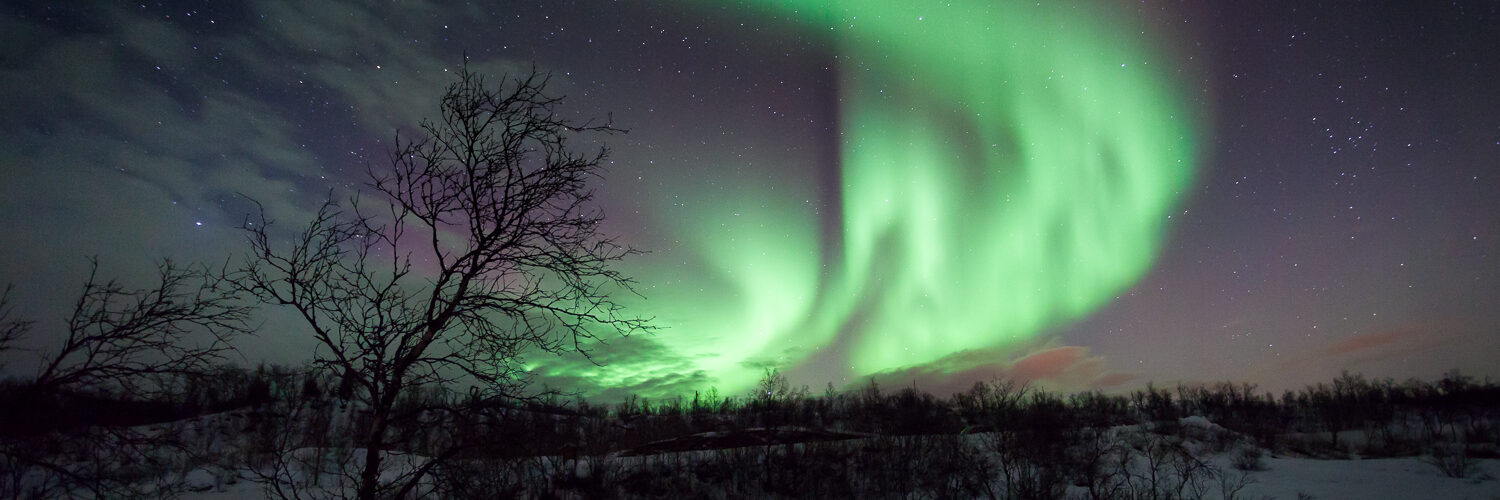
Green auroras often come from oxygen high in the atmosphere. Red, purple, and blue colors can appear under different conditions, depending on altitude, the gases involved, and the energy of the incoming particles. The exact display depends on much more than the date. Solar activity, the direction of the solar wind’s magnetic field, local darkness, clouds, moonlight, and latitude all matter.
The Key Is Magnetic Connection
A useful way to picture Earth’s magnetic field is as a flexible shield with field lines wrapped around the planet. The solar wind also carries magnetic field lines, usually called the interplanetary magnetic field. When the magnetic field carried by the solar wind points in a favorable direction, it can connect with Earth’s magnetic field through a process called magnetic reconnection.
Reconnection is not a simple opening in the atmosphere. It is a physical rearrangement of magnetic field lines that allows energy from the solar wind to enter the magnetosphere more effectively. When that connection is stronger, Earth’s magnetic tail can store and release more energy. That energy can then help power geomagnetic storms and brighten auroras.
One detail matters especially: the north-south direction of the solar wind’s magnetic field, often labeled Bz in space-weather data. When Bz points southward, it is better aligned to reconnect with Earth’s northward-facing magnetic field on the dayside of the magnetosphere. A long period of southward Bz can make geomagnetic activity much more likely. Aurora forecasts pay close attention to that direction because speed alone is not enough. A fast solar wind that does not connect well may produce a weaker response than a slower stream with a magnetic field pointed the right way.
Why the Equinox Changes the Odds
The equinox connection is often explained through the Russell-McPherron effect, named for geophysicists Christopher Russell and Robert McPherron, whose 1973 paper in the Journal of Geophysical Research helped formalize the idea. They were working with a known puzzle: geomagnetic activity tends to show a semiannual pattern, with stronger activity around March and September than around the solstice seasons. The effect is not about day and night being equal. It is about how Earth’s magnetic field sits relative to the solar wind as the planet moves around the Sun.
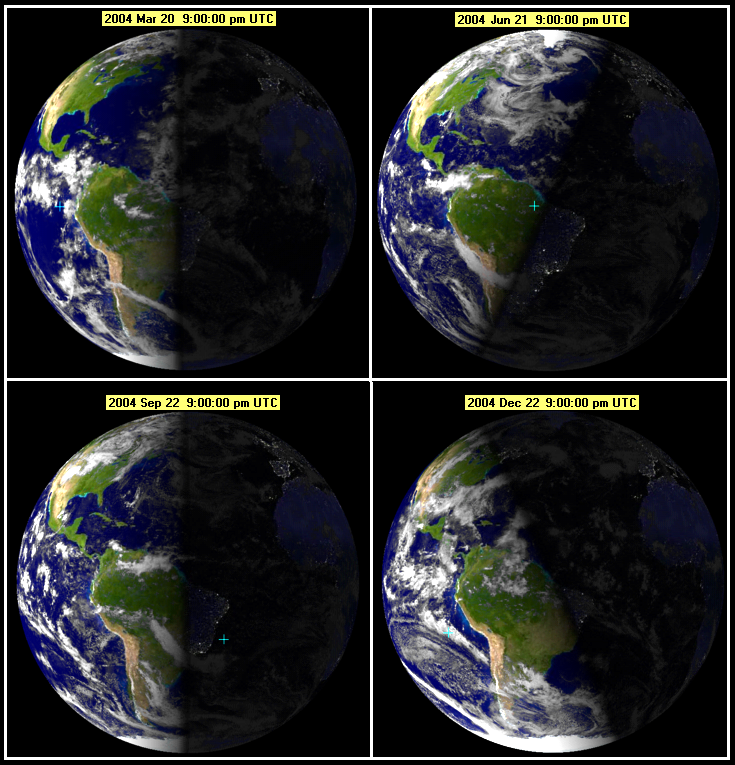
Near the equinoxes, Earth’s tilted axis is arranged so neither hemisphere leans strongly toward or away from the Sun. In that seasonal geometry, the orientation of Earth’s magnetic field can more often line up in a way that favors southward magnetic components in the solar-wind frame. That sounds technical because it is: the effect depends on coordinate systems, magnetic polarity, and the fact that Earth’s magnetic field and rotation axis are not the same thing. The practical result is easier to understand. Around the equinoxes, the solar wind has a better chance of connecting efficiently with Earth’s magnetosphere.
This does not make the equinox a switch. It changes the odds. If the Sun is quiet, there may be little to see even during a favorable season. If a strong coronal mass ejection arrives in June or December with the right magnetic orientation, it can still produce a major storm. The equinox effect is a multiplier, not the original source of the energy.
Why March and September Are Not Identical Every Year
It would be convenient if aurora season worked like a schedule: March bright, September bright, everything else lower. Real space weather is messier. The Sun follows an approximately 11-year solar cycle, and auroras are generally more likely during the active years around solar maximum than during quieter parts of the cycle. Even within an active cycle, one week can be calm and the next can bring several eruptions from the Sun.
NOAA’s Space Weather Prediction Center tracks geomagnetic storms with a G scale, from minor G1 storms to extreme G5 storms, and also publishes Kp-index information used by many aurora watchers. Those tools are useful because the equinox effect alone cannot tell anyone whether the lights will appear on a particular night. It only says that the magnetosphere may be more receptive if useful solar-wind conditions arrive.
Local viewing conditions add another layer. The strongest aurora in the world will disappoint a viewer under thick clouds or bright city lights. A faint aurora may become visible in a dark northern location but disappear from a suburban sky. Near the September equinox, nights are getting longer in the Northern Hemisphere, which helps skywatchers because there is more darkness than in midsummer. In the Southern Hemisphere, March and September can also matter, though viewing geography is different because there is less land close to the auroral oval.
What to Watch When Aurora Forecasts Mention the Equinox
Equinox timing is best treated as background context, not as a forecast by itself. A serious aurora forecast looks for solar wind speed, density, magnetic-field strength, and especially whether Bz turns southward for long enough. It also watches whether a coronal mass ejection is expected to pass Earth, whether a coronal hole is sending a high-speed stream our way, and how the magnetosphere is responding in real time.
- Kp index: A higher Kp generally means auroras can expand farther from the poles, though visibility depends on location and sky conditions.
- Southward Bz: A sustained southward magnetic field helps energy enter Earth’s magnetosphere more efficiently.
- Solar wind speed: Faster streams can deliver more energy, especially when the magnetic direction is favorable.
- Darkness and clouds: Even a strong forecast needs a dark, clear sky for good viewing.
NASA Earth Observatory has described March as historically one of the most geomagnetically active months, and NOAA’s forecasting tools show why daily conditions still matter. The equinox can improve the setup, but the aurora itself is a live interaction between the Sun and Earth. That is part of what makes it so hard to predict perfectly and so satisfying to understand.
A Seasonal Pattern With a Bigger Lesson
The equinox aurora boost is a reminder that Earth is not just a planet moving through empty space. It is moving through a changing stream from the Sun, carrying its own magnetic field and tilted axis along the way. Small changes in geometry can affect how energy crosses the boundary between the solar wind and the magnetosphere.
That is why auroras are more than a northern travel dream or a dramatic photograph. They show a planetary system at work: the Sun sending energy outward, Earth’s magnetic field responding, and the upper atmosphere turning invisible motion into visible color. Near the equinoxes, the geometry can give that system a helpful nudge. The lights still need solar activity, darkness, and a bit of luck, but the seasonal pattern is real enough to make March and September worth watching.