 Akshay Dinesh
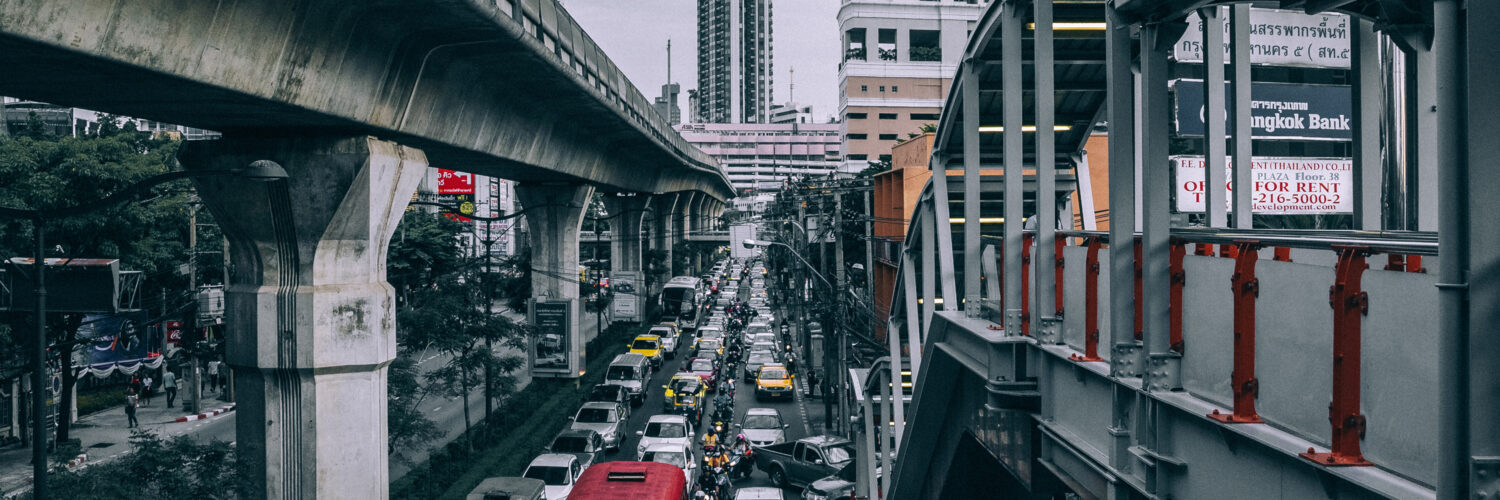
A line of cars can grind down to walking speed even when there is no crash, no construction crew, no police stop, and no obvious reason for anyone to brake. Then, just as mysteriously, the road opens up again. Drivers often leave these slowdowns feeling as if the cause must have disappeared before they reached it, but sometimes there was never a visible cause at all.
Traffic engineers call this kind of slowdown a phantom traffic jam, ghost jam, or stop-and-go wave. It forms when crowded traffic becomes sensitive enough that one small change – a tap on the brakes, a lane change, a moment of hesitation – travels backward through the line of vehicles. Each driver reacts a little later than the one ahead, and that delay can turn a small adjustment into a moving pocket of congestion.
Traffic Is a Flow, Not Just a Line of Cars
It is tempting to picture traffic as a set of individual drivers making individual choices. That is partly true, but on a busy road those choices add up into something closer to a flow. Transportation engineers often describe traffic with three linked ideas: speed, volume, and density. Speed is how fast vehicles are moving, volume is how many pass a point in a given time, and density is how tightly vehicles are packed together.
When a road is lightly used, one driver slowing briefly does not affect much. The following driver has plenty of room, adjusts smoothly, and the little disturbance fades. As density rises, the same action has a stronger effect because every vehicle is closer to the next one. A road can be moving at highway speed and still be close to the point where the flow becomes unstable.
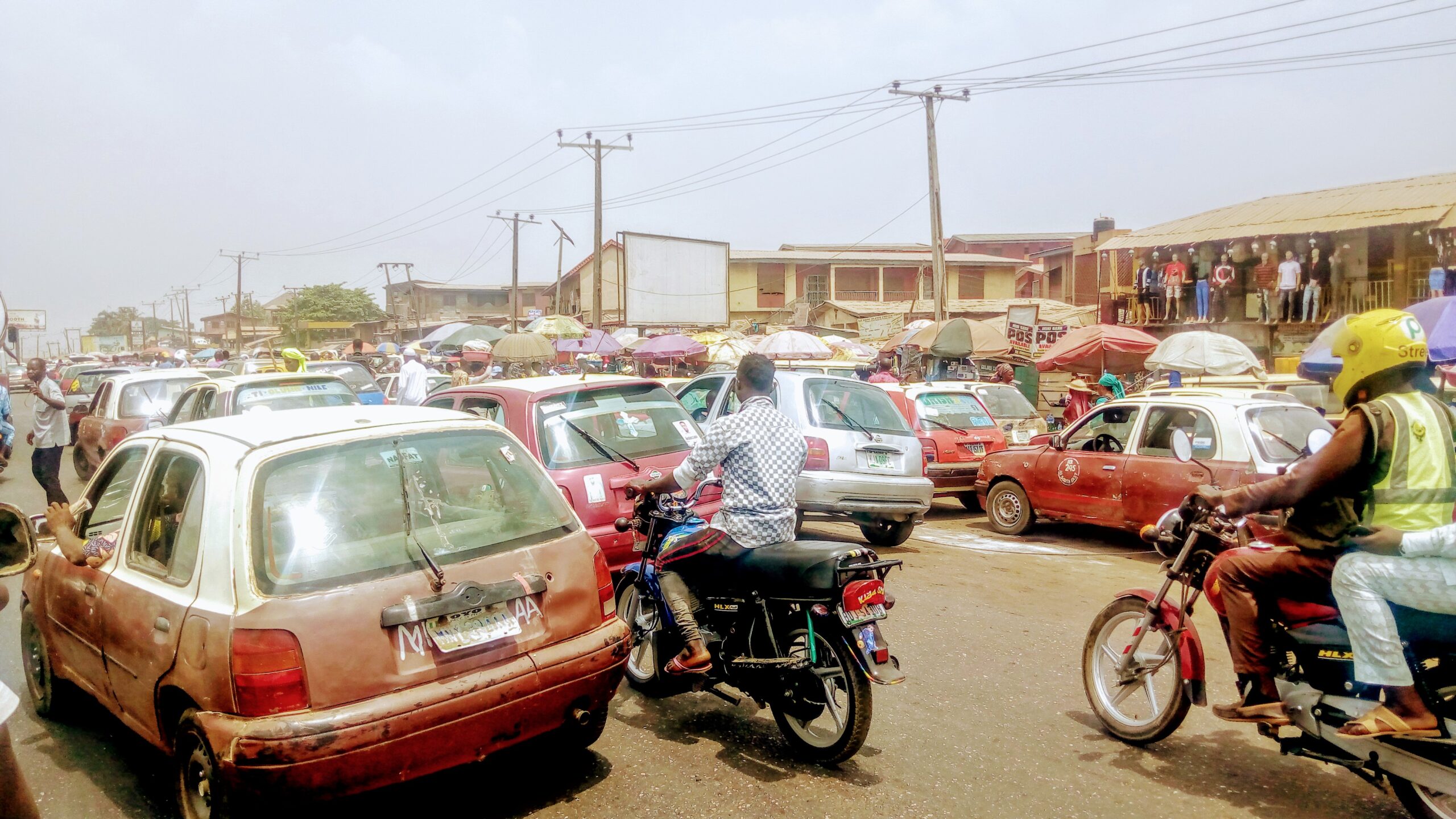
The Federal Highway Administration describes traffic breakdown as what happens when demand reaches or exceeds the capacity of a road section. Capacity is not only about the number of lanes. It is also shaped by merges, curves, grades, weather, driver attention, and the spacing between vehicles. Once traffic is near its limit, a tiny disturbance can push the stream from smooth movement into stop-and-go conditions.
That is why phantom jams feel so strange from inside a car. The driver experiences the road as a sequence of local events: brake lights ahead, a pause, then acceleration. From above, the pattern is clearer. A slowdown can move backward through traffic even while every individual car is moving forward.
How a Small Brake Tap Becomes a Moving Wave
Imagine a driver in a crowded lane who eases off the accelerator because the car ahead drifts slightly closer. The next driver sees brake lights and slows a little more sharply. The third driver reacts a fraction of a second later and leaves a larger gap to feel safe. By the time the disturbance has passed through twenty or thirty cars, someone farther back may need to brake hard or even stop.
The slowdown is not moving with the cars. It is moving through them. Each car enters the slow pocket, spends a short time inside it, and then leaves as traffic ahead speeds up again. To a driver sitting in the line, it feels like the jam is ahead. To a traffic camera, the jam can look as if it is traveling upstream, backward against the direction of travel.
This is why the word wave is so useful. A wave in water can move across a pond even though the water itself mostly moves up and down. In traffic, the wave is a pattern of changing speeds and distances. The cars are the medium through which the pattern travels.
Traffic shock waves are not just metaphors. The FHWA uses shock wave language to describe the boundary between two traffic states, such as free-flowing traffic and a queue. When a queue forms, the back of it can move upstream as more vehicles arrive than the congested section can release. When traffic recovers, another boundary moves through the line as vehicles accelerate and the queue dissolves.
The Circular Track Experiment That Made the Idea Visible
One of the clearest demonstrations came from a 2008 experiment led by Japanese researcher Yuki Sugiyama and colleagues. Drivers were asked to circle a single-lane track while trying to keep a steady speed and equal spacing. There was no intersection, no lane closure, and no crash. The setup was deliberately simple, almost too simple to create a jam.
At first, the cars moved smoothly. Then tiny differences appeared. One driver slowed a little, another responded a little late, and the spacing began to bunch and stretch. Soon a stop-and-go wave formed and traveled around the circle. The experiment showed that a jam could arise from ordinary car-following behavior alone when traffic density was high enough.
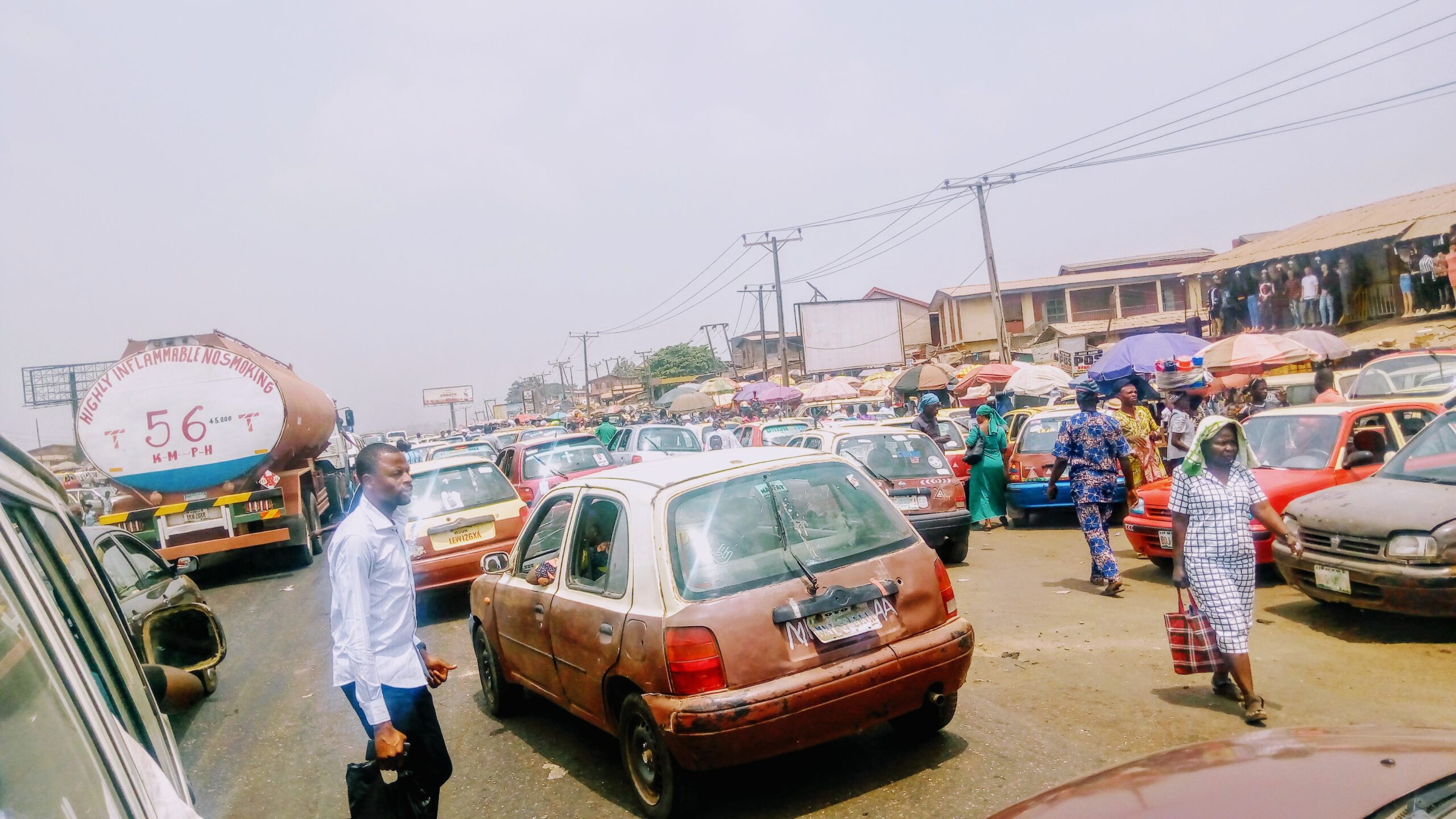
The result matters because it separates phantom jams from the familiar explanations drivers usually look for. Real roads do have bottlenecks, ramps, crashes, work zones, curves, and weather problems. Those can trigger or worsen congestion. But the circular-track experiment showed that visible obstacles are not always necessary. Under the right conditions, the system can create its own slowdown.
Researchers at MIT later popularized a related mathematical idea by comparing self-sustaining traffic waves to stable traveling structures. The math can get advanced quickly, but the everyday lesson is simple: once crowded traffic becomes unstable, a disturbance can keep moving even after the original cause has vanished. That is why the end of a phantom jam may reveal nothing more dramatic than open pavement.
Why Human Reactions Make the Wave Stronger
Human drivers are not machines that respond instantly and identically. They need time to notice a change, judge distance, move a foot, and decide how strongly to brake. They also differ in comfort level. Some follow closely, some leave space, some accelerate quickly when a gap opens, and some brake when they feel boxed in.
Those differences are normal, but crowded traffic magnifies them. A driver who brakes a little too firmly forces the next driver to make a bigger correction. A driver who accelerates quickly into a gap may close distance too soon and trigger another brake tap. The road begins to pulse: accelerate, brake, accelerate, brake. Even when everyone is trying to drive safely, the group behavior can become inefficient.
Lane changes can add another disturbance. When a car moves into a small gap, the driver behind may slow to rebuild following distance. That one adjustment can ripple backward. Merges work the same way when entering vehicles arrive in bursts or when drivers compete for space instead of spacing out smoothly.
This does not mean every driver is equally responsible for a jam. A crowded roadway is already near a tipping point. Individual choices matter, but they happen inside a larger system shaped by road design, demand, timing, transit options, and trip patterns. A single driver can trigger a wave, but the conditions that allow the wave to grow usually involve many vehicles packed into limited space.
What Actually Helps Smooth Traffic
The most useful driving habits are not dramatic. Leaving a steady following distance gives small disturbances room to fade before they grow. Looking farther ahead helps drivers respond gradually instead of reacting only to the brake lights directly in front of them. Keeping speed steadier, especially in heavy traffic, can be more helpful than racing into every open gap.
Cruise control and adaptive cruise systems can sometimes smooth speed changes, though they are not magic. The key is gentle adjustment. If a vehicle holds spacing by making frequent sharp corrections, it can still contribute to the pulse. If it reacts smoothly and early, it can help dampen the wave.
Transportation systems can also reduce phantom jams by managing demand and flow. Ramp meters spread entering vehicles more evenly. Variable speed limits can slow traffic before it reaches a breakdown point, which may feel counterintuitive but can keep the whole stream moving more consistently. Better incident management matters too, because a real bottleneck can leave waves behind even after the obstacle is cleared.
The biggest lesson is that traffic is collective. A highway is not only a road surface; it is a moving system of decisions, spacing, attention, and timing. Phantom jams begin when that system becomes too tightly packed to absorb ordinary human variation. The next time traffic slows for no visible reason, the missing cause may not be missing at all. It may be passing backward through the line as a wave, one brake light at a time.