 Akshay Dinesh
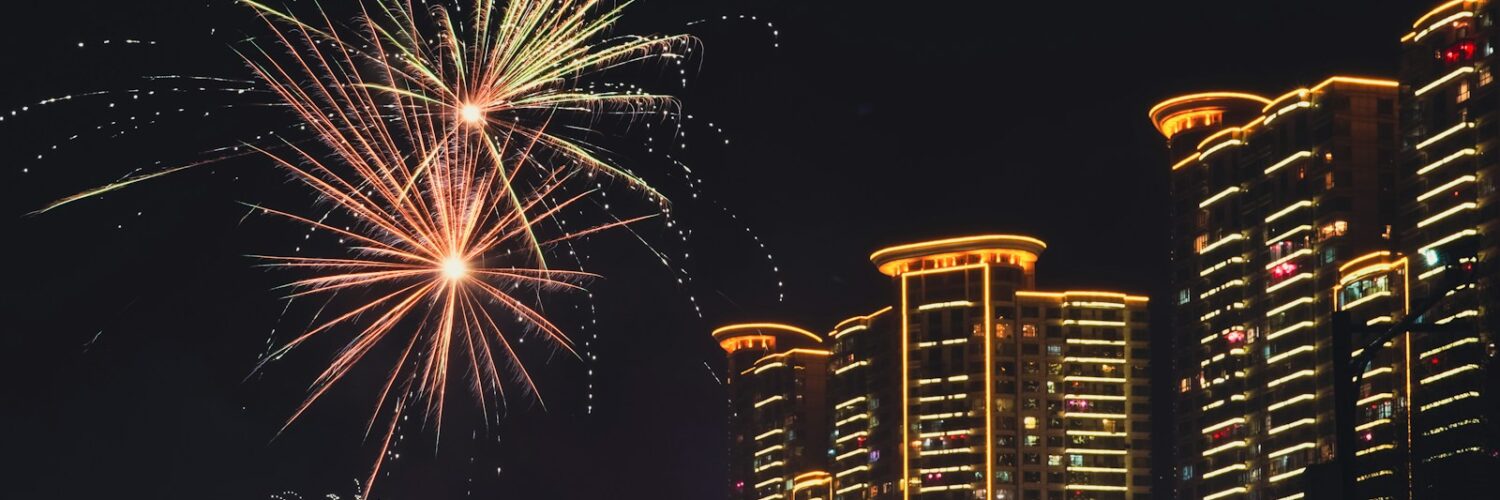
Fireworks look brief. A burst blooms, fades, and disappears in a few seconds. The smoke they leave behind can last much longer, especially on a warm, still night when the air near the ground is not moving much. After a large celebration, air quality monitors may show a sharp rise in fine particle pollution, sometimes well after the brightest part of the show is over.
That does not mean every backyard sparkler changes a whole region’s air. Scale matters. Weather matters. Distance from the display matters. But big fireworks nights, especially around July Fourth in the United States, create a useful real-world example of how combustion, particles, wind, and nighttime atmosphere all work together. The same sky that makes fireworks easy to see can also make their smoke slow to clear.
What fireworks add to the air
A firework is a small chemical package designed to burn quickly and visibly. Black powder launches the shell and helps it burst. Metal salts and other compounds create color. Binders, fuses, and paper casings hold the device together until the reaction happens. When those materials burn, they do not vanish. They turn into gases, tiny solid particles, and bits of residue that spread through the surrounding air.
The pollutant that usually matters most for short-term air quality is particulate matter, often shortened to PM. Larger particles can irritate the eyes, nose, and throat, but fine particles are especially important because they are small enough to move deeper into the lungs. PM2.5 refers to particles with diameters of 2.5 micrometers or smaller. For comparison, a human hair is dozens of times wider than one of these particles.
State air agencies such as Michigan’s Department of Environment, Great Lakes, and Energy describe fireworks as a source of particulate matter, ultrafine particles, and volatile organic compounds. The exact mix depends on the type of firework, but the pattern is easy to understand: a fast, bright combustion event produces a concentrated puff of smoke. During a large public display, thousands of those puffs can merge into a visible haze.
Why the spike often happens after dark
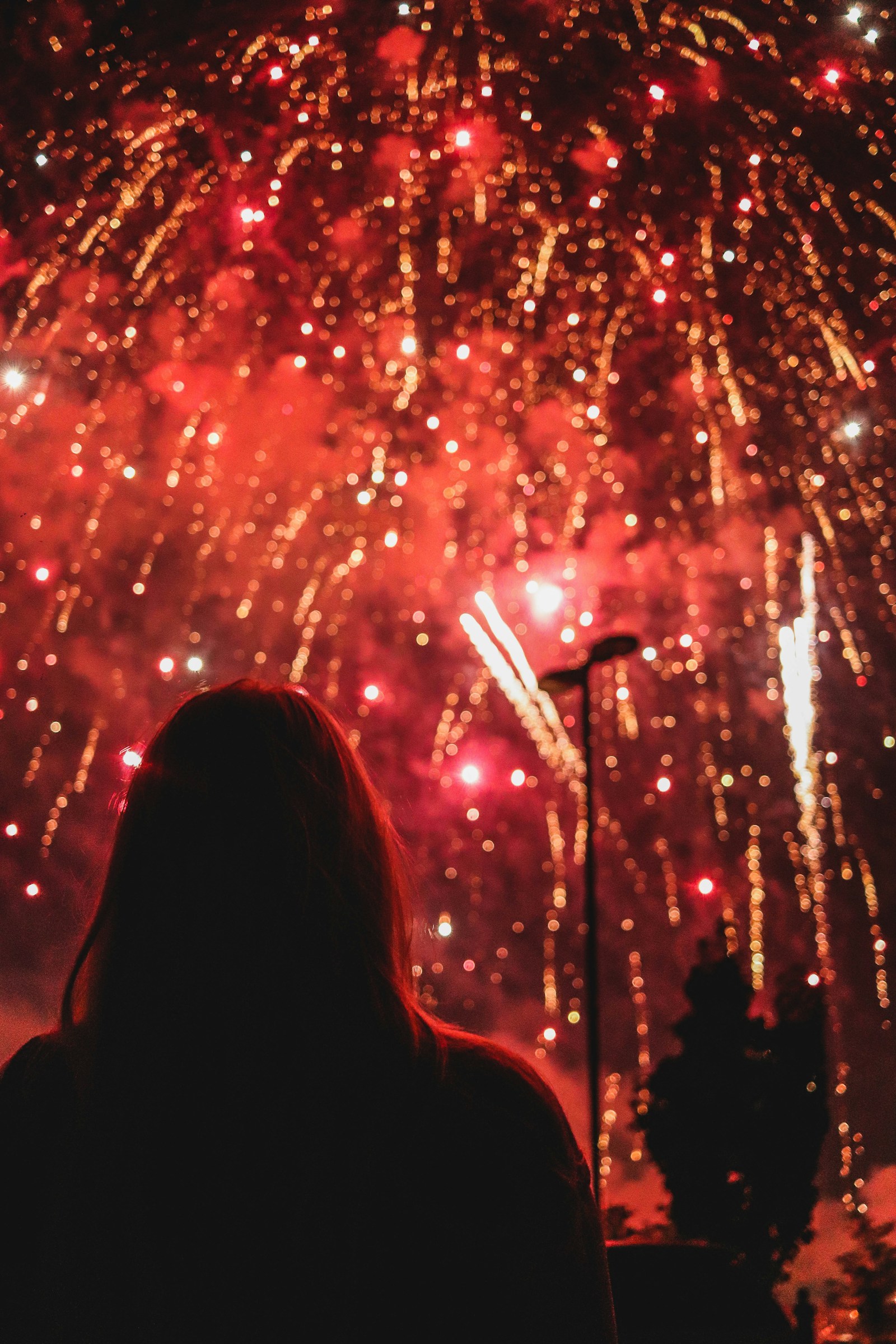
Fireworks are usually launched at night, so the timing of the pollution spike is not surprising. What is more interesting is how sharply the particle levels can rise. A national study published in Atmospheric Environment used PM2.5 observations from 315 monitoring sites across the United States and found a clear Independence Day signal. On average, fine particle concentrations for the 24-hour period beginning at 8 p.m. on July Fourth were 42 percent higher than on nearby comparison days.
The same study found that the largest average increases occurred around 9 to 10 p.m., close to the time when many displays are underway. At some sites, the increases were much larger than the national average because the monitors were close to fireworks or because local conditions favored trapped smoke. The results are a reminder that air pollution is not spread evenly like food coloring in a glass of water. It moves in patches, plumes, and layers.
Distance matters because fresh fireworks smoke is concentrated near where it is released. A monitor a few blocks from a show may see a very different pattern from one across town. Wind direction also matters. People downwind of a display may experience more smoke than people watching from the opposite side, even if both groups are the same distance away.
How calm weather traps smoke near the ground
On many summer evenings, winds weaken after sunset. The ground cools faster than the air above it, and the lower atmosphere can become more stable. In a stable layer, air near the surface has a harder time mixing upward. Smoke that might disperse quickly on a breezy afternoon can linger near streets, parks, and neighborhoods at night.
Temperature inversions make this effect stronger. Normally, air tends to cool with height, which helps rising warm air mix pollutants through a deeper layer. During an inversion, a warmer layer sits above cooler air near the ground, acting almost like a lid. Smoke can spread sideways beneath that lid instead of rising and diluting quickly.
A Minneapolis study of a July Fourth fireworks display measured gases, PM2.5, particle number, and weather conditions before, during, and after the event. Particle measures rose strongly between 10 p.m. and midnight compared with the previous night, and the study also found a second peak the next morning. The researchers linked that later peak to low wind and a temperature inversion trapping pollution. In other words, the air quality story did not end when the last burst faded.
How fireworks show up on the AQI
The Air Quality Index, or AQI, turns measurements of pollutants such as ozone and particle pollution into a scale that is easier to read. AirNow, the public air quality system supported by the U.S. Environmental Protection Agency and partner agencies, groups AQI levels into familiar categories: Good, Moderate, Unhealthy for Sensitive Groups, Unhealthy, Very Unhealthy, and Hazardous.
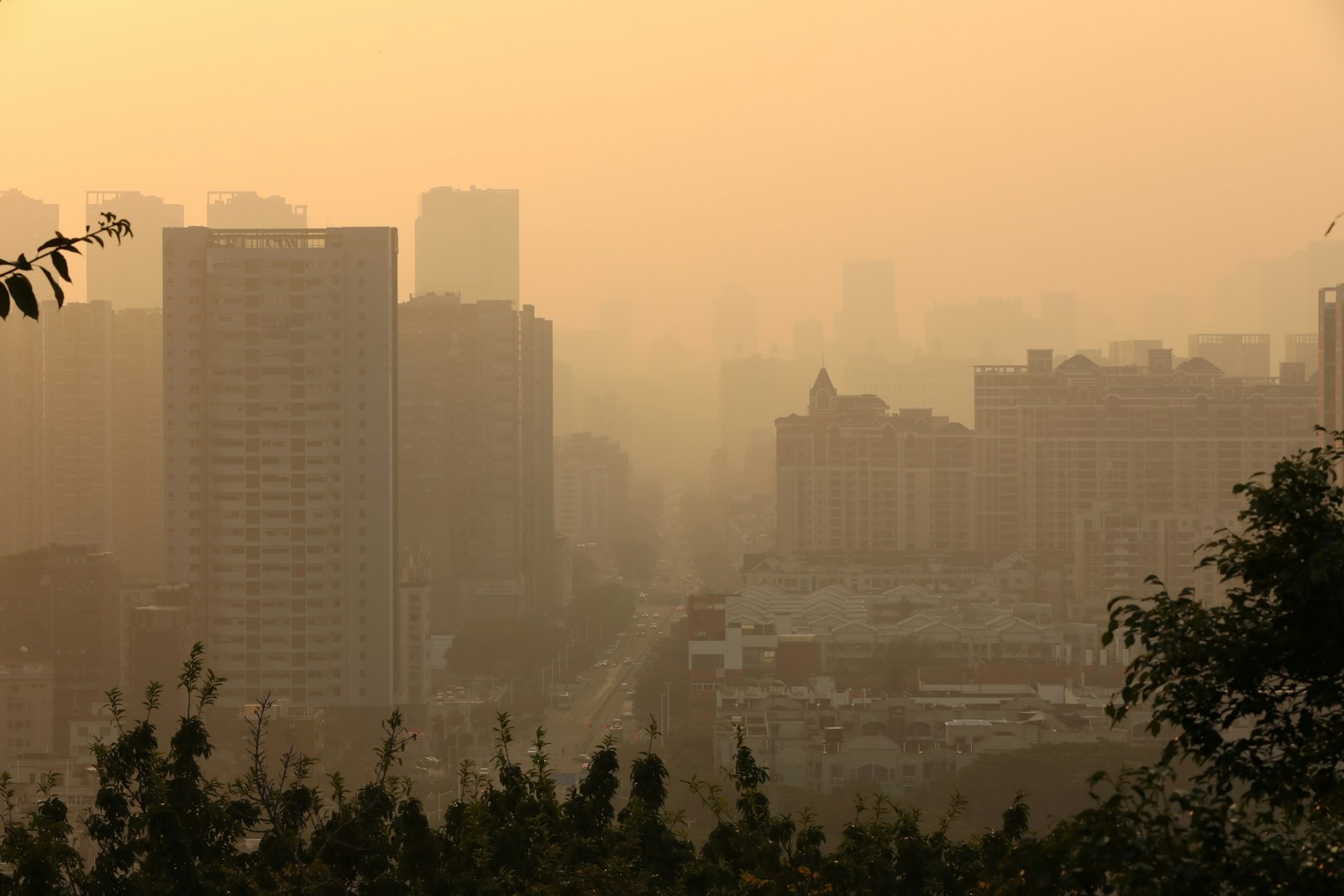
Fireworks smoke can push particle readings upward for a few hours, especially in places with many displays or stagnant weather. In some areas, the change may be visible as a jump from Good to Moderate. In other places, especially near intense displays or in basins and valleys where air gets trapped, the rise can be more noticeable. The key is that the AQI is local and time-sensitive. A broad regional forecast may not capture every neighborhood-scale smoke plume.
This is also why July Fifth can feel hazier than expected in the morning. If particles remain trapped overnight, visibility may look worse after sunrise even though the fireworks ended hours earlier. As the sun warms the ground, daytime mixing usually improves, and wind can carry the remaining smoke away. The national Independence Day study found average increases dropping back toward background levels by around noon on July Fifth, though local timing varies.
Why the effect is brief but still worth understanding
Fireworks are not a year-round pollution source in the same way traffic, industry, wildfires, or power generation can be. For most places, the fireworks signal is short-lived. That matters because a temporary spike is different from chronic exposure over months or years. Still, a brief spike can be noticeable, and it can matter more for people who are sensitive to particle pollution.
Fine particles can irritate airways and make breathing harder for some people, especially those with asthma, chronic lung disease, heart disease, or other health vulnerabilities. Children and older adults can also be more sensitive. The practical point is not panic. It is awareness. When smoke is visible, the air is calm, or local AQI readings are elevated, reducing heavy outdoor activity for a few hours can be a sensible choice.
There is also a broader science lesson here. Fireworks make invisible air processes visible. They show how combustion creates particles, how particles travel with wind, how nighttime stability can trap pollutants, and how measurements turn local air into data. A celebration becomes a small atmospheric experiment, with every smoke plume tracing the motion of the air.
What to notice during a fireworks night
The easiest clue is the smoke itself. If the smoke rises and drifts away quickly, the air is mixing and moving. If it hangs low, spreads along the ground, or blurs lights across the skyline, particles are probably lingering near the surface. A still, humid night can make the haze more obvious, while a light breeze can carry it downwind.
Local geography can shape the pattern too. Valleys, basins, dense downtown corridors, and waterfront areas with weak overnight winds may hold smoke longer than open, breezy places. A city can also have many small displays happening at once, so the combined smoke may be more widespread than a single plume from one public show.
Checking a local AQI map before and after a major celebration can make the pattern clearer. A sudden evening rise in PM2.5, followed by gradual improvement the next day, is a common fireworks signature. It is also a useful reminder that air quality is not only about what is released. It is about where the release happens, how much is released, and whether the atmosphere is ready to clear it away.
Fireworks are designed to be temporary, but their smoke gives a quick lesson in chemistry, weather, and public data. The particles are small, the timing is sharp, and the atmosphere decides how long the evidence stays close enough for people and monitors to notice.