
 Akshay Dinesh
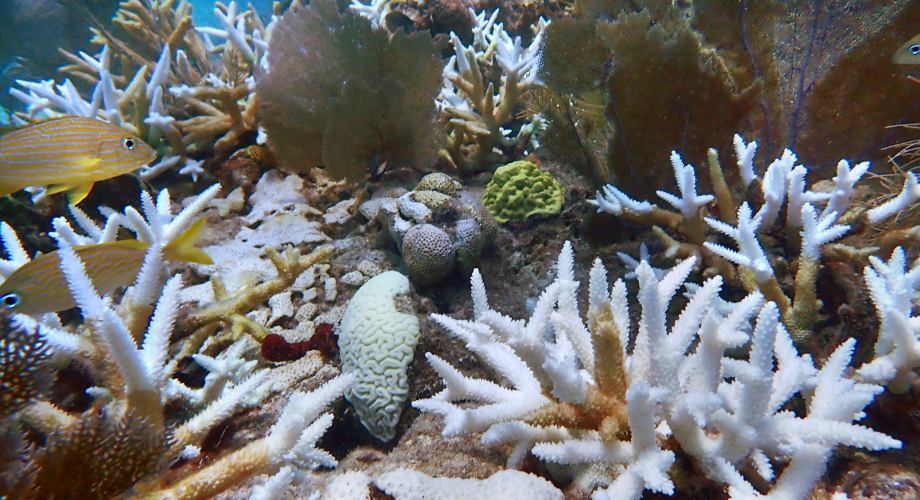
A healthy coral reef is full of color because it is full of life. Branching corals, rounded brain corals, sea fans, fish, algae, and tiny animals all share a crowded habitat built slowly over many years. When bleaching happens, that color can drain away with startling speed. A reef that once looked brown, green, gold, or pink may turn ghostly white, as if the living surface has been stripped from the seafloor.
Coral bleaching is not simply a change in appearance. It is a stress signal from one of the ocean’s most important ecosystems. The coral animal is still alive when bleaching begins, but it has lost a relationship that helps feed it, color it, and keep it healthy. If cooler, safer conditions return soon enough, some corals can recover. If the stress continues for too long, bleaching can lead to disease, slowed growth, or death.
The tiny partnership inside a coral
Corals may look like rocks or plants, but reef-building corals are animals. Each coral colony is made of many small animals called polyps. A polyp has a soft body, a mouth, and tentacles that can capture tiny food particles from the water. Many reef-building corals also produce a hard skeleton of calcium carbonate, which remains in place as the colony grows and helps form the structure of the reef.
The secret behind many coral reefs is a partnership between the coral animal and microscopic algae that live inside its tissues. These algae, often called zooxanthellae, use sunlight to make sugars through photosynthesis. Some of that food helps support the coral, while the coral gives the algae a protected home and access to compounds they need. The algae also give many corals their warm brown, green, yellow, or golden color.
This relationship works best in clear, shallow, sunlit tropical water. It is efficient but delicate. Corals often live close to the upper edge of the temperatures they can tolerate. A small rise in water temperature may not sound dramatic to someone standing on land, but for a coral colony already living near its limit, a few extra degrees can disrupt the chemistry inside its cells.
Why heat stress causes bleaching
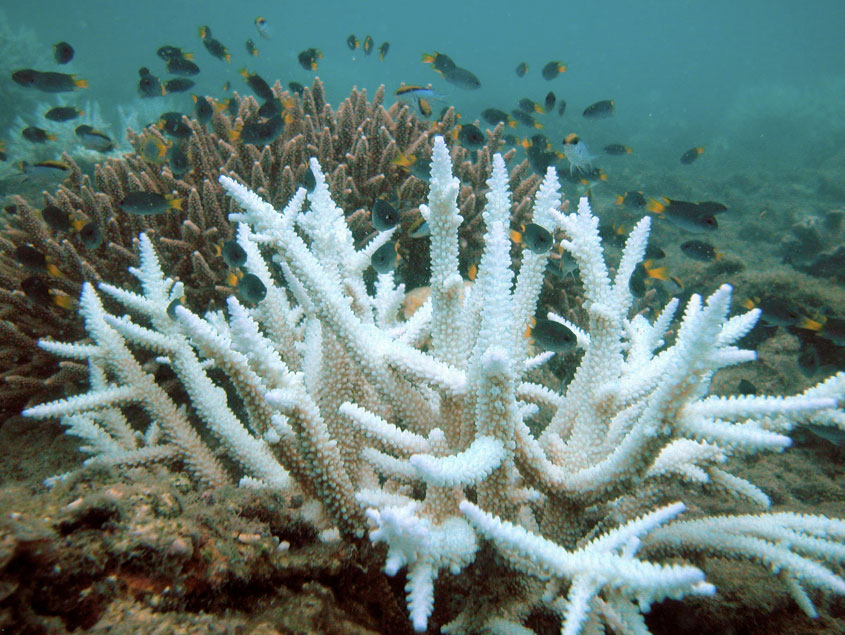
Bleaching usually begins when water stays unusually warm for too long. Heat stress can interfere with photosynthesis in the algae, causing the coral’s tissues to experience chemical stress. The coral responds by expelling many of the algae or by losing their pigments. Once the algae are gone or greatly reduced, the coral’s white skeleton shows through the mostly transparent animal tissue.
That is why bleaching looks so dramatic. The coral has not been painted white, and it has not turned into a bone or shell. The living tissue is still there, stretched over the hard skeleton, but the color-producing algae have been lost. A bleached coral may still catch some food with its tentacles, yet it has lost a major energy source. It is like a household suddenly losing a steady supply of groceries and trying to survive on occasional snacks.
Heat is the most common large-scale trigger, but corals can also bleach under other stresses. Very cold water, unusually bright sunlight, pollution, disease, freshwater flooding, or sediment can all make conditions harder for corals. Still, the global concern around bleaching has grown because marine heat waves are becoming more intense and more frequent. Warm water can spread across entire reef regions, turning a local stress into a regional or global event.
What recent global bleaching shows
The scale of recent bleaching has made the issue much harder to ignore. NOAA and the International Coral Reef Initiative confirmed the fourth global coral bleaching event in April 2024. NOAA’s Coral Reef Watch later reported that from January 2023 through September 2025, bleaching-level heat stress affected about 84.4% of the world’s coral reef area, with mass bleaching documented in at least 83 countries and territories. In June 2026, NOAA scientists said that the event likely ended in mid-2025, but they also noted that reefs are now bleaching so often that defining the start and end of global events is becoming more difficult.
Those numbers matter because reefs are not evenly scattered across the ocean. They cluster in warm, shallow regions such as the Caribbean, the Great Barrier Reef, the Indian Ocean, the Red Sea, and island chains across the Pacific. When heat stress reaches many reef regions at once, scientists see bleaching not as an isolated accident but as a sign of ocean-wide pressure.
Florida’s Coral Reef offers a sharp example. During the extreme marine heat of summer 2023, researchers documented severe bleaching in the Florida Keys. The Florida Fish and Wildlife Conservation Commission described it as the worst bleaching event ever recorded for Florida’s Coral Reef, with unusually hot water arriving earlier than the usual peak heating season and lingering for months. At Cheeca Rocks, a long-studied reef site, NOAA scientists found widespread bleaching after ocean temperatures stayed dangerously high.
Bleaching is a warning, not a final verdict
A bleached coral is in trouble, but bleaching does not always mean immediate death. If temperatures fall and water conditions improve, some corals can regain algae and recover color over weeks or months. Recovery depends on the coral species, the length and intensity of the heat stress, the condition of the reef before bleaching, and whether other pressures are present at the same time.
Some coral species are more sensitive than others. Fast-growing branching corals can create important habitat for fish, but many are vulnerable to heat, disease, and storm damage. Massive corals, such as some brain corals and star corals, may be more resistant in certain conditions, though they are not immune. Even within a species, some colonies survive heat better than nearby colonies. That variation is one reason scientists study reefs that resist bleaching or recover unusually well.
Repeated bleaching is especially dangerous because recovery takes time. A reef may survive one hot season and regain some color, then face another marine heat wave before it has rebuilt energy reserves or produced enough new coral growth. Disease can spread more easily through stressed corals. Algae can take over open space when corals die, making it harder for young corals to settle and grow. The damage can shift a reef from a complex living structure into a flatter, less diverse seafloor.
Why reef color matters beyond the reef
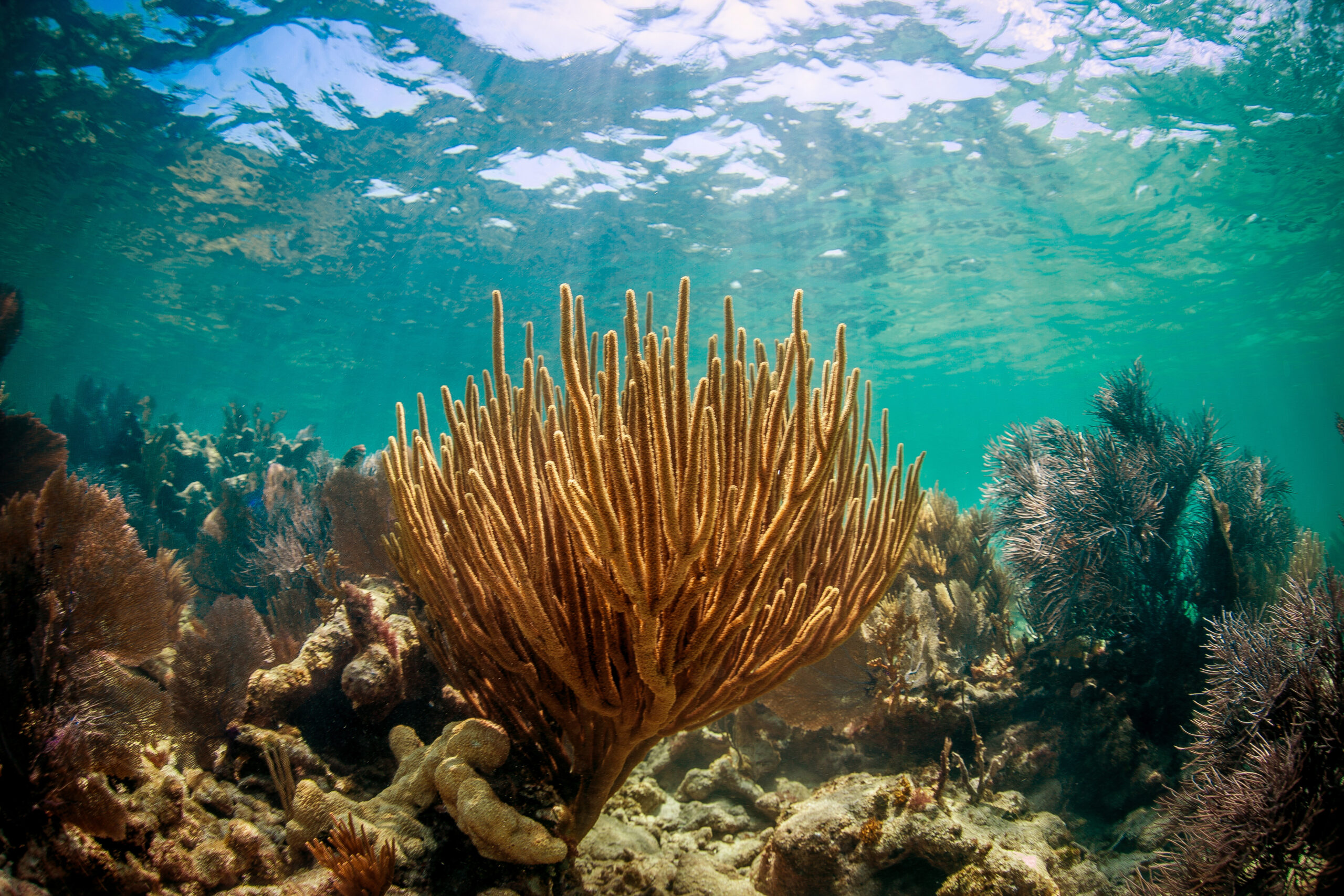
Coral reefs cover a small fraction of the ocean floor, but their importance is much larger than their area. They create three-dimensional habitat in places where the seafloor might otherwise be relatively open. Fish hide among coral branches, young animals grow in protected spaces, and predators hunt along the reef edge. A healthy reef is more like a city than a single organism, with many species using the same structure in different ways.
People rely on reefs too. Reefs support fisheries, tourism, and coastal culture in many places. They also help reduce wave energy before it reaches shore, which can lower erosion and storm damage in some coastal communities. When reefs weaken, the loss is not only ecological. It can affect food, jobs, local traditions, and the natural barriers that help protect beaches and harbors.
Bleaching also gives scientists a visible signal of ocean heat. Many climate changes are hard to see from the surface, but a white reef is a clear sign that the underwater environment has crossed a biological threshold. That does not mean every reef responds in exactly the same way. It does mean coral color can reveal stress that might otherwise remain hidden beneath the water.
How scientists track bleaching risk
Modern bleaching monitoring combines satellite data, temperature records, field observations, and reef surveys. NOAA Coral Reef Watch uses satellite measurements of sea surface temperature to estimate heat stress across reef regions. One key idea is that both the temperature and the length of exposure matter. A brief hot spell may be less damaging than weeks of unusually warm water pressing on the same reef.
Field observations remain essential because satellites cannot see every detail of reef health. Divers, researchers, and local monitoring teams report what they see underwater: which species bleached, how severe the bleaching is, whether corals are recovering, and whether mortality follows. Those observations help scientists connect broad heat maps with real biological outcomes.
Reef protection also has local and global parts. Local actions can reduce pollution, sediment runoff, careless anchoring, overfishing, and physical damage from boats or coastal construction. These steps cannot stop a marine heat wave by themselves, but they can leave corals in better condition before heat arrives. Broader climate action matters because ocean warming raises the baseline temperature from which future heat waves begin.
The clearest way to understand coral bleaching is to see it as a broken partnership. Corals and algae can build reefs together when water, light, and chemistry stay within a livable range. When heat pushes that relationship past its limit, the reef turns white and begins running out of time. The color may return if conditions improve, but each bleaching event is a warning that the margin for recovery is getting thinner.





Add comment