 Akshay Dinesh
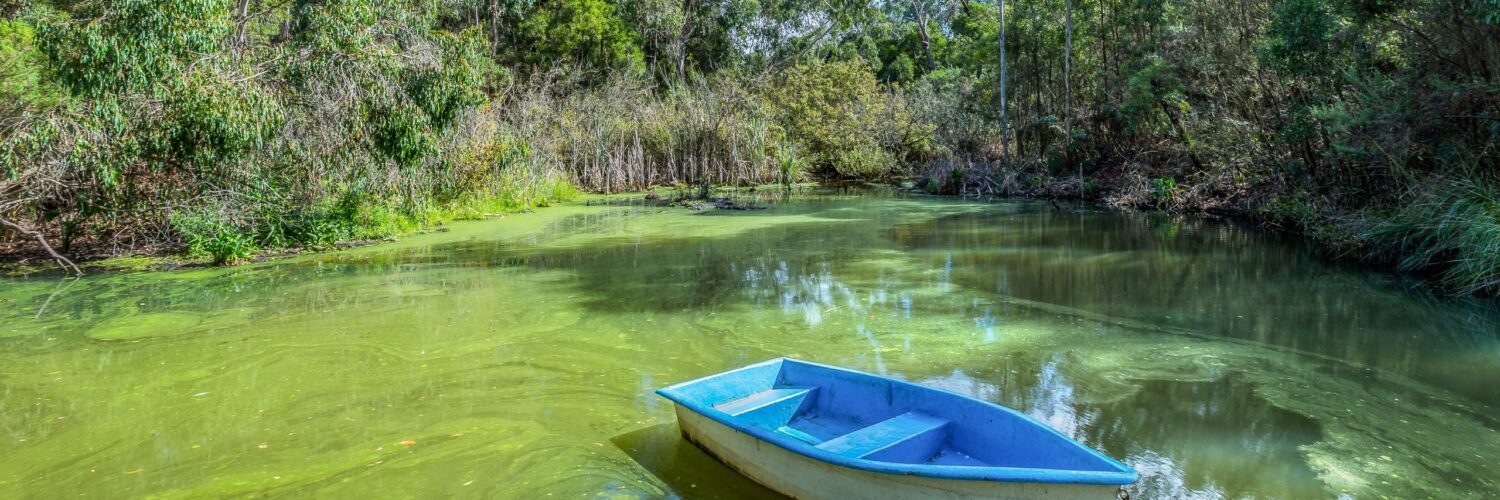
A lake can look peaceful from the shore and still be going through a major biological change. In warm months, some ponds, reservoirs, and lakes develop thick green streaks, surface scum, or paint-like patches that seem to appear almost overnight. People often call this blue-green algae, but the organisms behind many freshwater blooms are usually cyanobacteria, a group of photosynthetic bacteria that can multiply quickly when conditions favor them.
Not every green patch in water is dangerous. Some blooms are mostly a nuisance, while others can produce toxins or lower oxygen levels enough to harm fish, pets, wildlife, and people. That uncertainty is part of what makes harmful algal blooms worth understanding. A bloom is not just a messy-looking layer on the water. It is a sign that sunlight, heat, nutrients, water movement, and living organisms have lined up in a way that can change the whole lake ecosystem.
What Blue-Green Algae Really Is
Blue-green algae is a common nickname, but it can be misleading. Cyanobacteria are not true algae in the same way that green algae are. They are bacteria that use sunlight to make energy, which makes them behave a lot like algae in water. They are ancient, adaptable organisms, and many species are a normal part of freshwater ecosystems.
The problem begins when cyanobacteria grow too densely. A bloom can turn water bright green, blue-green, brownish, or even reddish depending on the organisms and pigments involved. The CDC describes harmful algal blooms as rapid growths of algae or cyanobacteria that can harm people, animals, or the environment. In fresh water, cyanobacteria are the most common cause of blooms that raise health concerns.
Some cyanobacteria can produce cyanotoxins, including toxins that may affect the liver, nervous system, or skin. Others cause trouble even without high toxin levels because thick mats block sunlight, decay, and use up dissolved oxygen. Fish and other aquatic animals need that oxygen to survive. When a bloom collapses and decomposes, the lake can lose oxygen quickly, sometimes leading to fish kills or foul-smelling water along the shore.
Why Blooms Often Spread in Summer
Warm water gives many bloom-forming cyanobacteria an advantage. The EPA notes that cyanobacteria that form harmful blooms tend to thrive in warm, slow-moving water, and warmer conditions can increase the size and duration of blooms. That is why summer and early fall are common bloom seasons in many places, though blooms can happen outside those months when conditions are right.
Heat is only one part of the story. Blooms also need nutrients, especially nitrogen and phosphorus. These nutrients can enter lakes through fertilizer runoff, eroded soil, leaking septic systems, wastewater, storm drains, and animal waste. A heavy rain after dry weather can wash a pulse of nutrients into a lake. If sunny, calm weather follows, cyanobacteria may get exactly what they need: food, light, warmth, and stable water.
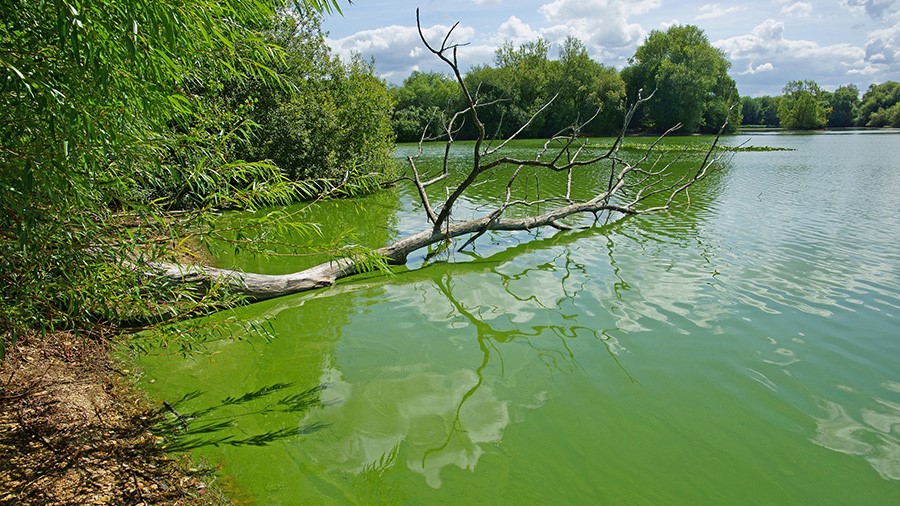
Water movement matters too. A fast-flowing river or wind-mixed lake is harder for surface scums to build up in one place. Shallow coves, still ponds, and sheltered shorelines are different. Cyanobacteria can collect where wind pushes them, sometimes making one beach look unsafe while another part of the same lake appears clearer. That patchiness can fool people into thinking a bloom is small or harmless, even when conditions across the lake are changing.
How Nutrients Turn a Lake Out of Balance
A healthy lake is not empty water. It contains algae, bacteria, plants, insects, fish, and countless microscopic organisms. Nutrients support that life, but too many nutrients can push the system out of balance. Phosphorus is especially important in many freshwater lakes because it often limits how much algae and cyanobacteria can grow. When extra phosphorus enters the water, it can act like an accidental fertilizer.
This process is called eutrophication. In plain terms, the lake becomes too well fed. More nutrients can mean more plant and algae growth, cloudier water, and less light reaching underwater plants. When the extra growth dies, decomposers break it down and use oxygen in the process. The result can be low-oxygen water near the bottom or, in severe cases, low oxygen across large parts of the lake.
Large lakes can show this pattern on a dramatic scale. NOAA monitors cyanobacteria blooms in parts of the Great Lakes, especially western Lake Erie, where warm shallow water and nutrient inputs can support recurring summer blooms. Smaller lakes and ponds can face the same basic pressures, even if they never make national news. A neighborhood pond beside lawns, roads, and storm drains may be just as vulnerable to nutrient loading as a famous lake, only on a smaller stage.
Why Some Blooms Become Harmful
A bloom becomes harmful when it creates toxins, depletes oxygen, releases irritating gases, disrupts food webs, or makes water unsafe for recreation or drinking. The difficult part is that appearance alone cannot prove whether toxins are present. A bright green scum is a warning sign, not a laboratory result. Testing is the only reliable way to know whether specific toxins are in the water and at what concentration.
For people, exposure can happen through swallowing contaminated water, touching scummy water, or breathing tiny droplets near affected water. Health effects vary because different organisms produce different toxins and because exposure levels differ. Public health agencies generally urge people to avoid water that is discolored, scummy, foamy, paint-like, or foul-smelling, and to follow local advisories for swimming, fishing, boating, and drinking water.
Pets deserve special caution. Dogs may drink from lakes, lick wet fur, or chew on algal mats along the shore. The CDC warns that animals can become very sick quickly after contact with harmful algae or cyanobacteria. A person may step back from strange-looking water; a dog may rush straight into it. That difference makes pet exposure one of the clearest real-world risks around bloom season.
How Scientists and Communities Track Blooms
Monitoring harmful algal blooms takes more than looking at a lake from a dock. Scientists use water samples, toxin tests, satellite imagery, sensors, and computer models to understand where blooms are forming and where they may move. NOAA has developed bloom forecasts for areas such as Lake Erie, where satellite observations and field measurements help track cyanobacteria across large stretches of water.
Local agencies often make the most practical decisions for residents. They may post swimming advisories, close beaches, test drinking-water intakes, or warn people not to let pets enter affected water. Those warnings can change as wind shifts the bloom or new test results come in. A lake may be open one week and under advisory the next, especially during hot, calm periods after storms.
Prevention is slower work, but it matters most over the long run. Reducing nutrient runoff can involve better fertilizer timing, streamside vegetation, wetland protection, stormwater management, improved septic maintenance, and farm practices that keep soil and nutrients out of waterways. No single fix solves every bloom problem, but fewer nutrients entering the water usually gives a lake a better chance to stay balanced.
Reading the Water Before You Go In
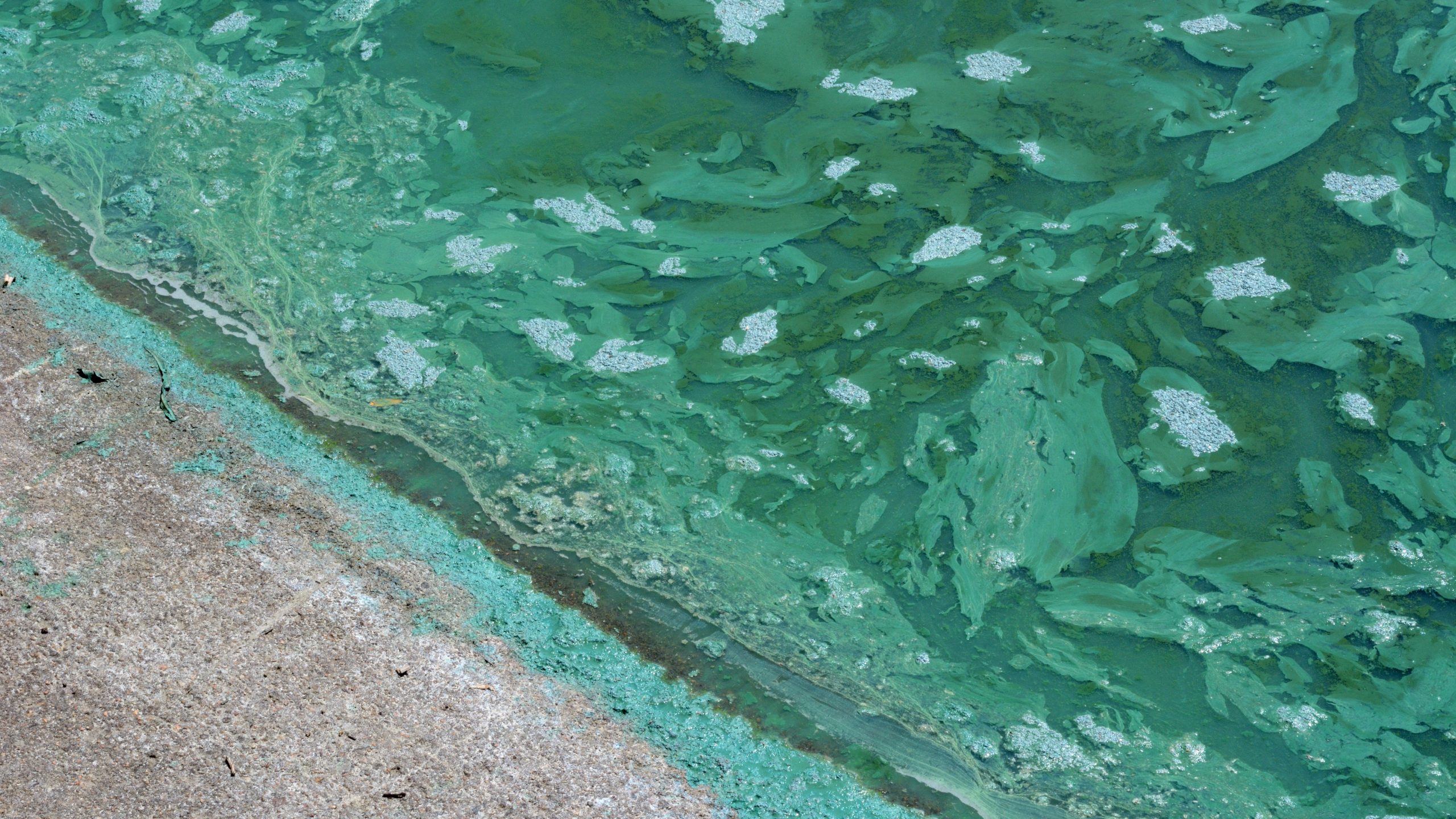
The safest habit is simple: look before entering the water, and take strange-looking water seriously. A harmful bloom may look like pea soup, spilled paint, floating mats, clumps, foam, or streaks near the shore. It may smell like rotting plants or rotten eggs as it decays. Clear water does not guarantee safety, but visible scum or strong odor is a strong reason to stay out.
Checking local advisories is also important because some blooms are monitored before they are obvious from shore. Public health, parks, environmental, and water utility agencies may post updates online or near boat launches and beaches. When an advisory is in place, it is not just a suggestion about appearance. It usually reflects testing, reports, or conditions that officials believe could create risk.
Blue-green algae blooms are a reminder that lakes respond to what happens around them. A summer bloom may begin with sunlight and warm water, but it is often strengthened by nutrients from lawns, streets, farms, and wastewater systems. Understanding that chain makes the green surface easier to read. The bloom is not just on the lake; it is connected to the whole watershed feeding it.