 Akshay Dinesh
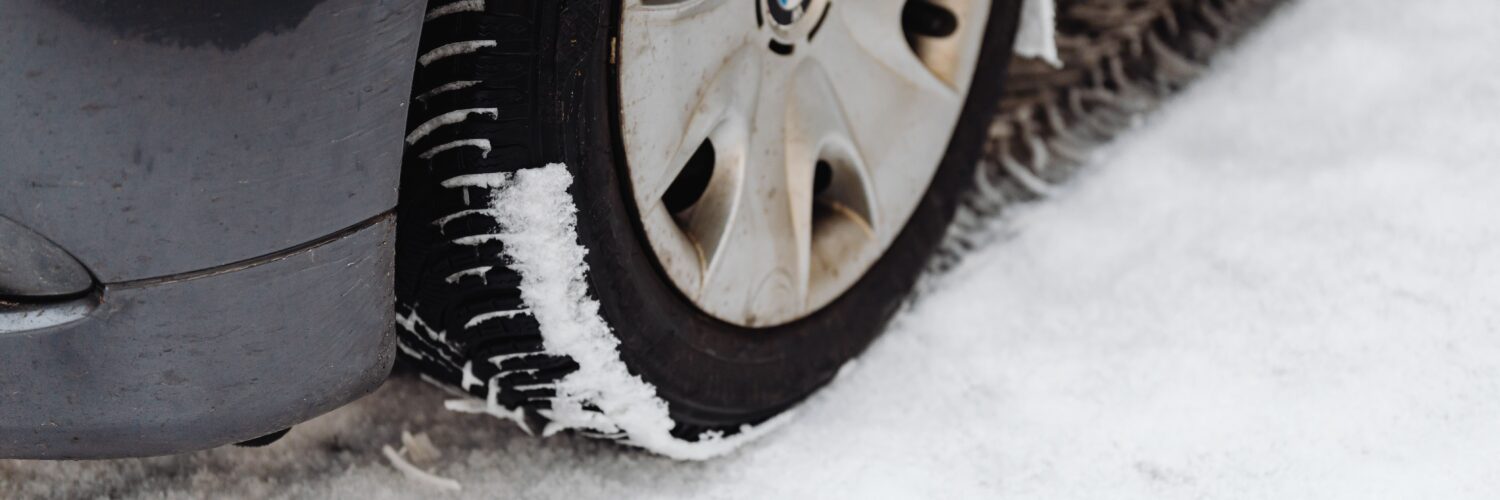
A chilly morning can make a dashboard tire-pressure light appear even when no nail has entered the tread. The air has not necessarily escaped overnight. As the temperature falls, the air already inside each tire exerts less pressure, so the gauge reads lower than it did on a warm afternoon.
That change is ordinary physics, but it still deserves attention. A seasonal pressure drop can leave a tire below the vehicle manufacturer’s recommendation, while a genuine leak can hide behind the assumption that cold weather is always responsible. The useful question is not whether cold air lowers tire pressure. It is how much change makes sense, how to measure it correctly, and what to do with the reading.
Colder air pushes less forcefully
Air pressure comes from moving molecules striking the inner surface of a tire. Warmer molecules move faster and collide with that surface more often and more forcefully. When the air cools, the molecules have less kinetic energy. Their collisions become gentler, and the measured pressure falls.
The relationship is captured by the ideal gas law, PV = nRT. In a sealed tire, the amount of air, represented by n, stays nearly constant. The tire’s volume, V, changes only modestly under normal conditions. That leaves pressure, P, moving roughly in step with absolute temperature, T. NASA’s Glenn Research Center uses the same equation to connect pressure, volume, temperature, and the amount of gas.
Absolute temperature matters here. Physics calculations use kelvins, whose scale begins at absolute zero, rather than treating 0 degrees Fahrenheit or Celsius as the absence of molecular motion. A drop from 70 degrees Fahrenheit to 40 degrees Fahrenheit is noticeable, but it is not a 43 percent loss of absolute temperature. It is a change from about 294 kelvins to 278 kelvins, or roughly 5.7 percent.
Where the one-psi rule comes from
Drivers often hear that tire pressure changes by about 1 pound per square inch for every 10-degree-Fahrenheit change in temperature. That is a useful rule of thumb for many passenger-car tires, not a universal law. The starting pressure, the tire’s flexibility, the vehicle’s load, direct sunlight, and the accuracy of the gauge all affect what appears on the dial.
Consider a tire that reads 32 psi at 70 degrees Fahrenheit. A gauge reports pressure relative to the atmosphere, so the calculation must first add ordinary atmospheric pressure, about 14.7 psi. The tire’s absolute pressure is therefore about 46.7 psi. Cooling the trapped air from 294 kelvins to 278 kelvins gives an estimated absolute pressure near 44.1 psi. Subtract atmospheric pressure again, and the gauge reading becomes about 29.4 psi. A 30-degree weather change has produced a drop of roughly 2.6 psi, close to the familiar rule.
The tire has not suddenly lost that much air. If the same sealed tire warms back to its earlier temperature, its pressure should rise toward the earlier reading. Real tires slowly lose air through rubber, valve components, and small sealing imperfections, however, so temperature does not explain every decline. One tire dropping much faster than the other three is a stronger clue that a puncture, damaged valve, or rim-seal problem needs inspection.
A warm tire gives a different answer
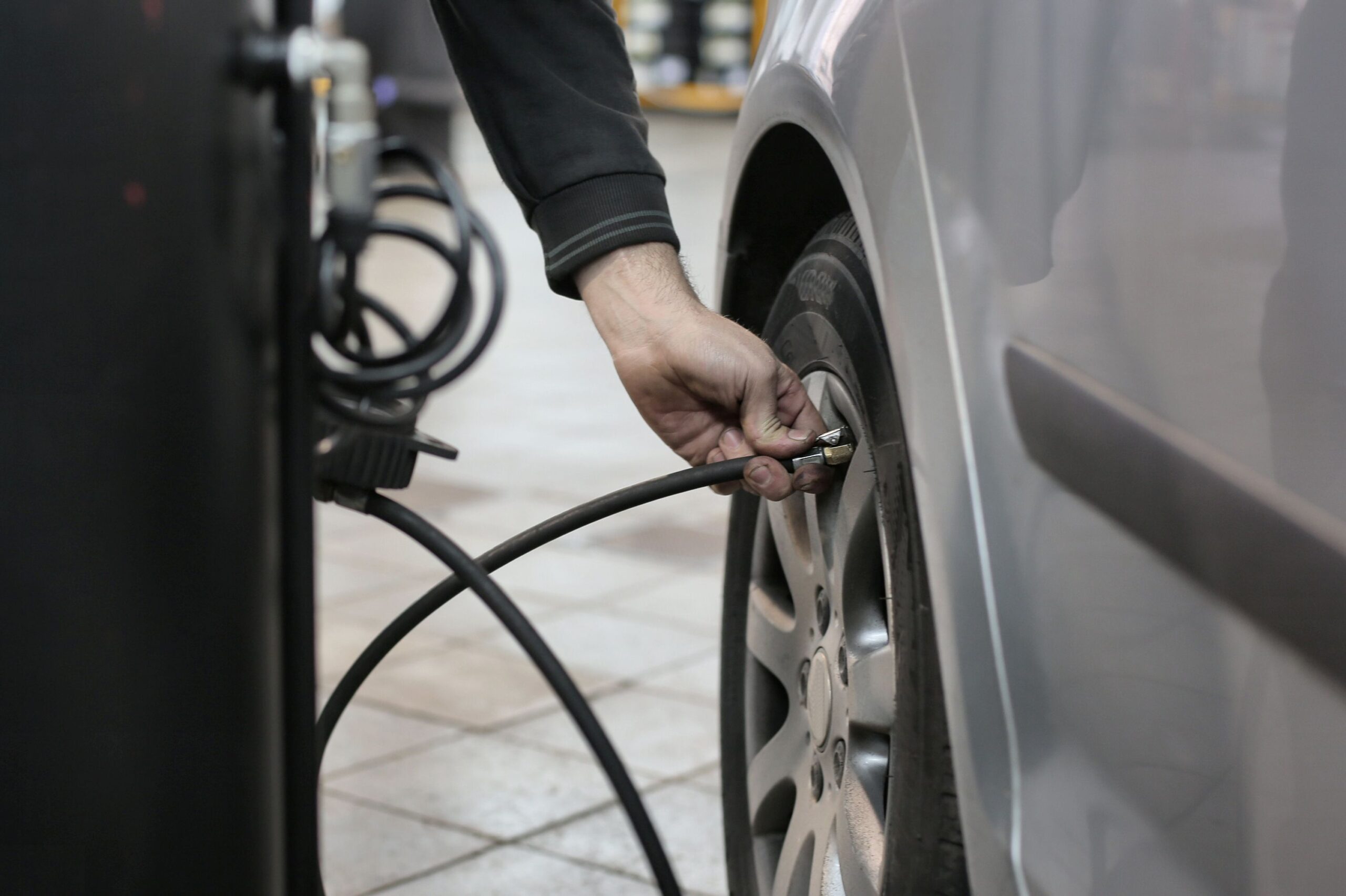
Driving bends the tire’s sidewalls and tread over and over. That flexing generates heat, while the road surface and brakes can add more. The warmer air inside expands in the sense that its molecules strike the tire more energetically, and the pressure reading rises. This is why a measurement after a highway trip should not be compared directly with a cold-pressure recommendation.
The National Highway Traffic Safety Administration defines a cold tire, for routine pressure checks, as one on a vehicle that has not been driven for at least three hours. Its TireWise guidance recommends checking all tires, including the spare when applicable, at least monthly. Early morning is often convenient, but the important condition is a rested vehicle rather than a particular hour.
Do not release air simply because a hot tire reads above the door-label value. That value is specified for a cold tire, and bleeding a warm tire down to it can leave the tire underinflated after it cools. If pressure must be added while traveling, use the vehicle recommendation as the immediate safety reference and check again when the tires have fully cooled.
Why the warning light may wait
A tire pressure monitoring system, or TPMS, is a warning system rather than a precision maintenance schedule. Federal rules require TPMS on new passenger cars, light trucks, and vans from model year 2008 onward. Some systems measure pressure with sensors in the wheels, while indirect systems infer a difference from wheel speed and other vehicle data.
NHTSA notes that the warning appears when a tire is significantly underinflated. The federal performance standard is built around detecting pressure at least 25 percent below the vehicle’s recommended cold inflation pressure, subject to the standard’s limits. On a vehicle calling for 32 psi, 25 percent is 8 psi. A tire could therefore be meaningfully low before the symbol appears, and the exact behavior varies by vehicle and system.
Cold weather can push several tires across that threshold at nearly the same time. The light may disappear after driving warms them, but that does not prove their cold pressure is correct. A handheld gauge answers the maintenance question more directly. If the symbol flashes before remaining on, consult the owner’s manual because that pattern can indicate a system fault rather than ordinary low pressure.
Use the placard, then watch the pattern
The correct target is the cold inflation pressure on the Tire and Loading Information label, usually found on the driver’s doorjamb, or in the owner’s manual. The pressure molded into the tire sidewall is generally a maximum associated with the tire’s load rating, not the everyday target chosen for that vehicle. Front and rear recommendations can differ, so read the label rather than making all four tires match by habit.
A sound cold-weather routine is simple:
- Measure the tires after the vehicle has been parked for at least three hours.
- Use the doorjamb placard value and check front, rear, and spare-tire instructions separately.
- Add air to a tire that is below its recommended cold pressure, then replace the valve cap.
- Repeat the check monthly and after a major temperature swing.
- Arrange an inspection if one tire repeatedly loses more pressure than the others.
Correct inflation supports the tire’s intended shape and contact with the road. Underinflation increases sidewall flex and heat buildup, can worsen handling, and raises rolling resistance. The U.S. Department of Energy estimates that average fuel economy can fall by about 0.2 percent for every 1 psi drop across all four tires. The number is small for a single pound, but chronic underinflation wastes energy and tire life mile after mile.
Cold weather does not create a mysterious empty space inside a tire. It slows the air molecules, lowers their pressure, and exposes any inflation that was already marginal. Measuring when the tires are truly cold, following the vehicle placard, and watching whether all four tires change together turns a seasonal warning light into a straightforward physics problem.