
 Akshay Dinesh
Put your head underwater at a pool or beach, and the world changes quickly. Voices from above the surface become blurred, splashes feel sharper, and a tap on a ladder can seem to come from everywhere at once. The strange part is that water is not bad for sound. In many ways, it is a better sound carrier than air.
The difference comes from the way sound travels as a pressure wave. Air, water, wood, metal, and bone all let particles push and pull on nearby particles, passing vibration forward. But each material has its own density, stiffness, and energy loss. Those properties decide how fast sound moves, how far it can travel, and how clearly a listener can tell where it came from.
Sound Needs a Material to Travel Through
Sound is not a loose object flying through space. It is a pattern of pressure changes moving through matter. When someone claps, a speaker vibrates, or a dolphin clicks, nearby particles are compressed and then relaxed. Those tiny changes spread outward as a wave.
In air, the particles are spread far apart compared with water. They still pass vibration along, but the wave moves relatively slowly. A common classroom value for the speed of sound in air is about 340 meters per second, though temperature changes it slightly. That is fast enough that speech feels instant across a room, but slow enough that thunder can arrive several seconds after lightning.
Water is much denser than air, but it is also much harder to compress. That stiffness matters. Pressure changes can pass through water with less delay, so sound in seawater often travels around 1,500 meters per second, more than four times faster than in air. The exact speed changes with temperature, salinity, and pressure, which is why ocean acoustics is more complicated than a single number.
Why Faster Sound Can Feel More Confusing
Faster sound might seem as if it should make underwater hearing clearer. For human ears, it often does the opposite. On land, the brain compares the slight timing and loudness differences between the two ears. If a sound reaches the left ear a tiny moment before the right, the brain uses that difference to estimate direction.
Underwater, sound reaches both ears so quickly that those timing clues shrink. The head also does not block underwater sound the same way it blocks sound in air. As a result, a swimmer may hear a clank, splash, or shout but struggle to locate it. The sound can seem to come from all around because the usual left-right clues are weakened.
There is another issue at the surface. Sounds that begin in air do not pass cleanly into water, and sounds that begin in water do not pass cleanly into air. Much of the energy reflects at the boundary because air and water have very different acoustic properties. That is why speech above a pool sounds muffled underwater even though underwater sounds themselves can travel well.
The Ocean Carries Low Sounds Especially Far
The open ocean is not quiet. NOAA Fisheries describes sound as one of the most efficient ways to communicate underwater, especially for marine animals. Light fades quickly with depth, and murky water can make vision unreliable. Sound can carry information through darkness, distance, and moving water in a way sight often cannot.
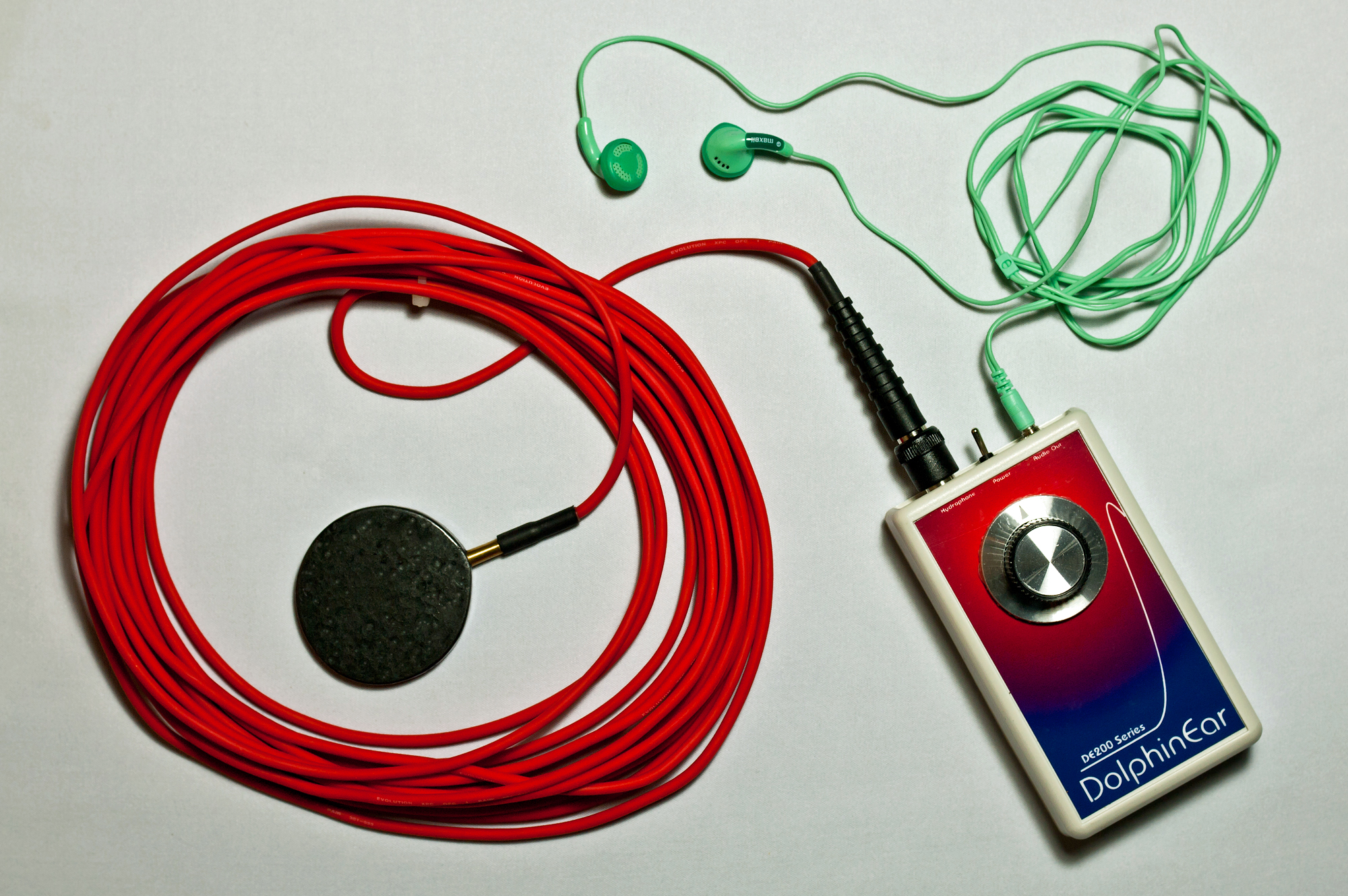
Low-frequency sounds are especially good travelers. They lose less energy than many high-frequency sounds, so they can move across long distances when conditions are right. Whales, ships, earthquakes, breaking ice, and storms can all contribute to the ocean soundscape. A hydrophone can record sounds that human swimmers would never notice directly.
Ocean conditions bend and shape these waves. Temperature usually decreases with depth near the surface, while pressure increases as water gets deeper. Salinity also matters. Because sound speed changes with these properties, sound waves can refract, or bend, through layers of water. In some parts of the ocean, this helps sound stay trapped in deep channels and travel remarkable distances.
How Sonar Uses Underwater Sound
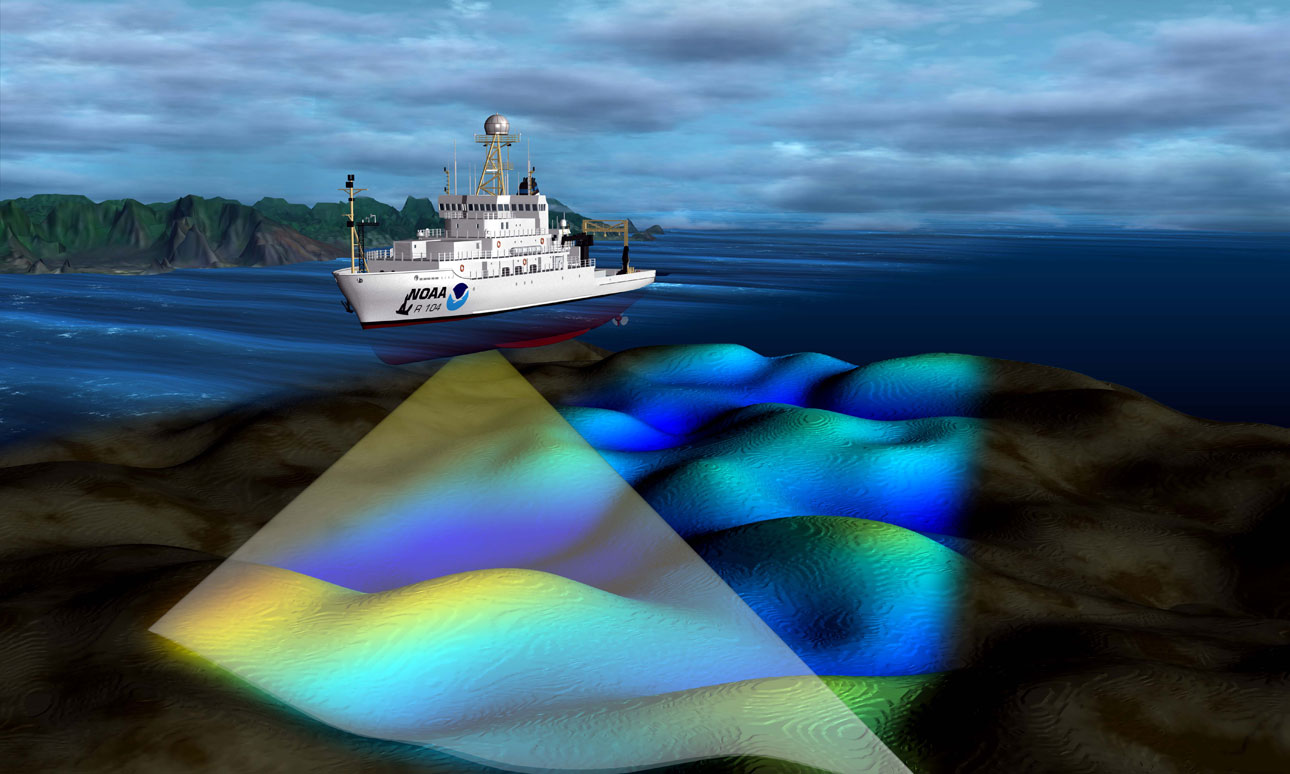
The same physics that helps animals hear also makes sonar possible. Sonar systems send sound pulses through water and listen for returning echoes. By measuring how long the echo takes to return, a system can estimate distance. If the speed of sound in that water is known well enough, time becomes a measuring tool.
Simple echo sounding can measure depth beneath a boat. More advanced multibeam sonar can send out many sound beams at once to map seafloor shape. Submarines, research vessels, fish finders, and underwater robots all rely on variations of the same idea: sound can go where light and radio waves often fail.
Accuracy is not automatic. A sonar reading depends on knowing how sound behaves in that particular water column. Warm surface water, colder deep water, fresh river input, salty ocean water, and changing pressure can all affect the path of sound. Scientists and navigators often measure or model these conditions so sound-based maps and distance estimates are not thrown off.
Why Underwater Sound Matters Beyond Curiosity
For a swimmer, underwater sound may be a small surprise. For ocean life, it can be central to survival. Many marine animals use sound to communicate, find food, avoid danger, coordinate movement, or sense their surroundings. When visibility is poor, a sound can carry clues that eyes cannot provide.
Human activity adds more sound to that environment. Ship engines, pile driving, sonar, seismic surveys, and construction can raise the background noise in some waters. NOAA studies ocean noise partly because added sound can interfere with animal communication and behavior. The issue is not simply whether the ocean is loud; it is whether important signals become harder to detect.
This is why underwater acoustics connects physics with biology, technology, and environmental science. The same wave behavior explains a muffled voice at the pool, a whale call crossing open water, and a sonar map of the seafloor. Water changes sound so strongly that ordinary listening habits can mislead us.
A Different Kind of Listening
Sound underwater is not weaker, slower, or less important than sound in air. It is different because water is a different medium. It carries pressure waves quickly, often over long distances, but it also changes direction clues, reflects sound at the surface, and bends waves through layers of temperature, salinity, and pressure.
That is why underwater listening can feel both vivid and confusing. A splash may sound close but hard to place. A hydrophone may hear signals too faint or too distant for a human ear. A sonar system may turn echoes into a map. Beneath the surface, sound is not just something heard; it is one of the main ways the underwater world is measured, explored, and understood.





Add comment