 Akshay Dinesh
A glass of water on a kitchen table usually looks clear. A swimming pool filled with the same basic substance can look bright blue, pale turquoise, or deep sapphire. That difference can make pool water seem as if it has been dyed, painted, or magically colored by the sky. The real explanation is quieter and more interesting: water itself has a very faint blue color, and a pool gives light enough distance through the water for that color to show.
The U.S. Geological Survey explains that pure water is not perfectly colorless. Its blue tint is usually too weak to notice in a cup, but it becomes visible when light travels through a long enough path of water. A pool is a perfect everyday example. It is shallow compared with a lake or ocean, yet still deep enough for light to be filtered, reflected, and sent back to your eyes with some colors changed along the way.
Water Is Clear, But Not Completely Colorless
Clear does not always mean colorless. A clear material lets light pass through without much cloudiness, but it can still absorb some wavelengths more strongly than others. Window glass, for example, may look almost invisible in a small pane but slightly green along a thick edge. Water behaves in a similar way, though its tint is blue rather than green.
Sunlight contains all the visible colors mixed together. When that white light enters a pool, water molecules interact with different wavelengths in different ways. Red and orange wavelengths are absorbed more readily than blue wavelengths. The effect is weak over a short distance, which is why a drinking glass does not look blue, but it builds as light moves down through the pool, bounces off the bottom or sides, and travels back upward.
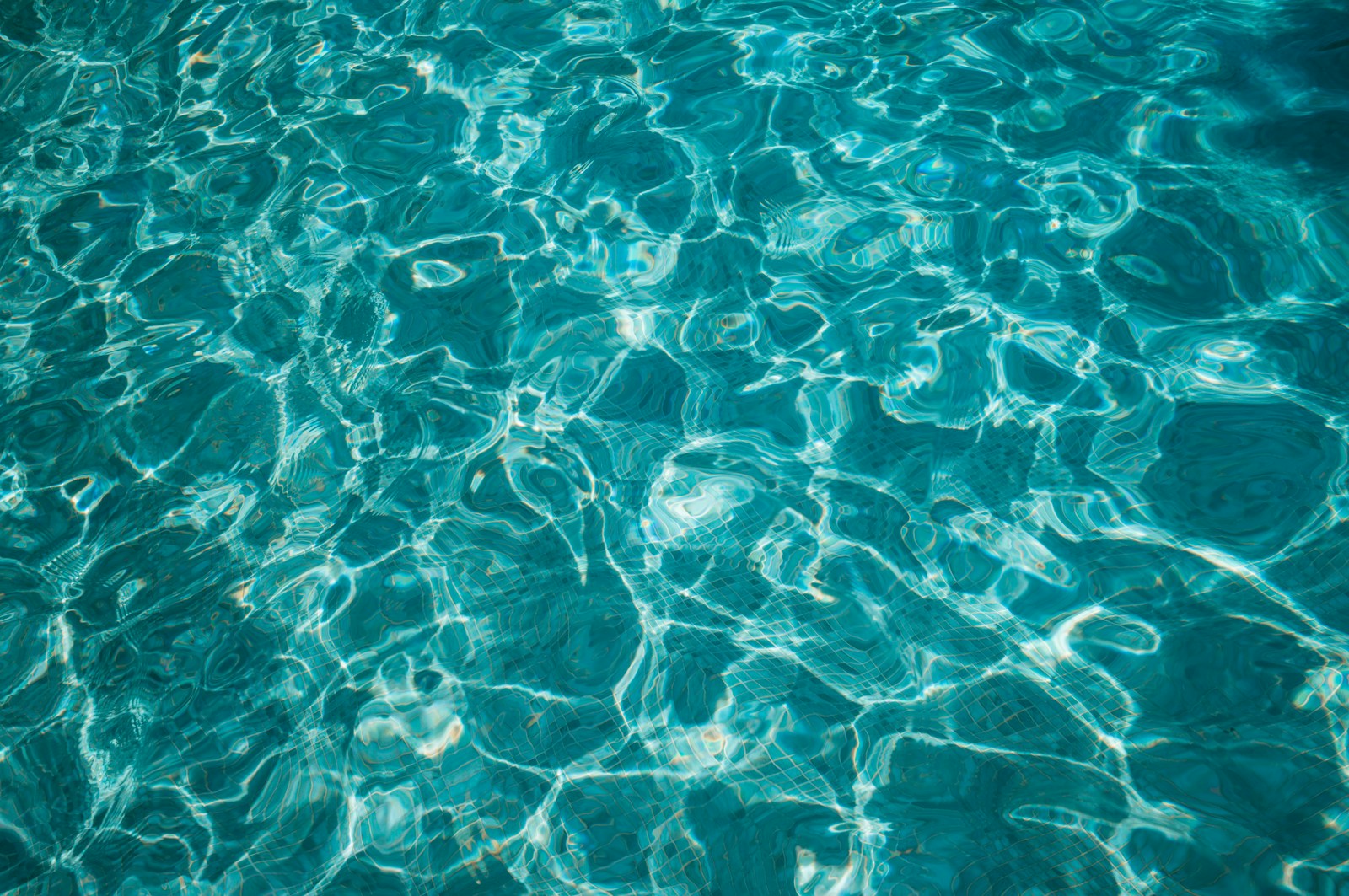
This is why depth matters so much. The same water can appear nearly colorless in a shallow step, pale blue in the middle of the pool, and darker blue at the deep end. There is simply more water for the light to pass through. More distance means more chances for red light to be absorbed before the remaining light returns to the surface.
Why Red Light Disappears First
Colors in visible light correspond to different wavelengths. Red light has longer wavelengths, while blue light has shorter wavelengths. In water, the longer red and orange wavelengths are removed more quickly. Blue light travels farther, so a pool with enough depth sends back proportionally more blue light than red light.
That does not mean water is glowing blue or producing blue light on its own. The pool is changing the mix of sunlight that reaches your eyes. If sunlight enters the water with red, orange, yellow, green, and blue all present, the returning light has lost more of its red end. Your brain receives a light mixture tilted toward blue, so the water looks blue.
NASA ocean-color education materials make a related point about clear ocean water: red light is absorbed near the surface, while blue light is reflected or returned from deeper water more effectively. A pool is much smaller than the ocean, but the same basic physics applies. The pool bottom and walls give the light a surface to bounce from, and the water column filters that light on both the way down and the way back up.
The Sky Helps, But It Is Not the Whole Answer
It is tempting to say that pools are blue because they reflect the sky. Reflection can play a role, especially outdoors on a bright day, but it cannot explain everything. Indoor pools can still look blue. Deep white containers of water can show a faint blue tint. Photographs taken from underwater often show blue even when the camera is not pointed at the sky.
The sky-reflection idea is partly persuasive because water surfaces do reflect light. A calm pool can act like a broken mirror, catching bits of blue sky, nearby trees, buildings, or lane lines. Ripples scatter those reflections into moving patches. But reflection is layered on top of the water’s own filtering effect, not a replacement for it.
A useful test is to compare a shallow white bathtub with a deep swimming pool. The bathtub may show only a faint hint of blue, while the pool looks strongly blue. Both may have white surfaces underneath. The difference is the length of the light path through water. The deeper pool gives absorption enough room to become visible.
Pool Design Can Make the Blue Stronger
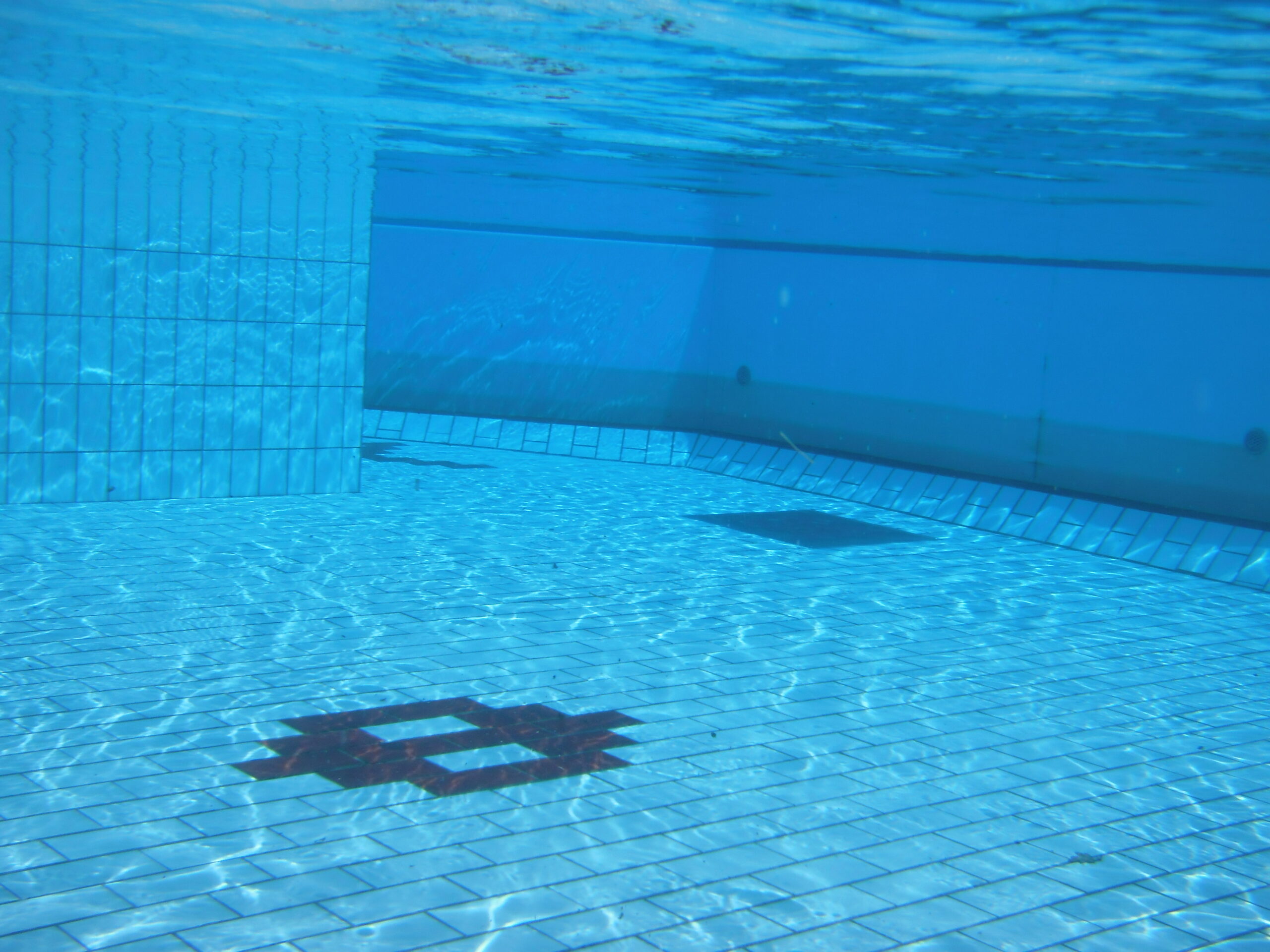
The water is only part of what you see. Pool design strongly affects the final color. A white or pale plaster bottom reflects plenty of light back upward, making the water look bright and clear. A blue tile lining reinforces the blue appearance because it reflects blue light even before the water filters the light. A dark finish can make the same water look deeper, richer, or almost lagoon-like.
Depth changes the color across the same pool. Steps and tanning ledges often look much lighter because the light passes through only a small amount of water. The deep end looks darker because more red light has been filtered out and less total light returns. This is why pool color often seems to shift gradually instead of staying perfectly uniform.
Lighting matters too. Midday sunlight contains a strong mix of visible wavelengths, so it can make clear water sparkle. Evening light is warmer, with more red and orange tones, so a pool may look less intensely blue near sunset. Artificial pool lights can also change the effect. A cool white light, a blue LED, or a warm yellow lamp will each start with a different color mixture before the water filters it.
When Pool Water Looks Green, Cloudy, or Gray
A clean pool’s blue color is mostly a light-and-water effect, but other colors can signal something else. Green water may come from algae growth, a chemical imbalance, or metals in the water. Cloudy water often means tiny particles or air bubbles are scattering light before it can travel cleanly through the pool. Gray or dull water may appear when suspended material, poor filtration, or surface debris interrupts the clear path of light.
This is where pool water differs from pure water in a demonstration. Real pool water contains dissolved chemicals, minerals, tiny particles, and sometimes organic material. Most of the time those substances are managed by filtration and water treatment, so the pool still looks clear. When they build up, they change how light moves through the water and can quickly overpower the natural blue tint.
USGS water-color guidance makes the same broader point for natural water. Sediment, dissolved organic matter, iron, and algae can turn rivers, lakes, and coastal water brown, yellow, green, or reddish. A swimming pool is controlled more carefully than a river, but the optical principle is similar: what light does inside the water depends on both the water molecules and anything suspended or dissolved in them.
A Small Everyday Lesson in Light
The blue of a swimming pool is easy to overlook because it feels familiar. Yet it is a compact example of how color works. Objects and materials do not simply possess color in isolation. They absorb, transmit, reflect, and scatter parts of the light that reaches them. What you see is the result of that interaction.
A pool looks blue because clear water weakly absorbs the red side of visible light, especially when light travels through enough depth. Blue light is left to travel farther and return more strongly to your eyes. The pool’s surface, bottom, tiles, depth, sunlight, and cleanliness all shape the final shade, but the basic reason begins with the water itself. The next time a pool looks impossibly blue, the color is not just decoration. It is sunlight taking a filtered round trip through water.