

 Akshay Dinesh
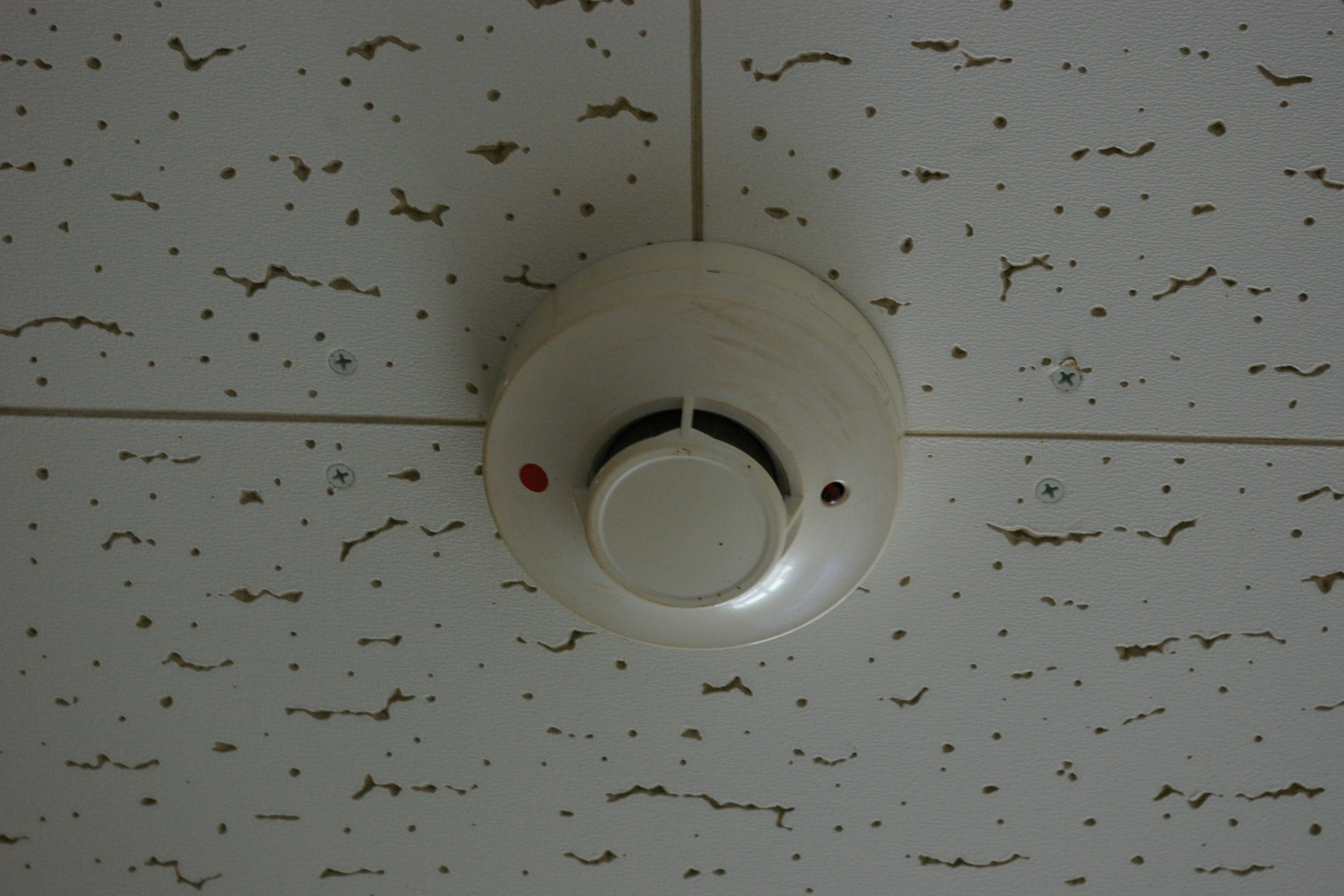
A smoke detector is easy to ignore until it starts chirping from the ceiling, but the device is doing a surprisingly delicate job. It is not waiting to see a flame. It is watching the air for tiny particles that change the way electricity or light behaves inside a small sensing chamber. That is why a working alarm can warn people while a fire is still small enough for escape to be realistic.
The National Institute of Standards and Technology describes modern smoke alarms as particle detectors. That simple idea matters because smoke is not one thing. A fast, flaming fire and a slow, smoldering fire can send different mixtures of particles into the air. Some particles are dark and tiny. Others are larger, lighter-colored, and better at scattering light. The two main household smoke-alarm technologies, ionization and photoelectric detection, notice those particles in different ways.
Smoke Is a Cloud of Clues
Most people picture smoke as a gray cloud, but a detector responds to what is happening on a much smaller scale. Burning or overheated materials release gases and solid or liquid particles. Those particles ride warm air upward, spread through rooms and hallways, and eventually enter the alarm through vents around its casing. Once they are inside, the alarm asks a narrow question: has the air changed enough to suggest a real fire?
That question is harder than it sounds. A detector needs to respond early, before smoke becomes thick and dangerous. At the same time, it cannot treat every bit of cooking vapor, dust, steam, or toast smoke as an emergency. Fire detection is a balance between sensitivity and selectivity. A detector that is too insensitive may respond too late. A detector that is too sensitive may annoy people so often that they silence it or remove the battery, which destroys its purpose.
NIST notes that nuisance alarms are part of the engineering challenge. Newer standards and product designs try to improve that balance so alarms respond reliably to real fires while becoming less likely to sound from ordinary cooking. The device may look simple from the outside, but inside it is making a judgment about airborne particles, thresholds, and time.
How Photoelectric Alarms Use Light
A photoelectric smoke alarm works much like a tiny optical experiment. Inside the sensing chamber, a light source points across a space where clean air normally causes little or no light to hit the detector. When smoke particles enter, they scatter the light. Some of that scattered light reaches a sensor, and if the signal rises past the alarm’s threshold, the alarm sounds.
This method is especially good at noticing the larger, lighter particles often produced by smoldering fires. A smoldering fire may begin in upholstery, bedding, wiring insulation, or another material that heats and decomposes before open flames appear. It can produce heavy smoke while the fire is still hidden. Photoelectric alarms tend to notice that kind of smoke sooner because the particles reflect and scatter light well.
The physics is familiar even outside a smoke alarm. Dust in a sunbeam becomes visible because particles scatter light toward your eyes. Fog makes headlights glow because droplets send light in many directions. A photoelectric alarm uses the same basic idea in a controlled chamber, with electronics watching for a signal instead of a person watching a beam.
Photoelectric alarms are not only for slow fires. They can detect flaming fires too, but their main strength is often early response to smoldering smoke. That is why the National Fire Protection Association describes photoelectric alarms as generally more responsive to smoldering fires.
How Ionization Alarms Use Electric Current
Ionization smoke alarms use a different trick. Inside the detector is a tiny amount of americium-241, a radioactive material sealed inside the sensing chamber. The Environmental Protection Agency explains that this source releases alpha particles, which ionize air molecules between two charged plates. In plain terms, some air molecules become electrically charged, allowing a very small current to flow through the chamber.
When smoke particles enter, they disrupt that steady flow. Charged particles attach to the smoke, and fewer charged particles move between the plates. If the current drops below the detector’s set threshold, the alarm recognizes that smoke may be present and sounds.
Ionization alarms often respond quickly to fast flaming fires because those fires can produce large numbers of tiny dark particles. The particles are small enough to interfere efficiently with the ionized air in the chamber. NFPA describes ionization alarms as generally more responsive to flaming fires, while NIST makes the same distinction between the two technologies’ usual strengths.
The presence of americium can sound alarming, but the amount is very small and shielded inside the device. EPA states that properly handled ionization smoke detectors pose no radiation health risk and should not be tampered with. The safety rule is straightforward: use the alarm as directed, do not open or damage the sensing chamber, and follow the manufacturer’s instructions when replacing or disposing of the unit.
Why One Type Is Not Perfect for Every Fire
No single home fire has to behave like a textbook example. A smoldering fire can turn into a flaming fire. A flaming fire can create smoke that spreads into other rooms before people notice heat. The material burning, the room layout, air movement, and distance from the alarm all affect how soon smoke reaches the sensor.
This is why fire-safety organizations often advise using both kinds of detection or a dual-sensor alarm. NFPA says ionization alarms are generally more responsive to flaming fires and photoelectric alarms are generally more responsive to smoldering fires. A home with both kinds of sensing has a better chance of catching different fire patterns early.
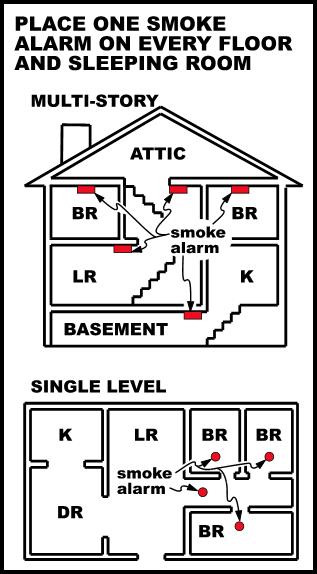
The distinction also explains why alarm placement matters. A great sensor cannot respond to smoke that never reaches it. Smoke normally rises with warm air, then spreads across ceilings and upper walls, but closed doors, long hallways, vents, ceiling shape, and room layout can slow or redirect it. Alarms near sleeping areas are especially important because people may not smell smoke while asleep, and smoke inhalation can make escape harder very quickly.
The Beep Is Only Useful If the Alarm Still Works
A smoke alarm is a sensing system, a sound maker, and a maintenance responsibility. Dust can interfere with airflow or sensing. Batteries can weaken. Devices age. Even hardwired alarms often need backup batteries, and many alarms have a useful service life of about ten years. The date printed on the unit matters because older electronics and sensors may become less reliable.
Testing is not just a ritual. Pressing the test button checks that the alarm can sound and that its power system is working. It does not reproduce every possible fire condition, but it catches basic failures that would otherwise stay hidden until an emergency. Cleaning around the vents, replacing batteries when needed, and replacing expired units keep the detector from becoming ceiling decoration.
False alarms deserve attention too. If cooking repeatedly sets off an alarm, the answer is not to disable it. Better placement, cleaning, a hush feature, or a different type of alarm may reduce the problem while preserving protection. An alarm that has been removed because it was annoying cannot warn anyone.
Early Warning Is the Real Invention
The most important part of a smoke detector is not the plastic shell or even the loud sound. It is the extra time. A detector turns invisible changes in the air into a signal people can act on. It senses the physics and chemistry of a developing fire before the situation becomes obvious to the human senses.
That is why the difference between photoelectric and ionization sensing is more than a product label. One watches how smoke scatters light. The other watches how smoke interrupts an electric current in ionized air. Both are built around the same goal: notice a fire while escape is still possible. A small device on the ceiling can do that because smoke carries clues long before flames fill a room.





Add comment